You make your biggest decisions in two seconds. Not by thinking longer. By trusting a split-second instinct.
This is Blink by Malcolm Gladwell, published in two thousand five. It explores the adaptive unconscious, the part of our mind that thinks without thinking, and asks how we can know something in the time it takes to snap our fingers. It became a global bestseller and changed how millions of people think about first impressions.
Fourteen Months Lost to One Glance
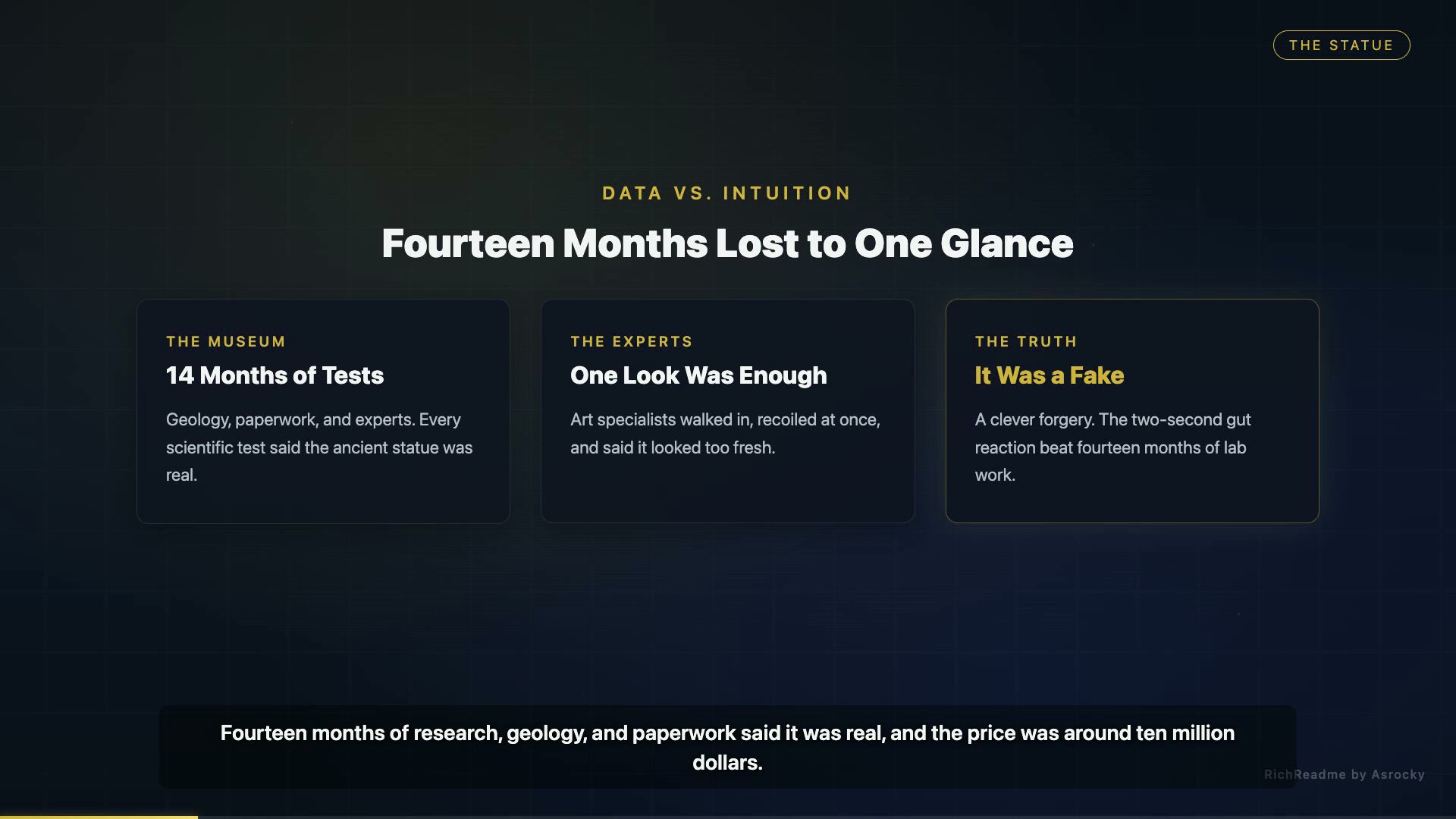
The story opens with a statue. The Getty Museum was offered an ancient Greek kouros, a marble figure of a young man. Their scientists ran every test imaginable. Fourteen months of research, geology, and paperwork said it was real, and the price was around ten million dollars. Then art experts walked in, took one look, and recoiled.
One said it looked too fresh. Another felt a flash of disgust. They were right. The statue was a clever fake. Fourteen months of data lost to a two-second gut reaction.
Thin-Slicing
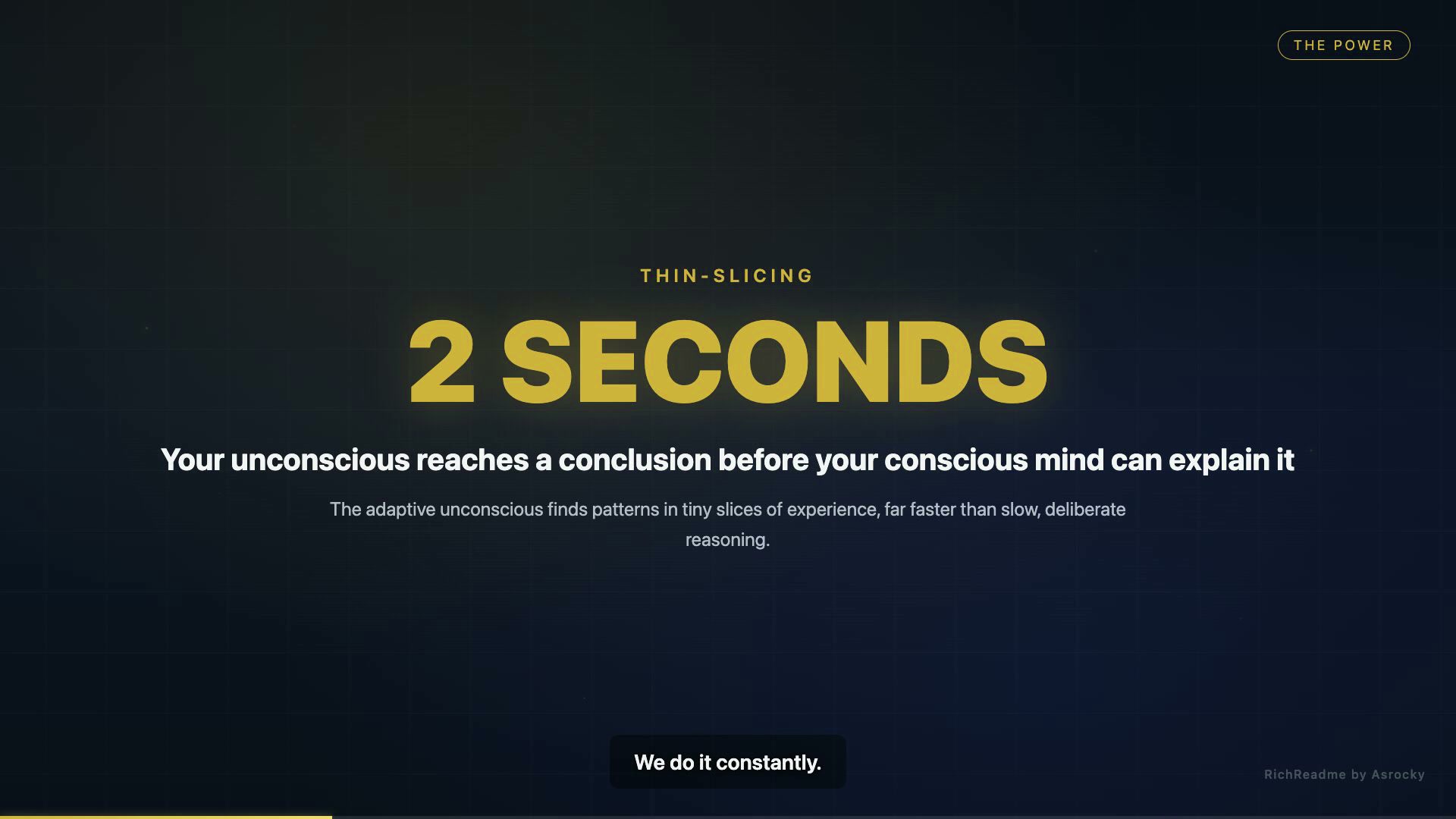
Gladwell calls this thin-slicing. Our unconscious can find patterns in tiny slices of experience, far faster than deliberate reasoning. We do it constantly.
We meet someone and decide in seconds whether to trust them. The mind processes millions of bits of data in the background, and hands us a feeling, long before we can explain why.
Marriage Predicted in Minutes
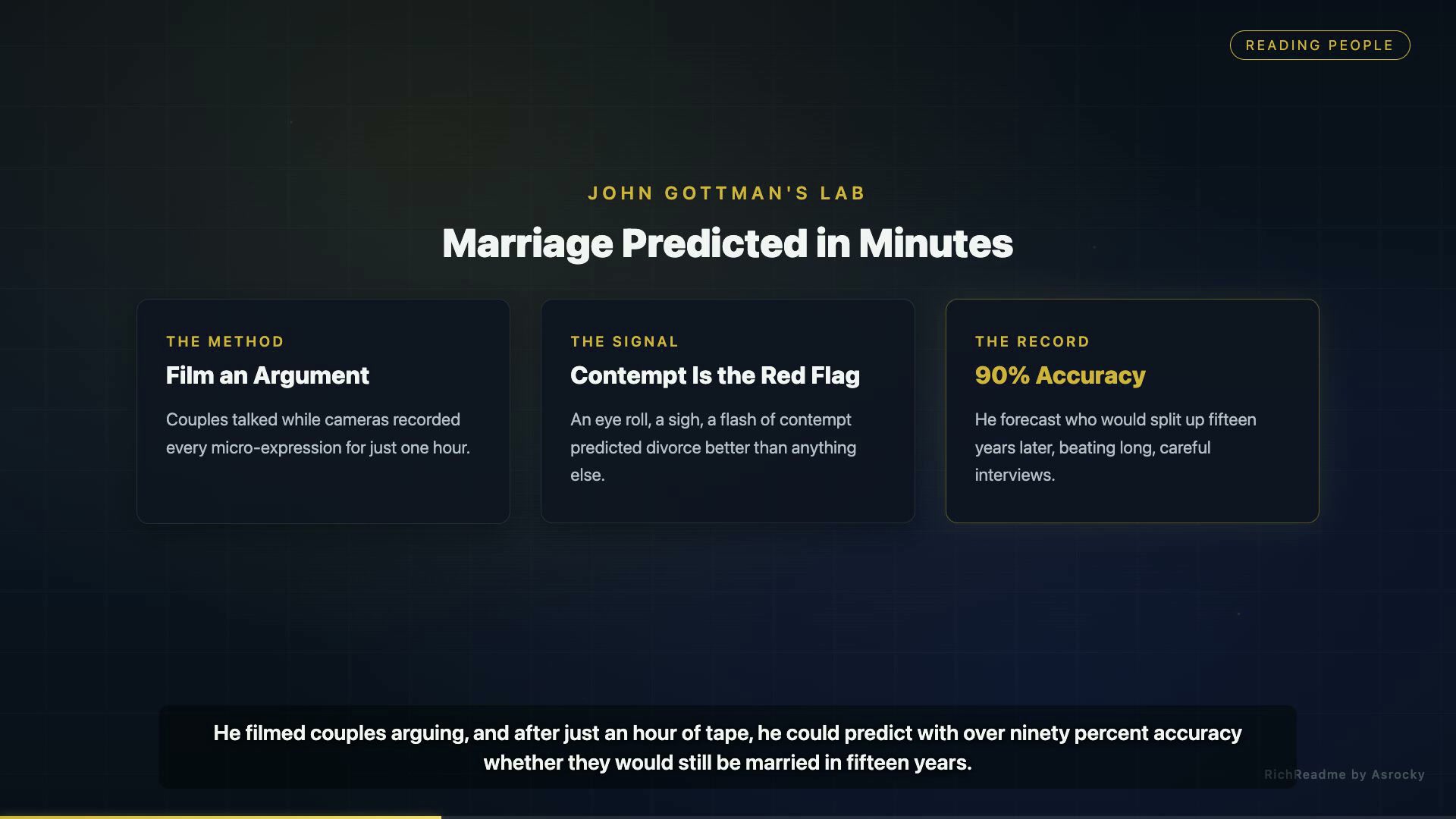
The best example is John Gottman. He filmed couples arguing, and after just an hour of tape, he could predict with over ninety percent accuracy whether they would still be married in fifteen years. He read tiny tells, like a sigh, an eye roll, a flash of contempt.
He found that contempt was the single strongest warning sign. He did not need to know their whole history. Minutes were enough.
Your Hand Knows Before Your Mind
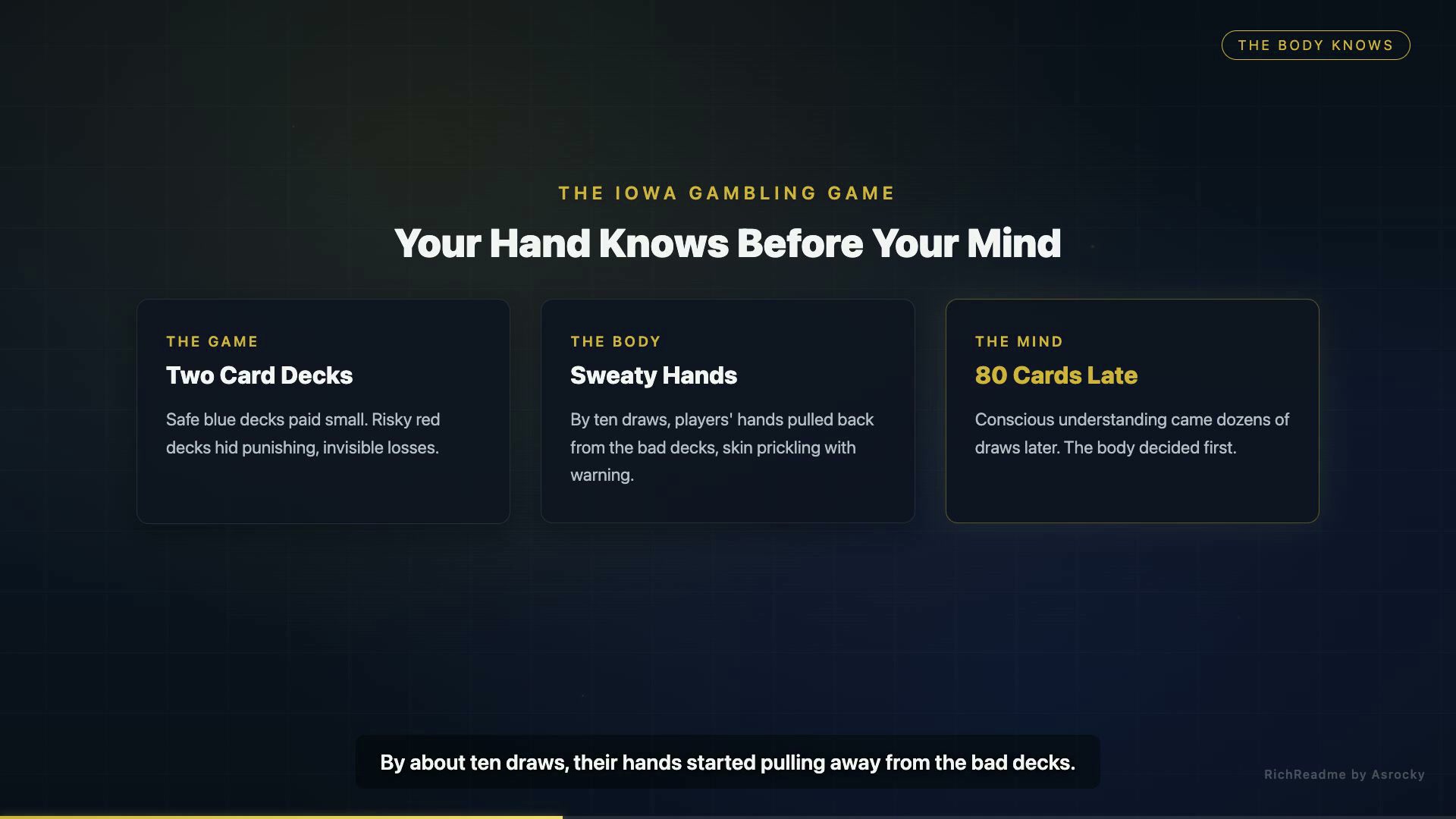
We also decide with our bodies before we decide with our words. In the famous Iowa gambling experiment, players drew cards from risky red decks and safe blue decks. By about ten draws, their hands started pulling away from the bad decks.
But they could not explain why until about eighty draws. Their skin sweated at the dangerous decks long before their conscious mind caught up. The body knew the deck was rigged before the mind could prove it.
The Gift
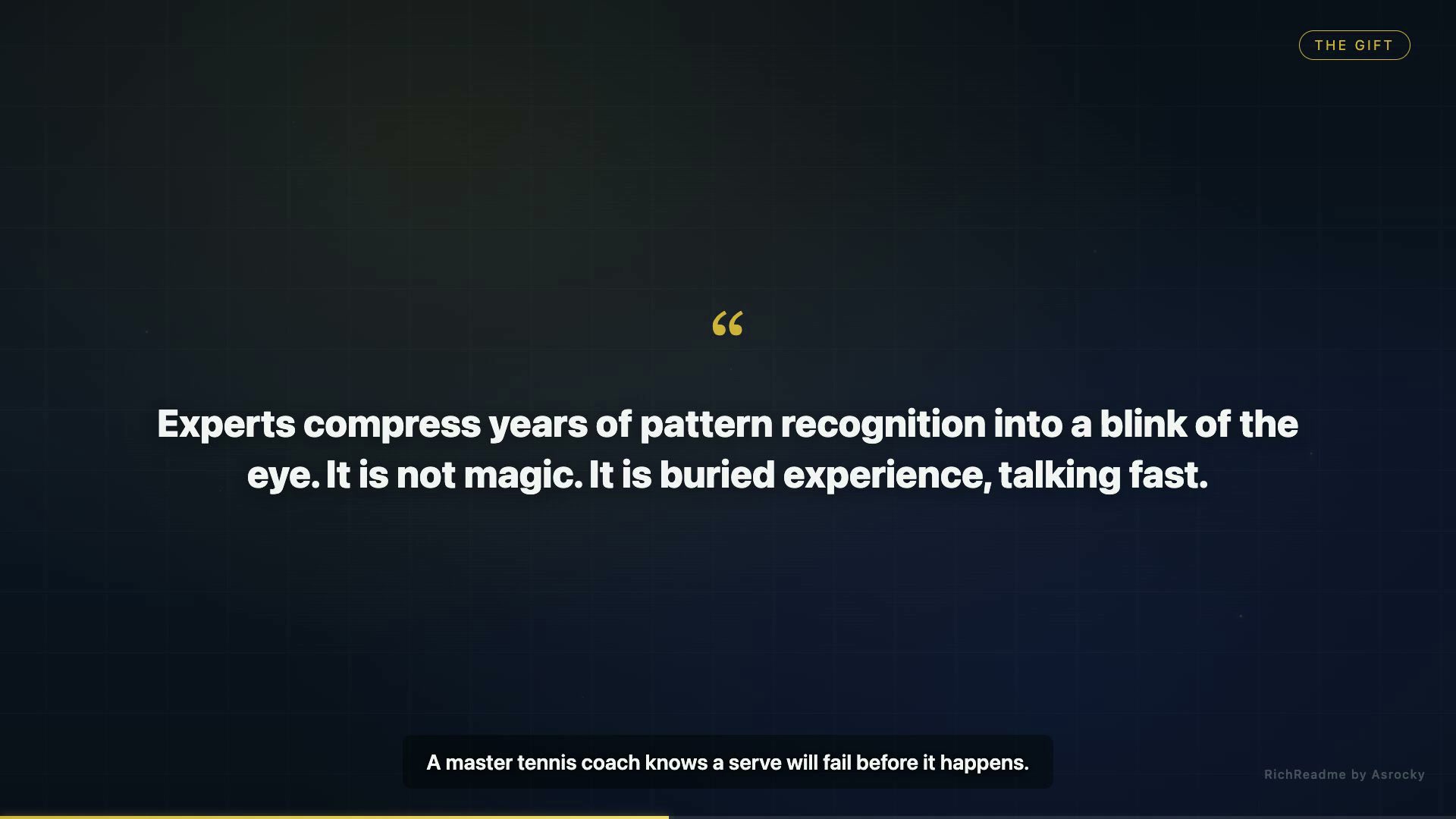
That is the gift of thin-slicing. Experts compress years of pattern recognition into a blink of the eye. A master tennis coach knows a serve will fail before it happens.
A great doctor sees what others miss. It is not magic. It is buried experience, talking fast.
The Human Gut Outplans the Data
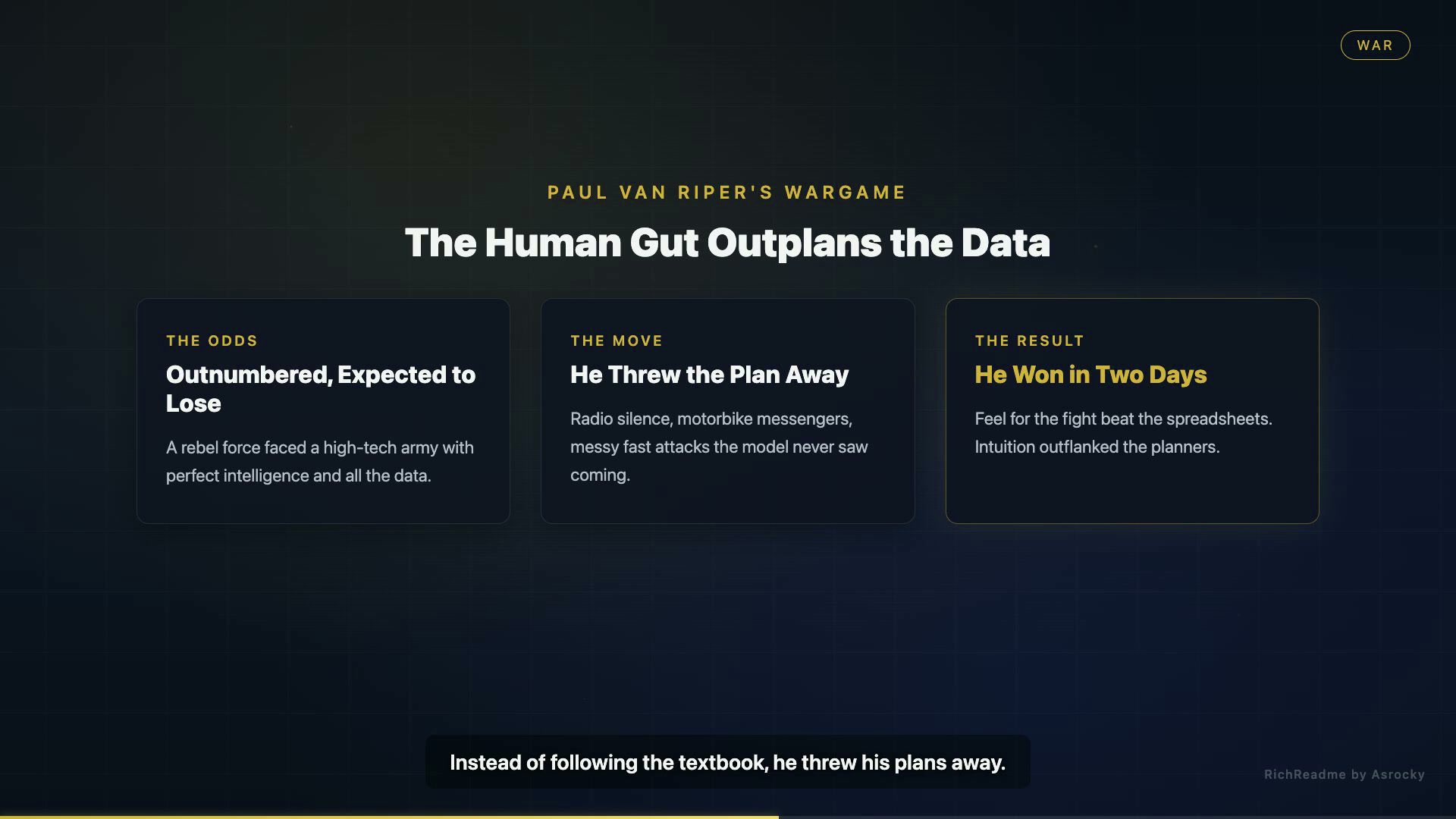
The same power shows up in war. In a famous military exercise, an outnumbered rebel leader named Paul Van Riper was expected to lose to a high-tech force with all the data. Instead of following the textbook, he threw his plans away. He used radio silence, sent messengers on motorbikes, and attacked in a messy, fast, human way.
Within two days, his side had wiped out the enemy fleet. The planners had all the information. Van Riper had the feel for the fight.
We Judge the Surface
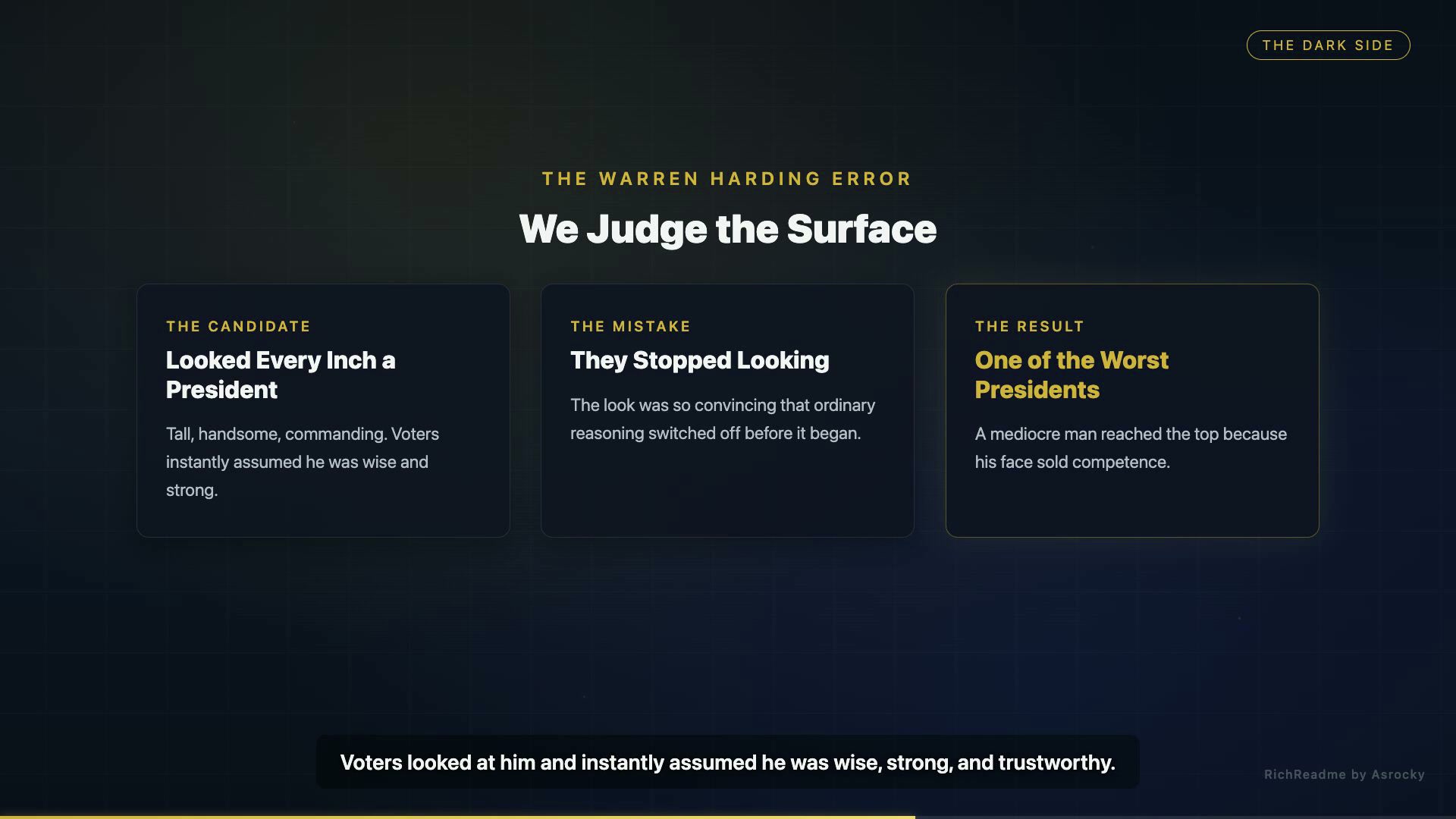
But thin-slicing has a dark side, and Gladwell calls it the Warren Harding error. Warren Harding looked every inch a president. He was tall, handsome, and commanding. Voters looked at him and instantly assumed he was wise, strong, and trustworthy.
They were wrong. He may have been one of the worst presidents in American history. He looked the part, so people stopped looking any deeper. We judge the surface, and the surface lies.
Good Intentions Are Not Enough
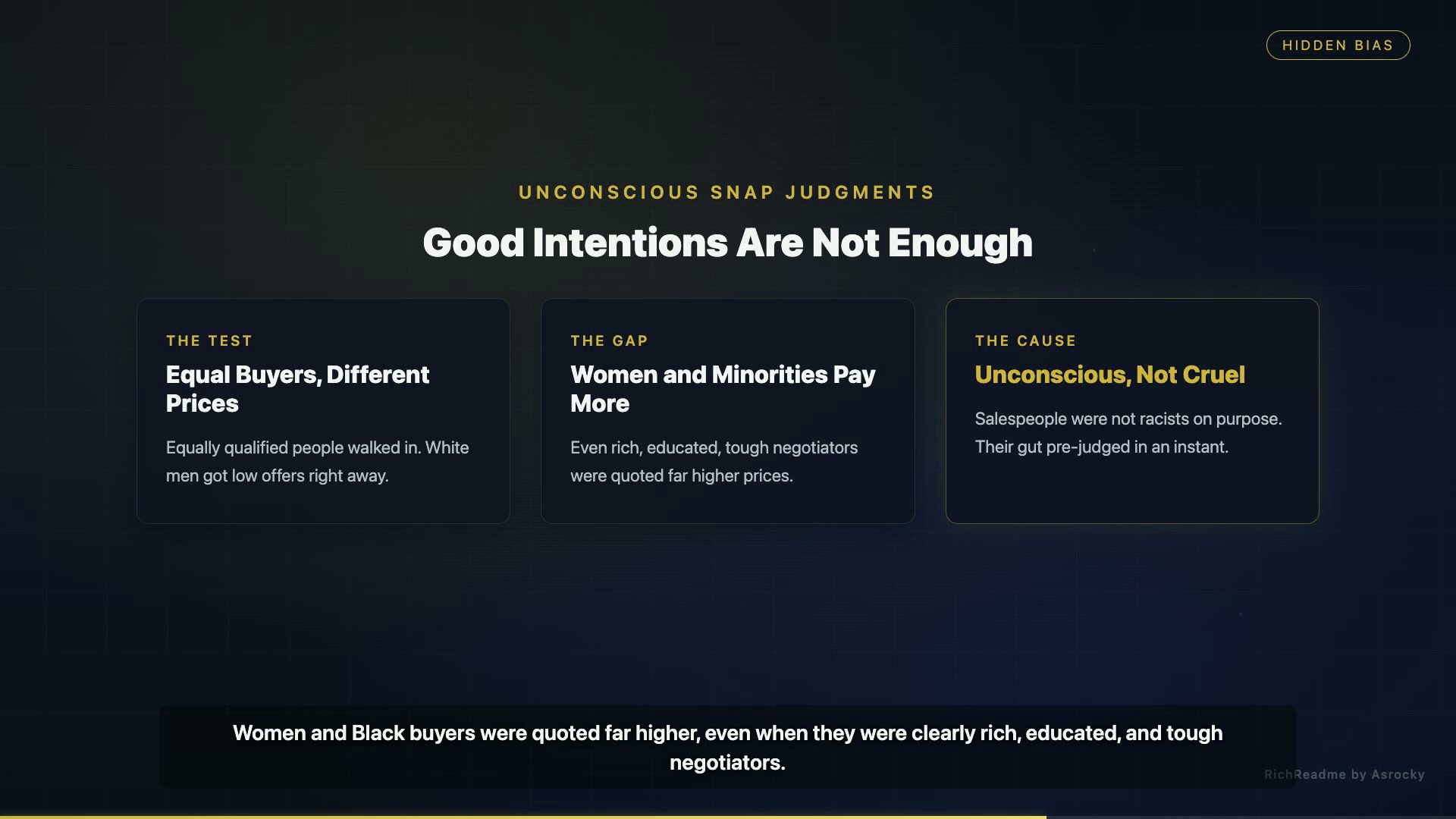
Our snap judgments also carry hidden prejudice. In a landmark study, researchers sent equally qualified buyers to car dealers. White men were offered low prices right away. Women and Black buyers were quoted far higher, even when they were clearly rich, educated, and tough negotiators.
The salespeople were not racists on purpose. Their unconscious did the judging, in an instant, before they could stop it. Good intentions did not protect them.
The Danger
The danger is that we trust our gut when we should not. The same fast machinery that reads an expert's years of experience can also read a lifetime of stereotypes. Thin-slicing is not always wise. It is only as good as what the unconscious has been taught.
The Brand Rewrites Your Taste
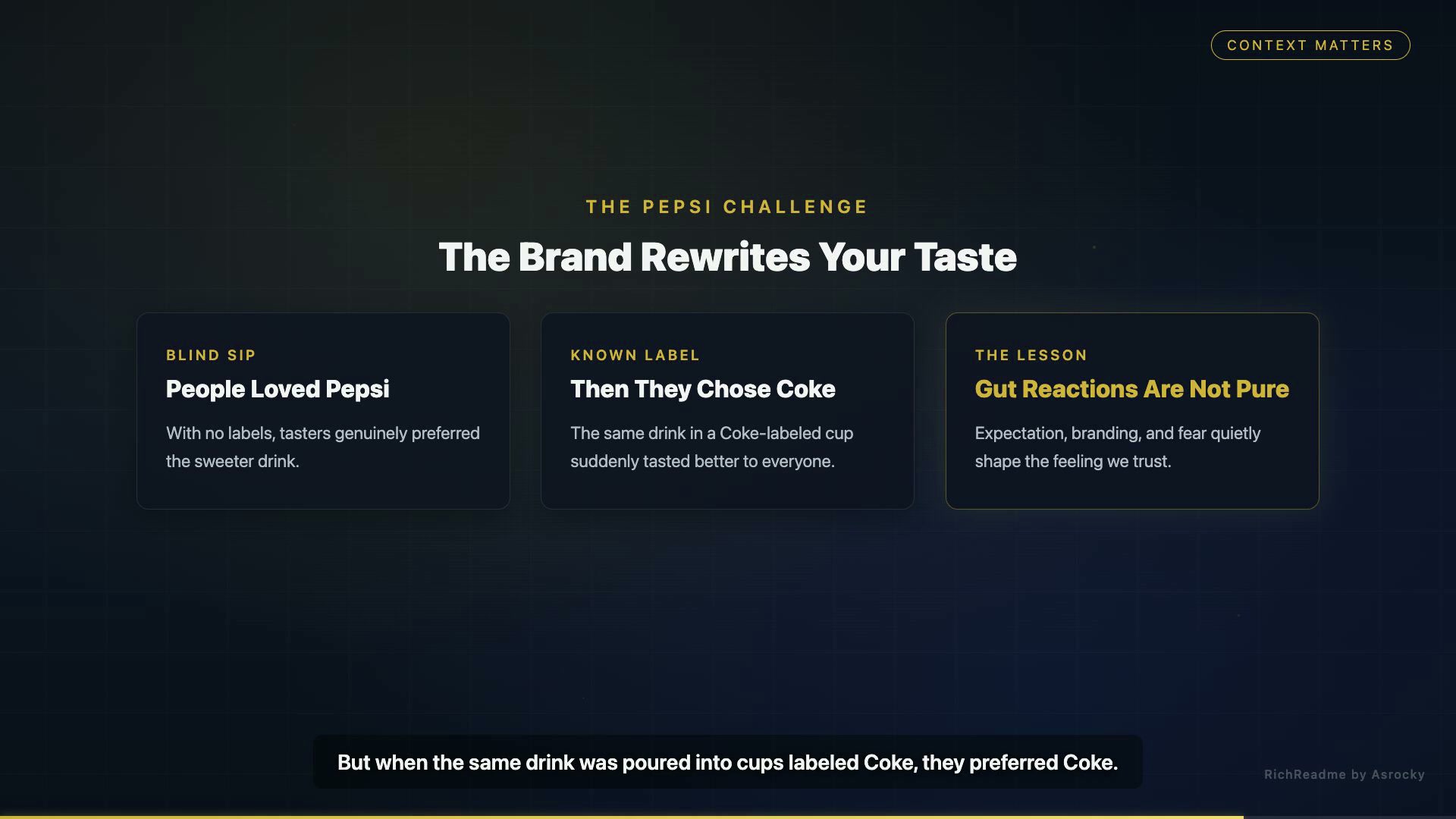
Sometimes knowing the context breaks the gut. In the Pepsi Challenge, people loved Pepsi in a blind sip. But when the same drink was poured into cups labeled Coke, they preferred Coke.
The brand rewrote their taste. Our instant reactions are not pure. They are tangled with expectation, branding, and fear.
Trust It, Then Audit It
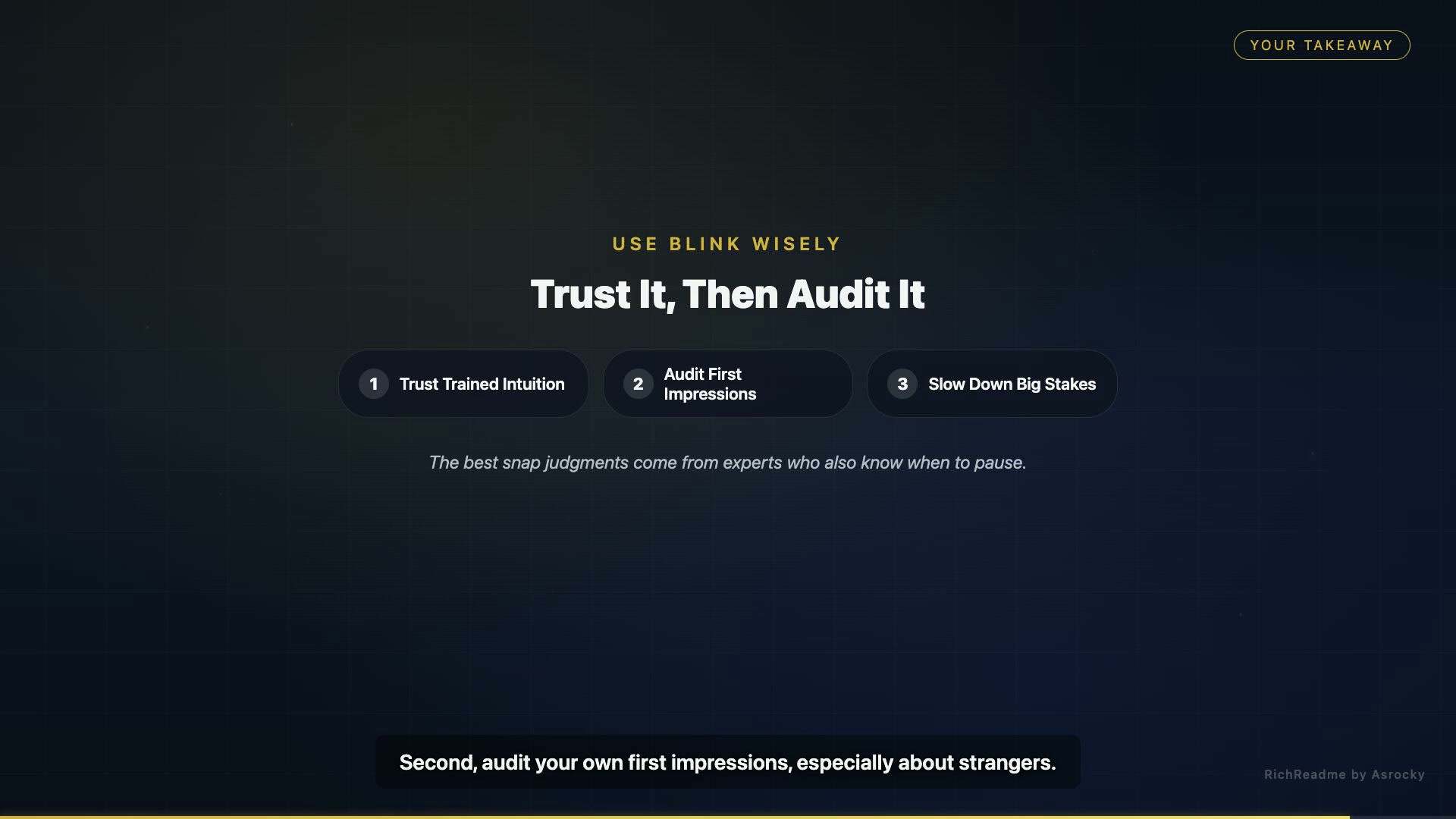
So how do we use Blink wisely? First, trust fast judgment only in people who have truly practiced their craft. Second, audit your own first impressions, especially about strangers.
Third, do not be fooled by a polished surface, because looks can fake competence. And when the stakes are huge, slow down. The best snap judgments come from experts who also know when to pause and think.