A food and tobacco company was sold for twenty-five billion dollars. It was the craziest takeover Wall Street had ever seen. Nobody won.
This is Barbarians at the Gate, by Bryan Burrough and John Helyar. It tells the true story of the biggest leveraged buyout in history, and it reads like a thriller because it actually happened. The company was RJR Nabisco, makers of Oreos, Camel cigarettes, and Winston. The man who started the fight was its chief executive, Ross Johnson.
Ross Johnson's Kingdom
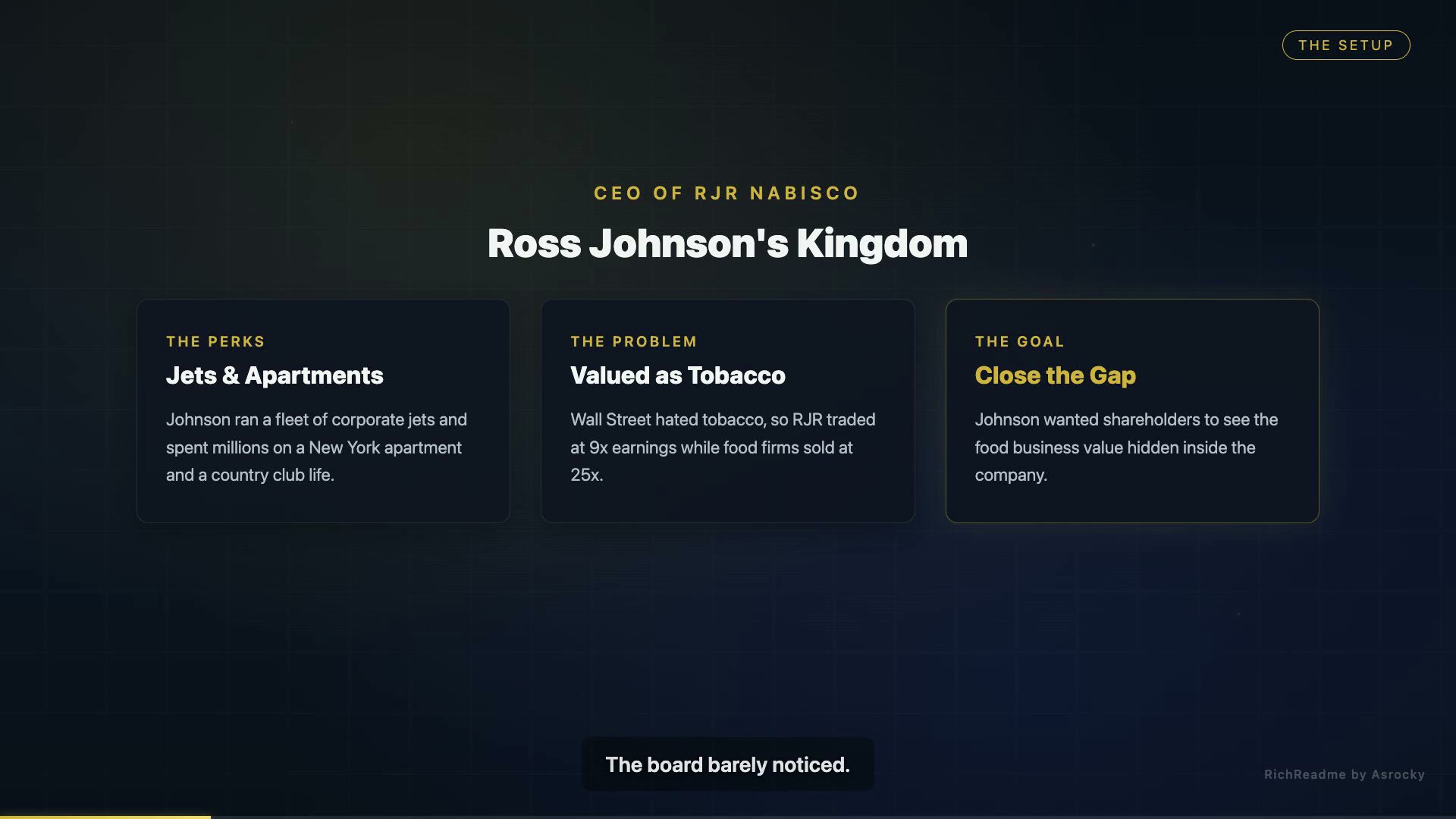
Johnson ran RJR Nabisco like his own kingdom. He kept a fleet of corporate jets. He flew friends and golf partners across the country. He spent millions on a New York apartment and a country club lifestyle. The board barely noticed.
What bothered Johnson was the stock price. Wall Street valued RJR as a tobacco company, and tobacco was hated. The stock sat at nine times earnings while food companies sold at twenty-five times. Johnson wanted that gap closed.
Borrow to Buy It All
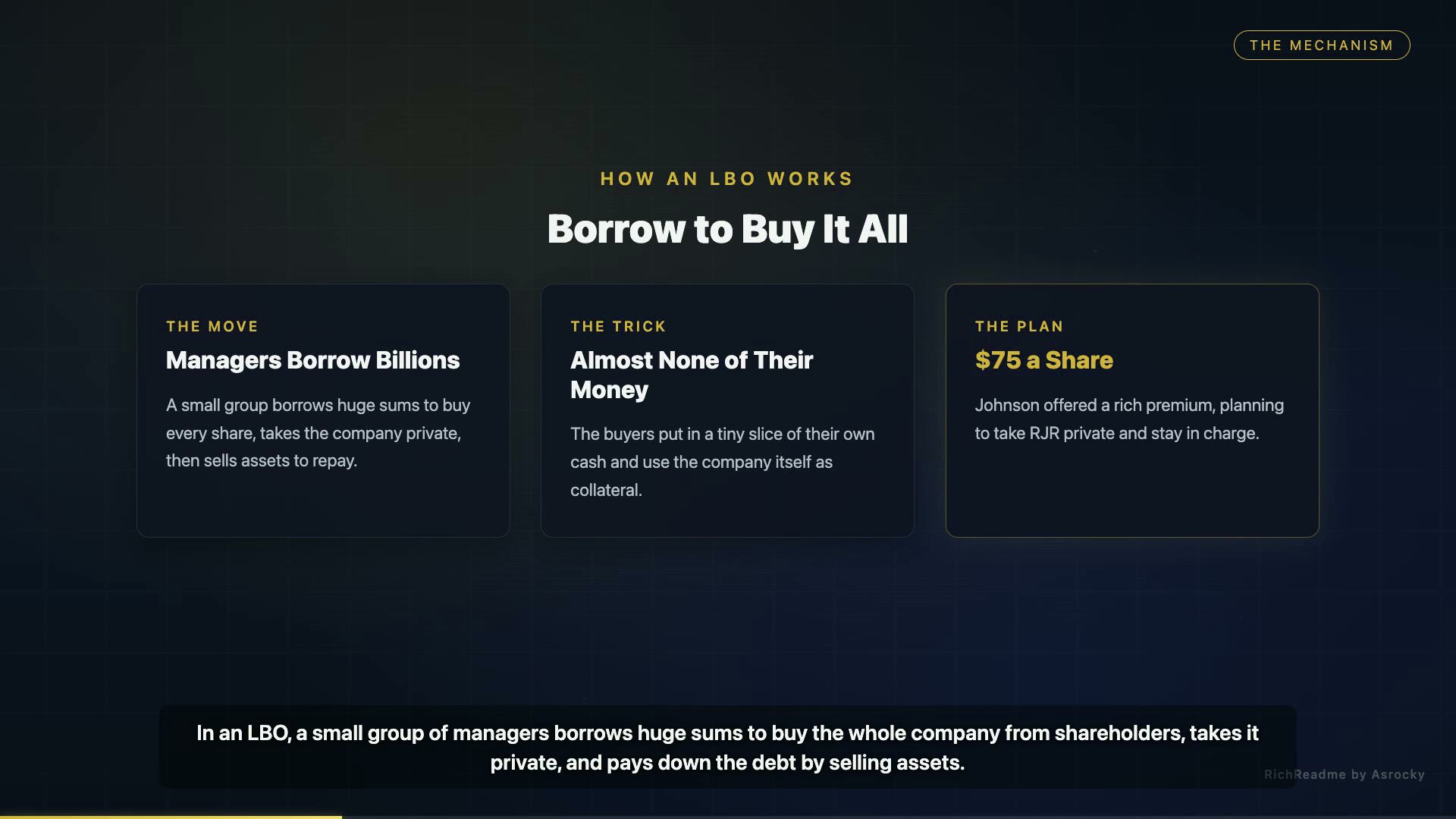
The idea he settled on was a leveraged buyout. In an LBO, a small group of managers borrows huge sums to buy the whole company from shareholders, takes it private, and pays down the debt by selling assets. The trick is the buyers put in almost none of their own money. Johnson planned to take RJR private at roughly seventy-five dollars a share, a rich premium, and walk away still in charge.
Word Got Out
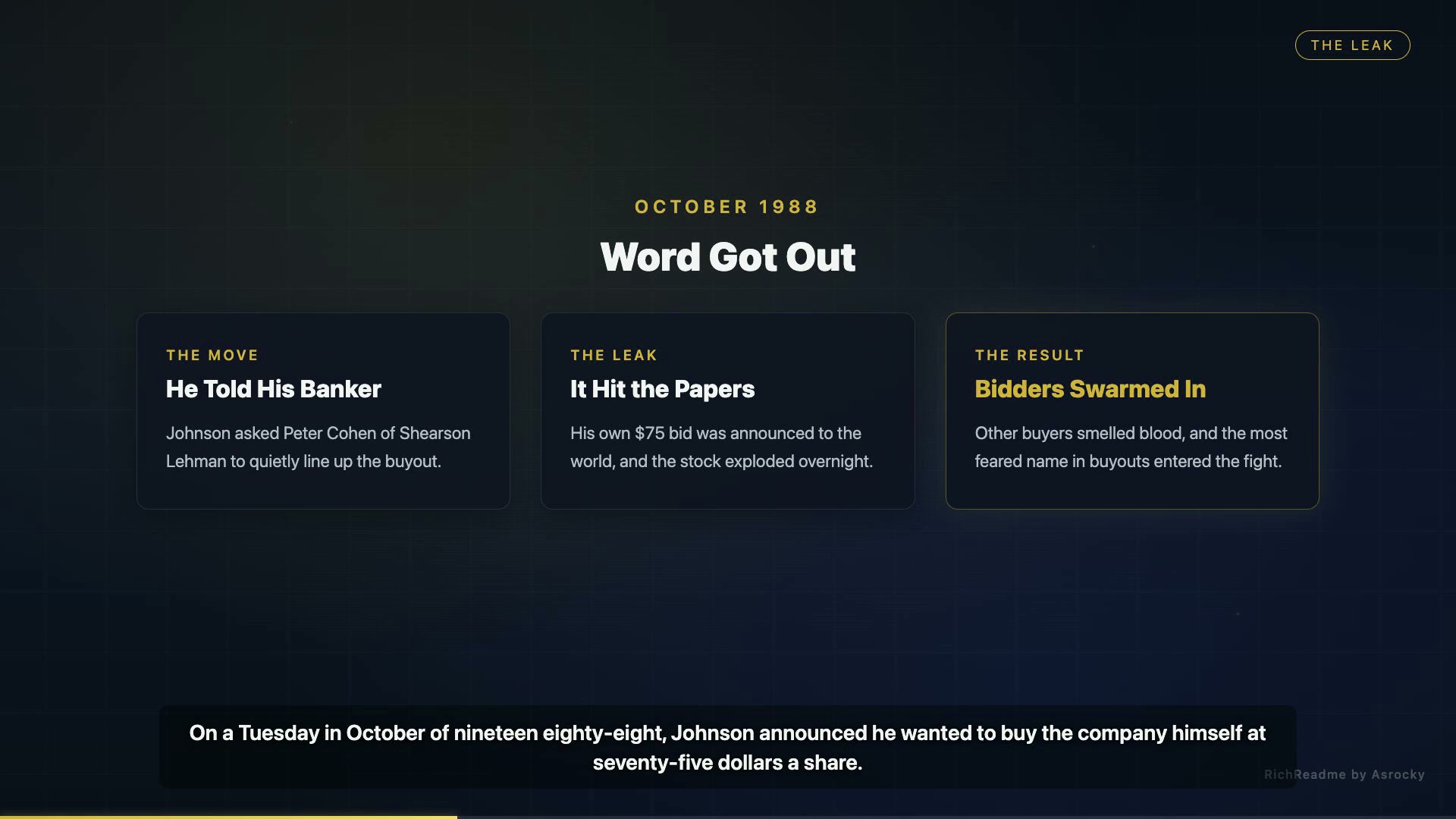
Then Johnson made a terrible mistake. He told his banker, Peter Cohen of Shearson Lehman, to line up the deal. Word leaked.
On a Tuesday in October of nineteen eighty-eight, Johnson announced he wanted to buy the company himself at seventy-five dollars a share. The market erupted. Other buyers smelled blood, and the most feared name in buyouts entered the fight.
Henry Kravis
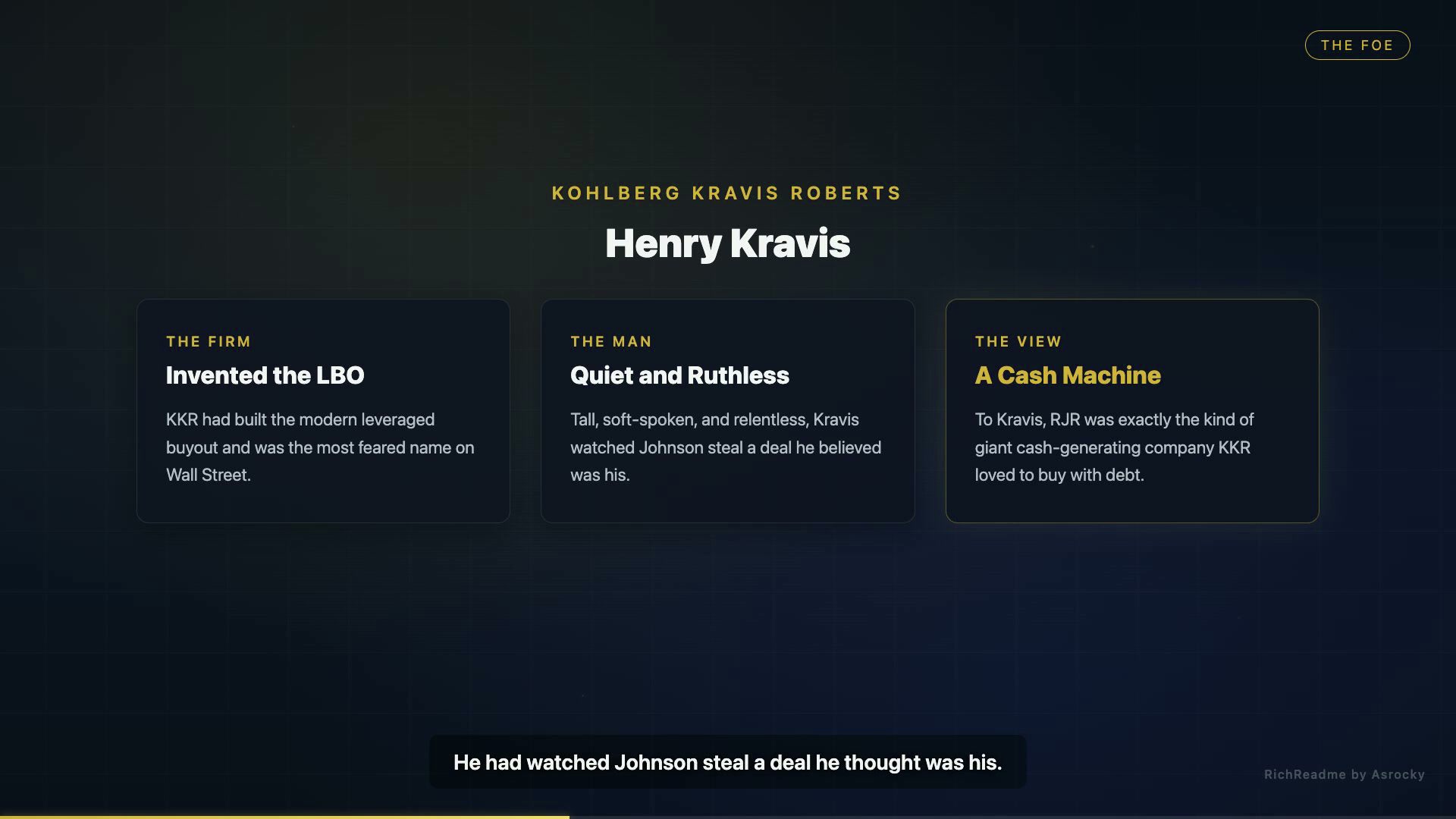
That name was Henry Kravis. His firm, Kohlberg Kravis Roberts, had invented the modern LBO. Kravis was tall, quiet, and ruthless.
He had watched Johnson steal a deal he thought was his. The moment the leak hit the papers, Kravis began lining up his own bid. To him, RJR was a giant cash machine, exactly the kind of company KKR loved to buy with borrowed money.
Other People's Money
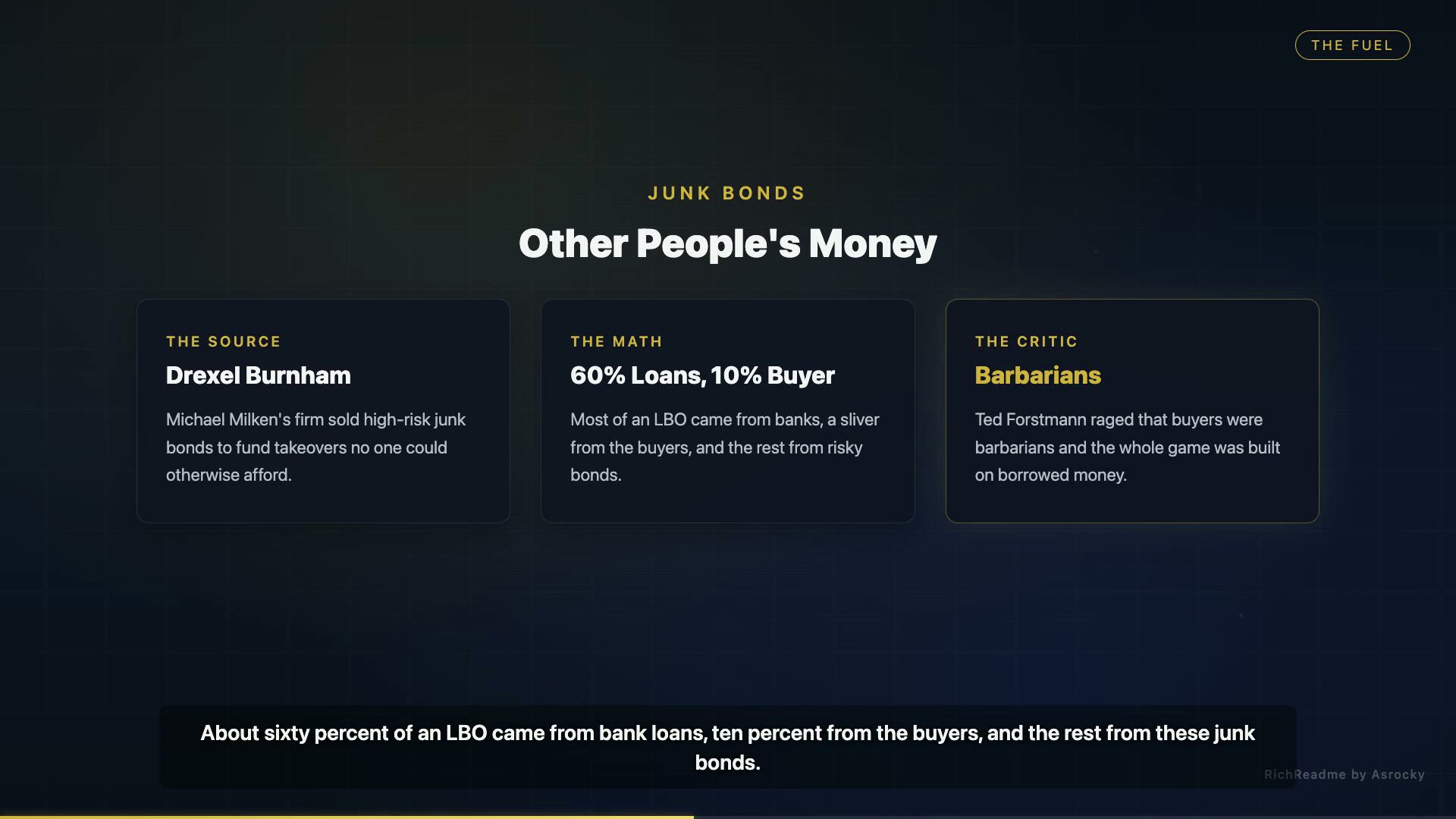
The money came from a strange new market. In the nineteen eighties, a firm called Drexel Burnham, led by Michael Milken, sold high-risk junk bonds to fund takeovers nobody could afford. About sixty percent of an LBO came from bank loans, ten percent from the buyers, and the rest from these junk bonds.
Ted Forstmann, another buyout baron, hated the system. He called the buyers barbarians and said the whole game was built on other people's money.
Prices Exploded
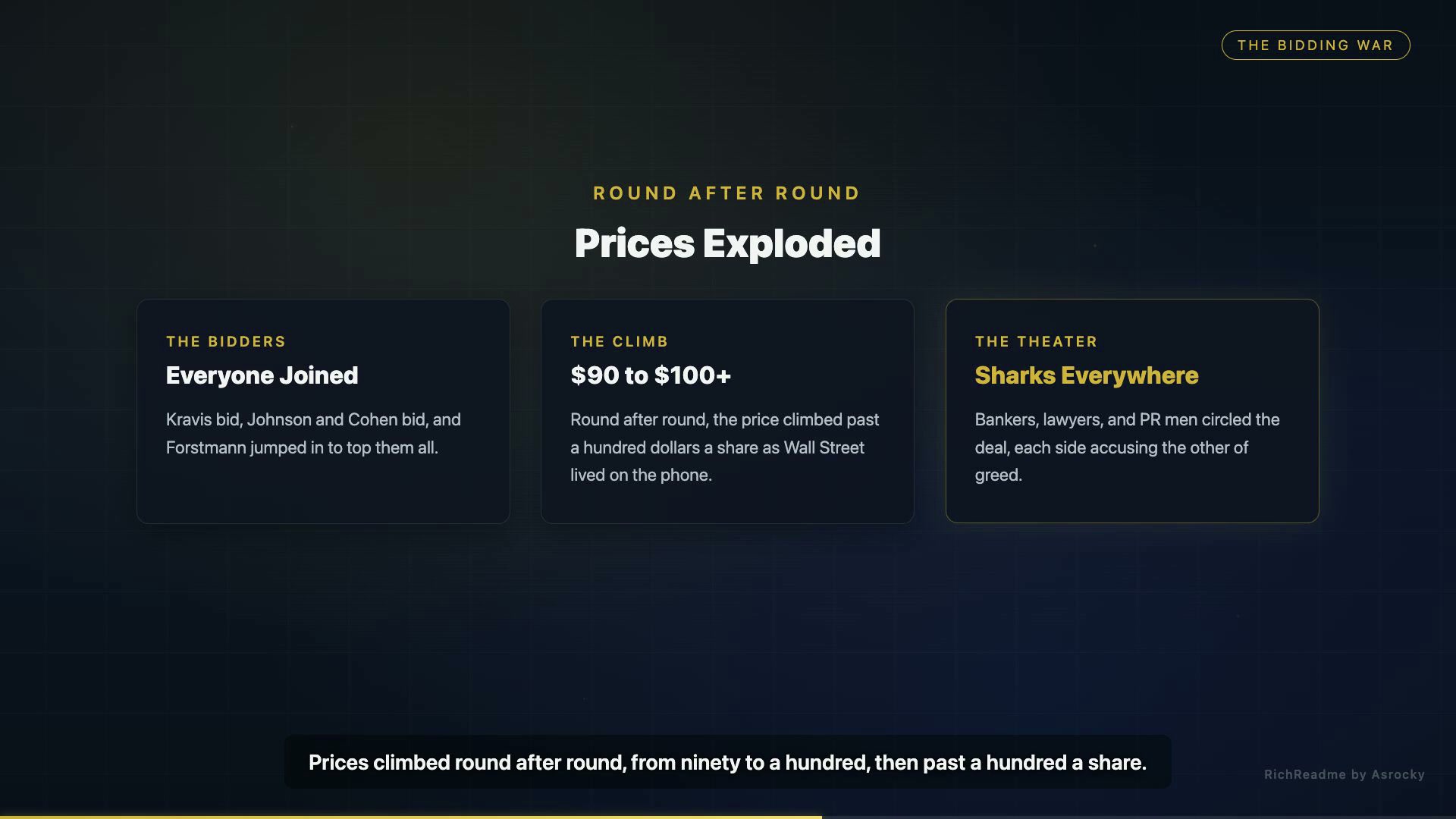
What followed was an auction out of control. Kravis bid. Johnson and Cohen bid. Forstmann jumped in.
Prices climbed round after round, from ninety to a hundred, then past a hundred a share. Wall Street lived on the phone for weeks. Bankers, lawyers, and public relations men circled the deal like sharks. Each side accused the other of greed while chasing the exact same prize.
Helping Themselves
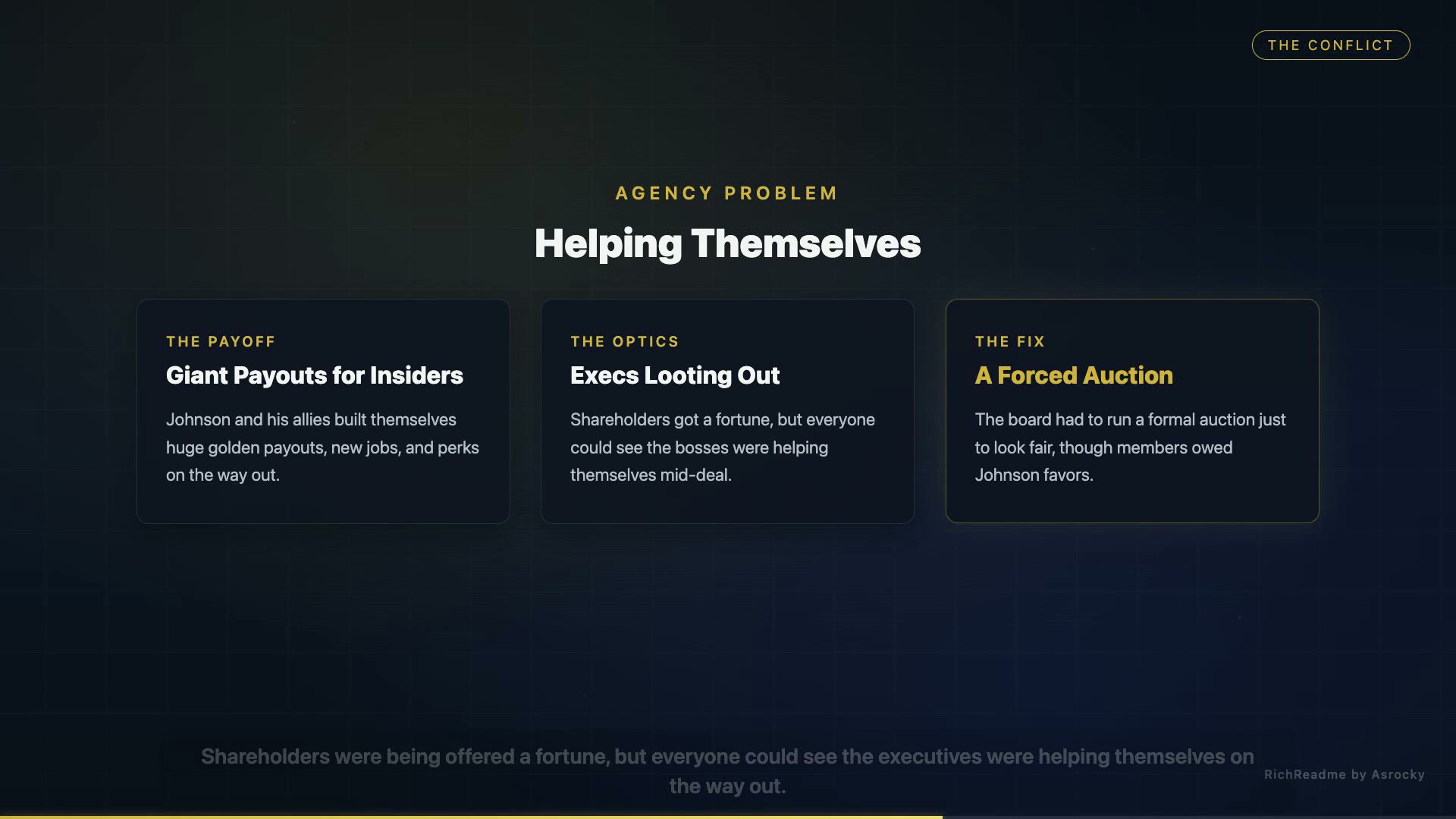
The ugly truth was how much the bosses wanted for themselves. Johnson and his allies built themselves giant payouts, new jobs, and perks that made the company jets look modest. Shareholders were being offered a fortune, but everyone could see the executives were helping themselves on the way out. The board was forced to run a formal auction to look fair, even though its members owed Johnson plenty of favors.
$109 a Share
The final vote came down to a number. On a cold November day, the board met at the law offices of Skadden Arps. Kravis offered a hundred and nine dollars a share.
Johnson's group offered a little more in cash, but with complicated promises and a bigger payday for the insiders. The directors chose Kravis. The price was about twenty-five billion dollars, the largest buyout in history up to that point.
Who Got Rich?
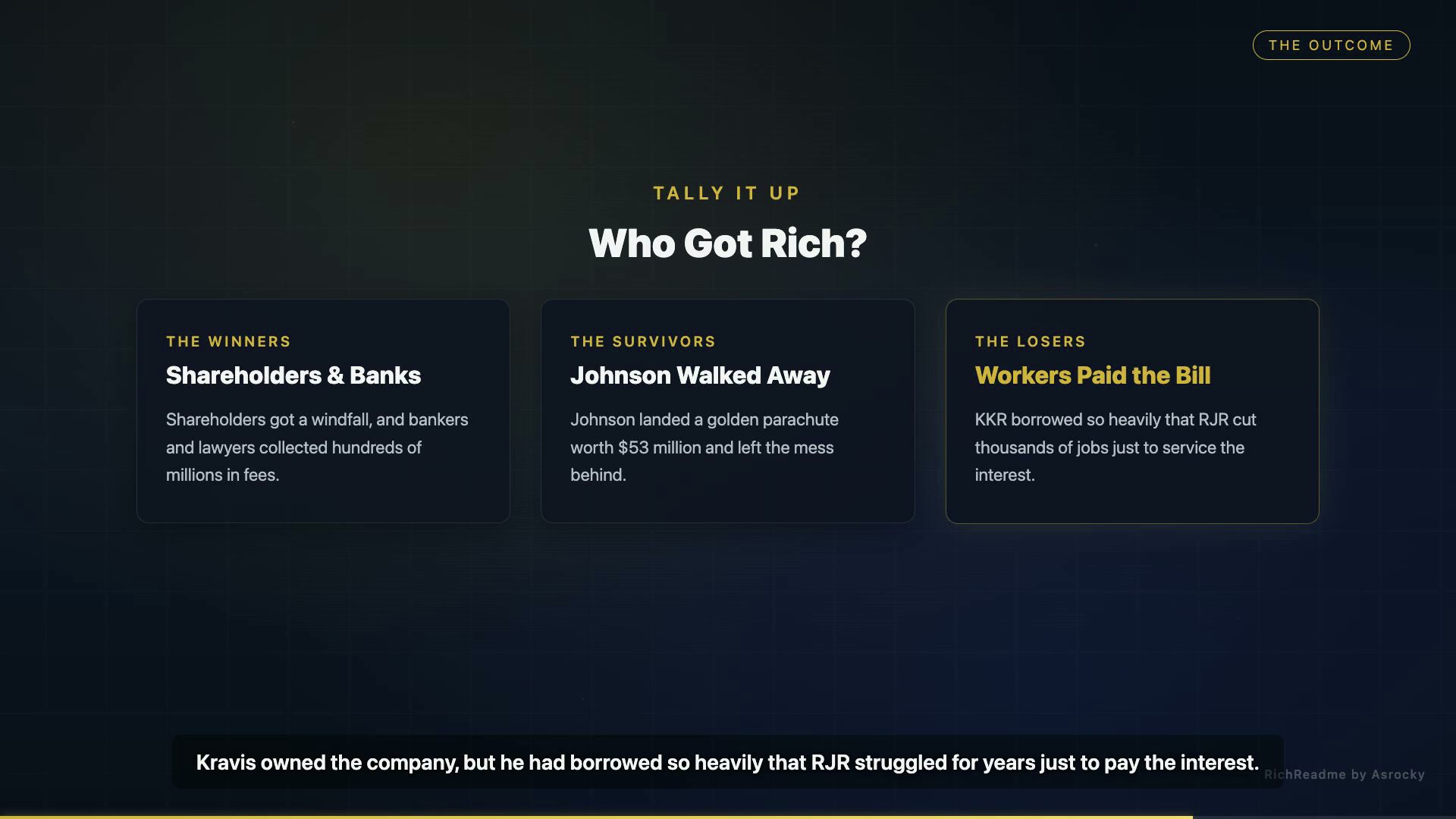
So who actually won. The shareholders got a windfall. The bankers and lawyers collected hundreds of millions in fees. Kravis owned the company, but he had borrowed so heavily that RJR struggled for years just to pay the interest.
Johnson walked away with a golden parachute worth fifty-three million dollars. The company later cut thousands of jobs to service the debt. It was a great story for almost everyone except the people who actually worked there.
Incentives, Not Morals
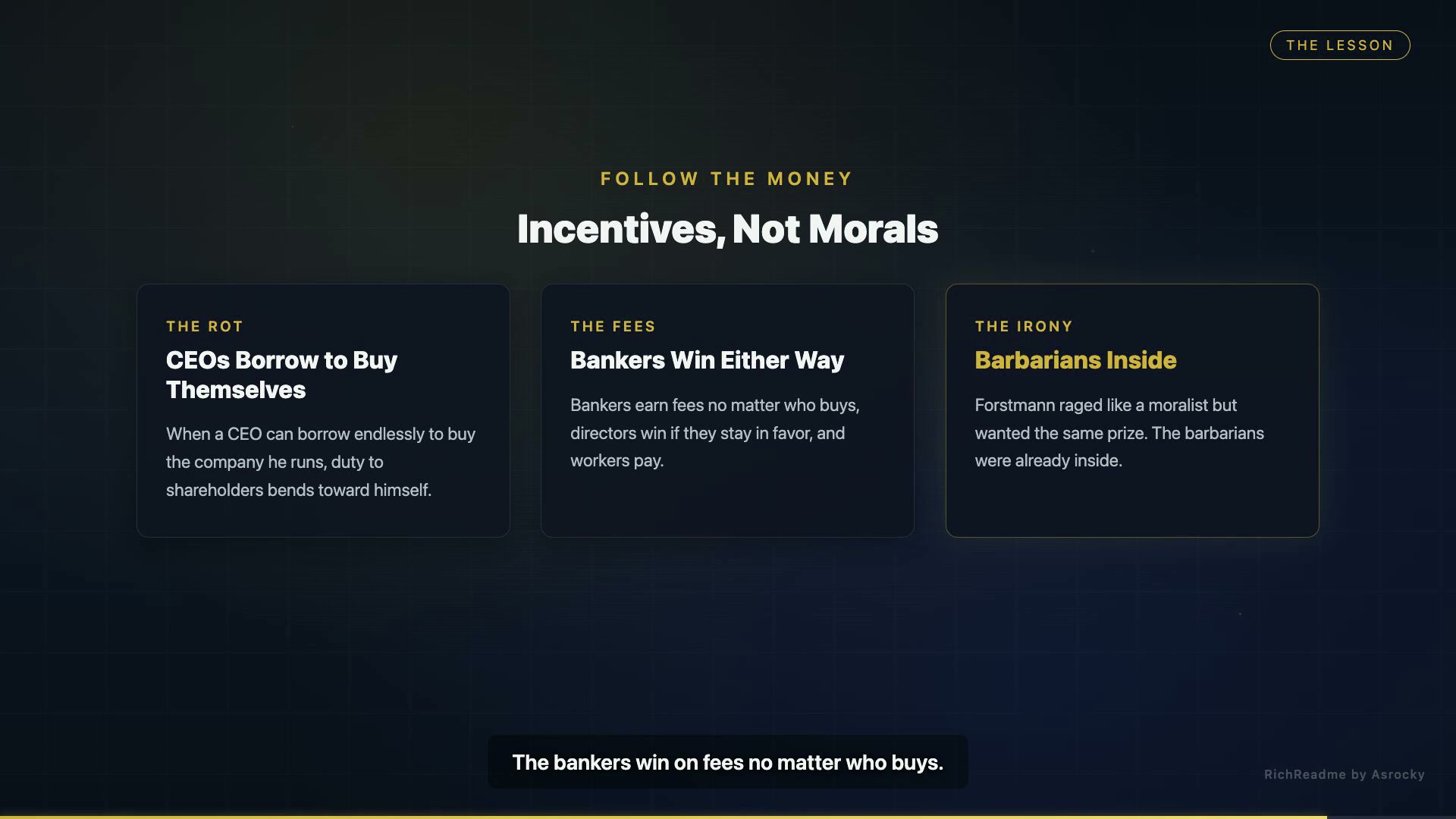
The book's real warning is about incentives. When a chief executive can borrow endless money to buy the company he runs, his duty to shareholders bends toward himself. The bankers win on fees no matter who buys. The directors win if they stay in good favor.
Only the small investor and the workers are left holding the bill. Forstmann raged like a moralist, but he wanted the same prize. The barbarians, it turned out, were already inside the gate.