Howard Marks
Uncertainty Ii
=== PAGE 29 ===
uncertainty over Whitewater. At the same time, Mexico's stock market had its own
correction, in reaction to the assassination of the leading presidential candidate. The
important lesson to be learned here is that wh enever market participants act as if nothing
can go wrong (or right), that represents an extreme swing of psychology -- of the
pendulum we wrote about in April 1991 -- that must be recognized for what it is and
acted on. As Roseanne Rozanadana used to say on Saturday Night Live, "it's always
something." UInvestment actions predicated on ev erything continuing to go well are
bound to fail U.
If the spark that set off the decline in bond prices was the rate increase, why did the
slump spread to so many other markets, including equities, foreign bonds, and commodities? Where were the benefits of strategic diversification? I would respond citing the following factors:
- First, interest rates affect the value of everything. I nvesting consists of putting
out money today in order to get more b ack at a later date. The "discounted
present value" of the projected future proceeds varies inversely with the
current level of interest rates. Simply put, when rates rise, the present value of
a future dollar declines.
- Another reason the impact of rates is broad stems from the fact that, as I was once told by sid Cottle (of Graham, Dodd and Cottle fame), "Investing is the discipline of relative selecti on." That is, the attractiv eness of x is in part a
function of the price of y. If bonds ch eapen and thus come to promise higher
prospective returns, stocks (or any ot her asset) will appear relatively less
attractive at their old prices and thus must cheapen as well in order for their
prospective returns to regain co mpetitiveness versus those of bonds.
- Further, it used to be, for example, that Americans determined the prices of U.S. stocks based on U.S. economic developments and Europeans determined the prices of European stocks based on European developments. These were local markets then, and they behaved di fferently. Today, investing is more
globalized, and the prices of assets in different countries are determined by
many of the same people, who may respond in common to fundamentals and psychology.
- The last reason many assets have moved t ogether is that in this particular
episode, many hedge funds managers (who, as we will discuss later, appear to have had a disproportionate impact on recent events) were forced by their increased capital to invest aggressively in macro-trends spanning national borders. This small group of hyper-active investors may have hooked markets up to an unusual degree.
For these reasons and others, asset prices ma y prove more highly interconnected than one
had expected.
1994 Oaktree Capital Management, L.P.
2
All Rights Reserved
=== PAGE 30 ===
* * *
The most noteworthy feature of the recent corr ection may be the role of some prominent
hedge fund managers. It was reported on Febr uary 25 that George Soros's Quantum Fund
had lost $600 million on its yen position in one day. On April 1, we read that Michael Steinhardt had lost $1 billion of his $5 billi on under management, due largely to the drop
in bond prices, and that in the last two mont hs, investors in Askin Capital Management's
Granite Funds may have lost 100% of their $600 million capital in mortgage backed securities. Hedge funds occupied a meaningful part of our February 17 memo because they were felt
to exemplify (to a power of ten) the risk-tolerant behavior of investors in general. Thus
their subsequent experience can offer us some valuable and highly magnified insights.
The important observations, applicable to all investment behavior, are as follows:
- Words alone mean very little . Just as "portfolio insu rance" turned out in the
1987 Crash not to insure much, today's startling losses i ndicate that many
"hedge funds" don't really hedge enough to make a difference, and that the Granite Fund, which described itself as "market neutral," was anything but.
- Following from the above, we are reinforced in the belief that some investors
don't know what their managers are doing, or how much risk they're taking.
As one "fund of funds" which had invested in the Granite Fund told the Wall
Street Journal, "It's unbelievable. This was touted as a low-risk, low-
volatility, market-neutral investment . We were clearly misled." Only by
really knowing what a manager does ca n you be sure he is right for you ,
but this often comes down to whether the manager truly understands his market, describes it accurately and does what he says he wi ll -- things that
can't be assessed from a marketing brochure.
- Investment strategy really is a two-edged sword , and he who lives by an
aggressive strategy usually can die by it. It proved possible for investors to
become too comfortable with volatility -- when it was on the upside and called "profit." Volatility is a lot less enjo yable when it turns to the downside, but
it's the flip side of the same coin.
- The outcome can actually be worse than symmetrical when incentive fees are involved, as Jan Greer of William Simon & Sons points out. That's because
while hedge fund managers took 20% of last year's big profits, they won't
replace a like percentage of subse quent losses. Usually, due to the
peculiarities of the math, if a portfol io is up 50% one year and down 33% the
next, it's back to where it started. But if the manager takes a fifth of the 50% gain in year 1, a 33% decline in year 2 will leave it 7% under water.
1994 Oaktree Capital Management, L.P.
3
All Rights Reserved
=== PAGE 31 ===
- As an experienced corporate director told Forbes a few years ago, "I no longer
expect people to do what I tell them to do; I've learned they only do what I
pay them to do." But while a hedge fund manager may have his reputation and some capital at stake, as to fees he is in a heads-we-win-tails-you-lose position. For a manager who is paid a pe rcentage of the profits on a one-year-
at-a-time basis, a single year of inves ting aggressively enoug h at the right time
can make him rich for life. Thus managers should be entrusted with
incentive fee arrangements only if th ey can truly be counted on to add
significant value which is
Unot U accompanied by proportionate risk .
- Volatility + leverage = dynamite . Only now do we see articles pointing out
(after the fact) that if a hedge fund borrows short to buy long Treasury bonds
with 6% "down," a 1% rise in the bonds' yield will wipe out 100% of the
equity in the position.
- When volatile securities have been bought on margin, sale may be forced
if the investor can't come up with more capital during a decline . This is a
big part of what put the Granite Fund under. If you own securities without
borrowing, you may experience a price drop -- which will hopefully prove
temporary -- but you can't be put out of the game.
- One characteristic of many inefficient ma rkets is some measure of illiquidity.
Thus when sales are forced in a chao tic market -- whether by margin calls,
client withdrawals or cold feet -- they can have the effect of contributing to or
exacerbating the decline. Often in this environment, the manager's choices for liquidation will be limited to his highest quality and most marketable holdings. In this way, forced sales can easily contribute to a deterioration of portfolio quality . When the Granite Fund received margin calls, its
manager could only get reasonable bids for securities which perform well
when rates rise. Selling th em cost the fund its hedge.
The prominent hedge funds that attracted the recent atte ntion -- favorable in 1993 and
less so this year -- are multi-billion-dollar entities which, because of their size, often
invest not in the undervalued mi cro-situations on which their early records were built, but
in macro-phenomena all around the world. Thus they provide an important object lesson
to which we want to point. These funds are run by managers who pursue a ggressive returns thr ough the use of highly
leveraged and thus volatile posi tions in large markets, some of which, such as Treasury
bonds, are relatively efficient. In this sense, they represent the opposite of what we
espouse .
Our approach emphasizes the low-risk ex ploitation of inefficient markets , as
opposed to aggressive investment in efficien t ones. We restrict ourselves to markets
where it is possible to know mo re than other investors. We put avoiding losses ahead of
the pursuit of profits. And we do not seek to employ leverage.
1994 Oaktree Capital Management, L.P.
4
All Rights Reserved
=== PAGE 32 ===
Inefficient markets must by defi nition entail illiquidity and oc casional volatility, but we
feel unleveraged and expert i nvestment in them offers investors with staying power the
best route to high returns without commensurately high risk. And we also feel investors who are capabl e of observing clini cally can learn some
valuable lessons from the current episode. We look forward to learning along with you. April 11, 1994
1994 Oaktree Capital Management, L.P.
5
All Rights Reserved
=== PAGE 33 ===
To: Clients
From: Howard Marks
Date: July 15, 1994
Subject: "How Does an Ineffi cient Market Get That W
ay?"
In an efficie
nt market , the actions of intelligent, in formed, diligent and objective
investors cause assets to be priced fairly based on the available information such that
their prospective returns are in proportion to th eir risk. No bargains are available, and the
only way to increase expected re turn is to take on more risk.
But in an inefficient marke
t, this process breaks down. The prerequisites for efficiency
are not fully satisfied, and thus prices are ab le to diverge from what they "should" be.
Some assets become overpriced and others underpriced. Profits can be earned by
applying skill, not just for bearing risk. It becomes possi ble to consistently achieve
superior risk-adjusted returns.
But how does a market get that way?
There are many possible reasons. Maybe most
investors ignore the market niche because it is little known. Perhaps information is
skimpy or unevenly disseminated. Market infrastructure may be under-developed, so
trading difficulties scare investors away. Maybe there's no trade reporting, so Seller A doesn't know what B got just a few minutes earlier and settles for less. The list of
possible reasons goes on and on, but we have our own favorite: Investors fail to act
objectively and dispassionately.
An efficient market m
ust be unbiased. That is , the participants must be motivated just by
economics and willing to either buy or sell depending on price. If every owner wants to (or must) sell a given good and won't beco me a buyer no matter how low the price goes,
the price of that good can fall below the "fair" level and it will be come possible to find
bargains. Conversely, prices can go too high when everyone wants to own something . . .
whether it's tulip bulbs, South S ea pearls or nifty-fifty stocks.
And that brings us to the high yield b ond market which rem
ains, in our opinion,
decidedly inefficient. High yield bonds contin ue to offer 350-400 basis points more yield
than "riskless" Treasury bonds to compensate for the risk of losing 50-150 basis points
per year to credit problems. And high yield bonds have the best performance record of
any major sector of the fixed income unive rse for virtually ever y period through today.
One would certainly expect these fact s to attract buyers and raise prices.
In 1984, I was sure this market would becom
e efficient in five years. But it hasn't done
so ten years later, despite the high historic and prospective returns. Why haven't enough
buyers stepped forward to eliminate the ex cessive risk premium, render these bonds
fairly priced and correct the inefficiency?
1994 Oaktree Capital Management, L.P.
All Rights Reserved
=== PAGE 34 ===
The answer, we feel, is simple: investors continue to be unfairly prejudiced against
them . Not every investor, clearly, but enough big players to create a buyers' market and
tilt the opportunity in favor of thos e who are willing to participate.
Prove it, you say? Well, this memo was occasioned by an article in "Pensions & Investments" reporting consultant SEI's r ecommendation that pension plan sponsors
invest 10% to 30% of their fixed income portfolios in high yield bonds. As I went
through the article, my reaction was that it was a great selling piece for our market sector -- not just SEI's recommendation, but what the article demonstrated about investor
attitudes. According to the article, SEI feels "a sponsor could add about 20 basis points of return without adding risk by putting 10% of its fixe d income portfolio in high yield, or junk,
bonds." And that's after SEI "tried to be as conservative as possible in its assumptions."
I'm sold! But the article goes on to show how a market can be biased against an asset
class:
. . . High yield is perceived as a wa y to add diversification, but is not well-
received by clients. "Not a lot of our clients are opting to use them . . . .
We work with some clients who ju st plain don't want them in their
portfolio." (Callan)
Because of the negative publicity surrounding high yield bonds around the turn of the decade, plan sponsors either are wary of investing in them, or are afraid of
being associated with them. (Pensions & Investments)
Some plan sponsors may be limited by plan guidelines to investment-grade securities, . . . Other sponsors may be wary of junk bonds because of the market's
well-publicized collapse in 1989 and 1990, and the securities' association with Michael Milken and the now-defunct bond house Drexel Burnham Lambert.
(SEI)
If we're going to worry about a collapse, I hope it'll be one looming ahead, not one which occurred five years ago. The asset class that collapsed in the past is likely to be cheap,
not to be riding a crest of popularity and thus heading for a fall. But too many investors drive looking in the r ear-view mirror. As someone at my former
place of employment once told clients, "We're buying the oils; they've been good to us."
We'd rather buy what has perfor med badly or is the subject of negative bias and thus is
cheap. We feel strongly that high yield bonds qualify today, and we'd be glad to talk
more about them, or about the opportunities in other areas.
1994 Oaktree Capital Management, L.P.
2
All Rights Reserved
=== PAGE 35 ===
Recommended Reading
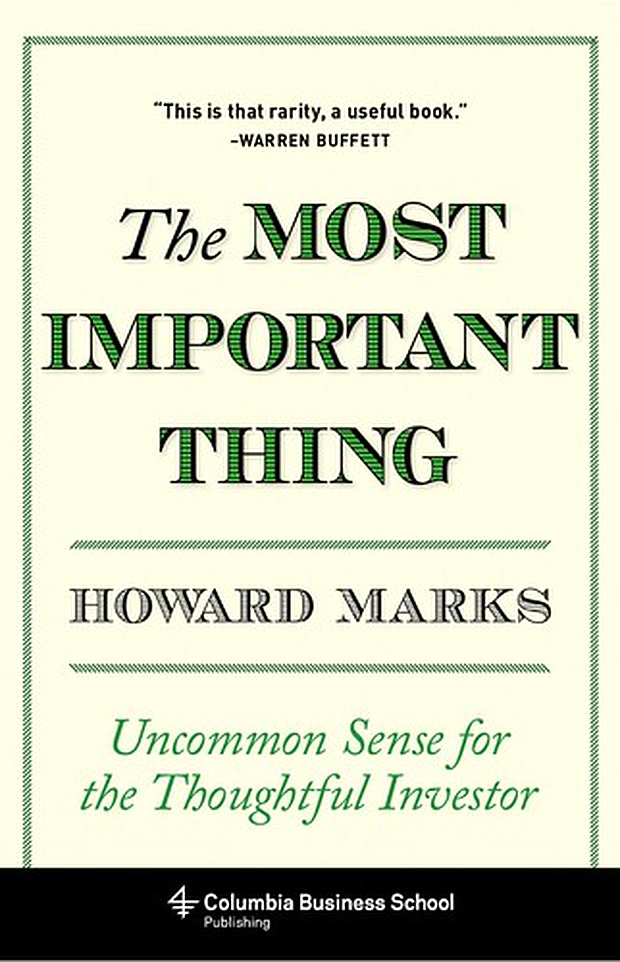
The Most Important Thing
Get on Amazon →
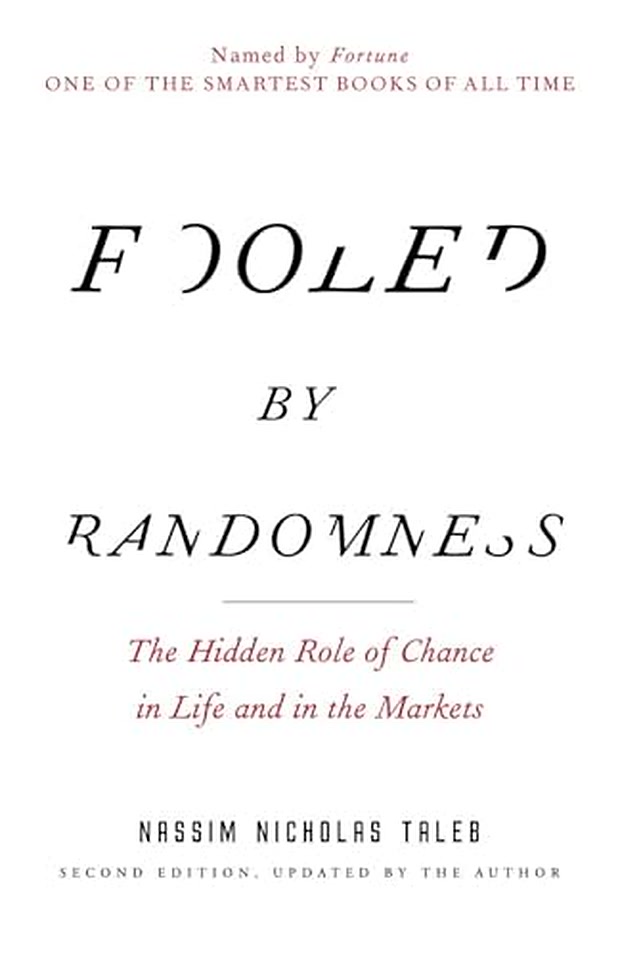
Fooled by Randomness
Get on Amazon →
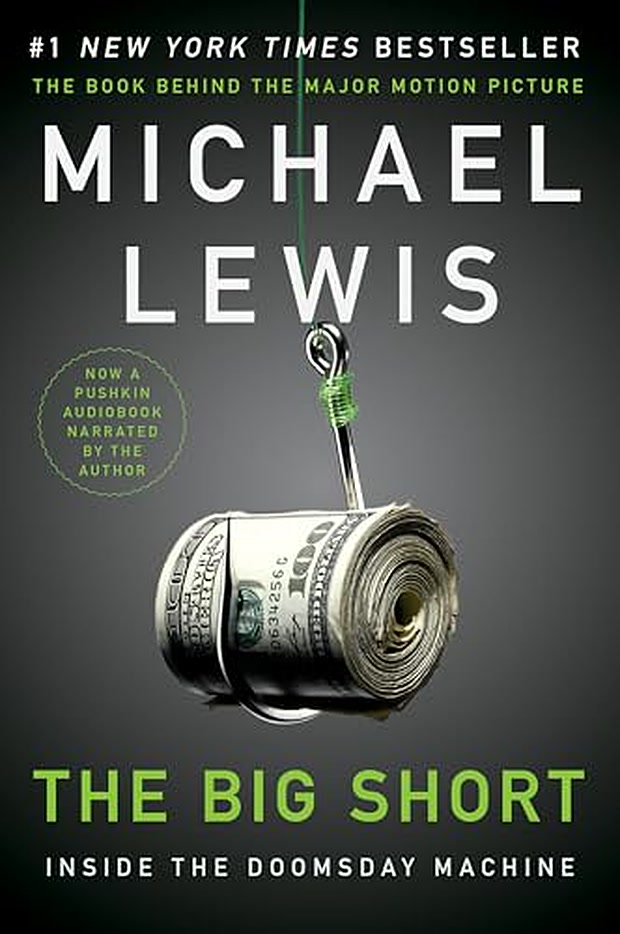
The Big Short
Get on Amazon →
As an Amazon Associate I earn from qualifying purchases.