Howard Marks
2010 12 01 Open And Shut
Memo to: Oaktree Clients
From: Howard Marks Re: Open and Shut
Mark Twain is described as having said, “History doesn’t repeat itself, but it does rhyme.”
Thanks to the tendency of investors to forget lessons and repeat behavior, it sometimes
seems there’s no longer a need for me to come up with new ideas for these memos.
Rather, all I have to do is recycle compone nts from previous memos, like a builder
reusing elements from old houses. I’m willing to try an experiment along those lines for this memo. Here are my building blocks: From “First Quarter Performance,” April 11, 1991:
The mood swings of the securities ma rkets resemble the movement of a
pendulum. Although the midpoint of its arc best describes the location of
the pendulum “on average,” it actually spe nds very little of its time there.
. . . This oscillation is one of th e most dependable features of the
investment world, and investor psychology seems to spend much more time at the extremes than it does at the “happy medium.”
From “The Happy Medium,” July 21, 2004:
The capital market oscillates betwee n wide open and slammed shut. It
creates the potential for eventual bargain investments when it provides
capital to companies that shouldn’t get it, and it turns that potential into
reality when it pulls the rug out fr om under those companies by refusing
them further financing. It always has, and it always will.
From “You Can’t Predict. You Can Prepare.” November 20, 2001:
Overpermissive providers of capital frequently aid and abet financial
bubbles. . . . In Field of Dreams , Kevin Costner was told, “if you build it,
they will come.” In the financial world, if you offer cheap money, they will borrow, buy and build – often without discipline, and with very negative consequences.
From “Genius Isn’t Enough,” October 9, 1998:
Look around the next time there’s a cr isis; you’ll probably find a lender.
The above citations provide th e themes for this memo. I’ll just update them, put them
into the current context and discuss the rami fications for investing today. We’ll see how
© Oaktree Capital Management, L.P.
All Rights Reserved
2it goes. If it works well this time, readers may conclude that in the future they can
fashion their own memos from bits and pieces of my old ones.
The Credit Cycle at Work
Consider this: the ups and dow ns of economies are usually blamed for fluctuations in
corporate profits, and fluctuati ons in profits for the rise a nd fall of securities markets.
However, in recessions and recoveries, ec onomic growth usually deviates from its
trendline rate by only a few percentage points. Why, then, do corporate profits increase
and decrease so much more? The answer lies in things like financial leverage and
operating leverage, which magnify the impact on profits of rising and falling revenues.
And if profits fluctuate this way – more than GDP, but still relatively moderately – why
is it that securities markets soar and collapse so dramatically? I attribute this to
fluctuations in psychology and, in particul ar, to the profound influence of psychology on
the availability of capital. In short, whereas economies fluctuate a little and profits a fair bit, the credit window
opens wide and then slams shut . . . thus the title of this memo. I believe the credit cycle
is the most volatile of the cycles and has th e greatest impact. Thus it deserves a great
deal of attention. In “The Happy Medium,” I discussed the work ings of the credit cycle in creating market
extremes:
Looking for the cause of a market extreme usually requires rewinding the videotape of the credit cycle a few m onths or years. Most raging bull
markets are abetted by an upsurge in the willingness to provide capital,
usually imprudently. Likewise, mo st collapses are preceded by a
wholesale refusal to fina nce certain companies, industries, or the entire
gamut of would-be borrowers.
Then, in “You Can’t Predict. You Can Prep are.” I described this expand-and-contract
process in detail, along with its ramifications:
The economy moves into a period of prosperity.
Providers of capital thrive, increasing their capital base.
Because bad news is scarce, the risk s entailed in lending and investing
seem to have shrunk.
Risk averseness disappears.
Financial institutions move to expand their businesses – that is, to
provide more capital.
They compete for share by loweri ng demanded returns (e.g., cutting
interest rates), lowering credit stan dards, providing more capital for a
given transaction, a nd easing covenants.
© Oaktree Capital Management, L.P.
All Rights Reserved
When this point is reached, the up- leg described above is reversed.
Losses cause lenders to become discouraged and shy away.
Risk averseness rises, and with it, interest rates, credit restrictions and
covenant requirements.
Less capital is made available – and at the trough of the cycle, only to
the most qualified of borrowers, if anyone.
Companies become starved for capital. Borrowers are unable to roll
over their debts, leading to defaults and bankruptcies.
This process contributes to and re inforces the economic contraction.
Of course, at the extreme the proces s is ready to be reversed again.
Because the competition to make loans or investments is low, high returns can be demanded along with high cred itworthiness. Contrarians who
commit capital at this point have a shot at high returns, and those tempting
potential returns begin to draw in capita l. In this way, a recovery begins to
be fueled. . . .
Prosperity brings expanded lendin g, which leads to unwise lending,
which produces large losses, which makes lenders stop lending, which
ends prosperity, and on and on.
The bottom line is that the willingness of potential providers of capital to make it
available on any given day fl uctuates violently, with a profound impact on the economy
and the markets. There’s no doubt that the recent credit crisis was as bad as it was
because the credit markets froze up and ca pital became unavailable other than from
governments. Impact of the Credit Cycle
The section above describes how the capital cycle functions. My goal below is to describe its effect.
From time to time, providers of capital simply turn the spigot on or off – as in so many things, to excess. Th ere are times when anyone can get any
amount of capital for any purpose, and times when even the most
deserving borrowers can’t access reasonable amounts for worthwhile
projects. The behavior of the capital markets is a great indicator of where
we stand in terms of psychology and a great contributor to the supply of
investment bargains. ( “The Happy Medium”)
© Oaktree Capital Management, L.P.
All Rights Reserved
4An uptight capital market usually stems from , leads to or connotes things like these:
Fear of losing money.
Heightened risk aversion and skepticism.
Unwillingness to lend and invest regardless of merit.
Shortages of capital everywhere.
Economic contraction and di fficulty refinancing debt.
Defaults, bankruptcies and restructurings.
Low asset prices, high potent ial returns, low risk and excessive risk premiums.
On the other hand, a generous capital market is usually associated with the following:
Fear of missing out on pr ofitable opportunities.
Reduced risk aversion and skepticism (and, accordingly, reduced due diligence).
Too much money chasing too few deals.
Willingness to buy securities in increased quantity.
Willingness to buy securities of reduced quality.
High asset prices, low prospective return s, high risk and skimpy risk premiums.
The point about the quality of new issue securi ties in a wide-open capital market deserves
particular attention. A decrease in risk av ersion and skepticism – and increased focus on
making sure opportunities aren’t missed rather than on avoiding losses – makes investors
open to a greater quantity of issuance. The same factors make investors willing to buy
issues of lower quality. When the credit cycle is in its expansion pha se, the statistics on new issuance make clear
that investors are buying new issues in greater amounts. But the acceptance of securities of lower quality is a bit more subtle. While there are credit ratings and covenants to look
at, it can take effort and inference to understand the signi ficance of these things. In
feeding frenzies caused by excess availabil ity of funds, recognizing and resisting this
trend seems to be beyond the majority of market participants . This is one of the many
reasons why the aftermath of an overly ge nerous capital market includes losses,
economic contraction and a subs equent unwillingness to lend.
The bottom line of all of the above is th at generous credit markets usually are
associated with elevated asset prices and subsequent losses, while credit crunches
produce bargain-basement prices and great profit opportunities.
The Events of the Past Decade
The last several years have provided a typical example of the credit cycle at work –
typical in its pattern, th at is, but unique in it s extent and impact.
The highs in risk tolerance, credulity, financial innovation and leverage seen
between 2004 and early 2007 gave rise to a credit crunch in late 2007 and 2008 – the
© Oaktree Capital Management, L.P.
All Rights Reserved
5greatest of our lifetimes – a nd to vast capital destruction . Structured and levered
investment vehicles melted down, bringing unprecedented losses to those who had
provided their capital, and forcing the sale of holdings regardless of price. Financial
institutions flirted with potential insolven cy, requiring their capital to be rebuilt via
government programs. Money market funds and commercial paper had to be buoyed as
well. Lehman Brothers went under. General Motors and Chrysler went bankrupt and
required bailouts, and companies such as Fannie Mae, Freddie Mac, Merrill Lynch and
Bear Stearns had to be supported or absorbed. All of this stemmed in large part from the
too-easy availability of capital and from market participants ’ irresponsible behavior in the
middle of the decade. The result was a massive flight to quality and widespread refusal to take risk.
In 2009, miraculously in my opinion, the responses of governments caused investor
psychology to turn positive, and the pursuit of return caused risk tolerance to be
restored. Risk capital became available again, en abling financial institutions to raise
equity capital and highly indebted compan ies to access the capital markets, extending
maturities and capturing the discounts on their de bt. As a result – thanks to the rise in
risk appetites – many markets show ed their greatest gains ever.
This year, even though economic and geopolitical fundamentals are still shaky and new things to worry about arise from time to tim e, the credit markets are generally wide open
for companies deemed to have critical mass. In “Warning Flags” in May, I observed that
certain types of deals could be completed that exemplified behavior in the most heated
pre-crisis days but had become impossible in late 2007 and 2008. These included issuance of CCC-rated, covenant-lite and payment-in-kind bonds; dividend recap
transactions; and the organization of structured entities for investing in debt.
Recently there have been additions to that list:
The issuance of 100-year bonds.
The issuance of 50-year bonds callable in fi ve years (if interest rates go up, the buyer
will be stuck with a low-rate bond, but if interest rates go down, the issuer can
quickly replace the bond with one bearing a lower rate).
The issuance of inflation-adjusted Treasury Inflation-Protected Securities (TIPS) that
will return minus 0.55% plus the rate of in flation (if there’s no inflation, the return
will be negative, and if the rate of inflation is positive, the yield on the TIPS will be
below that rate).
The issuance of bonds through so-called “dri ve-by deals.” When a deal is announced
in the afternoon and priced the next morning, investors have little time to study its
creditworthiness and covenants.
Each of these things is indicative of the following on the part of investors:
rising confidence and declining risk aversion,
emphasis on potential return rather than risk, and
willingness to buy securities of declining quality.
© Oaktree Capital Management, L.P.
All Rights Reserved
6Why These Developments?
As with any economic event, there are numerous explanations for th ese things. But the
one I want to concentrate on is government stimulus. In the depths of the credit crisis, governmen ts around the world took steps to deal with
the liquidity contraction, economic slowdow n and banks’ depleted capital accounts.
These included reductions of interest rates to record lows. The motivations and effects are many and varied.
First, everyone knows it’s the primary goal of rate cu ts to stimulate economic
activity by making it cheaper and thus more a ttractive for businesses to borrow money
with which to invest in fact ories, capital good and inventorie s. Retail credit should be
cheaper, too, encouraging consumers to borrow and buy.
Second, providing low cost borrowings is a way to rebuild the health of financial
institutions . If a bank can borrow $100 million from the central bank at 1% and lend it
out at 6%, it’s as though the government gave it $5 million per year (assuming the loans
turn out to be money-good). Thus, in a ddition to enhancing banks’ profitability and
equity, in principle this shoul d lead to increased lending.
To date, the results in these areas have been mixed. Economic activity is still muted and lending is slow. But another by-produc t has become particularly pronounced:
encouragement to take risk. So third, Treasury bill rates near zero – and note yields of 1 or 2 percent (depending
on which country we’re talking about) – have the effect of driving investors toward
riskier investments . Especially when fear and risk aversion recede, returns like these on
Treasurys become unacceptable. Thus some money that otherwise would have been invested in the safe part of the fixed income ma rket is forced to more aggressive places.
Whatever fundamental doubt – and resulting reti cence – might exist is in part offset by
the unacceptably low returns on the safest of investments. Thus, for example, people
who wouldn’t buy high yield bonds in the past at their traditional 12% yields, or at 20%
in 2008, will buy them today at 7% primarily because they can’t stomach Treasurys at 2%. In the same way, alternative investment categories that fared poorly in the crisis can
attract equity capital again (alb eit in smaller amounts and to be paired with less leverage).
The fourth impact is that interest rate declines cause asset appreciation. This
restores wealth – household and otherwise – and with it th e bullish feelings that give rise
to increased willingness to spend money and bear risk.
Fifth, quantitative easing (QE) puts cash in investors’ hands in exchange for the
securities the Fed buys. This, too, should add to investors’ appeti te for investing.
© Oaktree Capital Management, L.P.
All Rights Reserved
7However, a program such as QE that increases liquidity has additional
consequences . For example, other countries are co mplaining that (a) excess capital from
the low-rate U.S. will flood their markets, in flating asset and commodity prices, and (b)
increasing the supply of money in the U.S. w ill weaken the dollar, unfairly strengthening
the appeal of U.S. exports and reducing U.S. demand for imports.
The Ramifications
In 2003, my memo “What’s Going On?” include d a tortured metaphor called “The Cat,
the Tree, the Carrot and the Stick.” In low -return environments, I said, investors are
forced to move further out on the risk curv e because of the paltry returns available on
safe investments, and lured to riskier invest ments by the higher return s promised there.
Conscious risk bearing can be done responsibly and perhaps even profitably. But low-
return environments often lead investors to unconsciously reach for return, with results that are painful. One of our grea test imperatives is to be alert to the
emergence of such behavior.
A final reference to past memos: you might wa nt to look back to 2004’s “Risk and Return
Today.” It describes an investment envir onment in which rates on short-term Treasurys,
reduced by the Fed, had brought down returns in th e safe part of the capital market. As a
result, I said, the capital market line was “low and flat,” with inflated asset prices, low
returns, skimpy risk premiums and high risk. I went on to urge caution when investing in
such a low-return environment. It was earl y, but it turned out to have been in order.
There are differences today. Yield spread s on non-investment grade debt are above
average. Leverage is only available in more moderate amounts. With investors chastened by cash squeezes in 2008, the flow of capital to private strategies is limited.
Equity p/e ratios are below the historic averag e. And investors seem to be conscious of
the economic and geopolitical uncertainties.
But there are also direct similarities, primar ily in the fact that inadequate yields on
Treasurys are driving bond investors elsewhere to apply thei r rekindled risk-taking, and
thus absolute yields are low on a ll fixed income instruments.
On November 12, The New York Times reported on comments by Martin Feldstein,
former president of the National Bureau of Economic Research and chairman of the
Council of Economic Advisers under Ronald Reagan:
Anticipation of QE2, he wrote in the Financial Times , caused prices of
commodities and common stocks to rise. “Like all bubbles, these exaggerated increases can rapidly reverse when
interest rates return to normal levels,” he said. “The greatest danger will
then be to leveraged investors, including individuals who bought these
assets with borrowed money and banks that hold long-term securities.
© Oaktree Capital Management, L.P.
All Rights Reserved
8These risks should be clear after the r ecent crisis driven by the bursting of
asset price bubbles. Although the specific asset prices that are now
rising are different from last time, th e possibility of damaging declines
when bubbles burst is worryingly similar .” (Emphasis added)
In 2006-07, the most appreciated assets we re real estate, mortgages and buyout
companies. This year they’re Treasury securities around the world, gold, commodities,
currencies (versus the U.S. dollar), and real estate and stocks in emerging markets.
Buyout companies could return to the list due to the combination of cheap debt, equity
capital needing investing, and strong competition to put it to work.
The bottom line is that for whatever the reaso n, some asset prices have risen again,
risk bearing has returned, and the ri sky transactions of 2004-07 are once again
doable. Thus it strikes me that it’s time to dust off the ultimate piece of advice from
Warren Buffett:
The less prudence with which others conduct their affairs, the greater
prudence with which we must conduct our own affairs.
Investors who engaged in aggressive behavior just a few years ago experienced significant pain as a result . Perhaps the punishment was too brief, and perhaps it
was reversed too soon. Thus some are acti ng aggressively once again. It’s possible
that such behavior won’t be punished again the second time around, but prudent investors shouldn’t take the risk.
At the depths of the markets in the fourth quarter of 2008, after Lehman Brothers’
bankruptcy filing and other events had unnerved the world, great assets were on sale at
irrationally low prices. The result – as al ways in crashes – was that high prospective
returns were available with low attendant ri sk. Just two ingredients were required in
order to take advantage: capital and the nerve to invest it.
Today some assets are fairly priced and ot hers are high, but ther e are no bargains like
those of 2008. Capital and nerv e can’t hold the answers in such an environment.
We’re no longer in a high-return, low-risk market , especially in light of the inability to
know how today’s many macro uncer tainties will be resolved. Instead of capital and
nerve, then, the indispensable elements are now risk control, selectivity,
discernment, discipline and patience.
December 1, 2010
© Oaktree Capital Management, L.P.
All Rights Reserved
9Legal Information and Disclosures
This memorandum expresses the views of the author as of the date indicated and such views are
subject to change without notice. Oaktree has no duty or obligation to update the information
contained herein. Further, Oaktree makes no rep resentation, and it should not be assumed, that
past investment performance is an indication of future results. Moreover, wherever there is the
potential for profit there is also the possibility of loss.
This memorandum is being made available for educational purposes only and should not be used
for any other purpose. The information contai ned herein does not constitute and should not be
construed as an offering of advisory services or an offer to sell or solicitation to buy any
securities or related financial instruments in any jurisdiction. Certain information contained
herein concerning economic trends and performan ce is based on or derived from information
provided by independent third- party sources. Oaktree Capita l Management, L.P. (“Oaktree”)
believes that the sources from which such informa tion has been obtained are reliable; however, it
cannot guarantee the accuracy of such inform ation and has not independently verified the
accuracy or completeness of such information or the assumptions on which such information is
based.
This memorandum, including the information cont ained herein, may not be copied, reproduced,
republished, or posted in whole or in part, in any form without the prior written consent of
Oaktree.
© Oaktree Capital Management, L.P.
All Rights Reserved
Recommended Reading
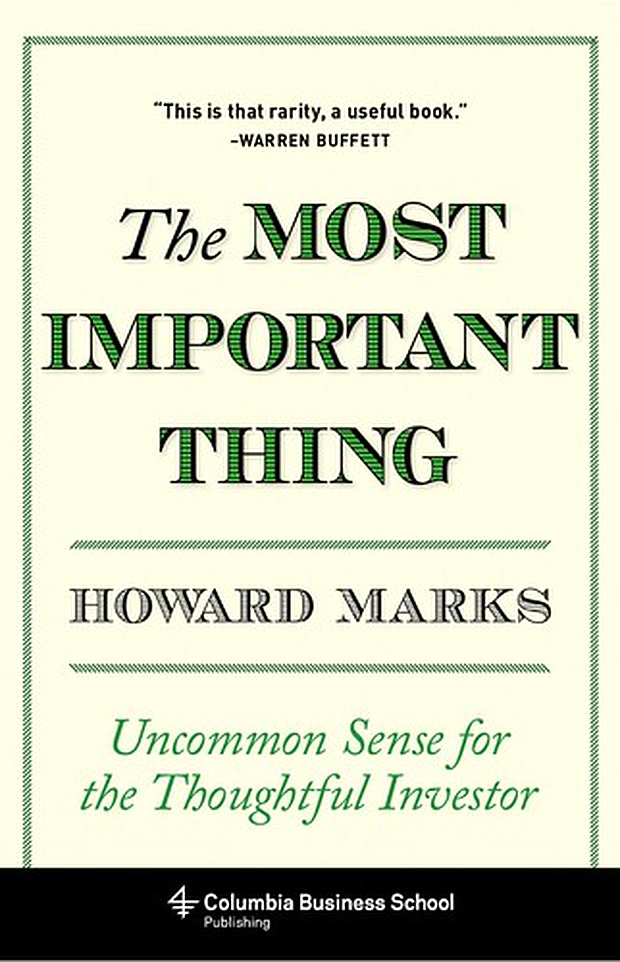
The Most Important Thing
Get on Amazon →
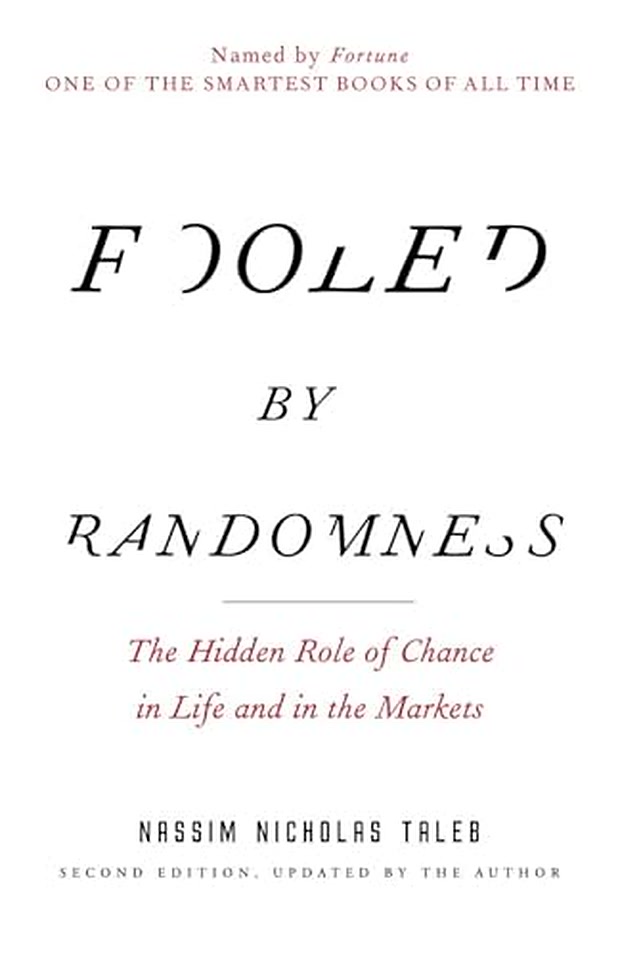
Fooled by Randomness
Get on Amazon →
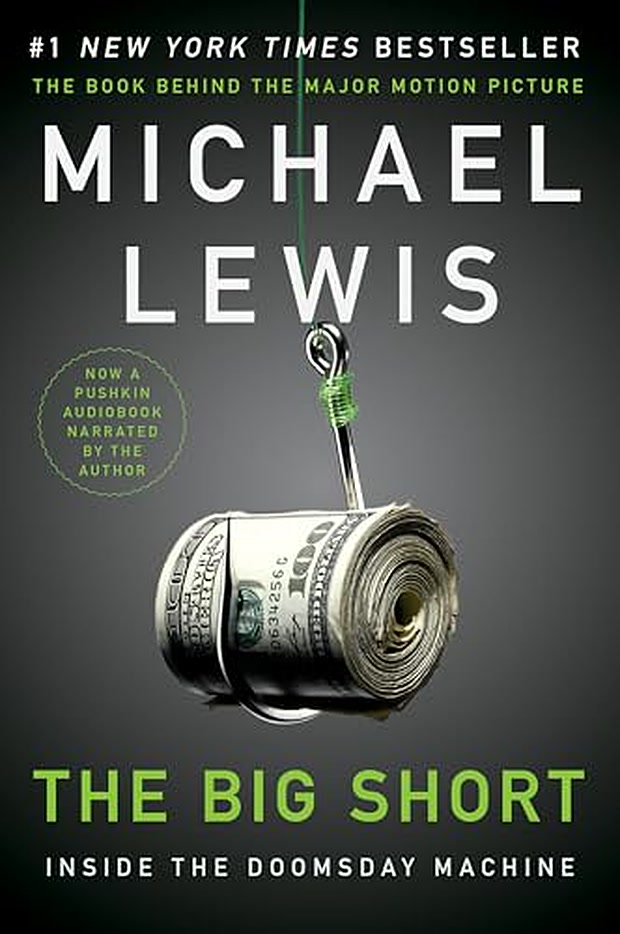
The Big Short
Get on Amazon →
As an Amazon Associate I earn from qualifying purchases.