Howard Marks
2010 09 10 Hemlines
Memo to: Oaktree Clients
From: Howard Marks
Re: Hemlines
While the details change, the pendulum-like fluctua tion of investment styles is a constant. Fear
versus greed, pursuit of safety versus aggressive ness, stocks versus bonds , and growth versus
value are just a few examples of the areas in wh ich we see this take place. In this way, the
investment world proves the wisdom of Mark Tw ain’s observation that, “History doesn’t repeat
itself, but it does rhyme.” The limits of the pendulum’s swing are fixed, and it tends to move back and forth over the
territory between them. This occurs because (a ) people tend to take trends to extremes, (b)
neither extreme of the pendulum’s arc represents a perfect or permanent solution, and (c) there’s no place else to go in these regards. Thus the best way to view investment trends may be
through an analogy to hemlines: all they can do is go up and down, and so they do . The
style mavens call for short skirts, and people fall into line, raising hemlines until they’re as high
as they can go. And then th ey drop (and so forth).
The reasons behind the rise and fall of investment fashions rarely repeat exactly, in that the
details, timing and effects vary from instance to instance. But the underlying process is a
recurring one. For example:
An idea is born when an undervalued asset is discovered.
Its undervaluation attracts attention, as do pioneering investors’ early gains.
Its popularity rises, attracting more and more adherents, even as undervaluation moves to
fully valued.
It turns into a mania or “bubble,” and price becomes immaterial.
Eventually, the last potential buyer becomes convinced and comes on board.
With no one else left to convert to the trend, the bubble of overvaluation is ripe for bursting.
When followers experience the first price declines, disillusionment sets in.
One-time devotees flee en masse, and the bubble turns into a crash.
This cycle of discovery, mania and crash is best summed up by the most useful of all investment adages: “What the wise man does in the beginning, the fool does in the end.” This memo will
be about recurring patterns, the history of stocks and bonds as I know it, and the adage’s applicability to that history.
A Brief History of Stocks
A significant milestone occurred in October 2008, attr acting a lot of attention. For the first time
in almost fifty years, it was reported, the divi dend yield on the Standard and Poor’s 500 stock
index was equal to the yield to maturity on the U.S. 10-year Treasury Note. People knew this
meant stocks had cheapened, but it took an understanding of history to grasp the real significance.
The truth is that stocks, like other investment media, tend to go in and out of style, and this
was just one more example of the latter.
© Oaktree Capital Management, L.P.
All Rights Reserved
Prior to the 1950s, common stocks were viewed as a speculative, inferior (i.e., junior) asset class. For that reason, stocks had to pay higher yields th an bonds in order to attract buyers; of course a
riskier asset should yield more. In fact, most st ates had laws restricting holdings of stocks in
fiduciary portfolios. This attitude toward stoc ks largely traced from the speculative stock bubble
in the 1920s – featuring high-margin buying, bucke t shops and shoe shine boys sharing stock tips
– which collapsed in the Crash of ’29. Poor economic and market performance stretching from
1929 to the end of World War II further contri buted to the skepticism toward stocks.
It was only after WW II that economic performance began to support optimism. Brokerage firms
led by Merrill, Lynch, Pierce, Fenner and Smith trum peted the merits of stocks. Equity investing
became widespread, and “customers’ men” in local brokerage offices delivered stock investing to
a great many households: I remember my mother buying 10 shares of Columbia Gas and 15
shares of Chock Full of Nuts around 1959.
I also remember a brochure on “growth stock i nvesting” that Merrill put out in the mid-1960s,
touting the desirability of rapid earnings growth and the strength of companies like IBM, Xerox, Avon, Coke, Texas Instruments and Johnson & John son. This idea grew into “nifty-fifty”
investing, a true mania adopted by many of the large banks, among others. Ballyhoo took over
from logic – excitement from value-consciousness – and these growth stocks’ prices reached 80 and 90 times earnings. The nifty-fifty stocks were tested – and found wanting – when the tide went out in the 1970s. Prosperity shifted to recession. The Arab oil embargo, a period of strong cost-push, and self-reinforcing cost-of-living adjust ments created hyperinflation to which few people saw a chance
for an end. Those growth stock p/e ratios went from 80 or 90 to 8 or 9. And stocks, Wall Street and the general economy went through a truly dreary decade, culminating in a BusinessWeek
cover story entitled “The Death of Equities,” in A ugust 1979. For evidence of the cyclicality of
attitudes toward stocks, consider its final paragraph:
Today, the old attitude of buying stocks as a cornerstone for one’s life savings and retirement has simply disappeared. Says a young U.S. executive: “Have you been to an American stockholders meeting lately? They’re all old fogies. The stock market is just not where the action is.”
In the investment world, lows in sentiment usuall y coincide with lows in price, and the late
Seventies were no exception. Because of the dr eadful environment, you could buy an existing
company in the stock market for less than it would cost to start one. I was fortunate to become a portfolio manager in mid-1978, and thus to bene fit from the subsequent recovery of investor
psychology from its nadir.
In general (albeit with some prominent exceptions ), the last half of the twentieth century was
marked by the rise of a cult of equities, and the last quarter century was probably the best ever.
From 1979 through 1990, the S&P 500 averaged an annual return of 15.4% and showed losses in
only two years (4.8% in 1981 and 3.1% in 1990). Economic prosperity, rising corporate profits, a
trend among consumers toward borrowing to spend, and the subsidence of inflation and interest
rates all made for a most hospitable environment.
When the stock market’s performance improved even further in 1991-99, with an average return
of 20.6% and no down years, the fawning kicked up a notch. From the low of 7 reached in 1980,
the p/e ratio on the S&P 500 eventually ex ceeded 33 in 1999. The market’s dramatic
© Oaktree Capital Management, L.P.
All Rights Reserved
3performance led to steady increases in the capital allo cated to equities, and eventually to the tech
stock bubble. It culminated in books such as the fact-based Stocks for the Long Run and the more
fanciful Dow 36,000 . If you asked institutional investors wh at return they expected from stocks
going forward, I think just about all would have said 11%.
An aside: investors consistently seize upon above average returns as an encouraging sign and
extrapolate them, and the 17.6% compound return on the S&P 500 from 1979 through 1999 was certainly a case in point. But rarely do they ask what gave rise to those good returns, or what it
implies for the future. In essence, stock ownershi p conveys the benefits of owning a corporation,
and stock appreciation should be powered by incr eases in profits. Thus long-run returns should
reflect corporate growth. But as Warren Buffett has pointed out, “. . . people get into trouble when they forget that in the long run, stocks w on't appreciate faster than the growth in corporate
profits.” Although that growth is the underlying source of equity profits, it is often overshadowed
and obscured in the short run by trends in valuation. People took that 17.6% gain as an
encouraging sign, overlooking the fact that it stemmed primarily from the rise of p/e ratios
described above and thus was unlikely to conti nue unabated. Rather than healthy performance
that could be extrapolated, this swollen return should have come as a warning that valuations were unsustainable and likely to regress toward the mean. But investors consistently fail to
recognize that past above average returns do n’t imply future above average returns; rather
they’ve probably borrowed from the future and thus imply below average returns ahead, or
even losses. The tendency on the part of investors toward gullibility rather than skepticism is an
important reason why styles go to extremes. Wharton’s Professor Jeremy Siegel, the author of Stocks for the Long Run , used historical data (a)
to demonstrate that there had never been a long period when stocks didn’t outperform cash, bonds
and inflation, and thus (b) to argue that most pe ople of average risk tolerance should have roughly
100% of their capital in the stock market. But Siegel, like many laymen, failed to pursue the
most critical line of inquiry. The right question to ask in the late 1990s wasn’t, “What has
been the normal performance of stocks?” but rather “What has been the normal
performance of stocks if purchased when the average p/e ratio is 33?”
Many investors were seduced by the performance of stocks in the late 1990s by the promise of
wealth and a secure retirement, and by the meshing of equity participation with the allure of the technology, media and telecom industries. The resu lts are well known: the first three-year decline
for stocks since the Great Depression; a peak-t o-trough decline of 51% for the S&P 500; massive
losses for tech investors; shrunken 401-k accounts; and general disillusionment with stocks.
Basically, I think equity investors had their hear ts broken, as happens from time to time in
the investment world. The promise of easy mo ney turned out to be empty – as usual – and
investors who had adopted overblown expectations promised “never again.” A good
economy, low interest rates and resurgent genera l psychology brought stocks back between 2002
and 2007, but just to their 2000 peak. Versus th e 11% prospective return they were sure of in
1999, by 2003 many investors expected only 6-7% from stocks (despite the fact that they were
now much cheaper). With the bloom off the rose, people looked elsewhere – to private equity, real estate, hedge funds and mortgage backed secu rities, for example – for the next solution. I
didn’t hear any investors say, “We don’t have enough stocks.” Their glory truly had faded.
But having recovered to their previous high, stocks were buffeted again in the credit crisis. They
fell 58% from their 2007 peak to their 2009 trough. Stocks weren’t singled out for punishment;
non-government bonds, real estate, mortgage secur ities and private equity all shared the pain as
panic and loss of confidence were everywhere.
© Oaktree Capital Management, L.P.
All Rights Reserved
With the panic now gone, stocks have recovered, but only about half their 2007-09 losses. The S&P 500 stands at a level that was first reached in 1998, meaning over the last twelve years, the
average stockholder’s paltry return of less than a percent a year came entirely from dividends. People talk about the “lost decade in equities,” and still no one seems to feel he owns too few
stocks. A Brief History of Bonds
The recent history of bonds requires less telling. Bonds were the bedrock of investment portfolios in the first half of the last century . Along with Treasurys, utilities and corporates,
business was brisk in railroad and street car bonds. Graham and Dodd’s classic, Security Analysis ,
devoted more than 200 pages to “fixed-value i nvestments” including preferred stock, of which
next to nothing is heard today. The story of bonds in the last sixty years is the mirror opposite of what happened to stocks. First
bonds wilted as stocks monopolized the spotlight in the 1950s and ’60s, and at the end of 1969, First National City Bank’s weekly summary of bo nd data died with the heading “The Last Issue”
boxed in black. Bonds were decimated in the hi gh-interest-rate environment of the ’70s, and
even though interest rates declined steadily duri ng the ’80s and ’90s, bonds didn’t have a prayer
of standing up to equities’ dramatic gains. By the time the late 1990s rolled around, any investme nt in bonds rather than stocks felt like an
anchor restraining performance. I chaired the investment committee of a charity and watched as a
sister organization in another city – which had suffered for years with an 80:20 bond/stock mix –
shifted its allocation to 0:100. I imagined a typical institutional investor saying the following:
We have a little money in bonds . I can’t tell you why. It’s an historical accident.
My predecessor created it, but his reasons are lost in the past. Now our fixed
income allocation is under review for reduction.
Even though interest in stocks remained low in the current decade, little money flowed to high
grade bonds. The continued decline in bonds’ popularity was fed, among other things, by the decision on the part of the Greenspan Fed to keep interest rates low to stimulate the economy and combat exogenous shocks (like the Y2K scare). With Treasurys and high grade bonds yielding 3-
4%, they didn’t do much for institutional investors trying for 8%.
As a result of a process I consider quite standard , bond allocations reached all-time lows at
just the time they became needed. Other than cash and gold, Treasurys were the only asset that
performed well in 2008. In fact, they benefited from a massive flight to quality. Corporate high
grade and high yield bonds suffered along with ev erything else in 2008, but less than stocks, and
they’ve enjoyed a comparable recovery. Thus bo nds have performed much better than stocks
since the onset of the crisis in Ju ly 2007, as shown on the next page.
© Oaktree Capital Management, L.P.
All Rights Reserved
5 June 30 to June 30
2007-08 2008-09 2009-10 three years
10-year Treasury bond 12.6% 7.3% 8.3% 30.8%
Barclay’s Govt/Credit 7.2 5.3 9.7 23.8 Citi High Yield Index -0.5 -4.2 24.7 18.8 S&P 500 -13.1 -26.2 14.4 -26.6
MS EAFE Index -22.5 -26.1 7.1 -38.7
MS Emerging Markets 2.6 -30.0 20.6 -13.4 Clearly, the recent performance edge of bonds over stocks has been dramatic.
What’s Going On Today?
Now, suddenly, investors seem to have awakened to bonds’ attractions. This after failing to
do so in time for the crisis, when hold ing bonds would have been of great value. Is this just
another case of investors driving while looking in the rearview mirror? And are they shifting
from stocks to bonds at just the wrong time? The headlines are dramatic and the facts are clea r. In just the last few weeks, we’ve seen
newspaper stories like these: “Investors Fleeing Stocks with Cash Flow Lure JP Morgan”
(Bloomberg, August 16), “Treasury Bears Cave as Bond Yields Keep Tumbling” ( The Wall
Street Journal , August 16), and “Growing Concern over Bond Bubble” ( Financial Times , August
21). Bloomberg reported as follows:
About $33 billion flowed out of funds owning U.S. shares this year . . . About $185 billion was sent to bond funds through July 31, the most on record,
according to the Investment Company Institute.
These statistics relate to mutual funds and their retail investors. While not necessarily the same
for institutions, they are indicative of trends in investor psychology. In other words, the
disaffection with stocks is continuing, and the withdrawn capital and much more is flowing to
bonds. (It must be noted, however, as Tom Petruno of the Los Angeles Times pointed out on
August 21, that gross
inflows to equity mutual funds are s till very substantial – and larger than
those into bond funds – although exceeded in this period by outflows.)
The first question I want to tackle is “why these tr ends?” The answer with regard to stocks is
simple. They were over-hyped in the 1990s; they disappointed in the 2000s; and investors are
extrapolating the poor performance (even at lower pr ices) just like they previously extrapolated
good performance (at higher prices). This tendency to expect trends to continue is typical of
investor behavior, especially with regard to phe nomena that should instead be expected to
regress toward the mean.
In the late 1990s, when stocks were performi ng so well and universally expected to far
exceed most investors’ return needs, no one saw a reason to hold fixed income instruments
with their modest yields. Now stocks have p erformed poorly for a decade and expectations
have been cut back. Equities are no longer considered the sure thing they were. The other day
The New York Times ran an article entitled “In Striking Shift, Investors Flee Stock Market”:
© Oaktree Capital Management, L.P.
All Rights Reserved
Renewed economic uncertainty is testing American’s generation-long love affair
with the stock market. . . . Small investors are “losing their appetite for risk.” . . .
“Like everyone else, I lost” during the recent market declines [an individual
investor] said. I needed to have a more conservative allocation.” . . . Investors
pulled $19.1 billion from domestic equity f unds in May, the largest outflow since
the height of the financial crisis in October 2008. (August 22, 2010)
Turning conservative after a crisis smacks of cl osing the barn door after the horse has left,
but it’s a regular feature of investor psychology.
Of course, there has to be a fundamental rationa le for investor behavior, and the current low
opinion of stocks is based on the spreading belief that the recovery will be anemic and there could be a double dip. Also behind it may be the expectation that tax rates on dividends and long-term
capital gains will rise relative to the rates on ordinary income.
And why is so much capital flowing to bonds? The analogy to hemlines serves well in this
regard. Take a long-established style, stir in changed circumstances, and add a significant swing
in psychology. Bonds became passé over a long period of time, and stocks caught everyone’s
attention. When these trends had gone as fa r as they could, and the error of the fashion
extreme ultimately was exposed, bo nds came back into style.
Bonds used to constitute the majority of portfol ios; then a 70:30 equity/bond mix became the
norm; and then bonds went further out of style. And then, when bond allocations got as small as they could, the style mavens began to call for more, instead. Of course it helped that bonds
outperformed during and after the crisis. So few people held bonds going into the crisis, a nd in such small amounts, that the attractions of
bonds must seem like a sudden revelation: They’re senior in the capitalization to equities, of course, so they’re less subject to fundamental risk. Then there’s what I call the “power of the
coupon.” In addition to redemption at maturity, mo st bonds provide an interest check every six
months. Not only are these cash flows spendable a nd investable, but they also serve to stabilize
bond prices, restraining volatility. Sounds like a gr eat deal. So why, people now wonder, did we
hold so few? Take historically small allocations, add in newly discovered merits, and you
get a buying trend and rising prices. The fundamental underpinnings for the buying trend in bonds are the converse of those
compelling equity reductions: concern about eco nomic sluggishness, the chance for a double dip,
and even the distant possibility of deflation. Under any of these circumstances, companies are
likely to do poorly, so you’d rather own senio r securities (debt) with the promise of positive
returns if held to maturity, rather than junior ones (equities), to which just about anything can
happen.
And if inflation is declining – taking interest ra tes with it – you’d rather secure a fixed rate of
return with a bond than hold a totally variable instrument like a stock. With inflation at zero or negative, the thinking goes, locking in today’s in terest rates will prove to have been a godsend.
Finally, if we get back into another crisis, w ouldn’t we rather hold bonds? Look how well they
did during the last one.
© Oaktree Capital Management, L.P.
All Rights Reserved
7At What Price?
That question – at what price? – isn’t just the right question to ask about bonds versus
stocks today. It’s the right question regarding every investment at every point in time.
I try every chance I get to convince people that in investing, there’s no such thing as a good
idea . . . or a bad idea. Anything can be a good idea at one price and time, and a bad one at
another. Here’s how I’ve put it in the past:
It has been demonstrated time and time again that no asset is so good that it can’t
become a bad investment if bought at too high a price. And there are few assets so bad that they can’t be a good investment when bought cheap enough. . . No asset class or investment has the birthright of a high return. It’s only attractive if it’s priced right. (“The Most Important Thing,” July 1, 2003)
Investment success doesn't come primarily from "buying good things," but rather from "buying things well" (and the difference isn't just grammatical). (“The Realist’s Creed,” May 31, 2002)
The thing to think about isn’t whether you’d rather have junior or senior securities in a recession, or fixed rate securities versus variable ones in deflation. The question is which securities are priced right for the future possib ilities: which ones are priced to give good
returns if things work out as expected and not lose a lot if they don’t? You mustn’t fixate on a security’s intrinsic merits, but rather on how it’s priced relative to those merits.
So, for example, it’s not enough to say “We want fixed rate securities in deflationary times.”
You’ll be glad to be holding 2½% ten-year Tr easurys if deflation materializes, but how will you
feel if it doesn’t? And what’s the probability of each outcome?
If bonds are ideal for deflation and stocks w ill bear the brunt of the associated economic
weakness, is that all that matters? Would you rather buy overpriced bonds than underpriced
stocks? Is there an objective standard for overpriced and underpriced? And, for example, if the
ten-year note will pay 2½% regardless of the envir onment, and stocks will return 15% if deflation
is avoided and lose 10% if it’s not, doesn’t defl ation have to have a likelihood exceeding 50% for
bonds to be preferred? (Check the math.) My point here is that simplistic blanket statemen ts are no help at all in making investment
decisions. How have investors gotten killed in the past? By falling for statements like these:
High-growth stocks are a good thing (1970).
Bonds rated below triple-B aren’t appropriate for investment (1977).
No one will ever buy equities again (1979).
There can never be too many disc-drive manufacturers (1988).
The Internet and optical fiber will change the world (1999).
Home prices can only go up, and there can’t be a nationwide surge in mortgage defaults
(2006).
High yield bonds are unattractive given the risk of Armageddon (2008).
Most of today’s positive articles about bonds are totally devoid of discussion of prices and
probabilities. But it’s only by assessing those things that attractiveness can be determined.
© Oaktree Capital Management, L.P.
All Rights Reserved
8What To Do Now?
Ever since the financial crisis started in mi d-2007, I’ve been saying any recovery would be
lackluster and investors shouldn’t be planning on prosperity. To me that called for investing in solid, stable, non-cyclical companies; avoiding levered companies and strategies; emphasizing risk-controlled strategies and ma nagers; and, perhaps foremost, holding more bonds and fewer
stocks. These were general principles: my own bl anket statements, if you will. But now that
stock prices have drifted lower a nd bond prices have continued to surge, I find I must reconsider
the emphasis on bonds.
How are bonds priced today? What returns can we expect? Let’s consider that 2½% ten-year note. With regard to Treasury securities, where it still seems safe to say there’s no credit risk, there are three possible states of nature.
If we buy at a yield to maturity of 2½% and in terest rates don’t change, we’ll enjoy an annual
return of 2½% per year for the next ten years. (With interest rates unchanged, there’ll be no
change in price other than from accretion to par at maturity, and we’ll be able to reinvest the
interest payments at the yields available at the time of purchase, an assumption implicit in the
yield-to-maturity calculation.)
If interest rates fall in response to economic wea kness or deflation, we’re likely to see interim
appreciation. And if we sell at the appreciat ed prices, our holding-period return will exceed
the yield to maturity at which we bought. Even if we just hold, our 2½% notes will be
desirable museum pieces, as in, “Do you remember the good old days, when you could get 2½% on Treasurys?” (In truth, though, how much lower can yields go from here?).
Finally, if the economy, inflation and interest rates surprise on the upside relative to today’s
low expectations, having locked in a yield of 2½% won’t turn out to have been a good thing.
From 2½%, it’s clear that rates have much fu rther to go up than down. Any substantial
increase in bond yields would bring meaningful interim price declines. It must be borne in mind that holders of the bonds of creditworthy issuers don’t have to worry about permanent
capital losses (unless they’re frightened into selli ng when things are down). A bond that’s
money-good will outlive any negative interim fluctu ations, pay par at maturity and deliver the
yield at which it was bought. So the real risk for people who invest in these bonds is that
their returns turn out to be sub-par under the circumstances. If inflation turns out to be
normal, investors in the 2½% note may end up with no more purchasing power down the road than they have today – that is, a real return of zero. Thus, if there are positive surprises in the
environment, bond holders are likely to wish they had stocks instead.
Portfolio construction is supposed to strike an appropriate balance between safety and
certainty on one hand and aggressiveness and gains-seeking on the other. The key question
is whether today’s bond buyers are leaning too heavily toward the former and forgetting too much
about the latter. Are they too pessimistic and thus honoring uncertainty to excess?
An article by Richard Thaler of the University of Chicago, in The New York Times of August 22,
makes an important point. He wrote about CFOs, but I think it’s largely the same for investors:
. . . the confidence limits [of their forecasts] widen after bear markets, mostly
because estimates at the lower bound become more pessimistic. This puts a new
light on the recent comment by Ben S. Bernanke . . . that the economic outlook
was “unusually uncertain.” . . . Yes, things feel more uncertain after bad times,
© Oaktree Capital Management, L.P.
All Rights Reserved
9but severe market downturns tend to occur after long bull markets when we are
feeling least uncertain.
In other words, investors become so accustome d to good times that bad times seem unsettling in
comparison. That could explain excessive appetites for the safety of bonds and thus why,
according to Deutsche Bank, “the top 10 low est-yielding U.S. corporate new issues in
history have been sold in the last 14 months” (Bloomberg, August 16).
And what about sellers of stocks? I’m no lo nger an “equity guy” by profession, and Oaktree
manages far more bonds than stocks, so this isn’ t a commercial. But I feel investors may be
overlooking some substantial merits on the part of stocks today (data from Bloomberg, August
16, except as noted):
Having made their organizations lean and bene fited from declining floating-rate interest
costs, cheaper labor or staff downsizing, companies are doing a good job of making money
despite today’s lackluster economic environm ent. “Earnings for S&P 500 companies may
rise 36% in 2010 and 16% in 2011, the largest two-year advance since 1994-5.”
Rather than spend that money on expansion or acquisitions, most companies are piling it up.
“The Federal Reserve reported in June th at nonfinancial companies were holding cash
totaling more than $1.8 trillion, having built up th eir hoards at a rate unmatched in more than
50 years” ( LA Times , August 25). This pile of cash adds greatly to companies’ financial
security and to the potential for dividend increases or stock buybacks in the future.
Finally, those selling or shunning stocks today seem to be overlooking some very attractive
valuation parameters.
o Price/earnings ratios are lower than usual. “The S&P 500 trades at 14.4 times annual
earnings, compared with an average of 16.5, according to data . . . that goes back to
1954.” Not giveaway levels, but 13% below the post-war average.
o Annual free cash flow for American companies excluding banks is running at 6.8% of their market value. This “cash flow yi eld” is roughly capable of being compared
against the yield on bonds. Although (unlik e dividends or interest) the cash flow
isn’t necessarily received by investors as it’s earned, it should contribute to stocks’ value one way or another.
The bottom line is that, as bond prices rise (reduc ing yields) and p/e ratios fall, the chances
increase that stocks will outperform bonds. Thus the benefits high grade bond investors feel
they’re gaining through what they’re buying can be undone by what they’re paying . I’ll say it
another way: the attractiveness of one investment re lative to another doesn’t come from
what it’s called or how it’s positioned in th e capital structure, but largely from how it’s
priced relative to the other.
I’m impressed today by the ability to assemble a por tfolio of iconic, high quality, large-cap U.S.
growth stocks that will provide appreciation in a strong environment, a measure of protection in a
weak environment, and a meaningful dividend yield regardless. To me, and given my standard
view that we don’t know what the macro futu re holds, these stocks’ potential over a range of
possible scenarios is more attractive than bonds which will do well in periods of economic
weakness or deflation but poorly in strength or inflation.
© Oaktree Capital Management, L.P.
All Rights Reserved
10Compared to stocks, I feel Treasurys and high grade bonds currently reflect all of the
environmental factors in their favor and perhaps more and are priced rich relative to stocks. For them to do well from here, with yields so low, everything has to work out as the bond bulls hope.
My friend, hedge fund manager Doug Kass, publish es a daily note to investors. (Given that I
average a memo every couple of months, I find the very idea daunting.) I usually like what he writes, which is another way of saying we think a lot alike. Doug’s August 18 note carried a
catchy headline, “Setting Up For the Trade of the Decade.” His nominee for that sobriquet: shorting the U.S. bond market.
What about high yield bonds, one of Oaktree’s fl agship asset classes? They’re selling at yield
spreads over Treasurys that are well above the hi storic norms, and their promised yields to
maturity (before credit losses) should help instituti onal investors toward their return goals. On
the other hand, it must be said that if interest rates rise, high yield bonds will see interim
markdowns (albeit cushioned by their modest dur ations and the “gravitational pull” of price
toward par at maturity). In all, given today’ s yield spreads, we believe high yield bonds will
outperform high grade bonds in most foreseeable long-term environments.
Leveraged loans may deserve consideration as well. The yields on these loans are low in the
absolute, like other fixed income instruments, but relatively attractive at 5½-6%. The loans are
senior-most in the capital structure, meaning they should provide some protection in a sluggish
economy, and the fact that their interest rates float with LIBOR should insulate them against
interest rate increases.
Oaktree manages half a dozen large “multi-strate gy fixed income” accounts, in which we are
responsible for allocating capital to our various marketable securities strategies. Recently, in
recognition of the developments described above, we made a modest initial shift away from high
yield bonds and into convertibles, with their sens itivity to equity market trends. Here’s what I
wrote to our multi-strategy clients a month ago:
Certainly by the onset of 2000, people believed too much in stocks and thought too little of bonds. Now, a decade later, th ese things are reversing. As we enjoy
our portfolios’ performance, we should be alert for a day when bonds will have
become too popular and stocks’ outcast stat us will have rendered them too cheap.
We can pat ourselves on the back for being in the right asset classes today, but we shouldn’t fail to consider what th ese diverging performance trends can do to
tomorrow’s returns.
Since few investment trends continue forever, it’s usually smarter to expect ultimate
regression to the mean rather than growth to the sky. No one should view the great
popularity of bonds relative to stocks without reservation.
September 10, 2010
© Oaktree Capital Management, L.P.
All Rights Reserved
Important Legal Information and Disclosures
This memorandum expresses the views of the author as of the date indicated and such views are subject to
change without notice. Oaktree Capital Management, L.P. (“Oaktree”) has no duty or obligation to
update the information contained herein. Further, Oaktree makes no representation, and it should not be
assumed, that past investment performance is an indi cation of future results. Moreover, wherever there is
the potential for profit there is also the possibility of loss. This memorandum is being made av ailable for educational purposes only and should not be used for any
other purpose. The memorandum and the information contained herein do not constitute and should not
be construed as an offering of advisory services or an offer to sell or solicitation to buy any securities or
related financial instruments in any jurisdiction.
Certain information contained herein concerning economic trends and performance is based on or
derived from information provided by independent third-party sources. Oaktree believes that the sources
from which such information has been obtained are reliable; however, it cannot guarantee the accuracy
of such information and has not independently verifie d the accuracy or complete ness of such information
or the assumptions on which such information is based. Certain information contained in this memorandum may constitute “for ward looking statements,” which
can be identified by the use of forward looking t erminology such as “may,” “will,” “should,” “expect,”
“anticipate,” “forecast,” “estimate,” “intend, ” “continue” or “believe” or other comparable
terminology. Due to various risks and uncertainties, ac tual events or results or the actual performance of
any scenarios or forecasts discussed herein may differ materially from tho se reflected or contemplated in
such forward looking statements. You are cautioned not to put undue reliance on any of the assumptions,
projections or other forward looking statements c ontained herein. No representation or warranty is
made as to future performance or such forward looking statements. Oaktree does not undertake any
obligation to revise or update any information cont ained herein in light of new information, future
developments or otherwise after the date of this memorandum. This information is intended for informational purposes only. You should not rely on it for any other purpose.
This memorandum, including the information cont ained herein, may not be copied, reproduced,
republished, or posted in whole or in part, in any form without the prior written consent of Oaktree.
© Oaktree Capital Management, L.P.
All Rights Reserved
Recommended Reading
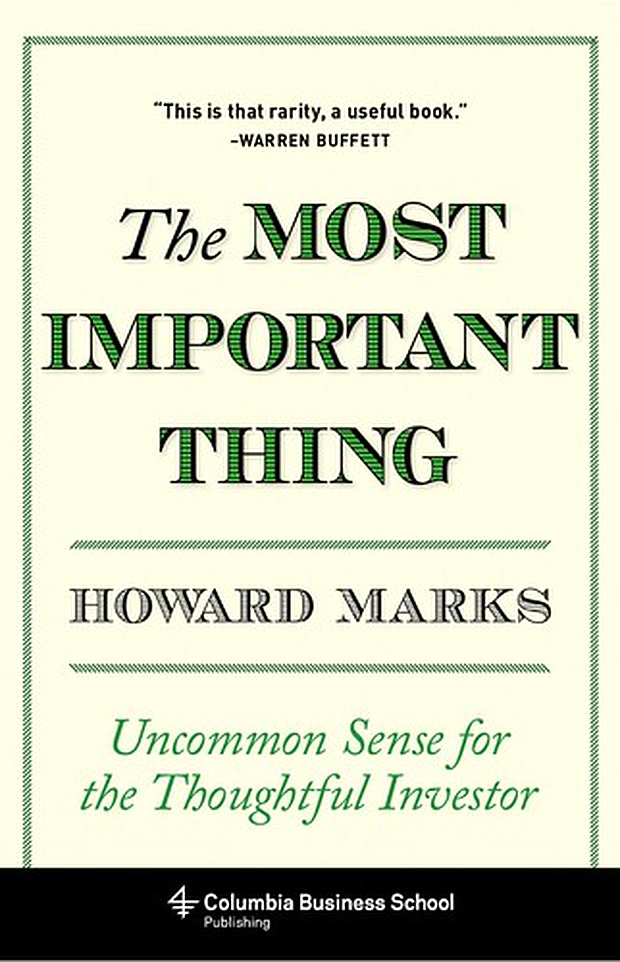
The Most Important Thing
Get on Amazon →
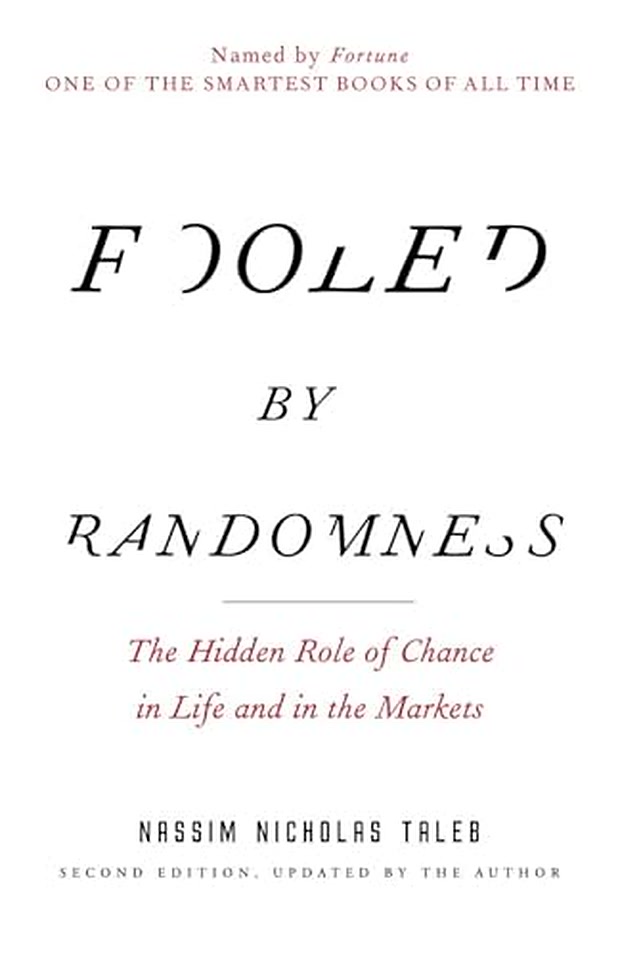
Fooled by Randomness
Get on Amazon →
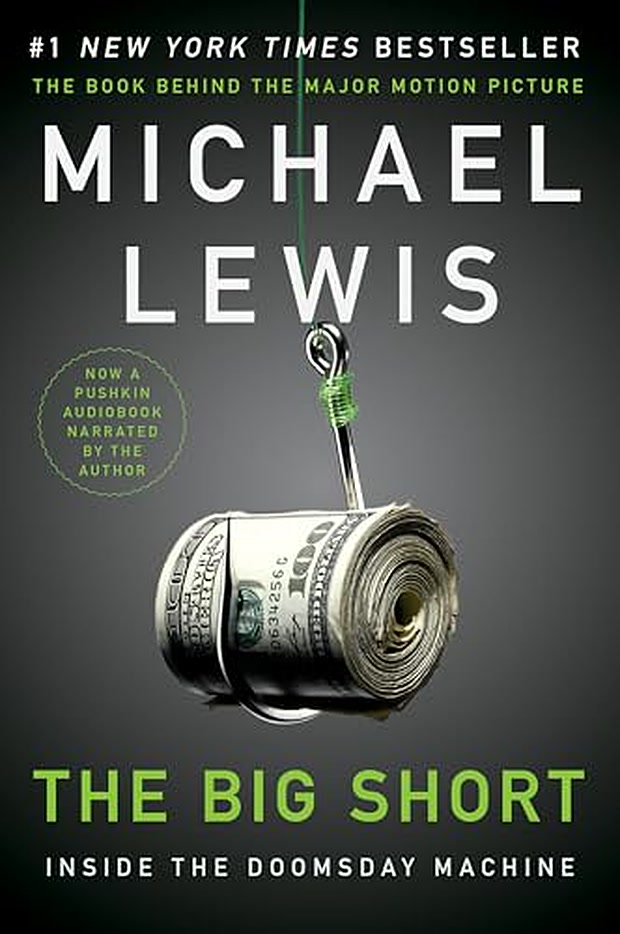
The Big Short
Get on Amazon →
As an Amazon Associate I earn from qualifying purchases.