Howard Marks
2010 07 19 Its Greek To Me
Memo to: Oaktree Clients
From: Howard Marks Re: It’s Greek to Me
In the early part of this decad e, I reviewed a few books for the Sunday Los Angeles Times .
Here’s how I began my assessment of Pete Peterson’s Running on Empty in 2004:
Consider Sam. He’s always been rega rded as the brightes t guy in town, and
maybe the handsomest. He has the best job and lives in th e best house. He
spends aggressively – detractors would sa y hedonistically – to support a lifestyle
that many others envy, but he shows good character by providing generously for
his sick and elderly relatives.
There are, however, a few problems. In recent years, he’s been spending more
than he makes, and his expenditures appear likely to grow faster than his income.
He covers each year’s shortfall by borrowing from other members of the
community. (They’ve always been glad to lend him money because of his good standing in town.) But this adds increas ingly to his debt, and thus to the next
year’s interest (and shortfall). In other words, he seems to follow Winston Churchill’s dictum: “It save s a lot of trouble if, instead of having to earn money
and save it, you can just go and borrow it.”
Finally, with the number of family memb ers Sam cares for increasing, with him
promising each of them an increasing stip end, and with his relatives – even the
sick ones – living longer, it seems clear th at in the future, the cost of supporting
them will grow considerably faster than his income. An annual deficit. Attachment to a lavi sh lifestyle. Grow ing indebtedness and
related increases in interest costs. Depe ndence on others to finance the shortfall
and the risk that those lenders will withdraw their loans or charge higher interest
rates. A commitment to pay for the welfar e of others that threatens to grow out
of control.
Pete’s book focused on the tendency of the United States to ignore the cost of its social
programs, run deficits and expand debt, and th e “Sam” in my analogy was, of course, Uncle
Sam. But now other nations have jumped the line and usurped the above description. Like
most of Western civilizati on, it started with Greece.
Because I was in London much of the time since Greece burst into prominence, I may be able to
add some insight from a European vantage point . This period in London was unusual for me, in
that with this topic in the headlines I was far more a student than a teacher. Most Americans
don’t start off sensitized to international economics and, especially, currency matters. It’s been
challenging to organize all I’ve learned and boil it down for a memo, but here it is.
© Oaktree Capital Management, L.P.
All Rights Reserved
2Strange Bedfellows
“Shared values” is one of the things I credit for Oaktree’s su ccess over the years. All of
Oaktree’s senior managers are c onservative, cautious people; we a ll agree that risk control and
consistency hold the keys to long-term invest ment success; and we all put clients’ account
performance ahead of our company’s profit. Shared values make it easy to run an organization and particularly easy to reach agreement on policies and tactics. Now imagine what it would be like to run an enterprise where (a) some of the constituents believed much more in thrift, discipline and transparency than others and (b) there was no
mechanism for making sure everyone played accord ing to the agreed-upon rules. Welcome to
Europe. In the 1950s Belgium, France, Italy, Luxem bourg, the Netherlands and West Germany came
together to form the European Coal and Steel Community, European Atomic Energy Community and European Econom ic Community, which in 1967 combined as the European
Community. Denmark, Ireland and the U.K. jo ined in 1973, and Greece, Spain and Portugal
joined in the 1980s. Membership has since ex panded to 27 nations, and the name “European
Union” (E.U.) was adopted in 1993. In 1999, eleven nations (since expanded to 16) agreed to form the euro zone and replace their individual currencies with the euro. Europe seemed to
have accomplished the daunting task of pulling together its nations and adopting a single
currency. This was a delicate balancing act, but for years it seemed to go quite well.
It was a requirement for success that all the nati ons share fiscal policy. However, as in most
economic alliances, there were incentives to nibble at the rules. And, believing more is better,
the E.U. admitted nations with less uniform va lues. The desire to create a common currency
and expand the reach of the union – to achieve a scale more comparable to economic powers
like the United States – colored decisions rega rding expansion and ulti mately led to trouble.
To get a feeling for what happened, let’s say you and I are such good friends that we decide to
combine our economic strength to ap ply together for a credit card with better terms and a higher
limit. We agree we’ll each (a) refrain from sp ending more than we earn and (b) receive and pay
that part of the bill that relates to our own ch arges. All goes well, and eventually we agree to
admit a third member to our association. But the new member doesn’t share our commitment to
thrift and integrity, wants to live a better life th an he can afford, and thus charges more on the
card than he earns. Our strong combined credit rating enables hi m to do so, and his balance on
the credit card starts to swell. When it comes out that our association is heavily indebted, we
chip in to pay off the unpaid balance, even t hough only one of us ran it up. In fact, since the
prodigal third member spent more than he made, he has nothing to contribute to paying off the
debt; thus you and I – despite having behaved more responsibly – are stuck with the burden.
Greece is that new member of the arrangement, and it (like a number of other countries) wanted
to give its people a better life th an they can afford, financed fr om the public treasury. Without
membership in the E.U. – or if the rules on deficits had been enfo rced – Greece’s economic
reality would have limited what it could do for its citizens. But E.U. membership enabled it to
borrow and spend to excess. Here’s what th e Bank of Spain’s governor said in April 2007:
“The single monetary po licy has meant that excessively loos e conditions for our economy have
been almost continuous” (Telegraph.co.uk , May 30). The same was true of Greece.
© Oaktree Capital Management, L.P.
All Rights Reserved
3My English friend Rodney Leach is a Member of Parliament and a committed leader of the
“Eurosceptics” who have campaigned to improve the E.U. and prevent Britain from adopting
the euro in place of sterling. His draft of a co ming paper influenced my understanding of the
situation: “Once inside the Club,” he writes, “ . . . the Mediterraneans resumed their old habits.
The temptation was irresistible to borrow at the low interest rates bestowed on them by
Germany’s participation. Greece in particular indulged itself by completely abandoning financial discipline.” Greece was able to violate the agreed-upon 3% cap on E.U. members’ deficits, abetted by
generous capital markets and the failure to en force the limit, and it engaged in financial
transactions designed to hide its growing debt. It bears noting th at much of what’s true today
about Greece has been true for years. But people didn’t understand its signif icance to the extent
they do today, or didn’t find it worrisome, a nd short-term-oriented politicians had every
incentive to ignore the problem rather than conf ront it and admit that th eir noble experiment was
fraying. Thus it emerged in early April that Greece and Greek companies had run up substantial debts
that would be hard to repay. It didn’t take long for people to fi gure out that the same was true
about the rest of the “PIIGS”: Portugal, Italy, Ireland, Greece and Spain. In May, some unfortunate remarks by Hungary’s Finance Minister made it a candidate for similar treatment.
Then Estonia came under the spotlight, a nd the process seemed to cascade non-stop.
A Problem of Substance
The real problem in Greece and the other coun tries – especially what Rodney calls the
“Mediterraneans” – isn’t one of deficits and debt. Those are merely the results and the symptoms. And if the problem were Greece alone, the smallness of its economy and financial
system would render it easily fixable. The pr oblems are more substant ial, structural and
widespread. (I looked at 17 Eur opean nations; they all ran defi cits in 2009, and only two of
those deficits were below the E.U.’s target of 3% of GDP. In ascending order, the deficits in
Belgium, Cyprus, Slovakia, France, Portugal, Spain, the United Kingdom, Greece and Ireland
were all between 6% and 14%.) The ingredients that contributed to the European crisis are many:
Slow-growing, unproductive and uncompetitive economies.
Low birthrates and aging populations. (“In th e 1950s there were seven workers for every
retiree in advanced economies. By 2050, the ra tio in the European Union will drop to 1.3 to
1.” – New York Times , May 23)
Generous benefits and social serv ices; cradle-to-grave safety nets.
Extensive vacations and stri ct limits on the work week.
Early retirement.
Artificially high debt ratings and resultant low interest rates.
© Oaktree Capital Management, L.P.
All Rights Reserved
4In “What Worries Me” (August 28, 2008), I expresse d concern about the fact that Americans
expect the world’s highest standard of living even though the U.S. is no longer a leader in
manufacturing output and global competitiveness. Certainly this is the case in spades for
Greece, whose economy is largely irrelevant but which wanted to meet its people’s demands.
In April, as the problem began to unfold, I hear d a Greek taxi driver express his worry on the
radio: “I might not be able to retire at 53,” the average retirement age. How can it be rational
for a nation with a limited economy to enable its citizens to retire at age 53? Well, it isn’t.
Greece was able to outspend its revenues for y ears because it benefited from the “reflected
halo” of the E.U.’s financial strength a nd low euro-related interest rates.
On June 4, 2005, the International Herald Tribune carried an op-ed piece by Thomas Friedman in which he prescientl y observed the following:
. . . [the forces of globalization are] eating away at Europe’s welfare states. It is
interesting because French voters are tryi ng to preserve a 35-hour work week in a
world where Indian engineers are ready to work a 35-hour day. Good luck. . . .
I feel sorry for Western European blue-col lar workers. A world of benefits they
have known for 50 years is coming apart, and their governments don’t seem to
have a strategy for coping. A few weeks ago, Franz Muenteferin g, chairman of Germany’s Social
Democratic Party, compared private equity firms which buy up failing businesses, downsize them and then sell them to “a swarm of locusts.”
The fact that a top German politician has resorted to attacking capitalism to win
votes tells me just how explosive the next decade in Western Europe could be, as
some of these aging, inflexible economies which have grown used to six-week
vacations and unemployment insurance that is almost as good as having a job become intimately integrated with Easter n Europe, India and China in a flattening
world. . . . Next to India, Western Europe looks like an assisted-living facility with Turkish
nurses.
In a nation with closed borders , a government can do almost about anything it wants. It can
print money with which to buy things for people w ho don’t earn those things themselves . . . as
long as sellers will accept that newly printed money at face value. But in a global economy,
competitive forces make it hard for people – or countries – to live better than their output justifies.
Less fundamental but more colorful, I’ve learne d about a number of factors which exacerbate
the situation in Greece and elsewher e. While just anecdotal, these tales are rampant in Europe:
© Oaktree Capital Management, L.P.
All Rights Reserved
5 As may be typical of Mediterra nean nations, compliance with Greek tax laws is, shall we
say, “spotty.” In this country of 11 million people, just a few thousand report incomes
above €100,000.
There’s a box to check on the tax form if you have a swimming pool, and 324 residents of
Athens said “yes.” However, when tax inve stigators checked satellite photos, they got a
slightly different figure: 16,974. That’s 2% compliance. ( The New York Times , May 10)
As part of the unorthodox arrangement, th ese countries have significant “black” or
“shadow” economies. In Greece, 20-30% of tran sactions are said to take place in cash
and/or through overseas bank accoun ts, unreported in both cases.
The prevailing rule in Greece seems to be “4-2 -4.” If you have a pending tax obligation of
€10, you meet with the tax collector. You hand hi m four for himself, yo u pay the authorities
two, and you keep four. It’s not a fluke that the typical Athens tax collect or, with a salary of
€50,000, is said to own real estate worth €2 million.
Going the proverbial baker’s dozen one better, workers in Greece’s public sector had quite a
deal: they were paid tw o “bonus months” per year.
In Spain, half of all employees are unionized and prot ected by very strict work rules that
limit efficiency and essentially preclude layoffs. This means any steps to cut costs fall on
the rest of the work force, which is hit disproportionately.
It seems that Italy (an E.U. founder but also a “Mediterranean”) maintains “a fleet of more
than 626,000 official cars, more than 10 times the number in France, Germany or the UK.” (Financial Times , May 12)
Together these things – low output, high gove rnment spending, under-the-table business
dealings, tax evasion, and financial proflig acy – represent a recipe for trouble. Today’s
developments merely prove that things th at don’t make sense can’t go on forever :
Perpetually spending more than you bring in.
Enjoying a standard of living you can’t afford.
Running an annual deficit that increases constantly as a percentage of GDP.
Owing amounts that increase consta ntly as a percentage of GDP.
Doing all the above while having a currency as st rong – and an interest rate as low – as in
nations where these things are not the case.
Things can go on longer than they should, and th ese probably have, but eventually there’s a
price to be paid. The world is up in arms t oday over everything that’s wrong with the European
financial picture, even though these conditions pr obably aren’t much changed from a few years
ago. It’s just that now people have decided to focus on them. The Role of Debt
As I mentioned above, debt isn’t the problem, or the cause of the problem. But it has been the
facilitator. In “The Long View” (January 9, 2009), I wrote (albeit without refere nce to Greece) about a
strong uptrend over the last few decade s in what I called “expansiveness”:
© Oaktree Capital Management, L.P.
All Rights Reserved
6Every business, government, non-profit orga nization or individual has a certain
amount of equity capital, net worth or surplu s. That capital, in turn, will support a
certain level of activity: production and sales, lending, government action,
charitable grants or consumption. But over the last several decades, if you
wanted to do more of these things th an your capital permitted, you could
borrow capital from someone else.
Without credit – I think back to my pre-cred it card college days of 45 years ago, for
example – you couldn’t spend money you didn’t have. Thus you couldn’t buy things you
couldn’t afford. Then the miracle of credit ca me along and it became easy to get in over
your head.
What would have happened if governments coul dn’t finance deficits by issuing debt? Greece
would only have been able to pay the benefits it could afford. Less pleasant, but perhaps
healthier. And what would have happened if builders weren’t able to borrow, and thus had to sell each
newly built home before they c ould erect the next? Spain woul dn’t have been the site of a
boom in which 2.8 million homes were built (w ith only 1.5 million sold), and with as many
building permits issued as in France, Germa ny, Italy and the Netherlands put together.
The Wall Street Journal of November 24, 2008 carried th e following quotation from Irving
Fisher, writing 76 years ago (“The Debt-Def lation Theory of Great Depressions,”
Econometrica , March 1933):
When it comes to booms gone bust, “over-investment and over-speculation are
often important; but they would have fa r less serious results were they not
conducted with borrowed money.”
While this statement wasn’t made with regard to Greece or even to government activities in
general, it is clearl y relevant to the current situation.
In recent years, most of the nations of the world spent more than they t ook in to give their
citizens more of what they wanted. As long as the capital markets were open, few could
think of a reason why this policy wouldn’t work forever . Economic units all over the globe
were able to borrow to cover defi cits. All that mattered was the ab ility to service the debt, even
if that required borrowing money to pay interest. No one seemed to demand the ability to repay.
When I was younger – in what seems like a distant past – national debt began to expand, and I
remember heated debate regard ing the significance, wisdom a nd likely consequences of that
trend. The subject receded in recent years, since every nation now does it to some extent and people became inured to the cont roversy, as they tend to do.
Two sentences stand out on this subject, from Bill Julian of Bill Julian Research on April 11. He quotes John Maynard Keynes as having said, “Government debt is really debt we owe to ourselves. So it doesn’t matter.” But today, most nations’ debt is no long er all “to ourselves,”
as nations with surpluses are larg ely financing the ones with deficits . Thus it’s hard to conclude
national debt doesn’t matter. Welcome to 2010.
© Oaktree Capital Management, L.P.
All Rights Reserved
7In the “old days,” government deficits were of ten part of counter-cyclical stimulus, a
concept with which Lord Keynes is identified. It seems logi cal that when its economy is
depressed, a nation will spend more than it rece ives in taxes in order to stimulate. Then,
in times of prosperity, it will cut expenditu res, run a surplus and pay down debt. But
permanent deficits appeared in the late tw entieth century, and thereafter national debt
has grown in good times and bad. The idea of national debt being repaid has evaporated.
Today, public and private institutions in Greece, Spain and Portugal owe €2 trillion to
foreigners, with no possibility of repayment in sight. Solutions and Stumbling Blocks
Thus far, most of the actions being taken to address the crisis are of two types: financial
maneuvers to calm the financial markets in the short term, and austerity measures designed to
reduce deficits in the long term. The United States’ credit crisis of late 2008 serves as a model for what must be done. The
elements that arise in a credit crisis are consistent: uncertainty regarding the future, fear of credit losses, and refusal to make loans. Financial systems run on confidence, and, when
confidence dries up, things can grind to a halt. Clearly, then, the most immediate efforts
must be to restore confiden ce and keep credit flowing.
This problem is particularly severe at financ ial institutions (and what is a national economy
today other than a financial system, hopefully with a manufacturing sector tacked on?).
Financial institutions are, by definition, marked by high leverage, and if confidence declines, the
providers of credit tend to ask for their money back. Since these institutions never have enough
cash on hand to satisfy the demands of the would- be withdrawers, they can fall prey to a run on
the bank. The first task, then, is to rest ore confidence and keep capital available.
Thus, at the beginning of May, the E.U. put together a rescue package for Greece worth €110
billion. And then, when the possibility of cont agion to Spain, Italy and Portugal began to be
recognized, that was increased on May 10 to €750 billion (or $900 billi on, a figure remarkably
similar to the U.S.’s program). In addition, th e European Central Bank es tablished a program to
buy government bonds of the affected nations, along the lines of our “quantitative easing.”
Many European governments have announced plans to reduce deficits. Their tactics include
reduced spending, freezes or cuts in public sector employment a nd wages, and higher retirement
ages. Some have enacted tax increases to augm ent revenues. Greece even says it’s going to
start collecting more of the taxes that are owed. Austerity is a ll the talk in Europe, and some
leaders are predicting periods of substantial suffering. That’s what happens when a borrow-
and-spend cycle that has advanced beyond prudence is brought to a halt.
It’s important to recognize, however, that one potential solution – traditionally perhaps
the easiest – isn’t available to the members of th e European Union: currency devaluation.
A key element in the situation is the absence of independently floating ex change rates. Think
for a moment about international finance. Countries differ in terms of growth rates,
productivity and inflation rates. In recognition of the differences, interest rates and exchange
© Oaktree Capital Management, L.P.
All Rights Reserved
8rates change relative to t hose of other countries. In general, countries that are better off in terms
of growth, productivity and infla tion will have stronger currencies and pay lower interest rates.
The easiest way for a nation with excessive fo reign debt to solve its problem is through
devaluation. If the drachma weakens relative to the deutschemark, a Greek who owes a
German a certain number of drachmas now owes him fewer deutschemarks (of course, if the
debt is denominated in deutschemarks, he now owes him more drachmas). This process can
occur through an explicit devaluation or th rough hyperinflation, and we’d be overwhelmingly
likely to see it in action fr om a standalone Greece.
Between 1980 and 2000, the drachma depreciated by roughly 85% relative to the deutschemark,
a reflection of economic reality. But with the co untries of Europe tied together with a single
currency, this can’t happen. Nations throughout Europe are doing what they can. That means reassuring financial markets
and implementing austerity measures, but not de valuing (as long as the debtor nations in
question remain part of the E.U.). So, Will It Work?
“Will It Work?” was the title of a memo I wrote on March 5, 2009, discussing whether the
Obama administration’s rescue plan would be successful. Th e problems were new and huge,
like today’s in Europe, and the solutions being attempted were untested, also like today’s.
The last section of “Will It Work?” was devot ed to the three things I said had to be
accomplished in order for the rescue to be eff ective: delever the economy, replace the capital
that has been destroyed, and restore confidence. The recipe in Europe is no different, although
the U.S. government had to shore up the financia l institutions, whereas in Europe governments
first have to support other governments.
In addition, there are wrinkles in Europe that the U.S. didn’t face to the same degree. They can
make it challenging to solve problems and especially to reach agreement quickly:
The European Union consists of 27 sovereign nations, each with its own central bank and
finance ministers. In addition there are the European Central Bank (“ECB”), the European
parliament and the E.U. ministers.
The countries have very diffe rent political views and are led by people from all over the
political spectrum.
The approach of nations to the problem will be colored by history that in some cases
includes war and occupation. Countries will be as ked to bail out others they fought against
in the past.
Finally, the countries’ financial status varies widely. Only a few – primarily Germany – can
contribute meaningfully to a bailo ut, and they will be asked to carry the vast majority of the
burden. Will they be willing to do so?
© Oaktree Capital Management, L.P.
All Rights Reserved
9As an indication of the intra-European differences, The Wall Street Journal said the following
on June 15:
Germany views the crisis on the euro zone’s Southern fringe as a symptom of other countries’ failure to copy Germa ny’s fiscal discipline and structural
overhauls to its economy. Its proposed remedies focus mainly on pushing other
countries to cut budget deficits. France, however, believes Germany’s larg e trade surplus and weak domestic
demand are part of the euro zone’s probl em, since they force weaker economies
to pay for their imports w ith debt, rather than thr ough exports to the German
market, Europe’s biggest.
In addition to political complexity, efforts to solve the problem will run into two important
issues:
Austerity measures and tax increases are anti -stimulative, and they are being applied
at a time when the economies in question are weak and need stimulus. Economic
historians such as Ben Bernanke recognize that adding liquidity is the best way to deal
with a slowdown, and that the withdrawal of liquidity exacerbated the Great
Depression.
In the long run, reducing deficits and debt will not be enough. The countries in
question have to increase their productivity and competitiveness.
In “Will It Work?” I quoted from Paul Krugman ( The New York Times of February 16, 2009):
As the great American economist Irv ing Fisher pointed out in the 1930s, the
things people and companies do when they realize they have too much debt
tend to be self-defeating when everyone tries to do them at the same time .
Attempts to sell assets and pay off debt deepen the plunge in asset prices, further
reducing net worth. Attempts to save more translate into a collapse of consumer
demand, deepening the economic slump. (Emphasis added)
The yoking together of the European nations intr oduces some interesting ramifications. Some
Northern European export economies – Germany in particular – are doing quite well. At this
stage of the cycle, they might be considering rate increases and their currencies might be
strengthening. But it’s doubtful the ECB will raise rates anytime soon, and the euro has weakened versus other currencies. Thus, for example, the German economy and German exports will be stimulated when they arguably do n’t need it. Germany will export more than it
otherwise might have, with some of its gains recirc ulated in the form of aid to other countries.
Good so far, but possibly inflatio nary. Complicated and not easy.
The analysis of sovereign debt is in large part political, not economic . Thus the open
questions are political, as desc ribed above, complicated by the mu lti-national aspect of the E.U.
and the absence of provisions for disciplini ng financial non-compliers, ejecting members or
winding down the Union.
© Oaktree Capital Management, L.P.
All Rights Reserved
10But as we saw in the U.S. in 2008 and 2009, there should be little doubt th at everything possible
will be done to save the euro and the E.U. (a lbeit perhaps with one or two fewer members
and/or a touch of “debt rescheduling”). They’re likely to continue to exist, but many of the key
questions in Europe surround the leve l of economic vibrancy we’ll see.
My purpose in writing this memo was to summar ize and explain the developments in Europe,
and that’s the vein in which I started. But then I star ted to think more broadly.
We Have Met the Enemy and He Is Us
According to The New York Times , a leading central banker addr essed his legisl ature on June 9
regarding his country’s fiscal operation, which he said “appears to be on an unsustainable path.”
“A variety of projections that extrapolate current policies and make plausible
assumptions about the future evolution of the economy,” he said “ show a
structural budget gap that is both larg e relative to the size of the economy
and increasing over time . . . .”
“In addition, government expenditures on health care for both retirees and non-
retirees have continued to rise rapidly as increases in the costs of care have
exceeded increases in incomes. To avoid sharp, disruptiv e shifts in spending
programs and tax policies in the future, and to retain the confidence of the
public and the markets, we should be planning now how we will meet these
looming budgetary challenges .” (Emphasis added)
Greece? No. Spain? No. Portugal, Italy or Great Britain? None of the above. That was Ben
Bernanke speaking before the Budget Co mmittee of the House of Representatives. Thus
my use above of the most famous line from Walt Kelly’s comic strip “Pogo.” Greece and the
other members of “Club Med” may be on the ho t seat today, but few developed nations are
exempt, and certainly not the U.S. The differenc es between the countries in the headlines and
many others are matters of degree, not kind. David Leonhardt’s column in The New York Times of May 12 provides a good way to start in on
this subject:
It’s easy to look at the protesters and th e politicians in Greece – and at the other
European countries with huge debts – a nd wonder why they don't get it. They
have been enjoying more generous government benefits than they can afford. No mass rally and no bailout fund will change that. Only benefit cuts or tax
increases can. Yet in the back of your mind comes a na gging question: how different, really, is
the United States? The numbers on our federal debt are becoming frighteningly familiar. The debt is projected to equal 140 percent of gross domestic product within two decades.
Add in the budget troubles of state gove rnments, and the true shortfall grows
© Oaktree Capital Management, L.P.
All Rights Reserved
11even larger. Greece’s debt, by compar ison, equals about 115 percent of its
G.D.P. today.
The United States will probably not fa ce the same kind of crisis as Greece,
for all sorts of reasons. But the basi c problem is the same. Both countries
have a bigger government than they’re paying for. And politicians,
spendthrift as some may be, are no t the main source of the problem.
We, the people, are. We have not figured out the ki nd of government we want. We’re in favor of
Medicare, Social Security, good schools, wide highways, a strong military –
and low taxes. Dealing with this di sconnect will be the central economic
issue of the next decade, in Eu rope, Japan and [the U.S.]. . . .
As societies become richer, citizens tend to want better schools, better medical care and other government services. [The U.S.] is following that pattern, but
without paying the necessary taxes. That combination has us on a course to Greece-like debt. As a rough estimate, the government will have to find spending cuts and tax
increases equal to 7 to 10 percent of GDP. The longer we wait, the bigger the
cuts will need to be (because of the accumulating interest costs).
Seven percent of GDP is about $1 trillion today. In concrete terms . . . the
combined budgets of the Education, En ergy, Homeland Security, Justice, Labor,
State, Transportation and Veterans Af fairs Departments are less than $600
billion. (Emphasis added)
Leonhardt provides some data for “cyclically adjusted primary balance as a percentage
of GDP” that make for frightening comparisons: Portugal - 2.8% France - 3.7 Spain - 5.6 Greece - 6.0 Iceland - 6.5 Britain - 6.8 United States - 7.3 Ireland - 8.2 The Times defines “primary balance” as “. . . a measure of each country’s medium-term deficit
as a percentage of GDP excluding interest pa yments and assuming that unemployment in all
countries drops significantly (to what economists c onsider ‘full employment’).” In other words,
these projections incorporate a good bit of optimism. The U.S. deficit is swollen by stimulus
measures that should shrink, but the data still make us look bad in some pretty bad company.
© Oaktree Capital Management, L.P.
All Rights Reserved
12The U.S. is better off than Europe in a number of ways:
Its national debt isn’t high as a percentage of GDP (according to CIA data, our ratio in 2009
was only 53%, versus 113-115% for Greece and It aly, and 62-77% for the Netherlands, the
United Kingdom, Germany, Portugal and France).
It benefits from having the worl d’s primary reserve currency.
Its Treasury securities are st ill a primary destination during any flight to quality (thereby
reducing its interest costs).
It possesses advantages in terms of top educati onal institutions, natural resources, creativity
and intellectual progress.
On the other hand, its drawbacks include a tradit ion of deficit spending; heavy total indebted-
ness (especially at the household level); many of the demographic issues that I described as
affecting Europe (e.g., aging population, potential for structurally high unemployment); costly
entitlement programs; declining competitiveness and a shrinking manufacturing base. Including the private sector, tota l U.S. debt stood at 358% of GDP in late 2008. That compares
to about 200% of GDP prior to the Great Depression and a peak of 300% in 1933 (sources: Bureau of Economic Analysis, Federa l Reserve and Census Bureau). The U.S., too, will have
to go through some major belt-tightening . . . pa inful if it starts soon, but much more so if
it is delayed until the future promis es are allowed to build up further.
I think David Brooks put it very well in The New York Times on May 13:
If you’re elected president or prime minist er in pretty much any country in the
developed world today, you’re faced with the same set of challenges: to reduce
national deficits without c hoking off a fragile recovery; to trim the welfare state
and raise taxes while still funding the things that lead to long -term growth; to try
to enact brutally painful m easures at a time when voters don’t trust their leaders;
to do it at a time when politics are polarized and a hundred different interest groups have the ability to block change. The chances that the world’s leaders are going to be able to do these things
successfully are betw een slim and none. It’s hard enough to figure out the right
mix of spending cuts and tax increases. It ’s nearly impossible to build a political
majority willing to enact them. Sometim e over the next decade or so, the world
will probably suffer from another series of crushing fiscal crises with significant economic pain and maximum political turmoil.
While Brooks led off with the paragraphs reprod uced above, he found “Glimmers of Hope” (the
title of his column) in the constructive budgeta ry approach being adopted by the new governing
coalition in Great Britain.
© Oaktree Capital Management, L.P.
All Rights Reserved
13This assessment from the Milken Institute should provide some motivation for problem solving:
By 2020, trillion-dollar defic its will become the norm even in years of solid
economic growth and low unemployment, rather than an unpleasant aberration
linked to a deep recession.
Absent wrenching changes in fiscal policy, things will only get worse after that. The retirement of the baby boom generation and the growth of health costs at a
rate far faster than the growth of GD P mean that government spending on Social
Security, Medicare and Medicaid (whi ch pays for most nursing-home care for
the elderly) is likely to explode. By the nonpartisan Congressional Budget
Office’s reckoning, spending on those three programs alone is expected to reach
18 percent of GDP in the year 2040. That is the average level of revenues,
measured as a portion of GDP, that the fe deral government has collected over the
past 50 years. So, in this scenario, there would be nothing left to pay for everything from defense to interest on the debt. Thus, unless those entitlement
programs (and other spending) can be dr astically curtailed or taxes raised
significantly, large and growing deficits are a certainty. But the auguries aren’t good. Both political parties have become advocates of low taxes. President Obama’s State of the Union address was a veritable panegyric to the virtues of tax cuts (alt hough he is willing to raise taxes a bit for
the rich in general, and rich bankers in particular). And now that Republicans have become defenders of spending every last dollar that Medicare recipients are
currently promised, the prospect of rein ing in entitlement programs seems more
remote than ever.
In a politics-as-usual scenario, with no ch anges in the current policy of low taxes
and unrestrained entitlement growth, the federal debt is projected to reach 100
percent of GDP by 2023. By 2038, it would reach 200 percent of GDP.
I’ll close on this subject with some even more pessimistic words from Bill Julian:
Add to the debt woes of European nati ons and US states the unfunded liabilities
of the US government ($30 to $50 trillion, depending on who you ask) the bearded nationalization of the largest financial institutions in the world, Fannie and Freddy, and you have to ask, how could it have gotten this bad?
. . . conditions of instability could reappear [quickly]. And this time, the crisis
will center on government debt and the bond markets. The collectivist impulse
spawned by Keynes as a solution to fi scal problems brought on by the bad
behavior of the banks and the governments who cover for them will have gone as far as they can. There will be no one left to bail out “the system.” The US government will be left with a nasty choi ce: austerity and fiscal discipline, or
monetizing the debt [through devaluati on or hyperinflation] and face a likely
collapse of the bond market.
© Oaktree Capital Management, L.P.
All Rights Reserved
14The bottom line appears to be that the U.S. must anticipate austerity, higher taxes, and the
sluggish growth that combination is like ly to produce. Failing that, we may face
devaluation, default and other unthinkable de velopments. We are not exempt from the
problems besetting Greece, or the awakening regarding the notions listed on page 5.
The State of the States
Many professional investors include What I Learned This Week from 13D Research among their
highest-priority reading. Its discussions are bi g-picture and almost academic, but Kiril Sokoloff
seems more likely than most to cover the big market-movers of tomorrow. He discussed the
financial condition of the states in his June 24 issue, and I can ’t resist quoting extensively (I
could give you more, but there has to be a limit):
Across the U.S., state governments are on th e edge of fiscal calamity . . . Last
month, a report from the U.S. Center on Budget and Policy Priorities issued
estimates that in fiscal 2010 the U.S. states collectively posted a near $200
billion budget shortfall, equivalent to 30% of all state budgets. As Time ’s David
von Drehle recently observed: “Such persistent budget woes are unparalleled in
the era of modern American government. You’d have to go back to the 1930s to
find a parallel.”
After plunging in 2009, tax revenues are starting to stabilize in some places ,
but revenues are still far off pre-recessi on levels. Collection of sales, personal-
income and corporate taxes – which constitute 80% of state revenue – slumped
12% over the past two years. Meanwhile, fixed costs co ntinue to keep states
deep in the red. As would be expected, state and local governments have begun to take some
much-needed steps – cutting costs, trimming pension eligibility, and depleting their rainy-day funds. In fiscal 2010, forty-five states reduced services to residents and over 30 states have raised taxes, in some cases significantly,
according to the Center on B udget and Policy Priorities. Fourteen states are
expected to have reserves of less than 1% of their annual spending by the
end of fiscal 2010 – they are basically living hand-to-mouth. . . .
But the states, it must be remembered, have a large number of fixed costs,
which continue to expand. In addition to soaring pension obligations, the
federal government has pushed a lot of its burdens onto the states, beginning
with the sprawling mess that is Medicai d. Created by Congress, administered by
the states, and funded by a mishmash of state, local and federal funds, the
healthcare system for America’s poor is a train wreck waiting to happen.
Medicaid spending, which accounted for 21% of state general fund
expenditures in 2009, rose 6.6% that year and is expected to rise 10.5% in
fiscal 2010, according to Linda Bilmes, a professor at the Harvard Kennedy
School. But while the number of enrollees increases, funding for the system will
barely budge. As Arizona’s Governor Jan Brewer said in her state-of-the-state
© Oaktree Capital Management, L.P.
All Rights Reserved
15address this year: “Government revenues have sagged to 2004 levels and some
people say we should just adopt the 2004 budget” – easier said than done when
your state’s Medicaid rolls have grown by nearly half a million since then. . . .
The states, like the federal government , are facing a demographic headwind
that will continue to shrink their tax revenues and compound their growing
social safety net obligations. As Graham-Fisher’s Josh Rosner reminds us, the
baby boomer’s peak earnings pot ential is behind them:
These boomers are now moving to become the largest tax on the social safety net. The largest generation in U.S. history w ill retire with less
equity in what has historically been the largest retirement and
intergenerational wealth transfer asse t for most families – their homes.
In many cases, these people will have no new [sic] personal savings
when they reach the end of their working lives and will essentially
become wards of the state. This increased burden on the U.S.
Treasury, in a decade, is the larges t unconsidered impact of the current
crisis.
Last year, the states’ fiscal woes were partly assuaged by th e federal stimulus
package. But nearly 70% of the $787 billion of stimulus funds approved early
last year will have been spent by Sept ember, according to the CBO. (And while
the emergency cash infusion helped the states keep their heads above water, it ultimately compounded their plight, since even though the federal funds are not
necessarily recurring, the jobs and oblig ations they fund are.) This year,
however, the federal stimulus money is going to be thinned dramatically.
The Obama administration has asked for about $50 billion for 2011, but experts
believe it would require another $160 billi on in cash just to meet demands for
the next two years. And this assumes there is no increase in unemployment or
decrease in tax revenues. Even thoug h there is scant a ppetite among election-
susceptible Democrats in Washington to add more zeroes to the end of the federal deficit, there may be no alterna tive. If the federal government does not
intervene, the entire U.S. economy could be put at risk. After all, aren’t
California and Illinois, like the co untry’s banks, “too big to fail”? (Emphasis
in the original)
I touched on the subject of the states’ fiscal condition in “Tell Me I’m Wrong” (January 22);
that and the passages above from Sokoloff’s piece should suffice for now. However, I do want
to go into a bit more detail regard ing one of the key contributors to Greece’s troubles : pensions.
Pension promises have long been used in the U.S. as a budgetary quick fix. As in some parts of
the private sector (see au to companies and “legacy” airlines), the public sector has a history of
substituting sweetened pension benefits (and reti ree medical benefits) for higher wages in the
here-and-now, a prime example of “kicking the can down the road.” Employees bargained for
promises of enhanced retirement payments in ex change for agreeing to limit increases in current
compensation, but the cost of keeping those promises will be high and, as of today, is far from fully funded.
© Oaktree Capital Management, L.P.
All Rights Reserved
16The Pew Center on the States estimates that as of June 30, 2008, the states had set aside $1
trillion less than would be needed to pay future pensions and medical benefits. On July 6,
The New York Times reported on a study by Joshua Rauh of the Kellogg School of
Management: “. . . assuming states make contribu tions at recent rates and . . . earn 8 percent, 20
states will run out of cash by 2025; Illinois, the fi rst, will run dry in 2018. . . . Illinois, once its
funds were depleted, would be forced to devote a third of its budget to reti rees; Ohio fully half.”
States such as California and Illin ois clearly have debts that will be hard to pay and budgets that
will be hard to balance. Fractious politics, the requirement for super-majorities on tax and
budget matters, and the role (in my state) of referenda all render solutions elusive. Will there
be a bailout? This is a great question to start thinking about t oday (although the prevailing
ethic is to not worry about anything until doing so is absolutely unavoidable).
I have no doubt that the federal government wa nts to avoid a bailout at all costs, and that
the rhetoric will remain staunchly anti-rescue. But when push comes to shove, I sincerely
doubt a state will be permitted to go bankrupt. As Warren Buffett said at this year’s
Berkshire Hathaway annual meeting, “I personally think it would be very hard, in the end, for
the federal government to turn away a state th at is having extreme financial difficulties.”
(Financial Times , May 4)
Just as the E.U. doesn’t want to give deficit spending a green light, fiscally responsible states
don’t want to pay debts that othe rs created through overspending. If the federal government
were to bail out a defaulting state, what would keep any state from running deficits, knowing they could count on others to pay off their debts? When overspending isn’t
punished, what is there to discourage it? What better exampl e is there of moral hazard?
Wouldn’t it actually be irrational for a state politician to vote to deny his constituents a benefit if
he knew the tab eventually would be picked up by others? And by the way, like Europe, the U.S. has its own di fferences. Certain regions will be asked to
foot the bill for others in a federal bailout. And certainly some states have been more
“expansive” than others and have run up bigger debts. All just lik e in Europe. In the same way
that Germans may be hesitant to bail out fr ee-spending Greece, Texans may think twice about
bailing out California, and North Dakotans may have doubts about New Yor k. “Red” states are
unlikely to leap to help struggling “blue” states given the Republican view that Democrats over-
expand the role of government.
* * *
Experience shows how radically markets fluctuat e between seeing the proverbial glass half full
and seeing it half empty. Rath er than achieve a happy medium , sometimes the markets focus
exclusively on good news (as during the twel ve months through April) and sometimes
exclusively on bad. Greece kicked off a turn to the negative in late April, which was
exacerbated by the Gulf oil spi ll and rising concern over the po ssibility of an economic double
dip. On May 8, after Greece’s troubles blossomed, The New York Times quoted Bill Gross as
saying, “Up until last week there was this confidence that nothing could upset the apple cart as
long as the economy and jobs growth was positive. Now, fear is back in play.”
© Oaktree Capital Management, L.P.
All Rights Reserved
17Just a few months ago, no one seemed to have a problem with nations that ran chronic deficits
and continuously increased their debt. Then inve stors changed their mind – as they tend to do –
and today they take a dim view of these practices. Government solv ency is considered a critical
issue. Here’s how guest contri butor and hedge fund analyst Andr ew Marks (also my son) sums
up current sentiment:
Sovereign debt has become like fiat cu rrency, as it is supported only by people’s
willingness to believe in other people’s willingness to refinance it. The debt of an issuer with no plan to repay and no underlying way to meet maturities other
than through refinancing sounds eerily like a subprime mortgage.
Markets are safer when fear balances greed, and when worry about losing money balances
worry about missing opportunity. We don’t like it when fear re ars its head and stocks drop,
but certainly that create s a healthier environment in which to be a holder, and one which should
offer better buying opportunities. Over the first part of this year it was easy to say prices
had gotten ahead of fundamentals; all things being equal, that now seems less true.
The current positives for investors include moderate valuations, rising corporate earnings and the likelihood we’re already in a recovery. On th e other hand, I continue to feel consumers are
too traumatized to resume spending strongly, a nd I see unpleasant and rarely contemplated
long-term possibilities including th ose discussed above. In partic ular, conservatism, austerity
and increased savings are good for economic units individually but bad fo r a stagnant overall
economy. Bottom line: anyone who invest s today in a pro-risk fash ion out of belief in the
recovery must be confident he’ll be agile en ough to take profits before the long-term
realities set in.
I’ve had a heck of a time pulling together all of these ideas, and I’ve found it even harder to
come up with anything like answers. But I hope the discussion has been helpful, and that you’ll
think about the questions I’v e raised and encourage othe rs to do so as well. I don’t enjoy
feeling like a worrywart, but I doubt my co ncerns are unfounded, and I can’t imagine
silence would be preferable.
July 19, 2010
© Oaktree Capital Management, L.P.
All Rights Reserved
18Legal Information and Disclosures
This memorandum expresses the views of the author as of the date indicated and such views are subject
to change without notice. Oaktree has no duty or ob ligation to update the information contained herein.
Further, Oaktree makes no representation, and it should not be assumed, that past investment performance is an indication of future results. More over, wherever there is th e potential for profit there
is also the possibility of loss. This memorandum is being made av ailable for educational purposes only and should not be used for any
other purpose. The information contained herein do es not constitute and should not be construed as an
offering of advisory services or an offer to sell or solicitation to buy any securities or related financial
instruments in any jurisdiction. Certain inform ation contained herein concerning economic trends and
performance is based on or derived from informatio n provided by independent third-party sources.
Oaktree Capital Management, L.P. (“Oaktree”) believes that the sources from which such information has been obtained are reliable; however, it cannot g uarantee the accuracy of su ch information and has
not independently verified the accuracy or complete ness of such information or the assumptions on
which such information is based.
This memorandum, including the information cont ained herein, may not be copied, reproduced,
republished, or posted in whole or in part, in any form without the prior written consent of Oaktree.
© Oaktree Capital Management, L.P.
All Rights Reserved
Recommended Reading

The Most Important Thing
Get on Amazon →
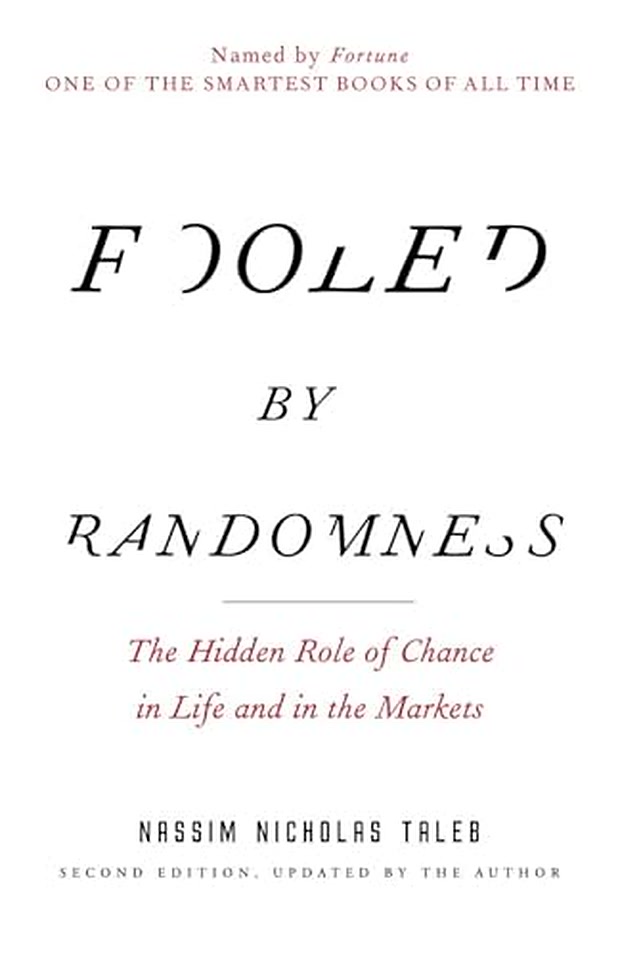
Fooled by Randomness
Get on Amazon →
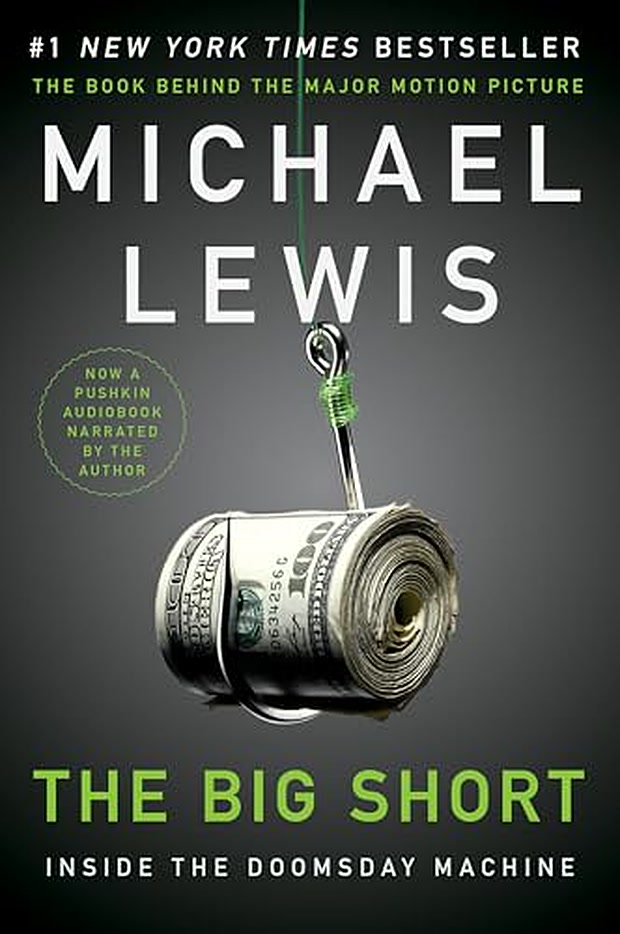
The Big Short
Get on Amazon →
As an Amazon Associate I earn from qualifying purchases.