Howard Marks
2010 05 12 Warning Flags
Memo to: Oaktree Clients
From: Howard Marks Re: Warning Flags
For about a year, I’ve been sharing my realiz ation that there are two main risks in the
investment world: the risk of losing money and the risk of missing opportunity. You can completely avoid one or the other, or you can compromise between the two, but you can’t eliminate both. One of the prominent featur es of investor psychol ogy is that few people
are able to (a) always balance the two risk s or (b) emphasize the ri ght one at the right
time. Rather, at the extremes they usually obsess about the wrong one . . . and in so
doing make the other the one deserving attention.
During bull markets, when asset prices are el evated, there’s great risk of losing money.
And in bear markets, when everything’s at ro ck bottom, the real risk consists of missing
opportunity. Everyone knows these things. But bull markets develop for the simple reason that most people are buyi ng – ignoring the risk of lo ss in order to keep from
missing opportunity – just when elevated prices imply losses later. Likewise, markets reach their lows because most people are selling, trying to avoid further losses and
ignoring the bargains that are everywhere. The Never-Ending Cycle
Why do people buy when they should sell, and sell when they should buy? The answer’s
simple: emotion takes over. Price increases excite investors and encourage them to buy,
and price declines scare them into selling. When the economy and markets boom, people tend to assume more of the same is in the offing. They find little to worry about, othe r than the possibility that others will make
more money than they will. Fear of loss recedes, and fear of opportunity costs takes
over. Thus risk aversion evapor ates and risk tolerance rises.
Risk aversion is absolutely essential in order for markets to function properly.
When sufficient risk aversion is present, people shrink from riskier investments and
prefer safer ones. Thus riskie r investments have to appear to offer higher returns in order
to attract capital. That’s as it should be. But when people get excited about the prospect of easy money – even if from assets or
investment strategies that ha ve become far too popular, turn ing into overpriced manias –
they frequently drop their risk aversion and adopt risk tolerance instead. Thus they swarm into the investment du jour without concern for its elev ated price and risk. This
behavior should constitute an important warning flag for prude nt investors.
© Oaktree Capital Management, L.P.
All Rights Reserved
In the same way that expanded risk tolera nce accompanies appreciated asset prices
and contributes to the risk of loss, so do es risk aversion tend to rise in times of
depressed prices, increasing the risk of missed opportunity. When people refuse to
buy assets regardless of their low prices, they miss out on the best, lowest-risk returns of
the cycle.
Recent History – on the Upside
Just as the recent market cycle was extreme, so was the swing in attitudes regarding the
“twin risks.” And thus so are the resultant learning opportunities.
Risk aversion was clearly inadequate in th e years just before the onset of the crisis
in mid-2007. In fact, I consider th is the main cause of the crisis. (Last year,
DealBook, the online business publication of The New York Times , asked me to write
about what I thought had been behind the cris is. My article, entitled “Too Much Trust,
Too Little Worry,” was published on October 5, 2009. It offers more on this subject
should you want it.) Here’s the background re garding the early part of this decade:
Interest rates kept low by the Fed combined with the first three-ye ar decline of stocks
since the Depressionto reduce interest in traditional investments. As a result, investors shifted their focus to alternative and innovative investments such as buyouts,
infrastructure, real estate, hedge funds and structured mortgage vehicles. In the low-
return climate of the time, much of the app eal of these asset classes came from the fact
that they promised higher returns thanks to their use of leverage, whether through
borrowing, tranching or derivatives. Given the high promised returns, investors forg ot about (or chose to ignore) the ability of
leverage to magnify losses as well as gains. Contributing to investors’ rosy view of
leverage’s likely impact was their belief that risk had been banished by (a) the efficacy of
the Fed and its “Greenspan put ,” (b) the combination of securitization, disintermediation,
tranching, decoupling and financ ial engineering, and (c) th e “wall of liquidity” coming
toward us from China and the oil producing nations.
For these reasons, few market participants were afraid of losing money. Most just
worried about missing opportunity . The unattractive outlook for stocks and bonds
meant investors would have to be aggressive and innovative if they were going to earn
significant returns in the low-return environment. Thus ri sk aversion (a) was unnecessary
and (b) would be counter-productive. “You’d be tter invest in this new financial product,”
people were told. “If you don’t, you’ll miss out. And if you don’t and your competitor
does – and it works – you’ll look out-of-step and fall behind.” When contemplating a virtuous circle without e nd, investors usually think of only one word: “buy.”
This describes the process through which fear of misse d opportunity can overcome
skepticism and prudence . And in this period, that’s what happened. No one worried
© Oaktree Capital Management, L.P.
All Rights Reserved
3about losing money. Fear of missed opportuni ty drove most investors, and Citibank’s
Chuck Prince famously said, “. . . as long as the music is playing, you've got to get up
and dance. We're still dancing.” Although he worried about a possible decline in
liquidity, he worried more about falling be hind in the manic race to provide capital.
Recent History – on the Downside
The events from mid-2007 through late 2008 or early 2009 demonstrate the reverse in
operation. The upward trend in home prices ground to a halt and subprime mortgages began to default in large numbers. Le veraged vehicles melted down. Credit became
unavailable, and financial in stitutions needed rescuing. Recession caused spending to
contract, and corporate profits declined. Bear Stearns, Merrill Lynch, AIG, Fannie Mae, Freddie Mac, Wachovia and Washington Mutual all required rescues. Bank capital,
commercial paper and money market funds needed federal guarantees. After the bankruptcy of Lehman Brothers, people bega n to ponder the collapse of the financial
system. As often happens in scary times, “po ssible” morphed into “probable,” or at least
something very much worth worrying about. Now a vicious circle replaced the virtuous one of just a few months earlier. And with its
arrival, the fear of losing money replaced the fear of missing opportunity. As I’ve said
before, I imagine most investors’ cry was, “I don’t care if I ever make a penny in the
market again; I just don’t want to lose any more. Get me out!”
For most investors, no assumption was too negative to be true, and no potential
return made the risk of loss worth bearing. High yield bonds at 19% yields. First lien
leveraged loans at 18%. Investment grade bonds at 11%. None of these was sufficient to
induce risk-taking. As I wrote in “The Limits to Negativis m” (October 15, 2008), “Skepticism calls for
pessimism when optimism is excessive. But it also calls for optimism when pessimism is excessive.” By the fourth quarter of 2008, risk aversion ruled and risk tolerance had
disappeared. A skeptical view toward exce ssive pessimism was called for at a time of
unprecedented low asset prices, but few people could muster it. The credit markets
offered the highest returns in their history, but fear of losing money kept most investors
from seizing the opportunity.
In the middle of this decade we saw a manic period in which losses were
unimaginable. The resultant shortages of risk aversion and skepticism caused investors to buy at highs and assume unp recedented risks in order to avoid missing
opportunity. This was followed – as usual – by a collapse in which no negative event could be ruled out and no return was high enough to induce buying, all because investors wanted nothing other than to avoid losing money.
This cycle produced a treacherous, low-return period in which it was very hard to find
investments promising good returns earned with safety, and then a period of collapse in
which there were bargains everywhere but few investors possessed the requisite “dry
© Oaktree Capital Management, L.P.
All Rights Reserved
4powder” and intestinal fortitude with whic h to buy. That’s the background. Where do
we stand today?
Signs of the Times
Optimism, adventurousness and unworried behavior characterized the pre-crisis period,
and investor behavior reflected those attitudes. In my memo “It’s All Good” (July 16,
2007), just before the onset of the crisis, I mentioned some of the warning signs in the
credit markets:
Unlike the historic norm, it’s routine today to i ssue CCC-rated bonds. It’s
easy to borrow money for the express pur pose of distributing cash to equity
holders, magnifying the company’s leverage. It’s so easy to issue bonds with little or no creditor protection in the indentur e that a label has been
coined for them: “covenant-lite.” A nd it’s possible to issue bonds whose
interest payments can be paid in mo re bonds at the option of the borrower.
The first requirement for an elevated opportunity in distre ssed debt is the
unwise extension of credit, which I de fine as the making of loans which
borrowers will be unable to service if things get a little worse. This
happens when lenders fail to require a sufficient margin of safety. . . .
The default rate in the high yield bon d universe is at a 25-year low on a
rolling-twelve-month basis. Under such circumstances, how could the
average supplier of capital be expected to maintain a high level of risk
aversion and prudence, especially when doing so means ceding all the loan making to others? It’s not for nothing that they say “The worst of loans are
made in the best of times.”
The inspiration for today’s memo came as my pile of clippings began to swell with indications that pre-crisis beha vior is coming back. Here ar e excerpts from a few, with
emphasis added in each case: On covenant-lite loans –
Are debt investors just stupid? Th at might help explain why they’re
buying covenant-lite loans again. These deals, which carry few restrictions on borrowers, became a sta ndard bearer for easy money. They
may have helped some companies limp through the downturn – but they’ve left lenders saddled with lots of risk and little return. It’s easy to see why companies like covena nt-lite loans. . . . But for owners
of the debt, the attraction is far le ss clear beyond the familiar short-term
reach for yield. . . .
© Oaktree Capital Management, L.P.
All Rights Reserved
5Lyondell Chemical is paying [Libor pl us 400 basis points] on its recent
$500 million covenant-lite deal. And th e energy refiner will emerge from
bankruptcy with a much slimmer debt lo ad than before it filed for Chapter
11.
Lyondell’s terms are better than 2007’s crop of covenant-lite loans, to be
sure, but lenders still are essentiall y relinquishing their right to force
companies into paying them more m oney, or exiting the loan entirely,
should their creditworthiness tumble. So why are lenders doing it again? Lyondell Chemical’s answer: investor
demand for higher yielding assets. This is a familiar mantra while official interest rates remain low. But lenders should be mindful of loosening
standards or risk finding themselves once again on the short end of the
stick. (“Don’t call it a comeback,” breakingviews , April 5)
On payment-in-kind loans and flexibility –
Clint Eastwood’s Dirty Harry char acter famously held a gun to a
suspect and asked: “Do you feel lu cky?” Investors in credit markets
seem to be saying yes, if Cerberus’ refinancing of Freedom Group, maker
of Remington firearms, is any indication. A deflating gun bubble backfired on the private equity firm’s plans last
year for an initial public offering of Freedom. Now trigger-happy credit
investors are taking off their safeties a nd letting Cerberus unload some of
its stake. The $225 million of notes are useful ammo for Cerberus. They allow Freedom to either pay the interest in cash or half in cash and half in
additional notes at the company’s discretion. The financing allows
Cerberus to get cash back on its inve stment today by buying back preferred
stock held by the private equity group ahead of an eventual IPO. . . . The buyers of these notes, though, are taking their chances. Freedom doesn’t look overleveraged according to its historic cash flow – the company’s debt level is about three times “adjusted EBITDA” for 2009. But sales of rival gun-makers are continuing to fall. . . .
Moreover, these sorts of notes are no toriously difficult to price. The
investor has to figure out the risk of the company encountering cash flow
problems, whether the firm will actua lly pull the toggle trigger, and how
much the PIK feature may reduce their potential recovery in the event of
default. Indeed, many investors took drubbings on similar notes issued at
© Oaktree Capital Management, L.P.
All Rights Reserved
6the top of the credit boom. Caution is warranted when investors remove
their trigger locks. (“Do you feel lucky?” breakingviews , March 31)
On initial public offerings –
It is springtime for IPOs. . . . KKR and Bain, two of the most aggressive private-equity firms du ring the buyout boom, are now as
aggressively looking to cash out . They are leading what is expected to
be a season of IPOs as long as the markets continue to stabilize or climb. The IPOs would allow the firms to partially cash out their stakes and
return money to investors. They also could use the proceeds to pay down the sizable debt used to finance the takeovers. (“Bain, KKR to Push New
Crop of IPOs,” The Wall Street Journal , April 9)
On leveraged loans –
Even as worries escalate about the ab ility of highly rate d countries to fund
themselves, there is a buzz at the other end of the credit spectrum.
Leveraged loans, a source of funding for private-equity acquisitions,
are drawing investor interest again after a long period in the
doldrums. In the U.S., there are signs of life in the collateralized-loan-obligation
market, with the year’s first deal not only refinancing an existing
CLO but bringing in new money, too. In Europe, HarbourVest Partners
is launching a listed fund to invest in mid-market leveraged loans.
Leveraged-finance bankers are more bullish, and new loans have started to flow. . . . There are wider implications, too: Cash moving into the loan market
represents a greater willingness to hold more illiquid assets, an
important development. . . . (“A Pulse Finally Returns to the Leveraged-
Loan Market,” The Wall Street Journal , April 12)
On dividend recaps –
Blackstone Group LP and other pri vate-equity firms are accelerating
sales of junk bonds and leveraged loans to pay themselves dividends
in a sign the market for the ri skiest debt may be overheating.
Apria Healthcare Group Inc., owned by Blackstone, is seeking consent
from bondholders to sell notes to is sue a dividend, following at least six
similar offerings this year, accordi ng to data compiled by Bloomberg.
© Oaktree Capital Management, L.P.
All Rights Reserved
7Including loans, companies have raised $10.8 billion in debt to fund
payouts this year, compared with $1 billion in all of 2009 and $1.3 billion
in the prior 12 months, according to Standard & Poor’s LCD. Private-equity firms are taking advantage of record high-yield, high-risk bond sales and a rally in loans to extr act cash from companies they own,
awaiting a rebound in leveraged buyouts and initial public offerings. So-
called dividend deals, which permeated debt markets in 2006 and 2007 before the credit seizure, may signal investors are becoming too
complacent, said William Quinn, chairman of American Beacon Advisors Inc. “You start to be concerned that you’r e increasing leverage, which was one
of the things that created these prob lems in 2008,” said Quinn, who helps
oversee $45 billion for the fund mana ger in Fort Worth, Texas. “I
understand why private-equity fi rms do it, but I would be
concerned.” (“Dividend Deals Rebound as Blackstone Seeks Cash,” Bloomberg , April 16)
Companies may increase borrowing to pay shareholder dividends in a
record year for junk bonds, St andard & Poor’s said. . . .
“We are starting to see the proceeds of high-yield issues being
channeled to shareholders as dividends, something that is less-welcome from a credit perspectiv e, reminiscent of the leveraged
finance market back in 2007,” analysts led by Taron Wade wrote . . . .
Companies owned by LBO firms in 2007 issued a record 6.1 billion euros
of loans in the first half to pay dividends to shareholders, data compiled by Fitch Ratings show. Private-equity firms “essentially decr eased the risk of their portfolio
equity investments, boosting their nea r-term equity returns at the expense
of the credit quality of the compan ies themselves,” according to S&P.
(“Junk Bond Issuers Increase Dividend Deals, S&P Says,” Bloomberg ,
April 20)
On collateralized loan obligations –
Citigroup is set to launch its second leveraged loan structured products
transaction this year, this time for a large private equity client, as debt
managers and bankers look to revit alise the markets which drove the
buyout boom. . . .
© Oaktree Capital Management, L.P.
All Rights Reserved
8If the transaction goes ahead soon, it will be only the second CLO to be
sold since the beginning of 2009. La st month Citigroup structured a
$525m CLO managed by US fund manage r Fraser Sullivan Investment
Management. . . .
Leveraged finance bankers are hopeful the CLO market can take off again as it would provide greater availability of finance for leveraged loans, the
engine of the private equity industr y. The market for CLOs ground to a
halt after the collapse of Lehman Br others pushed credit markets into
freefall. Even the most actively traded leveraged loans lost as much as a third of their face value in the depths of the crisis. (“Citigroup markets second CLO,” Financial News , April 19)
On buyouts –
Private equity firms bear some resemblance to children at a fairground: they jump on a ride as dealmaking gathers pace, whizzing
faster and faster, before jumping off as the cycle slows down. As the ride starts to gather pace again, buyout firms are back, with some
eyeing the biggest rides. (Emphasis in the original)
Mega-deals – transactions over $10 bn that were favoured in the boom
years of 2006-2008 but have been crimped by the lack of debt – are making a comeback. Last week, Blackstone Group and other investors were in talks to acquire financia l data processing company Fidelity
National Information Services, accordi ng to The Wall Street Journal.
The acquisition of Fidelity, which ha s a market capitalisation approaching
$10 bn and about $3 bn in debt, woul d be the largest leveraged buyout
since the credit crisis struck. . . .
Bankers and buyout executives said the resurrection of large buyouts
was being driven by a booming high-yield bond market. With low
interest rates in Europe and the US, investors are more willing to take the risk of weaker credits because it allows them to secure yields
unavailable in other forms of lending. (“Are dealmakers ready for
another white-knuckle ride?” Financial News , May 10)
On investor psychology –
Irrational equanimity is back. No t only are developed market stocks
back to pre-Lehman levels, but invest ors’ comfort levels are in a zone
not seen since the eve of the credit crisis in early 2007. Apart from US stock indices, this shows up in the price investors will pay to insure
© Oaktree Capital Management, L.P.
All Rights Reserved
9against volatility, with the CBOE Vix index down to its lowest since the
crisis eve of July 2007, and in sharp reductions in cash cushions held by
institutions. Merrill Lynch’s widely followed survey of fund managers . . . finds that more now want companies to pay high er dividends or make more capital
expenditures than see them pay down debts. . . .
Such equanimity is not totally irration al. Macroeconomic data in the past
month have run ahead of expectations . When the herd trampling forward
is this bullish, it is not a good idea to stand in its way. But it would be
easier to feel comfortable with curr ent share price levels if investors
showed a little more unease. Complacency on this scale suggests risk of a correction. (“Investor sentiment,” Financial Times, April 14)
Just as one returning swallow doesn’t make a summer, anecdotal evidence of rising risk
tolerance does not mean entire markets have returned to dangerous le vels. But it’s a fact
that issuers and investment ba nkers can do things today that they couldn’t do a year or
two ago. The door is open to transactions th at wouldn’t be possible if risk aversion
were running high. The clear inference is that fear of loss has declined and fear of
missed opportunity has come back to life. That’s an important observation.
Where Did the Unease Go?
Just a short while ago, I believed investors had been sufficiently traumatized that the
willingness to bear risk would be absent for ye ars. But it came back in just a matter of
months. What explains that? For one thing, the crisis – as painful as it was – was surprisingly brief. The worst of it began in the third quarter of 2008 with th e disclosure of weakness at financial
institutions. The onset of the most intense part of the crisis can be dated to Lehman
Brothers’ September 15 bankruptcy filing. Remarkably, high yield bonds began to
recover just three months later, with most of the indices showing gains of roughly 5% for
the month of December. So in the credit mark ets, the worst pain lasted only about three
months and quickly gave way to recovery. And what kicked off the recovery? Fear of missing opportunity was resurrected by the
Fed and other central banks which forced inte rest rates on short-term government debt to
near zero. It might have been the banks’ intent, or it might have been an unintended
consequence, but those low rates pushed investors to engage in riskier behavior . The
returns on T-bills and money market funds we nt to a fraction of a percent, meaning
investors had to crawl out on the limb in pur suit of returns they could live with.
Further, governments flooded the system w ith liquidity and produced the opposite of
crowding out. When governments are big issuers of debt, it can be hard for non-
© Oaktree Capital Management, L.P.
All Rights Reserved
10government issuers to raise money. But when governments are big buyers of securities
instead, the capital they inject into the ma rkets can make it easy for others to issue
securities.
Investors flooded risky companies wi th money in March even as the
government prepares to shut down a ke y engine driving one of the greatest
corporate-bond rallies in history. A total $31.5 billion in new high-yi eld debt, otherwise known as junk
bonds, hit the market through Tuesday, exceeding the previous monthly record in November 2006. Partly propelling the activity: The Federal
Reserve’s massive mortgage-buying pr ogram, [which recently came to an
end]. By buying $1.25 trillion of mortgage s ecurities, the Fed absorbed a flood
of assets that otherwise would have needed buyers. That kept money in the hands of investors, who went searching for something else to buy. The Fed’s underpinning encouraged investors to seek riskier, higher-yielding
securities. A natural choice: co rporate bonds. (“Bonds Cap Epic
Comeback,” The Wall Street Journal , March 31)
One of the prime tasks investors must perform is to stay alert to extreme behavior and
take hints as to what we should do from what we see taking place around us. This is best
expressed in Warren Buffett’s helpful reminder: “The less prudence with which others
conduct their affairs, the gr eater the prudence with which we should conduct our own
affairs.”
Investor behavior betw een 2003 and mid-2007 was sending some very worrisome
signals. It’s obvious in retros pect that all one had to do wa s take heed and lean in the
opposite direction. But observations regarding the past are no help for purposes other
than education. For observations to be profitabl e, they must relate to the present and the
future.
Investors have made a substantial move back in the direction of pre-crisis behavior.
That behavior has to be recognized and monitored. The pendulum has moved away
from the depression, panic, skepticism a nd excessive risk aversion we saw in the
fourth quarter of 2008, and with the disappe arance of those char acteristics have
gone the great bargain opportunities.
Uncertainty and fundamental weakness at th e depth of the crisis were offset by
irrationally low prices and th e potential for a rebound in ri sk tolerance, making most
assets a screaming buy. With most of the great bargains gone – along with excess risk
aversion – macro uncertainties should no longer be overlooked. Thus the caution,
discipline, patience, selectivity and discernment that were so unnecessary in 2009
are absolutely essential today.
© Oaktree Capital Management, L.P.
All Rights Reserved
11
* * *
I started this memo in late April, but I di dn’t get it out before Greece’s financial crisis
burst into full bloom last week. This give s me an opportunity to discuss the significance
of the recent developments (not the substan ce, however; that’ll have to await another
memo).
Investing defensively requires that when everything seems to be going well and
investors are feeling positive, we must sense the implicit danger and prepare for
negative developments.
In the mid-2000s, I began to warn that with asse t prices full, investors optimistic and their
behavior aggressive, it was important to worry about things that could come along to
derail the markets. When asked what they might be, my list of possibilities would go like this:
recession,
credit crunch,
$100 oil,
collapse of the dollar,
exogenous events such as terrorist attacks, or
something else.
The most dangerous possibilit y, I pointed out, was the last one. Markets and market
participants can adjust to th ings they see coming. What usually knocks them for a loop
are things they don’t anticipate. “We’re not expecting any surpri ses” is one of my
favorite oxymorons. By definition, surprises ar e things that aren’t anticipated, and thus
their arrival can be traumatizing.
Just a few months ago, I published a memo ca lled “Tell Me I’m Wrong” (January 22), in
which I listed a number of things that worried me. These included our reliance on
government stimulus and artificially low in terest rates; the uncertain outlook for
consumer spending, jobs and state and municipal finances; and the risks pertaining to inflation, exchange rates and interest rates. Here’s how I concluded:
My goal in this memo isn’t to expres s a forecast. I know no forecast – and
certainly not mine – is likely to be correct. What I do want to do is
caution that the considerable risks I see may be less than fully appreciated by those setting asset prices today. The greatest market risks lie in failure
of the macro economy to live up to th e expectations embodied in today’s
prices. . . .
Most people view the future as likely to repeat past patterns, which it may
or may not do. They tend to think of the future in terms of a single
© Oaktree Capital Management, L.P.
All Rights Reserved
12scenario, whereas it really consists of a wide range of possibilities.
(Remember Elroy Dimson’s trenchant observation that “risk means more
things can happen than will happen.”) And to the extent they do consider a variety of possibilities, few people include ones that haven’t been part of recent experience.
The uncertainties discussed above tell me today’s distribution of
possibilities has a substantial left-h and (i.e., negative) tail, probably
greater than at most times in the past. The proper response should be
to discount asset prices, allowing a substantial margin for error.
Forecasts should be conservative, yield spreads should incorporate
ample risk premiums, valuation para meters should be below the long-
term norms, and investor behavior should be prudent .
Conspicuously missing from my list of worries was Greece (and all it entails); thus it falls
firmly in the category of “something else.” Last week it dominat ed the headlines and
depressed markets worldwide. Thus in this short time I have proved two things: first, I
know little more than others about what th e future will bring and, second, when most
investors turn optimistic, it becomes important to worry. The issue of Greece and its debt has been on i nvestors’ radar screen s for months, but few
people seem to have understood its ramifications and the risks it presented to the markets.
Then, in recent weeks, things began to be di scussed daily in the media – such as Greece’s
profligacy and the risks involved in admitting it to the European Union; Europe’s lack of
an established mechanism for dealing with a problem of this nature; and its reliance on Germany to contribute voluntarily to a soluti on – that in hindsight it seems should have
been obvious. This tells us a few im portant things about investing:
Investors generally overestimate their ability to see the future, and the worst of them
act as if they know exactly what lies ahead.
It’s important to worry about what’s comi ng next. The fact that we don’t know what
it is shouldn’t permit us to thi nk there’s nothing to worry about.
Low asset prices allow us to invest aggre ssively, without much consideration given to
worrisome fundamentals and the possibility of negative surprises. But as prices rise,
so should our degree of concern over these things.
The bottom line is this: the fa ct that we don’t know wher e trouble will come from
shouldn’t allow us to feel comfortable in times when prices are full. The higher
prices are relative to intrinsic value, th e more we should allow for the unknown.
The recovery of 2009 in the face of significan t fundamental uncertainty meant that the
markets were reincorporating optimism and thus vulnerable to surprise and
disappointment. This in itself should be suffici ent to induce caution.
May 12, 2010
© Oaktree Capital Management, L.P.
All Rights Reserved
Legal Information and Disclosures
This memorandum expresses the views of the author as of the date indicated and such views are
subject to change without notice. Oaktree has no duty or obligation to update the information contained herein. Further, Oaktree makes no rep resentation, and it should not be assumed, that
past investment performance is an indication of future results. Moreover, wherever there is the
potential for profit there is al so the possibility of loss.
This memorandum is being made available for educational purposes only and should not be used
for any other purpose. The information contai ned herein does not constitute and should not be
construed as an offering of advisory services or an offer to sell or solicitation to buy any
securities or related financial instruments in any jurisdiction. Certain information contained herein concerning economic trends and performan ce is based on or derived from information
provided by independent third- party sources. Oaktree Capita l Management, L.P. (“Oaktree”)
believes that the sources from which such informa tion has been obtained are reliable; however, it
cannot guarantee the accuracy of such inform ation and has not independently verified the
accuracy or completeness of such information or the assumptions on which such information is
based. This memorandum, including the information cont ained herein, may not be copied, reproduced,
republished, or posted in whole or in part, in any form without the prior written consent of
Oaktree.
© Oaktree Capital Management, L.P.
All Rights Reserved
Recommended Reading

The Most Important Thing
Get on Amazon →
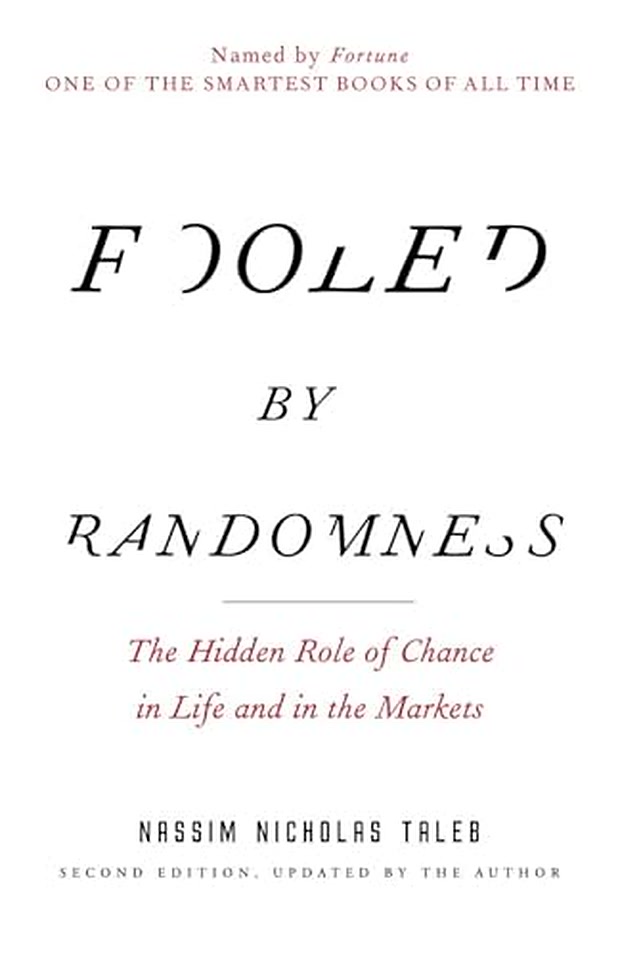
Fooled by Randomness
Get on Amazon →
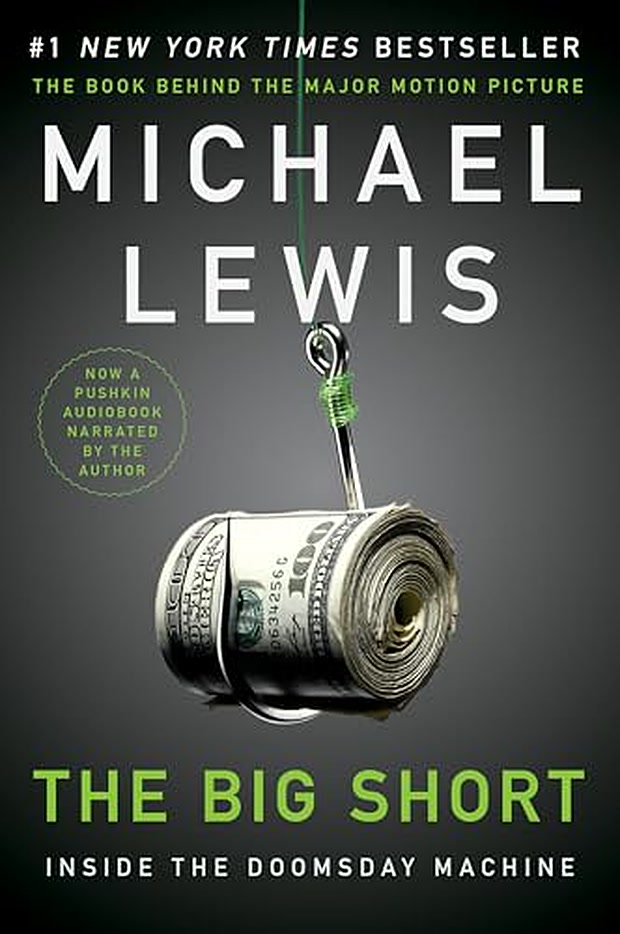
The Big Short
Get on Amazon →
As an Amazon Associate I earn from qualifying purchases.