Howard Marks
2009 11 10 Touchstones
© Oaktree Capital Management, L.P.
All Rights ReservedMemo to: Oaktree Clients
From: Howard Marks Re: Touchstones
In the two-plus years sin ce the onset of the financial crisis, it’s been a regular theme of mine that
we should look back, identify the causes and learn fr om them. I’ve tackled this assignment in a
number of memos and a variety of ways. Now, despite the fact that you’ve heard much of this
from me before, I’m going to try to pull it all together, using the quotati ons, adages and images
that I feel best capture the esse nce of what we’ve been through. When I think back, these are the
ones that stand out. “Greed Is Good”
There’s no debating which line from the film Wall Street is the most memorabl e. It’s hard to
forget the image of slicked-back takeover artist Gordon Gekko ur ging on his troops, invoking the
positive power of self-interest. What he meant by “greed is good,” of course, was that greed – or
self-interest, or the profit motive – is what dr ives people and companies operating in a free-
market setting to strive for more and better, a nd thus to work hard and optimally allocate
resources. It’s the force that motivates Adam Smith’s “invisible hand” and carries economies to increased output and higher standards of living. Among the many pendulum-like phenomena we occas ionally witness is the swing in people’s
willingness to rely on the free market. First they trust the market to come up with solutions. Then the shortcomings of those solutions are laid bare and there’s a call for regulation. Then the
folly of government involvement becomes evident and people want the free market back, and so forth. Because neither extreme is perfect, the oscillation between them goes on. Governments
can’t run economies or companies. But it’s equa lly true that in a free market, the rules will
occasionally be stretched and participants harmed. In a free market, things will inevitably go past the optimal to the extreme. When they swing
back, the retreat can be painful. Thus, if we’re going to rely on the market to settle things, we
have to be willing to accept the consequences.
In the pre-crisis years, the fr ee market was revered and deferred to, and regulation was thought of
as little more than a potential impediment to the market’s processes. (An article I can’t locate in
my pile of clippings beautifully explained the dearth of government action: “That’s the kind of regulation you get from an administration that do esn’t believe in regulati on.”) That attitude
permitted financial institutions to take actions and bear risks that turned out to be unwise, unprofitable and unsustainable. Thei r strategies took them to the brink of disaster in 2008.
In a truly free market, Bear Stearns, Merrill Lynch, Citibank, AIG, Fannie Mae, Freddie Mac and others likely would have gone ba nkrupt. Those bankruptcies would have been quite instructive,
© Oaktree Capital Management, L.P.
All Rights Reserved 2but also quite painful. If the world is unwilling to live with such lessons from time to time – and
if some institutions are consid ered to be “too big to fail” fo r society’s purposes – then free
markets and self-interest ha ve to be restrained. Greed may be good, but it can be permitted to
run free only up to a point.
Nothing’s More Risky Than a Widespread Belief That There’s No Risk
The recent crisis came about primarily because investors partook of novel, complex and dangerous things, in greater amounts than ever before. They took on too much leverage and
committed too much capital to illiquid investments. Why did they do these things? It all
happened because investors believed too much, worried too little, and thus took too much
risk. In short, they believed they were living in a low-risk world.
In 2006 and early 2007, for instance, we heard a lot about the “wall of liquidity” that was coming
toward us from China and the oil producing countrie s, a flow that could be counted on to provide
capital and raise asset prices non-stop. Likewise, we were to ld (a) the Fed had tamed the
business cycle through its adroit management, (b) securitization, tranching and disintermediation
had reduced risk by putting it where it could best be handled, and (c) the “Greenspan put” could
always be counted on to bail out investors who made mistakes. Th ese and other things were said
to have lowered the risk level worldwide.
Belief that risk has been banished is a key element in allowing people to engage in practices
they would otherwise view as risky, and in p ermitting assets to be bid up to prices that
would clearly be too high in a world perceived to involve risk.
. . . former Fed Chairman Paul A. Volcker noted that one of the causes of the
financial crisis “was the ultimately explosive combination of compensation
practices that provided enormous incentives to take risks” just as new financial
innovations “seemed to offer assurance – fals ely, as it turned out – that those risks
had been diffused.” ( The Wall Street Journal, September 18, 2009)
Worry and its relatives, distrust, skepticism an d risk aversion, are essential ingredients in a
safe financial system. To paraphrase a saying about the useful ness of bankruptcy, fear of loss is
to capitalism as fear of hell is to Catholicis m. Worry keeps risky loans from being made,
companies from taking on more debt than they can service, portfolios from becoming overly
concentrated, and unproven schemes from turnin g into popular manias. When worry and risk
aversion are present as they should be, investor s will question, investigate and act prudently.
Risky investments either won’t be undertaken or will be required to provide adequate
compensation in terms of anticipated return.
But only when investors are sufficiently ri sk averse will markets offer adequate risk
premiums . When worry is in short supply, risky bo rrowers and questionable schemes will have
easy access to capital, and the financial system will become precarious. Too much money will
chase the risky and the new, driving up asset pr ices and driving down pr ospective returns and
safety.
© Oaktree Capital Management, L.P.
All Rights Reserved 3For a market to function, those who invest and lend in that market must believe
that their money is actually at ris k. (President Obama, September 14, 2009)
Clearly, in the months and years leading up to th e crisis, few participants worried as much as
they’re supposed to.
Soros’s Theory of Reflexivity
Some of the biggest problems arise because market participants think of their environment as a static arena in which they act. What they miss – to their frequent detriment – is that their actions
alter the environment, causing the results to differ from their expectations. George Soros has written and spoke n most articulately about the ability of investors’ actions to
change the environment. He calls this process “reflexivity.”
The generally accepted theory is that fi nancial markets tend towards equilibrium,
and on the whole, discount the future corr ectly. I operate usi ng a different theory,
according to which financial markets cannot possibly discount the future correctly because they do not merely discount the futu re; they help to shape it. In certain
circumstances, financial markets can aff ect the so-called fundamentals which they
are supposed to reflect. When that happe ns, markets enter into a state of dynamic
disequilibrium and behave quite different ly from what would be considered
normal by the theory of efficient markets. Such boom/bust sequences do not arise
very often, but when they do, they can be very disruptive, exactly because they
affect the fundamentals of the economy. . . . (George Soros, MIT Department of
Economics World Economy Laboratory C onference, Washington, D.C., April 26,
1994)
My son Andrew, now starting his investment career, has provided an illustration of reflexivity at work that’s clear and topical. For several years prior to the crisis, the desire for hi gh returns with
low risk (what else is new?) created strong dema nd for mortgage-based investment products such
as RMBS and CDOs. Underpinning it all was the fact that there had never been a nationwide
decline in home prices, and thus participants were confident that geog raphic diversification
would render levered mortgage pools safe, warranting triple-A rati ngs for most of the resulting
securities. Rising demand for these products required an increasi ng volume of underlying
mortgages. This need caused lending standards to be weakened and loans to be provided to home buyers with dubious creditworthiness. Easy financing allowed buy ers to bid up home
prices to levels that exceeded the homes’ rea listic values and made it tough for borrowers to
make their mortgage payments. When the perpetual-motion machine of house appreciation
ground to a halt in 2007, the combination of too- high prices and record mortgage defaults
resulted in the first nationwide decline in home prices. Thus, in the end, the belief that an
asset was safe led to investor behavior th at made it unsafe. That’s reflexivity.
In 2003-07, as described above, investors considered the world a low-risk place. Thus they
rushed to buy assets they found attractive, bo rrowing in order to buy more when their own
capital was exhausted. They expected purchases made with cheap leverage to produce high
© Oaktree Capital Management, L.P.
All Rights Reserved 4profits with low risk. But their buying drove up both the cost of the assets and the riskiness
of the environment, transforming their “low-risk” strategies into high-risk ones. The
consequences have become clear.
Greenspan and Bubbles
One of the most obvious ways in which investors change the environment is through the creation
of asset bubbles, like the one that popped in the summer of 2007. In a process that invariably
looks silly after the fact, they reach the conclusion that an investment is a sure winner, usually on
the basis of simplistic platitudes that simp ly can’t hold up under scrutiny. These include
“Internet stocks must rise because these companie s are going to change the world,” “real estate
(or gold) is a good hedge against inflation,” “hom e prices can never decline nationwide,” “oil
will appreciate because it’s being consumed fa ster than it’s being found,” and “alternative
investments (or hedge funds or private equity funds) hold the key to meeting investment goals.” Because of the strength attributed to these platitudes, investors go on to conclude that the investments they support will be profitable regardle ss of the price at which they’re undertaken.
How can this be right? It’s not possible that something can be a good investment regardless
of the price paid. But when a logical-seeming platitude is ad opted by the stampeding herd,
that belief is the result. That’s how we get bubbles.
Bubble thinking is irrational, given that it’s built on a belief that there’s no price too high. This
goes on to manifest itself in a variety of ways . In the 1970s, when hyper-inflation was rampant
and interest rates were astronom ical, people concluded that no matter the interest rate paid,
borrowing to buy “inflation protected” assets like re al estate would be profitable. That’s bubble
thinking.
In my forty-year career, I’ve seen bubbles in growth stocks, small stocks, oil stocks,
emerging market stocks and tech stocks, as we ll as such surefire winners as silver, homes
and buyouts. In each instance, there was a l ogical underlying rationale for the desirability
of the subject assets, but people overlooked th e possibility that bubble thinking had raised
prices to dangerous levels.
Alan Greenspan greatly influenced economic and market developments during his term as Fed
Chairman from 1987 to 2006, and his record on th e subject of bubbles was poor. He set the
world on its ear in 1996 by railing against “irratio nal exuberance” as the Dow Jones Index soared
past the 6,000 level, but he was quiet thereafter, rationaliz ing appreciation well beyond 10,000
based on gains in productivity. Here’s his position on bubbles:
. . . bubbles generally are pe rceptible only after the f act. To spot a bubble in
advance requires a judgment that hundred s of thousands of informed investors
have it all wrong. While bubbles that burst are scarcely benign, the consequences
need not be catastrophic for the economy. (June 17, 1999)
. . . it was far from obvious that bubbles, even if identified early, could be preempted short of the central bank induci ng a substantial contraction in economic
© Oaktree Capital Management, L.P.
All Rights Reserved 5activity – the very out come we would be seeking to avoid. Prolonged periods of
expansion promote a greater rational willi ngness to take risks, a pattern very
difficult to avert by a modest tightening of monetary policy . . . we recognized that,
despite our suspicions, it was very diffi cult to definitively identify a bubble until
after the fact. . . . the idea that the co llapse of a bubble can be softened by pricking
it in advance is almost surely an illusion. (August 30, 2002)
Thus it was his view that (a) bubbl es can only be detected in retr ospect, not as they occur, (b)
even if detected, bubbles are hard to deflate be nignly, (c) rather than deflate them, bubbles can
be managed, and (d) deflating bubbles isn’t the job of the Fed. This relaxed position on bubbles
can easily be seen as having abetted their growth. For example:
. . . testimony before Congress last week re futes, once and for all, the existence of
an alleged housing market “bubble,” sa id chief economists of the National
Association of Home Builders. . . . “The time has come to put this issue to rest,”
said NAHB Chief Economist David Seiders. “The nation’s home builders have
said it, the Realtors have said it, and now Alan Greenspan has said it once again,
in no uncertain terms: there is no such thing as a current or impending house
price bubble.”
Asked about the issue during his testimony, Greenspan sai d, “We’ve looked at the
bubble question and we’ve concluded that it is most unlikely.” He attributed
recent “sizeable gains” in home prices to “the effects on demand of low mortgage
rates, immigration and shorta ges of buildable land.” ( Business Wire, July 22,
2002, emphasis added)
Ignoring bubbles is a special case of ignoring risk in general. The philosopher George Santayana
is famous for having said, “Those who cannot reme mber the past are condemned to repeat it.”
Likewise, those who fail to learn from past bubbles are bound to suffer in the bursting of
new ones.
The More You Bet, the Mo re You Win When You Win
In the years just prior to the crash, obliviousne ss to risk encouraged numerous forms of risky
behavior. One of the greatest was the use of leverage to increase retu rns, a phenomenon that
became widespread.
People make investments on the basis of posi tive expected returns. When the cost of
borrowing is below the expected return, using leverage appears certain to magnify the gain.
Thus the Las Vegas maxim that heads this section comes into play, and it's that kind of thinking that gives leverage its seductive power.
But there’s so much more to leverage than that, and unfortunately the rest is learned only when
things go badly. Leverage doesn’t make an inve stment better; it merely magnifies the gains and
losses. Leverage is what James Grant of Grant’s Interest Rate Observer calls “money of the
mind,” meaning it can vanish if the lender is able to take his money back. And any combination
© Oaktree Capital Management, L.P.
All Rights Reserved 6of fundamental difficulty, falling asset prices, redu ced market liquidity, collateral value tests and
margin calls can be the ruination of investors employing leverage. That’s what befell many in
the fourth quarter of 2008.
In 2003-07, interest rates brought lo w by the Fed, modest demands for risk premiums on the part
of unworried investors, and financial instituti ons’ competition to lend conspired to make low-
cost leverage readily available. That cheap financing (a) convinced pe ople that high leverage
was the route to increased returns (even from low-yielding underlying investments), (b) armed
all parties for a bidding war for assets, and (c ) made people rush to borrow and buy before the
river of financing ran dry. The result was a buying spree of massive proportions, the bill for
which – in terms of debt maturities, often unpayable – will come due in the next few years.
Like just about everything else in investing, le verage is neither good nor bad per se. Used
at the right time, in judicious amounts, to pur chase low-priced assets, it’s a good thing. But
that’s not the story of the pre-crisis years. And that’s a big reason for the trouble we’ve
had since.
“Risk Means More Things Can Happen Than Will Happen”
The above quote from Elroy Dimson of the London Bu siness School helps bring risk into focus.
Risk has been the subject of excessive comp lication and sophistication, but Dimson’s simple
formulation makes clear what it’s all about.
Investing consists entirely of dealing with the future. To do that, people must form opinions
about what lies ahead. But few things are more potentially harmful than projections. I’ve
collected a lot of quotations on this subject. Here are my two favorites, but I have a million
more:
We have two classes of forecasters: Those who don’t know – and those who don’t
know they don’t know. John Kenneth Galbraith It’s frightening to think that you might not know something, but more frightening to think that, by and large, the world is run by people who have faith that they
know exactly what’s going on. A m o s T v e r s k y
One of the errors committed in 2003-07 – forming a cornerstone of the crisis – consisted of
believing too much in the ability to predict the future. Investors, risk managers, financial
institution executives, rating agencies and regul ators trusted forecasts, extrapolations and
computer models. This made them comfortable with ri sk, always a dangerous arrangement.
The “I know” school of investing has received frequent mention in my memos (e.g., “Us and
Them,” May 7, 2004). Its members – money ma nagers, Wall Street strategists and media
© Oaktree Capital Management, L.P.
All Rights Reserved 7pundits – believe that there’s a si ngle future, it is knowable in advance, and they’re among the
people who know it. They’re eager to tell you wh at the future holds, and equally willing to
overlook the inaccuracy of their past predictions. What they repeatedly ignore is the fact that
(a) the future possibilities cove r a broad range, (b) some of them – the “black swans” –
can’t even be imagined in advance, and (c) even if it’s possible to know which one outcome
is the most likely, the others have a substant ial combined probability of occurring instead.
Thus one key question each investor has to answer is whether he views the future as
knowable or unknowable. An investor who feels he knows what the future holds will act
assertively: making directional bets, concen trating positions, levering holdings and
counting on future growth – in other words, doing things that in the absence of
foreknowledge would increase risk. On the ot her hand, someone who feels he doesn’t know
what the future holds will act quite differently: diversifying, hedging, levering less (or not
at all), emphasizing value today over growth tomorrow, staying high in the capital
structure, and generally girding fo r a variety of possible outcomes.
The first group of investors did much better in the years leading up to th e crash. But the second
group was better prepared when the crash unfol ded, and they had more capital available (and
more-intact psyches) with which to profit from purchases made at its nadir. Never Forget the 6'-Tall Man Who Drowned Crossi ng the Stream That Was 5' Deep on Average
The range of possibilities – the environments with which we must deal – invariably will include
some bad ones. We must prepare for them, a nd the unavoidable prerequisite for doing so is
being aware of them. Follo wing from the section above, the key is to view the future as a
range of possibilities, not a reliable point estimate .
How does the successful investor prepare for the uncertain future? By building in what
Warren Buffett calls “margin for error” or “mar gin of safety.” It’s having this margin
that enables us to do okay even when things don’t go our way.
If an investor prepares for a single future a nd attempts to maximize under the assumption that his
view will prove right, he’ll be in big trouble if it doesn’t. The investor who backs off from the
maximizing position is likely to do better when nega tive surprises occur. Thus it’s essential to
realize a few things:
It’s not sufficient to think about surviving “ on average” – investment survival has to be
achieved every day, under all circumstances.
The ability to survive under adverse conditions comes from a portfolio’s margin for error.
Ensuring sufficient margin for error a nd attempting to maximize returns are
incompatible .
The use of leverage illustrates a special case of the above. Le verage increases the gains if you
succeed and the losses if you fail. Thus levera ge increases the probability of maximizing under
favorable outcomes and reduces your margin of safety under unfavorable ones. In 2008,
leveraged loans that ultimately proved to be mo ney-good declined in price for psychological and
© Oaktree Capital Management, L.P.
All Rights Reserved 8technical reasons. Loan investors who were able to hold on recovered, but many who had
bought with leverage couldn’t do so. They drowned in the deep part of the stream.
Chuck Prince on Dancing
A quotation from the former CEO of Citigroup contains just 30 wo rds, but it could serve as a
case study regarding the events leading up to the crash:
When the music stops, in terms of liquidity, things will be complicated. But as long as the music is playing, you’ve got to get up and dance. We’re still dancing.
(Charles Prince, July 9, 2007)
I suspected in mid-2007 that this quotation would end up being emblematic of the cycle. It’s been replayed many times, but usually without the first dozen words. Prince seems to have been
more aware of what was going on than people give him credit for. He may have sensed the bank
was on thin ice in lending and levering, like the re st. The problem wasn’t that he overlooked the
danger; the problem was that he felt he had to participate anyway.
One of the dilemmas faced by businesses is that they can conclude that they have no choice but
to take part in dangerous behavior. Usually this is because they’re unwilling to cede market
share. On October 5, Leo Strine, Vice Chancello r of the Delaware Court of Chancery, wrote as
follows in The New York Times Dealbook :
. . . the ability of any particular firm to resist imitating the overly risky, but law-
compliant behavior of competitors will be compromised to the extent that
managers face criticism or even rem oval for not keeping up with so-called
industry leaders whose high, short-term retu rns have pleased a stock market filled
with short-term invest ors looking for alpha.
In “The Race to the Bottom” (February 14, 2007) , I described the dangerous behavior that
providers of capital engage in when the competition becomes heated. The formula is one of the
simplest: when there’s too much money chasing too few deals, asset prices are driven up,
prospective returns are driv en down, and risk rises .
Those seven little words – too much money chasi ng too few deals – represent an absolute death
knell for the availability of good returns earned with safety. It should be possible to know when
this is the case, as Prince did, but people tend to join in neverthele ss. Often this is true because,
even if they recognize the danger, they’re also aware that “bei ng too far ahead of your time is
indistinguishable from being wrong,” and they don’t want to be out of step.
The way I see it, investors face two main risks: the risk of losing money and the risk of
missing out . Although investors should balance the two, in reality this is yet another of those
arcs along which the pendulum swings regularly between extremes.
The disposition of a market – the position of the pendulum – can be inferred from the behavior of
participants regarding these two risks. In th e years just before the crash, encouraged by the
© Oaktree Capital Management, L.P.
All Rights Reserved 9purported risk-reducers described on page 2 above, investors generally ignored the risk of loss.
In those heady times, they feared only mi ssing opportunities, looking too conservative, and
losing business. This combina tion spurred them to employ aggr essive strategies, innovative
products, leverage and illiquidity. When most people think the worst imaginable outcome is
failing to participate fully in gains, the result is risky be havior. They’re inevitably
reminded that there’s worse, but it can take a long time to happen.
“It’s Only When the Tide Goes Out That You Find Out Who’s Been Swimming Naked”
When I came across the above quotation from Wa rren Buffett, I borrowed it for “It’s All Good”
(July 16, 2007) and later devoted an entire memo to it (“The Tide Goes Out,” March 18, 2008).
Buffett’s way of saying things combines brevity, humor and pinpoint accuracy, and this is a great
example. Financial innovation was a major co mponent in building the base fo r the crisis. As I’ve said
before, popularization of new investment products is possible only in rising markets, with
their suspension of skepticism, easy access to money, and dearth of trying moments. On the other hand, innovations are only tested in falling markets, and few pass the ultimate
test. Californians’ homes may contain construction flaws, but we only le arn about them during
earthquakes. Likewise, a fatally flawed investment product can easily survive until it’s tested in
a bear market. The extensive investment innovation of 2003-07 was driven by the poor performance of stocks in
2000-02 and the low yields available on high grad e bonds. A large number of new products and
strategies emerged, increasing in popularity in a salutary envi ronment. Few investors were
troubled by the products’ dependence on high leve rage or suddenly commonplace triple-A
ratings, or by the fact that they hadn’t been tested in tough times.
It’s not surprising that bull market developmen ts were defrocked in the tougher times of 2007-
08, but it’s somewhat shocking how many exam ples there are. It turned out that:
losses on investments involving leve rage, illiquidity or risky asse ts could be much worse than
the “worst case” that had been predicted,
beta had been confused for alpha, just as leverage had for value added,
there was nothing absolute about “absolute return,” and “marke t neutral” strategies were
correlated with the market,
the “golden age of private equity” had been a function of easy money, not bargain purchases,
sharing the upside with investment managers isn’ t sufficient to align their interests with those
of their clients, and
things that “should ha ppen” often don’t.
While an extreme case, the story of Bernie Madoff presents an apt example of this phenomenon.
Madoff’s fictitious returns weren’t very high, but they were remarkably steady; thus his clients
thought of his fund as a high-yieldi ng T-bill. This made it easy for the skilled Ponzi schemer to
satisfy the few withdrawal requests with cash from eager new investors. This could have
continued ad infinitum if not for the market collapse in 2008. Madoff’s investors had complete
© Oaktree Capital Management, L.P.
All Rights Reserved 10confidence in him, but they couldn’t get money they needed from other funds that had put up
gates, or they didn’t want to sell other investments that, unlike Bern ie’s, were showing big
losses. So Madoff received requests for $7 billion of withdrawals, an amount he simply couldn’t
raise from new suckers, and his nakedness became apparent.
The Madoff story exemplifies the ability of ill-founded investments to prosper in bull markets, and the role of bear ma rkets in exposing them. Now that the tide has gone out, many pre-
crisis miracles have been exposed as non-value based, overly dependent on prosperity and
easy money, pro-cyclical, over-hyped or just plain flawed. Hopefully next time, investors will give more thought to how their bull-market dalliances will fare when the tide goes out.
The Opposite of a Bubble
On the heels of the lessons regarding the run- up to the crash, the latter part of 2008 provided
several lessons about behavior in times of crisis. With the fundamental outlook terrible,
psychology depressed and technical conditions featuring a great de al of forced selling, that
period represented one of the greatest buying opportunities I’ve ever seen.
I expressed my view that, having been too optim istic before the crash, people were now taking
things too far on the downside. It’s not easy to resist emotional excesses at highs and lows, but
it’s by doing so that the best investment decisions can be made:
. . . it’s improbable events that brought on the credit crisis. Lots of bad things
happened that had been considered unlikel y (if not impossible), and they happened
at the same time, to investors who’d taken on significant leverage. So the easy
explanation is that the people who were hurt in the credit crisis hadn’t been
skeptical – or pessimistic – enough. But that [realization] trigge red an epiphany:
Skepticism and pessimism a ren’t synonymous. Skepticism calls for pessimism
when optimism is excessive. But it also calls for optimism when pessimism is
excessive . (“The Limits to Negativism,” October 15, 2008)
The swing of the pendulum to one extreme or anothe r is a constant in the investment world: from
optimism to pessimism, from credulous to skeptical, from sanguine to pa nicked, from wide-open
capital markets to windows slammed shut, from mo re buyers than sellers to more sellers than
buyers and, consequently, from overpriced to underp riced. Thus I was thrilled when an article
by my friend James Grant provided a quotation that beautifully sums up the end result of this
process:
To the English economist Arthur C. Pi gou is credited a bon mot that exactly
frames the issue. “The error of optimism dies in the crisis, but in dying it gives
birth to an error of pessimism. This new error is born not an infant, but a
giant.” (The Wall Street Journal , September 19, 2009, emphasis added)
Optimism thrives in bubbles. Th at’s what they’re built on, with optimism and rising prices
reinforcing each other. Likewise, crises are brought on by an extreme turn toward pessimism. Falling prices and pessimism contribute to each other on the way down.
© Oaktree Capital Management, L.P.
All Rights Reserved 11In the years just before the crash, no view wa s considered too optimistic. There were few
skeptics around to point out that a notion might be too good to be true. And then, as Pigou says,
the opposite became true post-Lehman Brothers. There was no scenario of which someone
wouldn’t suggest, “But what if it’s worse than that?” Now no idea was considered too negative
to be true.
The error is clear. The herd applies optimism at the top and pessimism at the bottom.
Thus, to benefit, we must be skeptical of the optimism that thrives at the top, and skeptical
of the pessimism that prevails at the bottom.
Pigou makes an excellent additional point. Bubble s usually build gradually over time, the result
of a steady accretion of logical basis, favorable developments, high returns being achieved,
platitudes taken to extremes, willing suspension of disbelief, rising optimism and the recruitment
of new buyers. But when the bubble’s faulty underpi nnings are exposed, it tends to collapse in a
rush. The excess of pessimism does arrive quickly, “born a giant.” Or as my partner Sheldon Stone puts it, “the air goes out of the balloon a lot faster than it went in.”
A recent report by Ian Kennedy and Richard Ri edel of Cambridge Associates, entitled
“Behavioral Risk,” provides an excellent explana tion for this process a nd describes its effect:
[During good times,] we suffer from what James Montier characterizes as “the
illusion of control: the belief that if things go wrong, we will be able to sort them
out.” When that illusion is shattered during a selling panic, we don’t know where
to turn or what to think. . . . What happens when we humans (and, indeed, other animals) are slammed by
shock? Unless trained otherwise, our instin cts tell us to retreat, conserve, seek the
comparative safety of groups, and search for a path out of danger. These are
ancient survival instincts, hard-wired. Slammed by financial shock, the same
instincts result in heightened risk aversion (gimme cash!), a dramatic foreshortening of our normal investment time horizon, an overwhelming impulse to flee with the herd, a te ndency to extrapolate current trends all the way to
Armageddon . . . In times of crisis, when risk aversion sp ikes, panicked investors tend to stampede
for the exits. The temptation to join them is well-nigh irresistible because the whole financial edifice seems to be co llapsing. Carefully wrought models are
rendered irrelevant overnight , as correlations converge on 1.0, and “fat tail” risk
wags the dog. . . .
When markets are falling, we instinctivel y feel that risk is rising, and when
markets are rising, that risk is ebbing. In the short term, this instinct may be
right since markets often run on moment um in the short run. But for long-
term investors it is dead wrong . . . . As equity markets plummet, investors’
risk aversion rises even as the funda mental risk is in fact declining . (emphasis
added)
© Oaktree Capital Management, L.P.
All Rights Reserved 12In other words, our instincts and emotions c onspire to make us do the wrong thing at the
wrong time: to trust at the top and worry at th e bottom, and to think something’s riskier at
$10 than it was at $100, as if the emotion-fed price decline is correct in suggesting that
something’s wrong.
Buy Low, Sell High
Of all the adages that bear on the events of this extreme cycl e we’re living through, the simple
one just above – probably the first one any of us learned – is still the most important.
In my early years in this business, people who spen t all their time on security selection were told
that asset allocation can be more important. I’d like to nominate a third candidate for primacy:
countercyclical behavior. Consid er any intermediate-term period of 3-5 years or so in which the
market pendulum makes a significant swing (and that’s about all of them). The period 2004-08
presents a good example. Individual security se lection had limited impact on the return from a
diversified portfolio. Asset allocation mattered much more, but primarily because it determined
your posture with regard to the market’s swing. By far the most pivotal thing is whether your
investing was anti-cyclical or pro-cyclical. Did you buy more at the bottom or more at the
top? Did you invest defensively at the top and aggressively at the bottom, or vice versa? In
other words, did you buy low and sell high, or buy high and sell low?
The Cambridge study describes the importance of resi sting the cycle and acti ng counter to it. It
also outlines the difficulty of doing so, and some of the reasons. But it is the most important
thing. Did you participate in the errors of 2004-08 or resist? That’s the key.
Resisting – and thereby achieving success as a cont rarian – isn’t easy. Things combine to make
it difficult, including natural herd tendencies a nd the pain imposed by be ing out of step, since
momentum invariably makes pro-cyclical acti ons look correct for a wh ile. (That’s why it’s
essential to remember that “being too far ahead of your time is indistinguishable from being
wrong.”) Given the uncertain nature of the future , and thus the difficulty of being confident your
position is the right one – especia lly as price moves against you – it’s challenging to be a lonely
contrarian.
A few things that can help, however. First, af ter even a little time sp ent in the investment
business, everyone should know that the herd is usually wrong at the extremes and pays dearly
for its error. Second, some contrarians have records that are very impressive. And third, an
accurate reading of investor mood and be havior – perceptive inference of danger or
opportunity based on what others are doing in the market – can give investors a good leg
up toward being effect ive contrarians.
I say we never know where we’re going, but we sure as heck ought to know where we are .
The cycle isn’t unknowable or unbeatable. Touchs tones like those enumer ated above are there
for everyone to see, but few people take full a dvantage. The key is to be among those who do.
© Oaktree Capital Management, L.P.
All Rights Reserved 13* * *
The philosopher Hannah Arendt wrote:
. . . no matter how much we may be capable of learning from the past, it will not
enable us to know the future. ( The Origins of Totalitarianism , 1951)
We cannot know what the future holds, and hist ory cannot tell us. But awareness of that
limitation is a key lesson in itself. Masterin g it increases our likelihood of investment
success.
November 10, 2009
© Oaktree Capital Management, L.P.
All Rights Reserved 14Legal Information and Disclosures
This memorandum expresses the views of the author as of the date indicated and such views are subject to
change without notice. Oaktree has no duty or obligation to update the information contained herein. Further, Oaktree makes no representation, and it should not be assumed, that past investment performance is an indication of future results. More over, wherever there is th e potential for profit there
is also the possibility of loss. This memorandum is being made av ailable for educational purposes only and should not be used for any
other purpose. The information contained herein do es not constitute and should not be construed as an
offering of advisory services or an offer to sell or solicitation to buy any securities or related financial
instruments in any jurisdiction. Certain inform ation contained herein concerning economic trends and
performance is based on or derived from informatio n provided by independent third-party sources.
Oaktree Capital Management, L.P. (“Oaktree”) believes that the sources from which such information has been obtained are reliable; however, it cannot g uarantee the accuracy of su ch information and has
not independently verified the accuracy or completeness of such information or the assumptions on which
such information is based.
This memorandum, including the information cont ained herein, may not be copied, reproduced,
republished, or posted in whole or in part, in any form without the prior written consent of Oaktree.
Recommended Reading
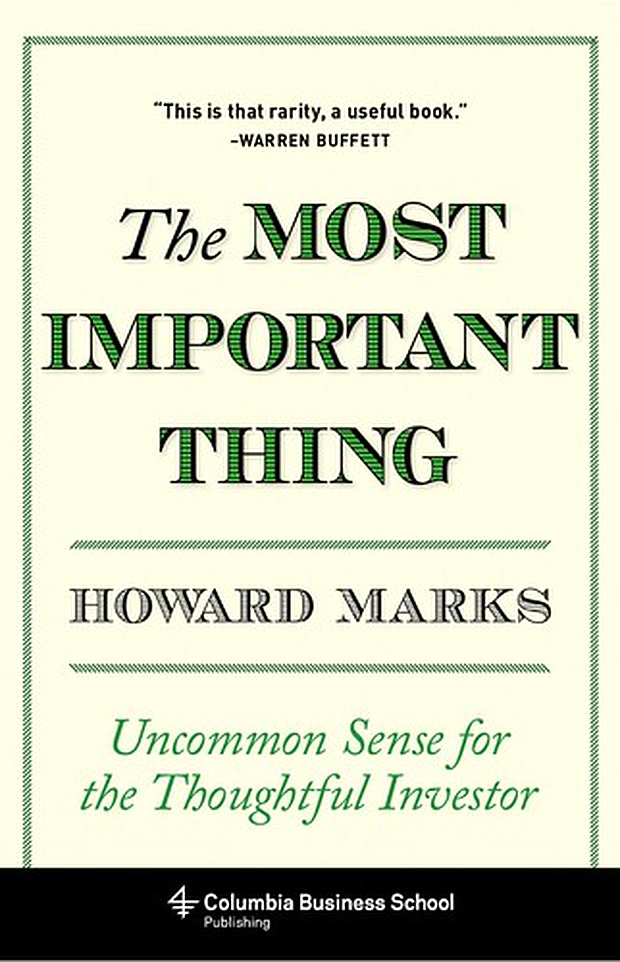
The Most Important Thing
Get on Amazon →
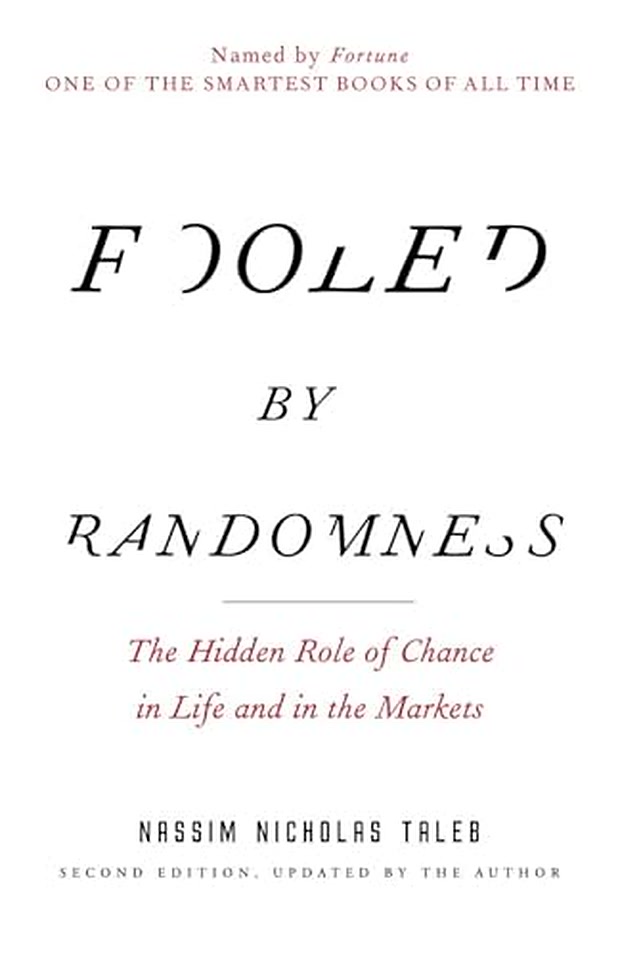
Fooled by Randomness
Get on Amazon →
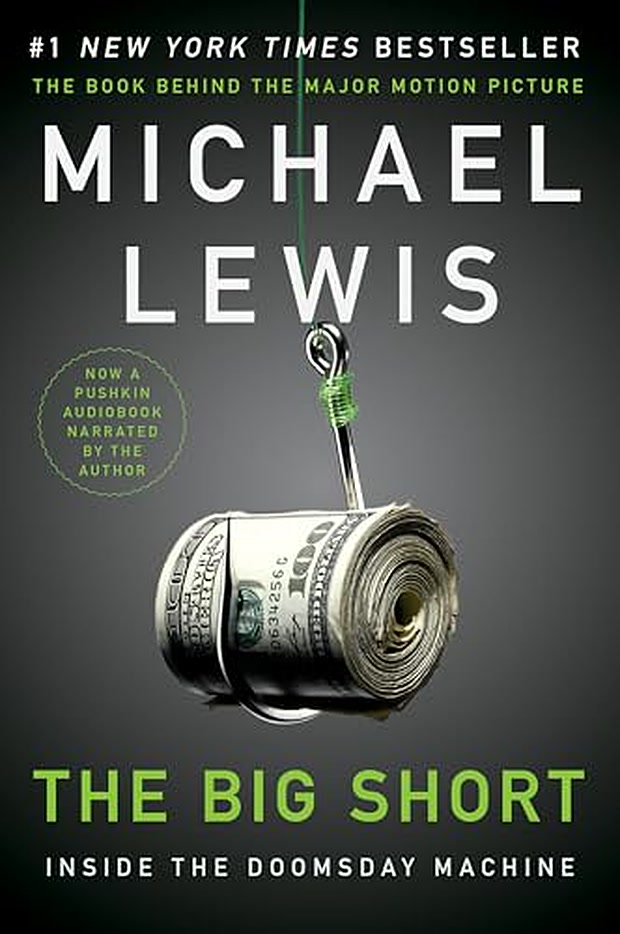
The Big Short
Get on Amazon →
As an Amazon Associate I earn from qualifying purchases.