Howard Marks
2008 10 15 The Limits To Negativism
© Oaktree Capital Management, L.P.
All Rights ReservedMemo to: Oaktree Clients
From: Howard Marks Re: The Limits to Negativism
The markets acted on Monday as if the credit crisis is behind us – how incredible it
is to be able to even write those words, whether true or not. Whichever is the case,
however, it’s important to reflect on what can be learned from the recent events. (I
developed these thoughts last week but just wasn’t quick enough to turn them into a
memo. So I’m reduced to discussing what we all hope is history ra ther than displaying
foresight.)
UThe Swing of Psychology
The last few weeks witnessed the greatest panic I’ve ever seen, as measured by its
severity, the range of assets affected, its worldwide scope and the negativity of the
accompanying tales of doom. I’ve been through market crashes before, but none attributed to the coming collapse of the world financial system.
It’s worth noting that few of the recent sh arp price declines were associated with
weakness in the depreciating assets or th e companies behind them. Rather, they
were the result of market conditions brought on by psychology, technical
developments and their interconnection. The worst of them reflected a spiral of
declining security pri ces, mark-to-market tests, capital inadequacy, margin calls, forced
selling and failures.
It was readily apparent that such a spir al was underway, and no one could see how or
when it might end. That was really the problem: no scenario was too negative to be
credible, and any scenario incorporating an element of optimism was dismissed as Pollyannaish.
There was an element of truth in this , of course: nothing was impossible. But in dealing
with the future, we must think about two things: (a) what might happen and (b) the
probability it will happen. During the crisis, lots of bad things seemed possible, but that didn’t mean they were
going to happen. In times of crisis, people fail to make that distinction . Since we
never know much about what the future holds – and in a crisis, with careening causes and
consequences, certainly less than ever – we must decide which side of the debate is more
likely to be profitable (o r less likely to be wrong).
© Oaktree Capital Management, L.P.
All Rights ReservedFor forty years I’ve seen the ma
nic-depres sive cycle of investor psychology swing
crazily: between fear and greed – we all know the refrain – but also between optimism
and pessimism, and between credulity and skepti cism. In general, following the beliefs
of the herd – and swinging with the pendulum – will give you average performance in the
long run and can get you killed at the extremes.
Two or three years ago, the world was so different as to be almost beyond remembering. It was ruled by greed, optimism and credulity. In short, it was the opposite of the last
few weeks: no story was too positive to be believed.
“There’s a worldwide ‘wall of liqui dity’ that can never dry up.”
“Triple-A CDOs are as safe as triple-A corpor ate debt but will deliver higher returns.”
“Leverage holds the key to better investment results.”
“Tranching and selling onward are spreadi ng the risk, thereby eliminating it.”
“Decoupling has reduced nations’ eco nomic reliance on the U.S.”
Boy, what a good time that was for a dose of skepticism! What benefits it could have
provided (in terms of losses avoided). But when conventional wisdom is rosy, few can stand against it. People who do so too early look woefully wrong and are swept aside.
That discourages others from trying the same thing, even as the cycle swings further to
the positive extreme.
UThe Black Swan
You may recall that in “The Aviary” in May, I wrote about The Black Swan, the second
book from Nassim Nicholas Taleb, author of Fooled by Randomness. In The Black
Swan, Taleb talks about unlikely, extreme, unpredictable events that have the potential for dramatic impact. His title was derived from the fact that, never having traveled to Australia and seen its black swans, European s of a few centuries ago were convinced all
swans were white. In other words, because th ey’d never seen something, they considered
it impossible.
The message of The Black Swan is how important it is to realize that the things
everyone rules out can still come to pass . That might be generalized into an
understanding of the importance of skepticism.
I’d define skepticism as not believing what you’re told or what “everyone” considers
true. In my opinion, it’s one of the most important requirements for successful
investing. If you believe the story everyone else believes, you’ll do what they do.
Usually you’ll buy at high prices and sell at lows. You’ll fa ll for tales of the “silver
bullet” capable of delivering high returns without risk. You’ll buy what’s been doing
well and sell what’s been doing poorly. And you’ll suffer losses in crashes and miss out
when things recover from bottoms. In other words, you’ll be a conformist, not a
maverick (an overused word these d ays); a follower, not a contrarian.
© Oaktree Capital Management, L.P.
All Rights ReservedSkepticism is what it takes to look behind a bala
nce sheet, the latest miracle of financial
engineering or the can’t-miss story. The idea being marketed by an investment banker or
broker has been prettied up for presentation. And usually it’s been doing well, making
the tale more credible. Only a skeptic can separate th e things that sound good and
are from the things that sound good and aren’t. The best investors I know exemplify
this trait. It’s an absolute necessity.
UThe White Swan
Most people probably took away from The Black Swan the same lessons I did (and the
lessons mentioned in “The Aviary”): “unlikely” isn’t the same as “impossible,” and it’s
essential for investors to be ab le to get through the low spots.
Of course, it’s improbable events that brought on the credit crisis. Lots of bad things
happened that had been considered unlikely (i f not impossible), and they happened at the
same time, to investors who’d taken on signifi cant leverage. So th e easy explanation is
that the people who were hurt in the credit cr isis hadn’t been skepti cal – or pessimistic –
enough. But that triggered an epiphany:
USkepticism and pessimi sm aren’t synonymous.
Skepticism calls for pessimism when optimi sm is excessive. But it also calls for
optimism when pessimism is excessive U. I’ll write some more on the subject, but it’s
really as simple as that. Contrarianism – doing the opposite of what others do, or “leaning against the wind” – is
essential for investment success. But as the cr edit crisis reached a peak last week, people
succumbed to the wind rather than resisting. I found very few who were optimistic;
most were pessimistic to some degree . Some became genuinely depressed – even a few
great investors I know. Incr easingly negative tales of the coming meltdown were
exchanged via email. No one applied skeptici sm, or said “that horro r story’s unlikely to
be true.” Pessimism fed on itself. Peopl e’s only concern was bullet-proofing their
portfolios to get th rough the coming collapse, or raising enough cash to meet
redemptions. The one thing they weren’t doing last week was making aggressive bids for
securities. So prices fell a nd fell – the old expression is “gapped down” – several points
at a time.
The key – as usual – was to become skepti cal of what “everyone” was saying and
doing. One might have said, “Sure, the negati ve story may turn out to be true, but
certainly it’s priced into the market. So ther e’s little to be gained from betting on it. On
the other hand, if it turn s out not to be true, the apprec iation from today’s depressed
levels will be enormous. I buy!” The negative story may have looked compelling, but
it’s the positive story – which few believed – that held, and still holds, the greater
potential for profit.
© Oaktree Capital Management, L.P.
All Rights ReservedUThe Future
I write a lot to dissect and explain past even ts, but I’ll try here to make a contribution by
taking the riskier path of talking about the future. What do I see?
As for the short term, it’s been amply demonstrated that governments and central
banks will do everything they can to resolve the credit crisis . No stone will go
unturned, and few options will be declined. Most people now believe that letting Lehman
Brothers go was a big mistake: as a resu lt of a calculated decision, discipline took
precedence over rescue. The results were disa strous, as the commercial paper market
froze up, money market funds “broke the buck,” and the crisis was ratcheted up several
notches. Most people don’t repeat their mistakes; they make new ones. So we should expect that all key players will be rescued in the period ah ead. Some elements of that effort will be
mistakes, but at least those mistakes won’t pull down the financial system. Morgan Stanley was the next big worry but, after Le hman, it became unlikely that Morgan would
be allowed to fail. I was asked, “Will the U.S. government guarantee a capital
investment made by a Japanese institution?” Abso lutely, if that’s what it takes. It beats
the U.S. having to put up its own money.
The sums being thrown around are the biggest ever: hundreds of billions, adding up
to trillions. But there’s no hesitation: every thing will be done. That doesn’t mean it
has to work, but it’s likely to.
Walter Wriston led Citibank from 1967 to 1984, a ll but my final year there. He was the
world’s leading banker and a great guy. One of his most famous observations was,
“countries don’t go bust.” I assume he wa s making reference to their ownership of
printing presses, and thus their unlimited abil ity to pay their local-currency obligations.
That’s the main reason why we shouldn’t expe ct there to be any limit on the resources
thrown at the problem. All it will take is runn ing the printing presses long enough to
rebuild financial instituti ons’ capital accounts, make good guarantees and enable
borrowers to roll over their outstanding debt, all of which is reckone d in nominal terms.
The philosophical bridge of unlimited aid to private institutions appears to have
been crossed, and printing the necessary money is unlikely to be an issue.
Of course, that doesn’t mean we’re out of the woods. Creating money isn’t the end of
the story. What will be the effect? First, the people who have money have to ma ke the decision to lend to those who need it
to fund their businesses. The Fed’s provision of capital to financial institutions – even at
ultra-low interest rates – is n’t enough. If banks borrow money cheaply and lend it to
people who don’t repay them, they’ll be out a lo t of low-cost capital. And if they’re on
the hook for repaying the Fed, they’ll be way behind. Because of residual conservatism,
the steps so far might have the ineffectiveness of “pus hing on a string,” something I
© Oaktree Capital Management, L.P.
All Rights Reservedme
ntioned in “Now What?” in January. We still have to see money begin to circulate
throughout the system.
Jim Grant, the creator of Grant’s Interest Rate Observer, uses a great phrase to
describe liquidity and cred it: “money of the mind.” Unlike actual currency, it
grows and shrinks depending on people’s moods – we’ve just seen a great
demonstration . So it’s not enough for the Fed to gi ve money to financial institutions;
they have to be convinced to provide liquidity and credit.
In recent times, the Fed has provided a lot of capital to banks, but it has also taken in a lot
of deposits from banks. We want to see th e Fed’s advance reloaned, not put on deposit.
That’s what it’ll take to restart the credit machine. Even when credit starts flowing again, howev er, I doubt things will return immediately to
their old pace. Losses have been taken and capital destroyed, and more losses may still be incoming (ask yourself if home prices ar e finished going down). More importantly,
psyches have been damaged: consumer psyc hology, lenders’ willingness, even investor
confidence – all have taken a b eating. I doubt if things will bounce right back. There just
won’t be the same expansiveness. I’ll stick with what I said in “Now What?”
Undoubtedly, credit will be harder to obtain. Economic growth will slow: the question is whether it will remain slightly positive or go negative,
satisfying the requirement for the la bel “recession.” Regardless, positive
thinking and thus risk taking are likely to be diminished. All I can say for
sure is that the world will be less rosy in financial terms, and results are likely to be less positive than they otherwise would have been.
UAwash in Money
In the longer term, we have to wonder abou t the effect on the world of a glut of
newly printed dollars, sterling and euros. The reason owning printing presses makes
repayment easy is that it lets a nation cheap en its currency. But one would think that
more units of currency per unit of GDP mean s a debasement of the currency, and thus
reduced purchasing power (read: higher inflation).
Walking along Hyde Park on Sunday, I saw a stre et vendor selling old stock certificates.
Do you have any banknotes, I asked? Anything from the Weimar Republic? For the last
few weeks, I’ve wanted to get some of those. In Weimar Germany, the government enabled itself to pay World War I reparations by
cheapening its currency . . . literally. So the 1,000 mark note I bought was simply over-
stamped One Million Marks in red. Voila! Now we’re all rich.
© Oaktree Capital Management, L.P.
All Rights ReservedThe ma
rk fell from 60 to the U.S. dollar in early 1921 to 320 to th e dollar in early 1922
and 8,000 to the dollar by the end of 1922. It’s hard to believe, but according to
Wikipedia (user-maintained and perhaps not always the most authoritative):
In December 1923 the exchange rate was 4,200,000,000,000 Marks to 1 U.S. dollar. In 1923, the rate of inflation hit 3.25 x 10
P6
P percent per month
(prices double every two days). One of the firms printing these [new 100 trillion Mark] notes submitted an
invoice for 32,776,899,763,734,490,417.05 (3.28 x 10
P19
P, or 33 quintillion)
Marks. [That’s not a misprint.]
Lord Keynes judged the situation this way:
The inflationism of the currency systems of Europe has proceeded to extraordinary lengths. The various belligerent governments, unable, or too
timid or too short-sighted to secure fr om loans or taxes the resources they
required, have printed notes for the balance.
But it’s not that easy. People with things to sell aren’t that stupid. So instead of 1,000
marks, a goat now costs one million marks. That piece of paper used to be a thousand mark note – and now it’s a million mark note – but it still buys the same goat. The benefit to the government is that it’s able to pay off its old no minal debts in currency
of which it suddenly has a lot more . . . but which no longer has much purchasing power.
So when repaid in the cheapened currency in 1923, the person to whom the government
owed 1,000 marks can only buy one-thousandth of a goat – not a whole goat as in 1920. My late friend Henry Reichmann was a boy then , working as a busboy in a restaurant in
Berlin. He told me he used to be paid at lunchtime and immediately ran out to spend his salary, since it would buy less if he waited until after work to shop. That’s hyperinflation. Just as the Great Depression became a model during the credit
crisis, Weimar Germany gives us something to think about regarding our new future.
I’m not smart enough to know what’s co ming, but I’m also not dumb enough to
think a few government action s on Monday were enough to solve all our problems.
At best, we usually substitute one problem fo r another – usually one later on in lieu of
today’s. I don’t know what to do about this risk, whethe r it’ll come home to roost, or to what
extent. And I certainly don’t think h yperinflation can be assigned a high enough
probability to make it worth doing much about. But it may cause one to rethink holdings
of low-yielding, flight-to-quality -elevated, long-term Treasurys.
© Oaktree Capital Management, L.P.
All Rights ReservedUThe New Financial Order
My daughter Jane – the artistic member of the family – has developed a strong interest in politics and economics of late. (I think th is is happening to young people all across the
U.S., and it’s a very favorable development.) On Saturday she called to ask what I thought about government ownership of banks. First, I said, I thought it could make an important contributio n to solving the short-term
problem, and that’s good. Second, however, the U.S. has a strong trad ition of government non-involvement in
business, and we’d probably like to see it stay that way. “Nationalization” is a much
dirtier word in America than in most other places ( International Herald Tribune headline,
October 14 – “Nationalization rule : Do it, but don’t say it”). My preference, I told Jane,
is for free enterprise with some adult supe rvision. When we make fundamental changes
in the system, it’s hard to foresee all th e consequences. Cons ider these questions:
Will legislators push bankers to make more loans to their constituents (remember
Fannie and Freddie)?
Will the banks have to lend to everyone, even weak borrowers? Will they be allowed to reject any applicants?
Will they be prevented from foreclosing when mortgages are unpaid?
Will they be deterred from financing “anti-social” investments like leveraged buyouts?
Will they be limited in compensating executives? Will that make them less attractive as employers?
Will bank employees worry about being penalized for errors of commission but not
errors of omission?
If so, will banks be staffed by people who are overly risk-averse? Will they lean
toward saying “no”?
Will capital be harder to come by, especi ally for smaller, younger companies?
Will economic growth be slower than it otherwise would have been?
Will non-government-owned banks be at a disadvantage because, as weaker credits, they’ll have to pay more than the competition for their capital?
No one knows, but these questi ons deserve consideration. Here’s the underlying
question: if the government’s equity is non-vo ting, will that be enou gh to keep it out
of the banks’ affairs? It’s far too soon to say (and hard to be completely optimistic).
I continue to believe the financial sector of the future will be less leveraged, less risk-
prone, less profitable, slower growing and more regulated. And that’ll make it less
exciting, less glamorous and less the employer of choice. But the beauty of the free-
market system is that most developments entail plusses as well as minuses. I’ve believed
for many years that just as success carries wi thin itself the seeds of failure (see 2003-
08), so does failure carry the seeds of success.
© Oaktree Capital Management, L.P.
All Rights ReservedIf the banks are ma
de more bureaucratic and risk-averse – and less aggressive and
competitive – I’m sure independent boutiques w ill arise and prosper. The model I have
in mind is a forest fire: a year after, bright green shoots grow from the ashes; in fact, I
think they’re fertilized by the ashes. Think what a landscape like that means for advisory firms like Moelis, Evercore, Gleacher and Greenhill.
In a free-market environment, not even a good knock can keep aggressive people
from responding to opportunities. The fina ncial sector will look very different in
ten years from what it was a year ago – and that won’t be all bad.
* * *
I find that I often end with a quote from Warren Buffett, and often it’s the same one:
The less prudence with which others conduct their affairs, the greater the
prudence with which we should conduct our own affairs.
But now I want to talk about the flip side: When others conduct their affairs with
excessive negativism, it’s worth being positive. When others love ‘em, we should hate
‘em. But when others hate ‘em, we can love ‘em. In “The Tide Goes Out” in March, I listed the stages of both bull and bear markets. I said
that in the terminal third st age of a bull market, everyone is convinced things will get
better forever. The folly of joining that consensus is obvi ous; people who invest thinking
there’ll never be anything to worry about are sure to get hurt. In the third stage of a bear market, on the other hand, everyone agrees things can only get
worse. The risk in that – in terms of opport unity costs, or forgone profits – is equally
clear . There’s no doubt in my mind that the bear market reached the third stage
last week. That doesn’t mean it can’t decl ine further, or that a bull market’s about
to start. But it does mean the negatives are on the table, optimism is thoroughly
lacking, and the greater long-term risk probably lies in not investing.
The excesses, mistakes and foolishness of the 2003-2007 upward leg of the cycle were the greatest I’ve ever witnessed. So has been the resulting panic. The damage that’s
been done to security prices may be enough to correct for those excesses – or too much or too little. But certainly it’s a good time to pick among the rubble.
* * *
© Oaktree Capital Management, L.P.
All Rights ReservedI wa
nt to take this opportunity to congra tulate and thank my Oaktree colleagues for
their ongoing steadfastness. There’s a simple formula for taking maximum advantage
of opportunities in a collapsing market:
(a) have a firm, well-reasoned estimate of an asset’s intrinsic value;
(b) recognize when the asset’s price falls below its value, and buy;
(c) average down if the price goes lower; and
(d) be right about the value.
Acumen and resolve are both essential. My colleagues cont inue to show both. In recent
weeks our list of purchases has been long most days, and our list of sales almost non-
existent. Where there’s cash we’ve put a lo t to work, averaging down aggressively, in
what we think are great buys.
I also want to thank our clients for trusting us and sticking with us. As Bruce Karsh
and I wrote ten days ago in a memo to investors in our Opportunities Funds for
distressed debt, “. . . in a few years we’ll reminisce together about how easy it was to take advantage of the bargains of 2008-09.” Whether or not the worst of the crisis is
now truly behind us, I cont inue to feel that way.
October 15, 2008
© Oaktree Capital Management, L.P.
All Rights Reserved 10Legal Information and Disclosures
This memorandum expresses the views of the author as of the date indicated and such views are
subject to change without notice. Oaktree has no duty or obligation to update the information contained herein. Further, Oaktree makes no rep resentation, and it should not be assumed, that
past investment performance is an indication of future results. Moreover, wherever there is the
potential for profit there is also the possibility of loss. This memorandum is being made available for educational purposes only and should not be used
for any other purpose. The information contai ned herein does not constitute and should not be
construed as an offering of advisory services or an offer to sell or solicitation to buy any
securities or related financial instruments in any jurisdiction. Certain information contained herein concerning economic trends and performan ce is based on or derived from information
provided by independent third- party sources. Oaktree Capita l Management, L.P. (“Oaktree”)
believes that the sources from which such informa tion has been obtained are reliable; however, it
cannot guarantee the accuracy of such inform ation and has not independently verified the
accuracy or completeness of such information or the assumptions on which such information is
based. This memorandum, including the information cont ained herein, may not be copied, reproduced,
republished, or posted in whole or in part, in any form without the prior written consent of
Oaktree.
Recommended Reading
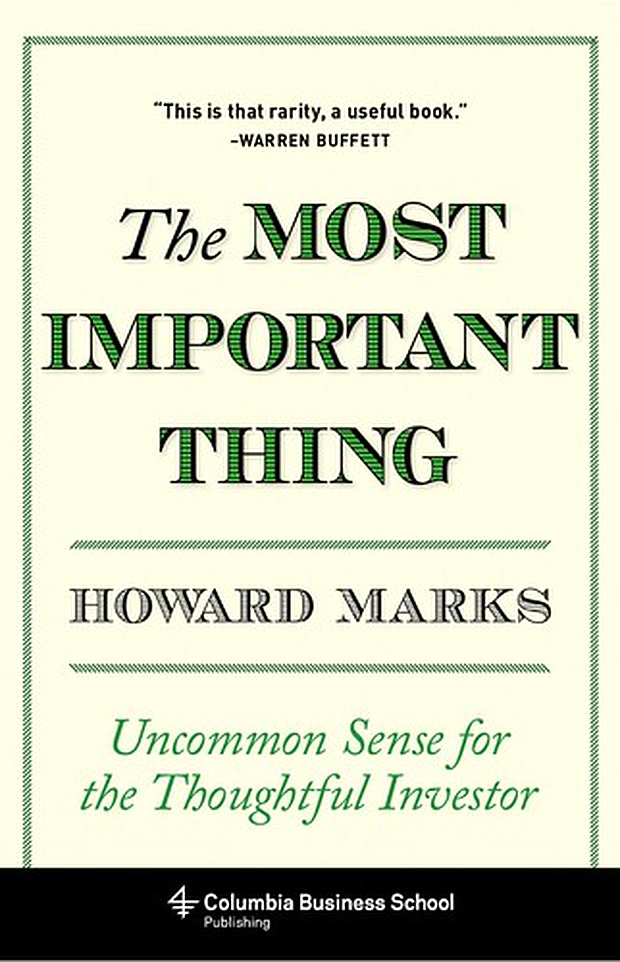
The Most Important Thing
Get on Amazon →
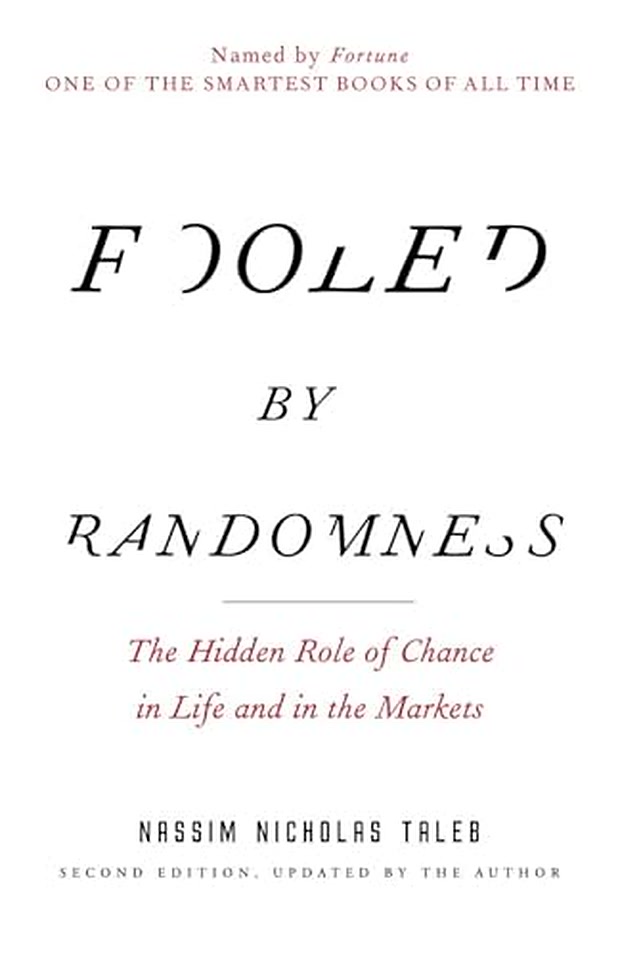
Fooled by Randomness
Get on Amazon →
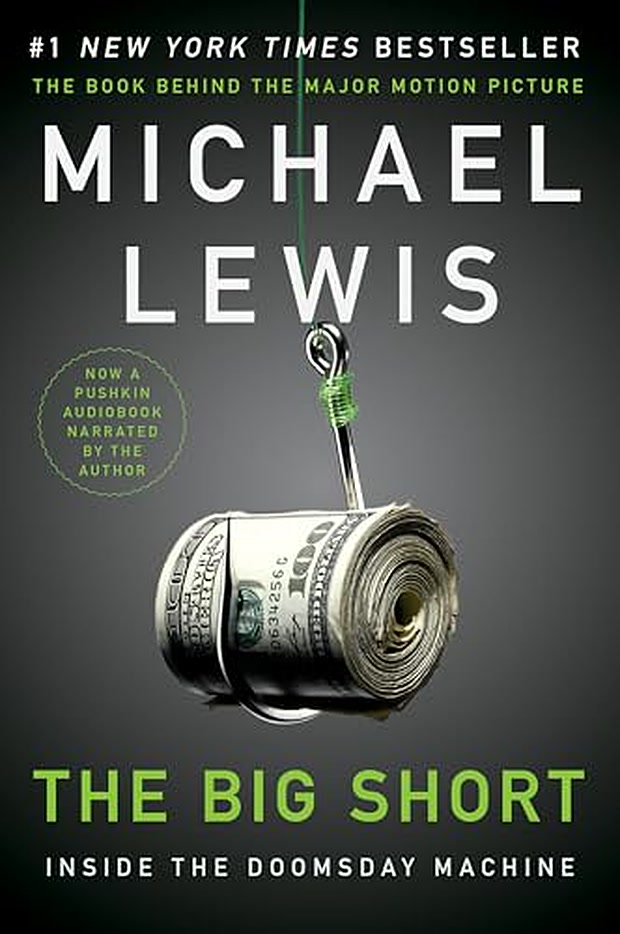
The Big Short
Get on Amazon →
As an Amazon Associate I earn from qualifying purchases.