Howard Marks
2008 07 31 Doesnt Make Sense
© Oaktree Capital Management, L.P.
All Rights ReservedMemo to: Oaktree Clients
From: Howard Marks Re: Doesn’t Make Sense
Academics have their theories about market e fficiency. Because market participants are
well-informed and rational, they say, ma rkets make correct decisions and smoothly
assign the right price to each asset. It’s for this reason that investors can’t routinely find
the mispricings they need in order to be able to beat the market.
But investors – and most of the people living on this planet, for that matter – are far from
the unemotional computing machines the academics assume them to be. They make faulty decisions, fall for scams and swing fr om one irrational positi on to another all the
time. In fact, I marvel at how many things take place in the worlds of business,
investments and politics that stem from irrationality and just don’t make sense . It’s
my purpose here to write about a few.
ULetting the Market Call the Tune
In “Whodunit,” I talked about C huck Prince, the ex-CEO of C itigroup. Early in July of
2007, he astutely observed, “When the music stops, in terms of liquidity, things will get complicated.” However, he went on to add, “as long as the music is playing, you’ve got to get up and dance. We’re still dancing.” Because Citigroup danced as much as
the other banks or more – and lost as much or more on subprime-related write-downs –
Prince lost his job in November 2007. The portion of Prince’s statement that I’ve high lighted seems emblematic of the attitudes
that prevailed from early 2003 until the summer of 2007. People were doing risky things
– often even though they recogni zed the attendant risk, as Prince seemed to do – because
they saw no alternative if they wa nted to remain competitive.
Upon hearing of Prince’s departure, my immedi ate reaction was to think (a) when a firm
fares so badly, the CEO may deserve to lose hi s job, and (b) to avoid that fate, Prince just
had to cause Citi to avoid the risky behavior he identified. If he had done the latter, Citi
would be among the big winners today instead of the losers; it wouldn’t have to
recapitalize by selling equity at depressed prices; and instead it would have funds with
which to take advantage of today’s better mark et environment. So in saying that if the
music was playing, Citi had to dance – and thus letting the market call the tune – Prince’s
leadership was flawed.
© Oaktree Capital Management, L.P.
All Rights ReservedUCompulsory Short-Termism
But is it right to say Prince and Citi could have avoided trouble by refusing to go along?
Let’s do what some DVDs let you do nowaday s: go back and consider an alternative
ending. It’s July 2005 instead of July 2007. Presciently, Chuck Prince says, “When the
music stops, in terms of liquidity, things will get complicated. We’re not going to get
caught in that trap. As of today, we’re a dopting a conservative stance toward loans,
mortgages, subprime, CDOs and SIVs. The ot hers can dance all they want; we’re sitting
this one out.”
What would’ve happened? Rather than lose his job in late 2007, he probably would
have lost it sooner. Why? Because from whenever he made that statement until July
2007, Prince would have looked dumb. While ot her banks were gaining market share,
Citi’s share would have been shrinking. And while other banks were borrowing on the
cheap to make mortgage-related investments at seemingly attractive spreads, Citi would
have been on the sidelines, forgoing easy prof its. Shareholders would have been yelling
for Prince’s scalp.
The bottom line is one of my three favorite adages: Being too far ahead of your time is
indistinguishable from being wrong.
Of the two things I think are most wrong about American business, the worst is
short-termism . (The other is the abili ty of executives to thrive while their companies do
poorly.) Companies are rewarded for short-te rm success and penalized for short-
term failure, whereas few people ask about the long term . The only thing that matters
is “What have you done for me lately?” A lot of this emanates from stockholders.
In a memo several years ago, I listed a few phr ases that have sunk into obscurity over the
course of my career. They included “fiduciary duty,” “p reservation of capital” and
“dividend yield.” Another is “long-term investor.” Most investment managers are measured agai nst a benchmark every quarter and expected
to add value. Some clients have their finge rs on the trigger, ready to axe a manager who
underperforms for a year or two. For this r eason, managers sit with their own fingers on
the trigger, ready to dump a stock or bond whose short-term performance lags. And
company CEOs whose securities are laggards are likewise on the hot -seat, with boards
that rarely support executives who disappoint Wall Street.
Too many people think of the long run as nothing but a series of short runs. The way to
have the best five-year investment record, they think, is by sequentially assembling the
twenty portfolios that will produce the best performance in each of the next twenty
quarters. No one wants to invest in a co mpany that may lag until long-term investments
pay off down the road. They’ll just sell its stock today, assumi ng they’ll be able to buy it
back later.
© Oaktree Capital Management, L.P.
All Rights ReservedUnderstanding this, comp
anies face great pressu re to emphasize short-term results. What
might they do in response?
Maximize revenues (perhaps by stuffing pipelines and offering discounts that
accelerate future sales into the present).
Minimize expenses in slow-to-bloom ar eas like research and development.
Borrow to buy back stock, because debt cap ital is cheap and e quity is expensive
(despite the fact that equity provides safety and leverage amplifies risk).
Do you want your companies doing these thi ngs? Probably not. But do the collective
external pressures force companies in these directions? Absolutely. The things that
maximize profits in the short run often serv e to decrease profits and increase risk in
the long run, but they can be mandatory these days.
Investors are increasingly short-sighted, and none more so than some hedge funds, with
their emphasis on year-by-year incentive fees. The average stock might deliver a return
roughly in line with the growth in corporate profits, and th e stocks of better companies
should outperform in the long run, but hedge f unds (and their investors) expect more.
They’re strongly motivated to hold a subset of stocks that will be the best near-term
performers. One approach is to take positions and then pressure companies to “maximize
shareholder value.” With their focus on short-run performance and short-run
compensation, many of the things they advocate – like spin-offs, stock buy-backs and oversized dividends – can be less than optim al for the long run. But that’s not their
concern. This kind of behavior exem plifies the debate over laissez-faire described in “The Aviary”
in May. In the long run, it should be good for society to have capital in the hands of
sophisticated, focused, bright managers who are free of guidelines and can go anywhere in pursuit of profit. In theory, it should be a positive that they’re willing
to bet against the herd, adopt unpopular positions and take on unresponsive
managements. But in the short run, they can have a destabilizing effect, especially
when several act in common . Maybe it just proves that free-market solutions – like just
about everything else – have both positive and negative aspects.
If Chuck Prince had taken Citigroup to the sidelines in 2005, it’s highly likely that some hedge funds would have tried to force him out. And with Citi looking unduly conservative, the board might not ha ve been in a position to resist. So being right isn’t
always enough when you run a public comp any. You have to be right in the short
run. And in choosing a course of action , the one that’s righ t for the short run
generally will be preferred over the one that’s right for the long run. None of this
seems ideal.
© Oaktree Capital Management, L.P.
All Rights ReservedUUnreliable Ratings
Probably the group that had the most power and yet covered itself with the least distinction over the last few years – and has been outed to the great est extent – are the
credit rating agencies. The rating agencies were accorded quasi-official status as the
policemen of the credit markets, and they failed miserably. This is nothing new. I’ve always considered the rating agencies to be error-prone, and
much of my career has consis ted of taking advantage of their mistakes. They’ve often
rated seemingly safe bonds too high and risky bonds too low. They’ve been slow to adjust ratings, but when finally they did change, they usually overshot. The bottom line
is that managing a bond portfolio according to ratings would be somewhere between unavailing and disastrous. Profits are more likely to be found in gaming against the
ratings.
Nevertheless, when the government felt Wall Street had to be policed and debt
investors protected, they tu rned to the agencies. Before doing so, I doubt anyone
checked to see how accurate rati ngs have been. Now we know. Thousands of ratings
of structured mortgage securities turned out to be too high and were adjusted downward,
often many notches at a time. The CDO tranche that didn’t have to be downgraded is the
exception, not the rule. In other word s, the ratings were grossly wrong.
In my view, a triple-A rating shouldn’t ju st imply a low probability of default, but a
low probability of downgrading as well. The agencies may say they were blindsided
by developments in residential defaults, but I think a triple-A rating should also
imply a low probability of being blindsided. To follow on with the “black swan”
thought process, something potentially subj ect to an “improbabl e disaster” shouldn’t
receive a triple-A rating. But clearly a lot did.
UA Model Destined to Fail
The bottom line’s simple: you can’t get de pendable results from a faulty process .
Most people realize now that the rating process was highly flawed.
I’ve written before about the bi ggest weakness: the fact that rating agencies are hired and
paid by the issuers whose debt they’re rating. In “Now It ’s All Bad?” (September 2007),
I compared this to a trial where the defendant picks and pays the judge. But I realize now
that I overlooked an importan t element in the equation. It’s actually a trial where the
defendant gets to ask a number of prosp ective judges what verdict they’d reach
before choosing one . Issuers can describe a proposed issue to multiple agencies, hear
back as to what rating they’re likely to a ssign, and then hire the one they want.
Think about an agency’s incentives under this arrangement: the fee goes to the one
willing to supply the highest rating. Go along and your profits grow; stand on principle and you’re left behind.
© Oaktree Capital Management, L.P.
All Rights Reserved
When I came into this business in the 1960s, Moody’s and Standard & Poor’s ma
de their
money selling subscriptions to their publications. Thus their customers were investors,
and they weren’t beholden to the issuers. Bu t when they began to derive most of their
revenue from the issuers, the agencies understood who was buttering their bread. There’s a further problem: only above-avera ge judgment can make you a superior
investor. The consensus view of the future is incorporated in market prices. Only
someone more astute than the consensus can help you do better than average.
Now let’s turn to the rating process. Anyone can compute current financial ratios and
see how a company’s doing today. And the future looks the same to the average person as it does to the consensus. Thus, for a helpful assessment of a company’s prospects, you need someone who can foresee possibilities and risks better than
most. But if someone possesses above-average insight into bonds’ prospects, will he
assign credit ratings for a living, or will he ge t a job managing investments? Money isn’t
everything, but most people tend toward their highest and best use. I think it’s fair to
say the rating agencies don’t attract bond gurus.
Since the ratings business is highly comp etitive and profit margins are slim, agency
analysts tend to be paid for high ratings and “responsiveness,” as opposed to unique
insight. Principled, conservati ve decisions aren’t rewarde d, as is now plain to see.
Moody’s disclosed in May that, because of a programming error, eleven European
CPDOs (complex investment vehicles formed to write large amounts of credit insurance)
had been incorrectly rated trip le-A instead of double-A. Okay, everyone makes mistakes.
But the plot thickens. According to The New York Times of July 2, the law firm of Sullivan & Cromwell
conducted an investigation for Moody’s and f ound that the ratings hadn’t been corrected
even after the error came to light. Its report,
. . . blamed employees in charge of monitoring and adjusting ratings for
considering “factors inappropriate to the rating process” after the errors
were discovered. . . . In a statemen t, Moody’s said unidentified employees
had violated a code that required analysts to consider only credit factors,
not “the potential impact on Moody’s, or an issuer, an investor or other
market participant.”
It’s not exactly clear what happened, a nd I don’t think anyone’s trying to make it
particularly clear. It seem s, however, that Moody’s em ployees overlooked the ratings
errors that came to light for “business reasons.”
According to an article on ratings in The Wall Street Journal of May 23, Moody’s and
Fitch,
© Oaktree Capital Management, L.P.
All Rights Reserved. . . acknowledged they have switched an alysts assigned to rate bonds after
receiving requests to do so from bond issuers or their bankers. Changes
usually were m
ade after a specific bond was rated, meaning the analyst
wouldn’t work on the bond issuer’s ne xt deal, according to current and
former officials at the credit-rating firms. . . .
At Moody’s, at least one analyst in th e group that rated collateralized debt
obligations, or CDOs, was moved off a particular investment bank’s deals
within the past few years after banke rs requested an analyst who raised
fewer questions, according to people familiar with the matter. Another mortgage analyst at Moody’s was moved to the firm’s surveillance unit af ter a Moody’s official agr eed with an investment
banker’s opinion that the analyst was too fussy, a person familiar with the situation said. . . . “We’re a service business ,” says John Bonfiglio, group managing
director of structured finance at Fitch. [Emphasis added]
Lastly, on July 9, The New York Times provided these tidbits from internal rating agency
emails, which were part of an SEC repor t on its investigation of the agencies:
“We do not have the resources to support what we are doing now.” “I am trying to ascertain whether we can determine at this point if we will
suffer any loss of business because of our decision and if so, how much?”
“We are meeting with your group this week to discuss adjusting criteria
for rating C.D.O.’s of real estate assets this week because of the ongoing threat of losing deals.”
It doesn’t make sense for unregulated a nd sometimes unprofessional organizations,
operating under the wrong incentives and performing tasks that are above their heads, to be appointed watchdogs of the capi tal markets. But that’s what happened.
UWhen It’s Good to Be Bad
Only in an Alice-in-Wonderland world can there be benefits in having a weak credit
rating. But today’s complex, rules-base d accounting system makes it possible.
On May 18, The Wall Street Journal published the story of Radian Group, a bond and
mortgage insurer. Although its business was poor, an accounting gain enabled it to report a $195 million net profit for the first quarter, as opposed to the $215 million loss it would have reported otherwise. However, this was an unusual gain. It didn’t arise because the value of Radian’s assets went up, but rather b ecause the value of its liabilities went down.
© Oaktree Capital Management, L.P.
All Rights Reserved
Here’s how, accord
ing to the Journal :
One of the basic rules of accounting says that a reduction in the value of a
liability leads to a gain that usually boosts profit. Under the new [mark-to-
market accounting] rule, companies have to take into account the market’s view of their own financial health wh en considering the market value of
some liabilities. In this case, a company’s poor health can lead to a
reduction in the liability’s value. . . .
In other words, if you owe money and the probability you’ll pay your debts declines,
your financials strengthen. But shouldn’t a de clining ability to pay be associated with
weakness, not strength? Before enacting rules like this one, someone should ask if
they make sense. It doesn’t seem anyone did .
Similarly, mark-to-market accounting can – in the extreme – require a company to value
its assets at the prices that w ould be realized if they all ha d to be sold today. And those
prices are likely to decline as more asse ts are assumed to need dumping. Liquidation
values are far different from intr insic values or going-concern values. Do we really want
to value assets on the assumption that they’re all going to be sold immediately? What
purpose does that serve?
UBlame the Speculators
The current debate over the role of speculators in oil pricing reminds me of Rep. Noah
Sweat’s classic answer when asked in 1952 what he thought about whiskey:
If you mean whiskey, the devil’s brew, the poison scourge, the bloody monster that defiles innocence, deth rones reason, destroys the home,
creates misery and poverty, yea, litera lly takes the bread from the mouths
of little children; if you mean that evil drink that topples Christian men
and women from the pinnacles of ri ghteous and gracious living into the
bottomless pits of degradation, sh ame, despair, helplessness, and
hopelessness, then, my friend, I am oppos ed to it with every fiber of my
being.
However, if by whiskey you mean the oil of conversati on, the philosophic
wine, the elixir of life, the ale th at is consumed when good fellows get
together, that puts a song in their hear ts and the warm glow of contentment
in their eyes; if you mean Christmas cheer, the stimulating sip that puts a
little spring in the step of an elderly gentleman on a frosty morning; if you mean that drink that enables man to magnify his joy, and to forget life’s great tragedies and heartbreaks and sorro w; if you mean that drink the sale
of which pours into our treasuries untold millions of dollars each year, that provides tender care for our little cr ippled children, our blind, our deaf,
© Oaktree Capital Management, L.P.
All Rights Reservedour dumb, our pitifully aged and infirm, to build the finest highways,
hospitals, universities, and community colleges in this nation, then m
friend, I am absolutely, unequivocally in favor of it. This is my position, and as always, I refuse to be compromised on matters
of principle.
I guess you could say Rep. Sweat found the merits of whiskey to be in the eye of the
beholder. So, it seems, is the role of “s peculators” in the escalation of oil prices.
Politicians don’t seem eager to tell constituents the truth about oil:
We use too much of it (perhaps because it ’s cheaper in the U.S. than elsewhere).
Our cars are less efficient than they should be.
A good bit of this year’s increase in the dolla r price of oil may be attributable to the
fact that a dollar now buys considerably less goods (or other currencies) than it did in
December.
Oh yeah: and Washington completely droppe d the ball in areas lik e fuel efficiency
standards.
So it shouldn’t come as a surprise that some politicians are blaming the price rise on other people: speculators. But what is a speculator? That’ll bring an answer like Rep. Sweat’s.
Ask a lay person, and the answer will be a shiftless gambler who takes unwise chances in pursuit of unjustified profits. In the commodities market, a distincti on is made between “commercial” and “non-
commercial” traders. A commercial trader may buy oil, for example, in the course of its
main business (like an airline, utility or o il refiner) and thus have a reason to hedge
against price rises. Or it ma y be an oil producer that want s to protect against falling
prices by selling its future production at the current price. People making value judgments deem these to be “legitimate” reasons. Speculators, on the other hand, are non-comm ercial traders – a nyone without direct
reliance on oil in its business. The current fu ror implies they don’t ha ve valid reasons for
buying oil.
But what about the long-term investor wh o wants to own natural resources as part
of a balanced portfolio? Or the individua l seeking protection against inflation? Or
the sovereign nation that wants to put part of its reserves into something other than
depreciation-prone dollars? These motives aren’t “illegitimate ,” and they don’t
deserve to be disparaged.
In particular, some have suggested that pens ion funds should be barred from trading in
oil. This has to have more to do with scap egoating and short-term perception than it does
with preventing improper behavior or solving our nation’s energy problem.
© Oaktree Capital Management, L.P.
All Rights ReservedPrices – for everything – are set by the inte raction of supply and dema
nd, and short-term
swings in these things can swamp long-te rm fundamentals. Certainly, incremental
demand from the kinds of buyers described above may have lifted the recent price of oil
above what it otherwise would have been. But upward pressure doubtless came as well
from (1) increased consumption (especially in developing countries li ke China and India),
(2) rising international tensions, and (3) the simple fact that, because a dollar now buys
less than it used to, it’s logical for sellers to demand more of them per barrel. How
much of the blame rightly falls on the speculators?
Thirty billion barrels of oil are consumed each year worldwide, worth over $4 trillion at
today’s prices. Can the buying of oil by i nvestors – even speculators – really be
responsible for much of this ye ar’s $1 trillion increase in th e total cost of those thirty
billion barrels? I don’t think th at explanation makes much sense.
When major problems arise in the economy or markets, politicians and the media
often find it attractive to point fingers at alleged evil doers. That’s a lot easier than
admitting that regulation fell short, or that we face intractable problems. We’re sure
to see criticism and even prosecutions follo wing the current economic episode. But any
misdeeds are likely to be symptomatic of a lax environment, not causes of the problem,
and punishing them is unlikely to be an effective part of the solution.
UEliminating the Fear of Loss
A couple of weeks ago, I had a great talk with Tom Petruno, an insightful business
reporter for the Los Angeles Times . Calling on our shared expe rience as Californians, he
presented what I consider a very apt analogy. It went like this:
We’ve all heard about the connection between the Fed’s actions and moral hazard.
There’ve been many incidents and scares over the last couple of decades: Black Monday,
the meltdown of Long-Term Capital Management, Y2K, the bursting of the tech bubble, 9/11, and a recession here and there. Each time, the Fed rushed in with interest rate cuts
and increases in liquidity designed to prevent or offset their depre ssing effects. A few
times, it was said, these actions averted a collapse of the world financial system.
But the cost was moral hazard: a growing expectation that the Fed would bail out
imprudent risk takers. By behaving in ways that cause people to think they’ll always
come to the rescue, authorities encourage ris ky behavior. And we a ll share the cost of
rescuing the risk takers, whether we particip ated or not. In this way, the risk taking
encouraged by the Fed’s policy of protecting pa rticipants caused the risks to grow ever-
higher. The result is a housing bubble and full-scale credit crunch that together have cost
millions of people money and perhaps their homes, pushed financial institutions to the brink, and caused the government to expe nd a lot of its problem-solving resources.
Tom asked if I didn’t see a parallel between th e management of our financial system and
the policy toward forest fires. The western st ates experience forest fires all the time, for
© Oaktree Capital Management, L.P.
All Rights Reservedany number or reasons: lightning, stray cigarettes, cam
pfires that get out of control, even
arson. While undesirable, these frequent fi res have a good side: they get rid of the
relatively small amount of dry brush cr eated each year during our dry season.
But in recent years, the authorities promptly extinguished these fire s to make sure they
wouldn’t get out of control. As a result, brush was permitted to accumulate from year to year. And this May, when a series of freak lightning storms started 2,000 fires, the built-
up brush turned some of them into major c onflagrations at a time when fire-fighting
resources were stretched thin. This past Sunday, the 27th, the Los Angeles Times kicked off a major series on forest
fires. Here’s part of what it said:
The government’s long campaign to tame wildfires has, perversely, made the problem worse. . . . By stamping out most wildland blazes as quickly
as possible, the Forest Service has stymied nature’s housekeeping – the frequent, well-behaved fires that once cleaned up the pine forests of the Sierra Nevada and the Southwest. No w, woodlands are tangled with thick
growth and dead branches. When fires break out, they often explode.
Sound familiar? Clearly, the analogy between fi nancial crises and forest fires is solid.
And I told Tom that just as the Fed’s growing tendency to solve every problem led people to take greater risks, the policy of fighti ng fires early also created moral hazard by
encouraging people to build homes further into the forest. It fell to the community to
keep those unwisely built structures safe, just as the government now feels it has to
rescue subprime borrowers a nd financial institutions.
Capitalism can produce great results, but partic ipants have to be a llowed to both win and
lose. If they aren’t, they come to believe the only possible outc omes are winning or, at
worst, breaking even. Good business decisions can be made only if the hope for gain
is balanced by the fear of loss. The latte r must not be eliminated. The system must
be allowed to work. Of course, this has to be balanced against the desire to prevent
catastrophes, necessitating so me very difficult choices.
UCounting on a “V”
Finally, I want to provide a word of caution regarding expecta tions for recovery. I hear
predictions that things will come back next year. Earlier this month, for instance, an
elevator news display cited a forecast that home prices will rise 4% in 2009, almost
offsetting 2008’s decline. People have become conditioned to expect V-shaped declines and recoveries. We saw quick downs and ups in the markets or the economy in 1987, 1990, 1994, 1998 and 2002. But it doesn’t have to be that way. Those of us who were in this business in the 1970s
know different.
10
© Oaktree Capital Management, L.P.
All Rights Reserved
The ‘70s saw a 37% decline in the S&P 500 in 1973-74; huge losses in the “nifty-fifty”
growth stocks; the Arab oil embargo in 1973; inf
lation in the hi gh teens; short-term
interest rates in the 20s; and an infamous Business Week cover story, “The Death of
Equities.” Stagflation ruled, and there seemed to be no way out of the wage-price spiral. People wore buttons promoting President Ford ’s WIN program (“Whip Inflation Now”),
but neither the buttons nor the program di d any good. New York stockbrokers were
driving cabs, and it was extremely difficult to find employment in the investment
industry. That means that in order to be part of the investment industry in the ‘70s, you pretty much had to have your job by 1969. And that in turn means you had to be at least 21 by 1969 . . . and sixty or older today. There aren’t many of us still working.
I can tell you, no one was talking about a “V ” in the 1970s. We experienced financial
malaise lasting almost a decade. The best we felt we could hope for was a “saucer-
shaped” recovery, a far different story. As I said in “The Tide Goes Out” in Ma rch, economies aren’t hard-wired, and no one
knows in advance how things will go. Furthe r, some of the ingredients this time never
have been seen before. When taken togeth er, I see problems that may not go away any
time soon and the possibility of a sluggish period lasting more than months or quarters. First, let’s consider financia l institutions and the housing market. In recent years, as
everyone knows, the former combined with the latter to create a bubble based on the
combination of leverage, innovative struct uring and heedless buying. Institutions and
housing have been gravely hurt, and they’re lik ely to bring harm to additional sectors of
the economy. For their downward spiral to be arrested, I see four th ings that have to
happen:
Home prices have to stop going down.
Home mortgages have to be made available.
Financial institutions have to stop experiencing incremental write-offs.
Financial institutions have to be able to raise additional capital with which to rebuild
their balance sheets.
The problem I see is that each of these four things is dependent on the occurrence of
another – a classic chic ken-or-the-egg problem. Write-offs won’t stop until home
prices stop going down. Prices won’t stop goi ng down until mortgages become available.
Mortgages won’t become available until lenders can raise capital. And capital won’t be
freely available until write-offs stop coming. Which will happen first, facilitating the
others? What will cause it to happen? When? These things will happen, of course. Maybe for reasons we can’t foresee. Maybe for no apparent reason. And maybe just because things got so bad they couldn’t get any worse.
I go through this only to show why I don’t see an easy or quick solution. But then I’m
rarely an unbridled optimist.
11
© Oaktree Capital Management, L.P.
All Rights ReservedSecond, consumer spending is a principal lync hpin of the econom
y, and there’s no reason
to think the near-term outlook here is positive:
Employment, earnings, the wealth effect a nd consumer psychology in general are all
likely to be negative, and thus to act as depressants on the economy.
Higher energy costs and higher mortgage paymen ts (driven up as inflation worries lift
interest rates) both have the poten tial to hamper consumer spending.
Consumers aren’t likely to be able to borro w as easily as in the past. Credit cards
may not be available as freely. Borrowing on home equity could be nearly
impossible and, anyway, there isn’t as much equity to borrow against.
The American consumer hasn’t saved in year s and thus has very little in the bank to
spend.
The consumer may realize that savings are esse ntial – at last. If so, in order to save,
he’ll have to spend less than he makes – at last. This, too, will depress spending.
The record over the last decade – and even the first half of 2008 – shows the American
consumer to be incredibly resilient and unwilling to break the spending habit. Thus it
isn’t impossible that spending will st ay strong . . . just illogical.
Basically, I think this economy has to hunke r down. Financial institutions have to
strengthen their balance sheets. Consumers should do so as well. There should be less
risk tolerance and financial innovation. Regulation is destined to increase, and in
exchange for its support of financial institu tions, the Federal government is likely to
demand that they carry less leverage and take less risk. Thus fina ncing could be scarce.
But positives do exist. Dollar-denominated e xports look very cheap to the rest of the
world and will bolster the U.S. economy. A nd the Fed will do everything possible to
help (but it can reduce rates only so far and has to remain vigilant regarding inflation).
The usual tug-of-war is taking place between the optimists and the pessimists. On July 18, the Financial Times quoted Deutsche Bank chief exec utive, Josef Ackermann, as
saying, “We are seeing the beginning of the end of the crisis.” But the very next day, The
New York Times quoted Alan Blinder (ex-vice chairm an of the Fed board of governors):
“The financial system looks substantia lly worse now than it did a month ago.”
On balance, I continue to think the odds favor economic sluggishness for a not-
insubstantial period of time. Given today’s general dearth of beaten-down assets
outside of residential real estate and financial institutions, investing gradually
probably won’t cause you to miss great opportunities. But it will keep you out of trouble and ensure that you have capital with which to take advantage of any bargains ahead. In my book, going slow here makes the most sense.
July 31, 2008
12
© Oaktree Capital Management, L.P.
All Rights Reserved 13Legal Information and Disclosures
This memorandum expresses the views of the author as of the date indicated and such views are
subject to change without notice. Oaktree has no duty or obligation to update the information contained herein. Further, Oaktree makes no rep resentation, and it should not be assumed, that
past investment performance is an indication of future results. Moreover, wherever there is the
potential for profit there is also the possibility of loss. This memorandum is being made available for educational purposes only and should not be used
for any other purpose. The information contai ned herein does not constitute and should not be
construed as an offering of advisory services or an offer to sell or solicitation to buy any
securities or related financial instruments in any jurisdiction. Certain information contained herein concerning economic trends and performan ce is based on or derived from information
provided by independent third- party sources. Oaktree Capita l Management, L.P. (“Oaktree”)
believes that the sources from which such informa tion has been obtained are reliable; however, it
cannot guarantee the accuracy of such inform ation and has not independently verified the
accuracy or completeness of such information or the assumptions on which such information is
based. This memorandum, including the information cont ained herein, may not be copied, reproduced,
republished, or posted in whole or in part, in any form without the prior written consent of
Oaktree.
Recommended Reading
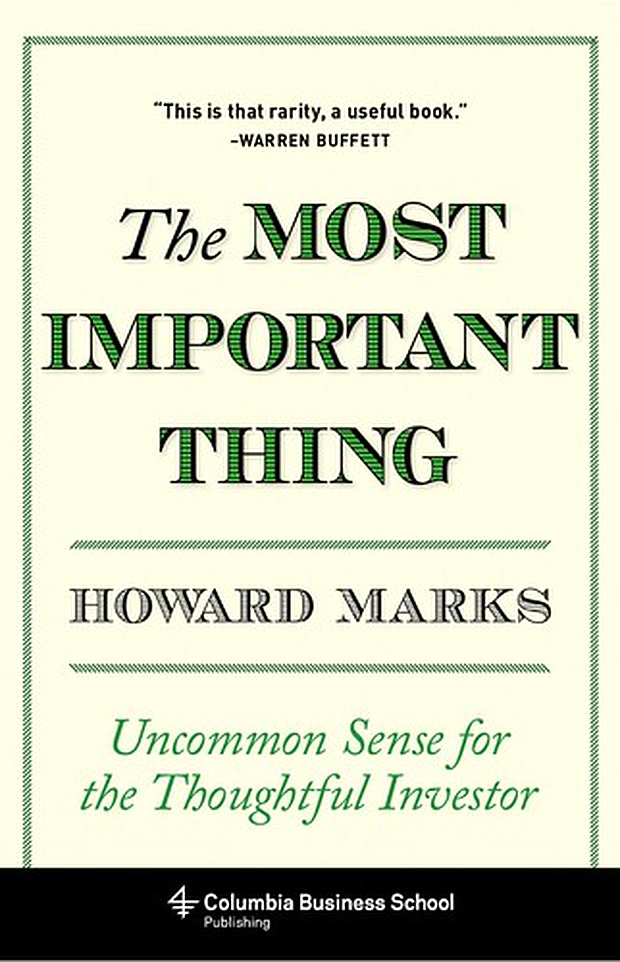
The Most Important Thing
Get on Amazon →
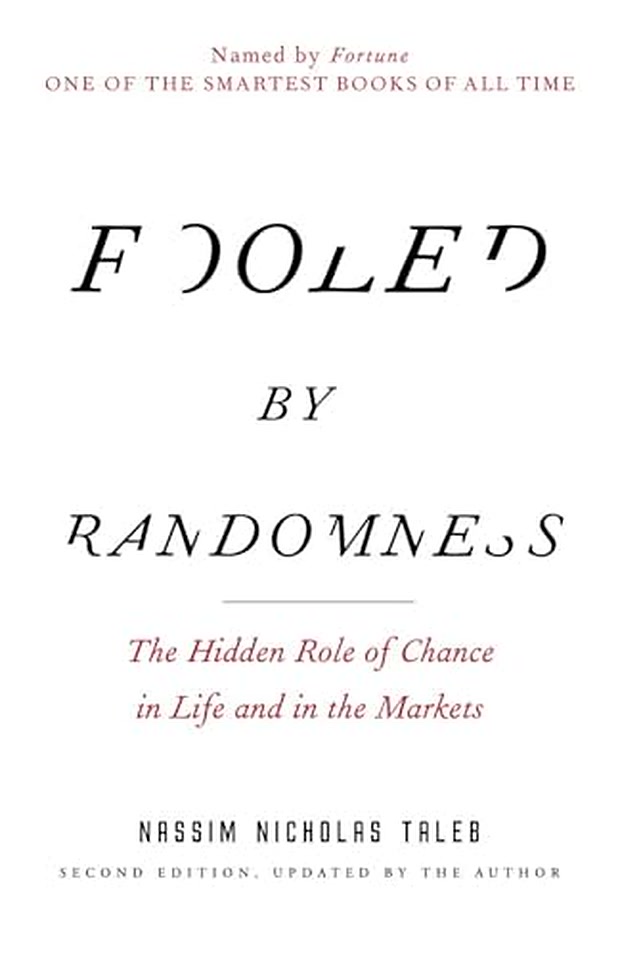
Fooled by Randomness
Get on Amazon →
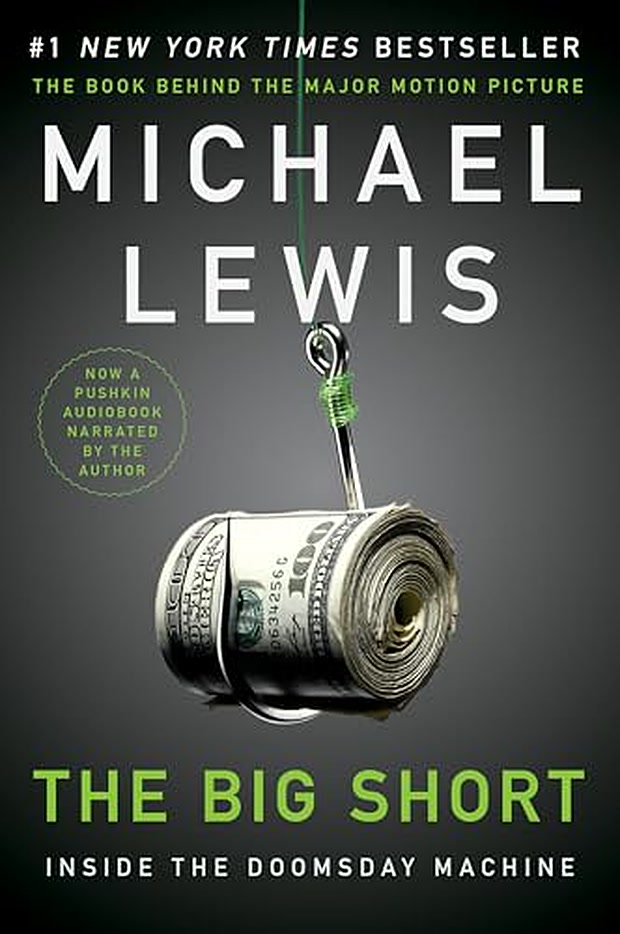
The Big Short
Get on Amazon →
As an Amazon Associate I earn from qualifying purchases.