Howard Marks
2008 05 16 The Aviary
© Oaktree Capital Management, L.P.
All Rights ReservedMemo to: Oaktree Clients
From: Howard Marks Re: The Aviary
Rather than dwell this time on a single subject, I want to cove r a few. They may not seem
related at first, but I believe they’re birds of a feather.
UA Dead Duck
While it’s important that we have a sense for where we stand in terms of the market cycle,
figuring that out can require some sophisticated infe rence. It’s not often that we get crystal clear
evidence of the pendulum’s swing, or get it in s hort order. That’s what makes the case I’ll
describe so distinctive. “The Race to the Bottom” (February 2007) is one of my favorite memos. I think it presented
clear evidence of the degree to which the pendulum of innovati on and risk taking had swung to
the undisciplined end of its arc. As I described, I was prompted to write it by an article in the
Financial Times of November 1, 2006, which reported the following:
Abbey, the UK’s second-largest home loan s provider, has raised the standard
amount it will lend homebuyers to five times either their single or joint salaries, eclipsing the traditional borrowing levels of around three and a half times salary. It followed last week’s decision by Bank of Ireland Mortgages and Bristol and West to increase standard salary multiples from four to 4.5 times.
After quoting that paragraph, I went on to draw what I thought was the compelling conclusion:
Any way you slice it, standards for mortgage loans have dropped in recent
years, and risk has increased. Logic- based? Perhaps. Cycle-induced (and
exacerbated)? I’d say so. The FT quoted John Paul Crutchley, a banking
analyst at Merrill Lynch, as saying “When Abbey are lending a multiple of five times salary, that could be perfectly sensible – or it could be tremendously risky.” Certainly mortgage lending was made risk ier. We’ll see in a few years whether
that was intelligent risk taking or excessive competitive ardor.
Auctions were taking place in the capital markets, and suppliers of capital were bidding against
each other to make deals. In the case of UK ho me mortgages, the right to make loans would go
to the institution willing to lend the highest multiple of annual sala ry . . . that is, willing to accept
the most risk. In the last few years, there were many ways in which lenders and investors vied for deal flow on the basis of lowered return ex pectations and heightened risk. I considered
Abbey’s decision emblematic of this trend.
© Oaktree Capital Management, L.P.
All Rights Reserved
Thus, you can imagine my reaction upon reading the following in the Fin
ancial Times of
April 8:
First-time buyers with no cash savings were shut out of the housing market yesterday after Abbey became the last ma instream lender to stop offering 100 per
cent mortgages. Borrowers who a month ago had a choice of mortgages offering 100 per cent of a property’s value, will now need a deposit of at least 5 per cent . . . More than 20 lenders . . . offered 100 per cent mortgages at the start of last
month. These have been pulled out of the market one by one as banks and building societies have distanced themselves from riskier lending.
Eighteen months ago, Abbey was the first to take lending standards to a new low in terms of
times-salary-loaned. Now, it’s the last to raise them with regard to down payments. Can there
be a clearer example of the credit cycle at work?
For now, high-risk, no-worries lending seem s to be a dead duck, a casualty of the
corrections in risk aversion and demanded returns that have accompanied – or are at the
root of – the current credit crunch. At the highs of the credit cycle, anyone can get money for
any purpose. At the lows, even deserving bo rrowers are shut out. The former is highly
expansionary, and the latte r depresses economic activit y. It’ll always be so.
UThe Canard of Free Market Infallibility
“Canard” is the French word for “duck.” In English, however, a “canard” is “a Tfalse or
unfounded report or story T.” That English meaning comes from the French phrase “vendre des
canards à moitié”: to cheat, l iterally, to half-sell ducks.
A canard gained broad acceptance over the last decade or two, as faith in the ability of the
free market to optimally allocate assets morphed into an irrational ex pectation that the free
market would produce a continually rising tide, lifting all boats and bringing a better life
for everyone. Here’s my version of the saga.
One of the longest cycles I’ve witnessed has ta ken place in the area of government involvement
in the financial industry. Prior to 1929 (I wasn’t around for this part), there was little regulation.
When much of the subsequent market collapse was attributed to improper conduct in investment
banking and in investments generally, this led to significant new regulation. For an interesting look at beha vior in the 1920s, I’d recommend Wall Street Under Oath, written
in 1939 by Ferdinand Pecora, who led the Senate inve stigation into the caus es of the Great Crash
and then became a New York State judge. It’s a scathing indictment: imagine Wall Street operating in the 1920s unhampered by today’s securities laws. Among other things, the Street’s conduct led to the enactment of the Glass-Steagall Act of 1933 that mandated the divorce of commercial banks from investment banks, th e Securities Act of 1933 and the Securities
Exchange Act of 1934. Thus a strong regulator y regime prevailed – particularly under the
© Oaktree Capital Management, L.P.
All Rights ReservedDemocrats who controlled the W
hite House for 28 of the 36 years from 1933 to 1969, and the
Senate for 44 of the 48 years from 1933 to 1981. (In America, regulation is generally associated
with Democrats and liberalism, and deregul ation with Republicans and conservatism.)
The last 28 years have been very different, how ever, thanks primarily to Ronald Reagan and
Margaret Thatcher, bolstered by centrist Clint on and Blair administrations, and helped along by
Bush, Bush and Brown. For much of that tim e, the Fed was under the leadership of Alan
Greenspan, who is philosophically indebted to Ayn Rand, a strong believer in free markets.
Free-market solutions were deemed certain to yield optimal economic decisions. Deregulation, privatization and market pricing went into full swing. Government involvement in policy making and control was di srespected. In short, it was assumed that
the profit motive – Adam Smith’s “invisible hand” – would maximize capital efficiency
and, therefore, societal welfare.
This trend reached its apogee in the last ten years. The Glass-Steagall Act was nullified; this allowed, for example, the combination of Citiban k and Salomon Brothers. Other than lowering
interest rates and providing li quidity to fend off weakness, the Fed employed a hands-off
approach. Investment managers and investme nt bankers gained fame and huge fees for
performance that showed which of them were the most talented. In every corner, the cry was
“let the market decide.”
Clearly, however, the events of recent years attest to excesses prompted by the profit
motive . More was better: more leverage, more innovation, higher ratings for a given security
and more activity in areas like residential real estate. Equally clearly, not all of the free-
market decisions were salutary; the pr oof can be found in the fact that laissez-faire has
landed us in a financial crisis that some ob servers consider the potentially most serious
since the Depression.
How can we reconcile theory a nd practice: the way free-market decisions are supposed to work
and the way they do work? The answer lies, I think, in the difference between short term and
long, and in the coexistence of beneficial general trends and harmful exceptions. Free markets
allocate resources efficiently in the long run. But they can’t make the tide rise continually,
and while some boats rise, others will crash. Properly functioning free markets will give
rise to times that set the stage for ruin, and then to times of ruin itself. They must create losers as well as winners, and capital destruction as well as capital creation.
In pursuit of profit in a free mark et, people can engage in any behavi or that’s not illegal. (Well,
actually, they can do ille gal things too, but hopefully not for long.) Ethical considerations
constrain some but not all, and ethicality seem s to wax and wane. There’s no doubt that profit
pursuers sometimes push the envelope. Examples?
The fees for appraising houses and rating secu rities went to those willing to assign the
highest values. Did they let this affect their valuations?
© Oaktree Capital Management, L.P.
All Rights Reserved Thanks to disintermediation, financial institu tions saw that they could earn fees for
originating loans and selling them
onward. Did the rewards for achieving volume displace
the prudence they used to employ when putting their own capital at risk?
Once financial engineers had built their new tranched products, th ey could sell them at lower
yields (higher prices), sell more of them, and earn bigger fees if they could get them rated
higher. For a given instru ment, single-A was good, double-A wa s better and triple-A was
best. The investment bankers marshaled the data and fed it into their models, tweaked to
yield the best possible result. I find it hard to believe th ey ever said, “Wait a minute;
triple-A’s too high given the underlying coll ateral” or “It can’t be triple-A, because
there are a few scenarios that, although unlikely, would yield terrible results.”
I’m not suggesting these people engaged in il legal activity or cons ciously did the wrong
thing. They were just trying to make more money for their employers and themselves. But
I believe their economic self-interest caused them to go to extremes in an environment that
allowed candor, skepticism and ethics to be forgotten in pursuit of revenue maximization .
UA New Canard Takes Flight
Government involvement in the private sector is like hemlines: it goes up and down. But it does
so in very long cycles. It ta kes decades for it to reach maximu ms and minimums, and it can take
a long time for the error of the extremes to be exposed. In the last couple of months, we ’ve read a great deal about the need for increased regulation, and
there’ll be more. There ar e several reasons for this:
First, when there’s a crisis, people tend to look for easy explanations. Insufficient regulation
can be a good candidate.
Members of the out-of-power pol itical party can always make hay by blaming the governing
party and its philosophy.
The truth is, whichever philosophy is in the ascendancy will deserve some responsibility
for crises . . . because no approach is perfec t. Regulation will always produce red tape
and some inefficient, non-market solution s, and deregulation will always permit a
degree of cowboy behavior.
It’s easy to allege that the so lution can be found in reversing th e trend in regulation, and hard
to disprove a priori .
So now the cry has been raised. People ar e jumping on the bandwagon, and those opposed are
trying to head it off with promises of better beha vior and self-regulation. As the Financial Times
noted on April 10,
© Oaktree Capital Management, L.P.
All Rights ReservedNow credit and consumer confidence ar e ebbing
, to the likely detriment of
company profits. State intervention, whic h free marketers have argued against for
centuries, has been royally legitimized.
Paul Volcker put it this way in the FT of April 12: “The bright new financial system – for all its talented participants, for all its rich rewards – has failed the test of the marketplace.” Belief in free market omniscience has been laid to rest for a while.
The New York Times of April 15 described Bob Steel, Treasury Under S ecretary for Domestic
Finance, as being highly optimistic about a “supe rregulator” or “market stability regulator” that
“would pass judgment on the capital levels, trading exposure and leve rage of Wall Street’s most
sophisticated institutions.” Yet within just the last two years, it says, “Mr. Steel has been co-
chairman of one commission that claimed h eavy-handed regulation was stanching financial
innovation and another that argued that hedge funds could police themselves.” Times certainly
do change.
And in a sign of the times, breakingviews.com , an online interpreter of financial news, put it this
way on May 14:
The hands-off approach to financial markets now looks neglectful. . . . Greenspan’s laissez-faire attitude to a sset prices went along with paying little
attention to bank supervision and positively welcoming the growth of less regulated financial institutions. Trusti ng financial markets to self-correct now
looks wrongheaded. . . . The authorities need to relea rn that financial markets
are too important and too impulsive to be left to operate unconstrained .
They work better with careful, consistent supervision. (Emphasis added)
In place of market-based decisions, we’re likely to see more limits on free-market activity. I find
it impossible to believe that the government will do a better job than the market of allocating
assets and preventing excesses. But the current pain – when combined with regulation’s avowed
goals of avoiding harm, limiting predatory conduct and protecting the little guy – will make the
trend hard to resist. As Martin Wolf wrote in the FT of April 16,
More regulation is on its way. After fri ghtening politicians and policy makers so
badly, even the most optimistic banker must realize this. The question is
whether the additional regulation will do any good. (Emphasis added)
Some specific actions have the potential to increase financial security, such as (a) increases in the
capital reserves required against complex structur ed products and off-bala nce-sheet vehicles and
(b) full and detailed disclosure of the latter. Some increase in regul ation seems appropriate,
especially with regard to off-bala nce-sheet entities, the source of most of the banks’ losses. It’s
remarkable that just six years after Enron, where the worst abuses were hidden off balance sheet,
another crisis was able to aris e there. Banks benefit from de posit insurance (the government’s
seal of approval) and access to cheap Fed funds. Thus it’s reasonable that, in exchange, all of
their entities should be tightly regulated. This is especially true sin ce it’s been made clear that
non-bank activities won’t be perm itted to sink our large banks.
© Oaktree Capital Management, L.P.
All Rights Reserved
But I think there are dozens of reasons why gene rally increased regulation won’t work to the
hoped-for extent. Here are my first twelve: 1. It’s far eas
ier to find holes in regulations than to plug them. Financial professionals
innovate and expand. Regulators mu st try to catch up, often with outdated tools. By the time
new rules are enacted, the financiers have moved on to invent ne w products and open new
loopholes.
2. It’s a simple fact that the regulated are more financially motivated to act than the regulators
are to respond. It’s no t without effect that investment ba nkers work two or three times as
many hours per week as the people w ho’re counted on to police them.
3. The most skillful regulators often move eventually to work in regulated institutions, weakening the effectiveness of the regulat ory process and spilling its secrets.
4. Hedge funds and derivatives are behind many of the excesses, and it will be particularly
hard to get them under control. Today, one huge area of uncer tainty is credit default
swaps, particularly with rega rd to capital adequacy and c ounterparty risk. It’s not a
coincidence that CDS are deri vatives with heavy hedge fund involvement. How might they
be regulated?
5. Derivatives are particularly hard to regulate because it’s difficult to quantify the risk
they entail. Let’s take the simplest example: you sell someone a “naked call” that gives him
the right to buy from you for $2 apiece 100 shar es of a stock you don’t own. If the stock
goes to $5, you lose $300 (the difference be tween the $2 you’ve been paid and the $5 you
now must pay to buy 100 shares to deliver). If it goes to $10, you’re down $800. At $100,
you’re down $9,800. At $1,000, you’re down $99,800. At $10,000, it’s $999,800, and so
on. With naked call writing (and its equivalent, naked short selling), the potential loss is
theoretically unlimited. So what ’s the right amount of risk to show on your balance sheet?
No one can say. Should it be the “worst case”? And what is that? Or how about a model-
derived estimate of the likely outcome? The la st few months certainly showed those to be
useless.
6. It’s worth noting that banks, probably the most regulated of our financial institutions,
are reporting the biggest losses. Regulation can be improved and tightened, but it’s
hard to believe that it actually ca n be counted on to prevent crises. Similarly, the
weaknesses in the mortgage loan generation pr ocess were huge, but no regulator spoke out
against them.
7. It’s been proposed that financia l institutions should be required to stress-test their ability to
cope in difficult times. But how bad an environmen t should they be able to survive? What is
the worst case, and should banks have to prepare for it? If banks always were required to
be able to survive the conditions of Februa ry and March, for instance, they might never
make a loan.
© Oaktree Capital Management, L.P.
All Rights Reserved8. Regulatory proposals are also likely to include calls for more and better risk
management . But the risk managem
ent profession’s exertions in the last ten years probably
exceeded the sum of its efforts prior thereto. Those efforts certainly didn’t head off the
current crisis. In fact, it’s highly likely that risk managers’ blessings led to a false sense of
security in recent years, and thus to more confident (and greater) risk taking.
9. Since many of the biggest recent errors occurred in the area of credit ratings, it’s
appropriate to ask whether regulation could make ratings more accurate. According to an article in the Herald Tribune of April 25,
Senator Chris Dodd . . . practically begge d Christopher Cox, the SEC chairman, to
ask for new authority. He suggested that perhaps it would be a good idea to leave
credit ratings to some kind of non-profit ag ency that would not have conflicts of
interest. Both he and [Senator] Shelby suggested that the SEC should revoke the
operating license of a credit rating agency that was wrong too often.
Can you imagine anything along these lines working? Would you like to see credit ratings being set by an agency lacking economic motivation? Who would determine whether
they’d been “wrong too often”? And would “wrong too often” in clude ratings that proved to
be too low, or just too hi gh? I’ve seen a lot of both in the last forty years.
10. Likewise, some of this cycle’s greatest gaffes came from having people make loans who lacked an ongoing stake in their creditworthiness. So it’s been suggested that lenders should
be required to have money at risk in loans even after they’ve been securitized and sold
onward. Could regulators possibly prevent a highly motivated lender from getting around this requirement? How, for instance, would they keep an institution from hedging its bets
through offsetting positions in derivatives?
11. A number of the proposals I’ve read relate to financial executives’ compensation. Bankers’
bonuses should be related to performance that ha s been adjusted for th e risks entailed. And
they should be long-term in nature and subject to being clawed back if profits turn into losses
later on. Can government possibly regulate compensa tion in the private sector? And
should it under our system? I would say “no” to both.
12. Finally, the main things that gave rise to the pain this time around were imprudence,
insufficient skepticism and ex cessive faith in innovation . The International Herald
Tribune of March 29 said, “Democrats in Congress . . . are pushing for tougher restrictions
on risky lending.” And I read elsewhere a sugg estion that mortgage lenders should have to
act responsibly. How can these things be regulated? How might a regulator require good
judgment, and how would it be measured?
I think Alan Greenspan did an excellent job of summing up the situation in an op-ed piece in the
Financial Times of April 7,
Regulators, to be effective, have to be forward-looking to anticipate the next
financial malfunction. This has not proved feasible. Regulators confronting real-
© Oaktree Capital Management, L.P.
All Rights Reservedtime uncertainty have rarely, if ever, been able to achieve the level of f
uture
clarity required to act pr e-emptively. Most regulatory activity focuses on
activities that precipitated previous crises.
Aside from far greater efforts to ferret out fraud (a long-time concern of mine),
would a material tightening of regulati on improve financial performance? I doubt
it. The problem is not the lack of regul ation but unrealistic expectations
about what regulators are able to prevent. How can we otherwise explain how
the UK’s Financial Services Authority, whos e effectiveness is held in such high
regard, fumbled Northern Rock? Or in the US, our best examiners have
repeatedly failed over the years. These are not aberrations.
The core of the subprime problem lies w ith the misjudgments of the investment
community. . . . Even with full authority to intervene, it is not credible that
regulators would have been able to pr event the subprime debacle. (Emphasis
added)
Martin Wolf sized the challenge in the FT of April 16:
If regulation is to be effective, it must c over all relevant instit utions and the entire
balance sheet, in all significant countries ; it must focus on capital, liquidity and
transparency; and, not least, it mu st make finance less pro-cyclical.
That’s a tall order. The results are un likely to stack up well against the goals.
No, government intervention does n’t hold the key to a financial system existence free of
extremes and crises . . . any more than laissez-faire does. But the trend is likely to be in
the direction of regulation. The truth is that cycles, with their dangerous excesses, will
cease to occur only when human emotion and the pursuit of profit no longer go to extremes. Neither government intervention nor the free market w ill ever produce that
result.
UThe Black Swan
The best-known bird around today is The Black Swan , the second book from Nassim Nicolas
Taleb. You may remember Taleb as the author of Fooled by Randomness , which I’ve described
as an essential read (see “Returns and How They Get That Way,” October 2002, and “Pigweed,”
December 2006). He’s an ex-hedge fund manager and self-styled philosopher whose books are nearly impenetrable (I suspect in tentionally). But they also c ontain some incredibly important
ideas. The main thrust of Fooled by Randomness was that while many of the forces that shape
investment performance – or history in general – are random in nature, people often ignore that
fact and give them meaning that would be warr anted only if they weren’ t random. Thus the top
performing investor in a given year may be the manager – in Taleb’s terminology, the “lucky
© Oaktree Capital Management, L.P.
All Rights Reservedidiot” – who took an extreme and unwise pos ition and was bailed ou t by a highly improbable
event that occurred by chance. For that reason, one year of outstanding perfor
mance says
absolutely nothing about the likelihood of another.
The Black Swan continues in that vein, emphasizing the dangers of overestimating knowledge
and predictive power. The book gets its name – and its theme – from some unusual Australian
birds which, never having been seen before forei gners began to visit, were considered in Europe
not to exist. According to Taleb, there are three criteria for a “black swan.” Th e first two are that it should be
“an outlier” and carry “a n extreme impact.” The fact that these “highly consequential events”
are infrequently occurring and improbable ofte n is taken to mean they’re nonexistent and
impossible. The difference between the two m ay be small, but it’s highly significant.
Taleb’s third criterion is that black swan phenomena have “retrospective (though not prospective) predictability.” And because people are able to “concoct explanations” for them
after the fact, they end up believing themselv es capable of understanding the causes and
predicting future occurrences . In short, they underestimat e the limits on foreknowledge with
regard to these events – a regular theme of mine, as you know – and underrate the role of
randomness. To simplify their world and render it subject to established statistical analysis,
quants attribute standard properties – like the familiar bell-shape d curve – to events that are far
less regular than they should be for this approach to be valid. The publication of The Black Swan last year was extremely well timed, because many of the
infamous recent events satisfy Taleb’s criteria.
The greatest errors in mortgage securitiza tion arose because “home prices have never
declined nationally” was taken to mean “home prices can’t decline nationally.”
Innovative financial products we re modeled on the basis of common probability distributions
that may have been inapplicable to the phenomena being studied. Thus the possibilities were
oversimplified by recent business school graduates who’d never been out bird-watching in the real world.
In the end, events that had been described as highly unlikely happened. But they shouldn’t
have come as complete surprises and should have been anticipated. Models had led people to consider things with a 1% chance of loss as riskless. Once in a while, however, people
need a reminder that “unlikely” isn ’t synonymous with “impossible.” Black swans do
occur.
Now, with the final bullet point above in mind, le t’s talk about the black swan as a practical
matter, not a topic for philosophic rumination. It ’s easy to say black swans should be prepared
for, and that the people who fell into the last few years’ traps ignored obvious risks. My
December memo “No Different This Time” incl uded the following among the key lessons of
‘07:
Investment survival has to be achieved in the short run, not on average over
the long run. That’s why we must never fo rget the six-foot-tall man who
© Oaktree Capital Management, L.P.
All Rights Reserveddrowned crossing the stream that was five feet d
eep on average. Investors have
to make it through the low points.
This statement makes obvious sense. Certainly in vestors must brace for untoward developments.
There are lots of forms of financial activity that reasonably can be expected to work on average,
but they might give you one bad day on which you melt down because of a precarious structure
or excess leverage.
But is it really that simple? It’s easy to say you should prep are for bad days. But how bad?
What’s the worst case, and must you be equipped to meet it every day?
Like everything else in investing, this isn’t a matter of black and white. The amount of risk
you’ll bear is a function of the extent to which you choose to pursue return. The amount of safety you build into your portfolio should be based on how much potential return you’re
willing to forgo. There’s no right answer, ju st trade-offs. That’s w hy I went on from the above
as follows:
Because ensuring the ability to [survive] under adverse circumstances is incompatible with maximizing returns in the good times, investors must choose between the two.
One of the most interes ting questions I’ve pondered over the years is this: How much
should we spend – be it in the form of insurance premiums or forgone returns – to protect against the “improbable disast er” (my term for the black swan)? But that’s
all it remains: a question. It’s for ea ch of us to answer in our own way.
UBirds on a Wire
There’s an old riddle about ten birds sitti ng on a telephone wire. A hunter shoots one. How
many are left? The usual response is nine. But the correct answer is none; the rest are frightened
by the gunshot and fly away. Maybe it’s a jo ke, but it illustrates the ease with which
ramifications – what my British friends cal l “knock-on effects” – are overlooked.
In “It’s All Good . . . Really?” I discussed the way people were de scribing the events of last
summer as an isolated subprime crisis and ignor ing the potential for contagion. Now most see
that the “subprime crisis” was ju st the first act in what might be a long period of generalized
economic difficulty and market weakness.
The longer I think about economic and inve stment trends, the more I view every
development as a reaction to something else . And you’ve probably noticed my inability to talk
about current events without disc ussing their precursors. I see the events since last summer –
and those that will stretch in to the coming months and perhap s years – as a chain reaction:
The subprime crisis resulted from trends that had been building during the preceding years:
leverage, securitization and tran ching, financial engineering, l ooser ratings, unregulated non-
10
© Oaktree Capital Management, L.P.
All Rights Reserved 11 bank lending, weaker loan standards and rising risk tolerance. The risk embodied in these
things came home to roost in residential mortgages first because it’s there that they were
applied to the greatest extent and to the weakest underlying collateral. Too many triple- A
securities were created from each pool of non -investment grade mortgages, and they
collapsed as soon as default rates surpassed the models’ assumptions .
The credit crunch was an obvious next step. A number of more generalized developments
resulted from the mess in residential mortgages:
o rising risk aversion,
o higher demanded risk premiums, and thus lower prices for risky assets,
o the withdrawal of leverage and liquidity,
o leveraged fund meltdowns and frightening headlines,
o losses at banks and thus endangerment of their capital adequacy, and
o hoarding of capital and the unavailability of new loans.
This resulted in problems at financial institutions . Losses on highly leveraged investments
were sure to lead to a crisis mentality, which could morph easily into a plain old crisis. What
are the cha racteristics of financial institutions?
o high leverage ,
o near-total reliance on short-term deposits and borrowings to fund illiquid, longer-
term assets,
o risk bearing – that’s what their business consists of , and it’s by doing so that they
earn lending spreads (if they borrowed safe and lent safe, where wo uld the spread
come from?), and
o extremely low transparency .
What greater recipe could there be for a drying up of confidence? If a financial
institution loses the confidence of its customers, what’s to prevent a run on the bank?
Nothing, as the UK found out in September with Northern Rock and the US found out in
March with Bear Stearns. And what can inject fear into an economy more than doubt about
the safety of its financial institutions?
The main shoe left to drop concerns the impact on the broader economy . Economies run
on confidence. People spend on non -necessities be cause they expect the future to be good
and their incomes to grow. Businesses expand plant, workforce and inventory because they
expect sales to increase. Financial institutions lend because they expect to be repaid with
interest. Investors provide capital because they expect the value of assets to increase. When
doubt is shed on these expectations, the growth process stalls. When the economy contracts
for two consecutive quarters, a recession is declared, and positive assumptions become
further in doubt.
Already, businesses are reporting declining or disappointing earnings (even General Electric).
Unemployment is on the rise. Higher prices for oil and food are likely to cut into consumers’
ability to spend. And their psyches have been damaged by scary headlines they may or may not
© Oaktree Capital Management, L.P.
All Rights Reservedunderstand. Consumer confidence is at low leve ls, and fewer Americans expect an improving
future. Much of the growth in consum
er spending has been abetted by the more widespread
availability of credit. Now, less credit should mean less spending. Thes e aren’t the conditions
for a vibrant economy.
There’s a strong consensus that we’ll see a reces sion – and a possibility we’re in one already.
GDP grew in the first quarter, but final sa les were down and output increased only because
businesses added to inventories. These additi ons likely were involuntar y, and when stopped or
reversed, GDP growth certa inly could go negative.
Please note that a depressed econom y isn’t the end of the line. Slower consumer and industrial
activity could feed back to the beginning of the process, causing further house price depreciation,
further write-downs, a further cr edit contraction and so forth. And then, when levels get low
enough, something mysteriously will cause the cycle to turn positive. Things don’t happen in isolation in economies a nd markets. Birds do flock together. The
implications of past events will spread further.
UPhoenix from the Ashes?
As always, there’s a tug-of-war going on between the optimists and the pessimists. This time,
however, the stakes are unusually high and the rhetoric proportional to the potentially
momentous consequences. Over the last few weeks, the markets rose based on statements to the effect that the worst had
passed: “We’re closer to the end than the be ginning” (Lloyd Blankfei n of Goldman Sachs).
“Maybe 75 to 80 percent over. . . ” (Jamie Dimon of JPMorgan Chase). The worst is "behind us" (Richard Fuld of Lehman Brothers). The subprime market in the U.S. has reached its eighth
inning or maybe the "top of the ninth" (Morgan Stanley’s John Mack).
On the other hand, John Thain of Merrill Lynch said, “I hope those who say we are at the end are
correct. I am somewhat more skeptical.” Da n Fuss of Loomis Sayles, a highly experienced
bond manager with an excellent track record, sa id, “This is the most worrisome financial
situation I’ve seen in my working lifetime” [whi ch approximates fifty years]. And George
Soros described this go-round as “much more serious than any other financial crisis since the end of World War II." People are talking about March 17, the day JPMo rgan Chase rescued Bear Stearns, as the
bottom. Psychology was terrible in the weeks lead ing up to that event; th ings would have melted
down much further in the absence of a re scue; and psychology and markets picked up
substantially thereafter. Certainly that day was “a bottom,” but I’m not so sure it was “the
bottom.”
The Bear Stearns rescue dealt with the credit crunch, investor attitudes and the possibility
of a downward spiral among financial institut ions. But it didn’t mark the end of mortgage
12
© Oaktree Capital Management, L.P.
All Rights Reserveddefaults or economic weakness. Mortgages will continue to go unpaid, and the numbers m
ay
accelerate if interest rates take ad justable-rate loan payments highe r and if house prices continue
to fall. Further, nothing that was done in March will preclude economic slowdown, falling
corporate profits or defaults on debt. Finall y, it doesn’t seem to have done much for the
availability of credit. Several elements are likely to remain – or become – further depressants:
Bank write-downs will continue to be reported. The majority of the banks’ subprime-
related losses may have surfaced as relate to the current level of house price depreciation
and mortgage default. That doesn’t mean these trends won’t go further, and thus that the
reservoir of unreported losses won’t be refilled. The IMF has projected total mortgage-
related losses of $1 tril lion. Certainly the write-downs announ ced to date haven’t approached
that figure. And there’s a broad consensus that most holders haven’t been as forthcoming on
this subject as the U.S. banks.
Progress is being made toward breaking the logjam, but we’re not done yet, and there
continue to be additions to th e backlog. As banks report larg e write-downs, I can’t help but
sense that the immediate reacti on is, “I wonder how much more remains.” Only when people
stop thinking that way will real progress have been made toward easing the credit crunch.
Similarly, sales of “hung” bridge loans are incr easing, and clearly some investment banks are
willing to take their medicine with regard to the extent to which loans bought in 2006 and
2007 are unsalable at par. Recently we have se en sales at 90, often with financing provided
by the sellers. But just as in the case of mortgage losses, it’s quite possible that new
obligations to lend will re-burden the fi nancial institutions’ balance sheets , as companies
draw against the excess credit lines that were arranged at the time they changed hands in
buyouts.
The availability of credit is still a question mark , although things seem to be getting better.
Despite the Fed’s low rates and all central banks ’ massive injections of liquidity, inter-bank
interest rates still incorporat e significant yield spreads and volumes are limited. On April 28,
the Financial Times quoted John Maynard Keynes:
Whilst the weakening of credit is suff icient to bring about a collapse, its
strengthening, though a necessary conditi on of recovery, is not a sufficient
condition.
In other words, the FT said, “just because the banks are not going bust does not mean
that they can lend as before – nor would they if they could.”
Commercial real estate prices, like home pr ices, are coming off irrational highs achieved
because of the oversupply of investment capital in the last few years. The coincidence of a
broad real estate collapse with a significant recession has the potential to make this a
painful episode. But few prominent commercial defaults and failed refinancings have been
reported to date.
13
© Oaktree Capital Management, L.P.
All Rights Reserved The economic news, while not dire at the moment, isn’
t rosy. Consumer spending,
inflation, employment and business investment all remain exposed to negative future
developments. Default rates among highly le vered companies have just begun to rise.
Finally, the viability of deri vatives such as credit default swaps has yet to be tested .
That means either (a) they’re not going to cause trouble, or (b) they’r e going to cause trouble
and have yet to do so. This is another cas e where potential negatives have yet to be
dispelled.
The markets have seen substantial gains since the time of Bear Stearns’s rescue. They give me
the impression that people who refrained from trying to “catch a fa lling knife” may have
concluded that they waited too l ong, and thus they rushed to buy out of fear that they’d look bad
if they stayed uninvested. Th e FT of April 28 summed up in a way I thought was very much on
target:
The awkward truth is that nobody knows for su re how severe an impact the credit
crunch will prove to have on the glob al economy and on financial markets.
On fundamental grounds a wealth-preserving investor might well feel justified in
being cautious until the extent of the downside becomes clearer. The beauty contest approach [in which, rather than bet on w ho’s the prettiest contestant,
people bet on who most people will j udge to be the prettiest contestant] , however,
suggests that many professional investors are taking the view that however bad their private fears, the majority of their counterparts are looking
through the immediate fallo ut to a rosier future.
Just as markets anticipate ei ght of the next five recessions, so too they can look
forward to eight of the next five bull market recoveries. (Emphasis added)
I’m not saying the pessimists are right and the op timists are wrong, or that we truly face an
ongoing crisis. Rather, I think the possibility is there and several more shoes remain
capable of dropping . Importantly, while mortgage securi ties and leveraged loans have gone
through the wringer and arguably might be cheap, most other assets are as yet unscathed or have
rebounded. Stocks, in particular, do not seem to reflect the possibi lity that this economy’s goose
is cooked, having declined only slig htly from 2007’s all-time highs.
* * *
So you want to know, “Is it over?” Here’s my bottom line:
There’s been a significant correction of the excesses of a year ago. Prices are down and
risk premiums are up. Fear and risk aversion have been brought back into the equation;
unbridled optimism is no longer the norm.
14
© Oaktree Capital Management, L.P.
All Rights Reserved 15 A good part of the losses have been rec ognized that relate to the fundamental
deterioration – and especially the mortgage defaults – to date.
Psychology, which reached “end-of-the-world” levels in the days leading up to the
rescue of Bear Stearns, is back from the brink and on the upswing. Although this could
be a worrisome sign of inadequate caution, the risk that psychology will spur a massive
downward spiral seems to be off the table for now.
However, the foreseeable future is not without significant risks, many of which are real,
not psychological (to the extent the two can be dis tinguished in economics). There could
easily be further house price depreciation, caus ing more mortgage defaults and requiring
additional write-downs. American consumers, buffeted by rising prices for energy and food
and concerned about the future, could easily slow their spending and further weaken the
economy. And we continue to believe that many high-priced, highly leveraged private equity deals will fail to surviv e an economic slowdown.
The outlook continues to call for prudence . . . although not as much or as urgently as a
year or two ago. Then, people were investing at low returns in the belief that nothing could
go wrong. Today, that optimism has been disp elled and prospective returns embody more
generous risk premiums.
However, only when a great deal of caution ha s been built into the markets – and hopefully
an excess of caution – is it time to turn high ly aggressive. We’re not there yet, but there’s
reason to believe we’re moving in that direction.
May 16, 2008
© Oaktree Capital Management, L.P.
All Rights Reserved 16Legal Information and Disclosures
This memorandum expresses the views of the author as of the date indicated and such views are subject to
change without notice. Oaktree has no duty or obligation to update the information contained herein. Further, Oaktree makes no representation, and it should not be assumed, that past investment performance is an indication of future results. More over, wherever there is th e potential for profit there
is also the possibility of loss. This memorandum is being made av ailable for educational purposes only and should not be used for any
other purpose. The information contained herein do es not constitute and should not be construed as an
offering of advisory services or an offer to sell or solicitation to buy any securities or related financial
instruments in any jurisdiction. Certain inform ation contained herein concerning economic trends and
performance is based on or derived from informatio n provided by independent third-party sources.
Oaktree Capital Management, L.P. (“Oaktree”) believes that the sources from which such information has been obtained are reliable; however, it cannot g uarantee the accuracy of su ch information and has
not independently verified the accuracy or completeness of such information or the assumptions on which
such information is based.
This memorandum, including the information cont ained herein, may not be copied, reproduced,
republished, or posted in whole or in part, in an y form without the prior written consent of Oaktree.
Recommended Reading
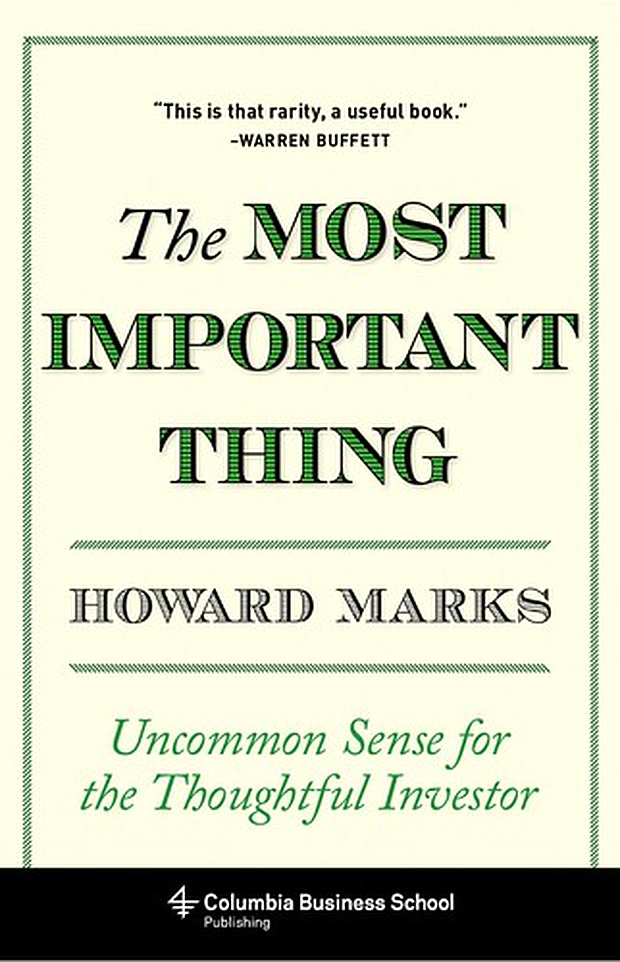
The Most Important Thing
Get on Amazon →
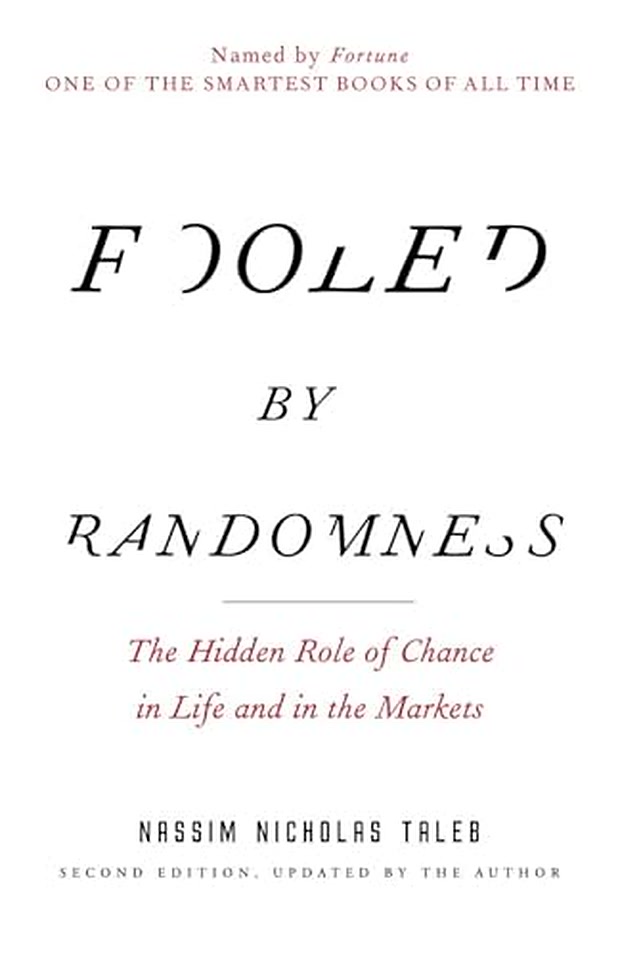
Fooled by Randomness
Get on Amazon →
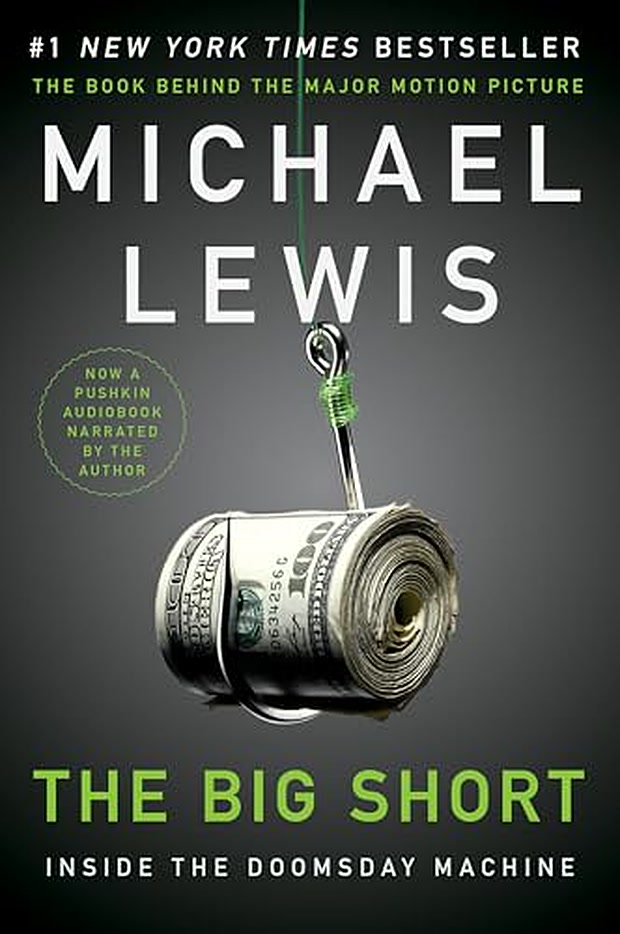
The Big Short
Get on Amazon →
As an Amazon Associate I earn from qualifying purchases.