Howard Marks
2007 09 10 Now Its All Bad
© Oaktree Capital Management, L.P.
All Rights ReservedMemo to: Oaktree Clients
From: Howard Marks Re: Now It’s All Bad?
I’m a great believer in the cyclical nature of the markets, but I never cease to be amazed
at how far they can go in one direction and for how long; the extremes they can reach,
despite logical arguments to the contrary; a nd the swiftness of the swing back. It all
reminds me of a point I made in my sec ond memo, “First Quarter Performance” (April
1991): Although the midpoint of its arc best de scribes the location of the pendulum “on
average,” it actually spends very little of its time there. Instead it is almost always
swinging toward or away from the extremes of its arc. Just seven weeks ago, I complained in “It’s All Good” that investor s were acting as if
nothing could go wrong. “Priced for perfectio n” was the concept underlying values, and
people were more than willing to pay prices set that way.
Now, of course, the prevailing attitude appear s to have swung from “it’s all good” to “it’s
all bad.” Pessimism has replaced optimism, pe rhaps also to excess. There are days on
which no one seems able to tell me how the de veloping credit crisis mi ght be resolved in
short order and a full-scale meltdown avoided, and when no one seems able to find a ray of sunshine in the current situa tion (other than bargain hunters).
It’s like the aspiring actor who takes acting classes, waits on tables and hustles auditions
for a decade . . . and then gets his big break and becomes an “overnight success.” Except that in this case, having built up great exces ses over a period I date from November 2002,
people are now acting as if this market has become an overnight flop. Some of us have been saying for years that a swing back of the market cycle was due, but
it took a long time to happen (calling to mind, as so often in my case, the dictum that
“being too far ahead of your time is indisti nguishable from being wrong”). This delay
does a good job of illustrating Lord Keynes’s famous observation that “markets can
remain irrational longer than you can remain solvent.”
Markets can swing in a single direction for a longer period and to a greater extent than
anyone might expect. That’s crowd psychology. But the swing back can be equally surprising – in terms of what kicks it off and how fast it moves. I recently came across a
great quote from Larry Summers: “in economic s things happen slower than you expected
they would but when they finally do, they ha ppen faster than you imagined they could.”
Certainly the recent transition from all good to all bad demonstrates this phenomenon.
© Oaktree Capital Management, L.P.
All Rights ReservedUThe Virtuous Circle
The financial world seems to have melted down in just a few weeks. But the truth is, the
seeds of the crisis have been growing for years – unnoticed by most – as a seemingly virtuous circle spun unabated. Henry Kissinger was a member of TCW’s board when I worked there, and a few times
each year I was privileged to hear him hold forth on world affairs. Someone would ask, “Henry, can you explain yesterday’ s events in Bosnia?” and he’d say, “Well, in 1722 . . .”
The point is that chain reaction-type events can only be unde rstood in the context of that
which went before. The challenge is figuri ng out how far back to go. In talking about
how the market got to its current cond ition, I’ll just look ba ck five years.
Everyone remembers the last corporate debt crisis, during the summer of 2002.
Recession, credit crunch, 9/11, Afghanistan, the telecom meltdown, and scandals at
Enron and the like combined to make bonds ava ilable at ridiculously high yields. Those
who were willing to buy had an opportunity to earn ultra-high returns with what turned
out to be very little risk. Around the beginning of November 2002, however , it felt like a switch was thrown.
Maybe distressed debt managers who hadn’t been aggressive enough during the summer
concluded they had to get invested before year-end. For whatev er reason, bond prices
started to rise. Our active di stressed debt funds gained 20% that month, and the markets
never looked back. Investors in all asset cl asses forgot the panic that had gripped them
just a few months earlier and b ecame preoccupied with making money.
Because only modest returns were expected from high grade bonds (with their 4-5%
yields) and U.S. common stocks (following the 2000-02 bear market), investors sought
solutions in non-traditiona l investments with brief track reco rds at best, and thus little or
no clarity regarding the risks involved.
Vast sums flowed to hedge funds, and thous ands of new ones were formed. High yield
bonds and leveraged loans began to be issued again . . . because now there were buyers.
This enabled buyouts to be financed and then recapitalized, and qui ck payouts to equity
holders resulted in eye-poppi ng IRRs, attracting more capital to buyout funds. Real
estate attracted vast amounts of capital, too, ev en when “cap rates” – current cash yields –
sunk below 5%; what could be better than a tangible asset providing inflation protection?
Borrowing power became virtually unlimited, as is often the case when providers of
capital are eager to put money to work. T hus the financial environment reflected (1) a
vast ability to leverage, (2) an uninhibited s earch for return, and (3 ) investors competing
to make investments by accepting lower returns and decreased safety. This combination supported new investment techniques, which grew rapidly despite being untested.
Securitization, tranching and selling onward were employed extensively, often in
combination. For investors seeking high returns in a low-return world, leverage
seemed to hold the answer, and it was used in ways never seen
© Oaktree Capital Management, L.P.
All Rights Reservedbefore. Collateralized loan obligations and colla teralized debt obligations, for example,
grew practically unchecked. These debt f actories bought up vast amounts of raw m
aterial
– in the form of underlying portfolio assets – in order to generate a salable product.
The bottom line of it all: high lever age, untested vehicles and inadequate
preparedness for adverse developments. Little awareness of risk, low credit
standards, slender risk premiums and little margin for error. In short, a recipe for
possible disaster.
UThe Vicious Circle
It’s easy to explain what happens at th is point in the typical market cycle:
eventually, everything goes the other way. That’s exactly what happened this summer.
There’s a bump in the road. It doesn’t matter what it is, a nd it’s usually different each
time. This year the problem occurred in th e field of subprime mort gages. There was a
surprising rise in delinquenci es, the immediate effect of which was limited to a small
segment of the economy and the few invest ors who’d bought securities backed by these
loans. In the months leading up to July, th e impact went largely undetected outside the
subprime arena.
But from time to time in the investment world, a chain reaction is set off – maybe
you’d say a “tipping point” is reached – which causes one sort of problem to create
others and to cascade from one asset class, market or region to others.
I think the first step toward a broadening-out of the subprime problem came in a few days
during which rating agencies downgraded hundr eds of mortgage-back ed securities and
the debt of CDOs built on them. The repercussions were many and swift. Not only did
the downgradings have a direct negative effect on mortgage portfolios and their holders,
but they provided a wake-up call, a shocking reminder of some forgotten realities:
That risk had been underestimated.
That things investors thought they knew – truths they held so strongly – they really
hadn’t known at all.
That elements they had relied on – in this case, debt ratings – had let them down.
Nothing works, they were reminded, except an alysis that is first-hand, in-depth and
superior.
Then there were the holders’ problems. B ear Stearns, for example, announced significant
losses in two of its hedge funds, as fall ing prices for subprime holdings rendered
collateral inadequate and margin calls eliminat ed maneuvering room. A few days later, it
was reported that the investor s’ equity was all gone.
And then there are technical factors. These are developments that encourage selling or
deter buying but are unrelated to investment fundamentals. A number soon arose:
© Oaktree Capital Management, L.P.
All Rights Reserved Suddenly, market participants realized how hard it can be to value obscure,
infrequently-traded assets and how much the prices of such assets can diverge from
their value. In fact, “value” can be an empty concept in tim
es of crisis, when it
becomes painfully clear that an asset is only worth what it can be sold for. Thus
people came to question the prices funds were using to value subprime-related
holdings, as well as the mode l-derived prices their investment bank creators had
charged for them.
Worried about both subprime fundament als and pricing, and suddenly under
increased scrutiny, many lenders stopped providing financing. Short-term
commercial paper, which many investors had used to leverage their subprime-related
asset investments, became largely impossible to roll over.
Funds that had promised liquidity to their investors – even some money market funds
– became worried about their ability to accurately value subprime holdings and sell
them at fair prices. Thus they suspended withdrawals. What could have a more
traumatic effect on investor confidence?
Where leverage was withdrawn, margin calls arrived, or funds had to meet actual or
feared withdrawals, holders of subprime assets became forced sellers. Few things
have a more devastating effect on investment performance.
UMetastasis
The fundamental, psychological and technical influences described above devastated the
market for subprime investments, of course, but they also spread qui ckly to other assets
and markets and metastasized into new forms of trouble. Investor psychology turned in all markets, even those totally unconnected to subprime
loans. Caution replaced optimism. Risk av ersion took over from risk tolerance (or risk-
blindness). Skepticism and the concept of capital preservation were resurrected.
Concern over being under-invested gave way to fear of buying too soon. Cash came to
be viewed as a source of security and buying power, not a drag on results. All over the
investment world, people started to think more about what can go wrong rather than what
can go right. In short, the things that contributed to the virtuous circle began to be
reversed, in ways that were unimaginable just two months ago.
Bridge financing for buyouts represents an out standing example. Buyouts were an area
of great enthusiasm – and some of the greate st excesses, I think – in the 2002-07 up leg:
Vast sums were raised in buyout funds, lik ely increasing the managers’ motivation to
buy companies.
Purchase prices for target companies were lifted by stock market strength, bidding
wars and the demands of stockholders and boards.
© Oaktree Capital Management, L.P.
All Rights Reserved Acceptable debt/equity ratios – and thus th e prices funds were willing to pa
y for
companies – increased as the cost of debt financing fell.
Companies became even more leveraged as r ecapitalizations allowed debt to replace
equity on post-acquisition balance sheets.
Although purchase prices and leverage ratios were rising rapidly, the banks were ready
and willing to “bridge” – or accept the risk i nvolved in completing – future financings for
buyouts. Often this came in the form of “s taple financing,” thr ough which banks enabled
buyers to include committed financing as a co mponent of their bids. As of a month ago,
banks had committed to supply $277 billion of financing for buyouts, a figure that omits equity bridges (promises to raise some of the equity required in a buyout) as well as non-
U.S. transactions. These bridges have become one of the big stories of 2007.
Prior to July, investors comp eted to put money to work despite rising buyout prices,
increasing leverage ratios, decl ining yield spreads and weaker terms and covenants. The
banks counted on this eagerness in extending their financing commitments, and for years
they were not disappointed. But then the negative developments in s ubprime mortgages reminded investors about
risk.
The sight of funds melting down and susp ending withdrawals was sobering.
Worry about the economic impact of falli ng home prices and less buoyant consumer
spending became pervasive.
In this new, chastened environment, investors who’d bought CLO and CDO debt
realized they had put too much faith in fa vorable ratings and thus were in trouble.
This caused their appetite for debt to dry up.
Bond pricing and terms no longer seemed adeq uate – and the risk associated with
declining to purchase a new issue no longer loomed so large.
In short, in the unique way in which market s can turn from red-hot to frigid, potential
buyers lost interest in the financings the banks had committed to place. And so the
bridges became “hung.” The banks recognize that this isn’t par paper anymore, and thus
they’re likely to accept discount bids to clear it off their balance sheets. Observers
describe this process by saying “risk ha s been repriced.” They mean investors now
realize they’ve been accepting inadequate compensation for bearing risk and are
insisting on more. “Risk repricing” is a good term for what’s happening.
Clearly this phenomenon isn’t limited to subprime debt and bridge financings. In fact, the complete list of impacted securities, mark ets and participants is staggeringly long and
diverse:
subprime loans, and thus large amounts of residential mortgage-b acked securities and
CDO debt,
money market funds that experienced losses in subprime-backed paper and were
forced to freeze redemptions,
© Oaktree Capital Management, L.P.
All Rights Reserved Alt-A mortgages – not subprim
e, but similarly weak on documentation,
mortgage lenders,
commercial mortgage-backed securities, not because rents or property values are
down, but because these securities may be held by residential mortgage investors
forced to raise cash,
bridge financings – and with them the likelihood of future buyouts looking anything
like those of the recent past,
the investment and commercial banks that committed to the bridges,
the stocks of target companies in announ ced buyouts that are shaky as to completion
and/or likely to be renegotiated,
merger arbitrageurs, or “risk arbs,” who assumed the risk of these deals failing to be
consummated as announced,
others who bet that good times and low volatility would continue, and that probable
things would happen and improbable things wouldn’t. These incl ude sellers of put
options and credit default insurance,
“quant firms” that built highly leveraged portfolios with help from models that
extrapolated past market behavior,
hedge funds and other leveraged investors in a wide variety of fields that pursued
“spread” or “carry” trades using large amounts of borrowed money (more on this later),
banks (e.g., Germany’s IKB) and fund mana gers (e.g., Carlyle and KKR) that formed
highly leveraged subsidiaries that would employ extensive le verage in the pursuit of
profit,
anyone dependent on issuing commercial paper or other forms of short-term debt to
finance leveraged investments, and
CLOs and CDOs, their investors, and t hose who depended on them to continue
buying debt providing inadequa te risk compensation.
The list of affected areas is long and could grow longer. On bad days, losses on U.S.
stocks, European stocks and emerging market stocks all are attributed to the credit
crunch. Exchange rate swings – and strength in the yen in particular – are blamed on
declining use of the carry trade, a regular f eature of which was borrowing at low rates in
Japan and investing for more elsewhere. And the other day, I read th at lower profits at
London investment banks will likely result in smaller bonuses for investment bankers . . .
and thus in lower prices for London real estate.
How could investors in the areas listed above have expected that a crisis in subprime
mortgages would affect them this way? W ho would have guessed, for example, that low-
grade mortgage delinquencies would depress returns on risk arb funds? The New York
Times of August 18 described A Demon of Our Own Design , by Richard Bookstaber (see
“Investment Miscellany,” November 2000) as pointing out that “the proliferation of
complex financial products like derivatives, co mbined with use of leverage to bolster
returns, will inevitably mean that there will be a regular st
ream of market contagions like
the one we’re having now – one of whic h, someday, could be calamitous.”
© Oaktree Capital Management, L.P.
All Rights ReservedThis pattern of contagion exemplifies th e hidden fault lines that I say can run
through portfolios and – like constructi on flaws in California homes – become
apparent only during infrequent catastrophes. But their invisibility most of the time
doesn’t mean they’re not there. The existence of these common threads is one of the
things that m
ake it difficult to predict the correlation between a ssets, one of the key
ingredients in intelligent portfolio constr uction. And it’s a good reason to attach a
significant premium to managers with alpha, or superior investment insight and skill.
ULeverage and Liquidity
It’s clear that when the story of 2002-07 is written, leverage and liquidity will be
among the main players. For much of the last few year s, we saw a vast appetite for
securities. It created enormous demand for – and pushed up prices of – real estate- and
asset-backed paper, CLO and CDO debt , buyout funds, hedge funds, high yield bonds
and leveraged loans. In fact, there seemed to be unlimited demand for non-mainstream
investments. With all that money to put to work, few potential buyers refrained from
participating in an upswing that some observers thought lacked a sufficient raison d’être,
reasonable limits and adequate risk compensation.
One of the factors contributing most strongly to that demand was an ability to
borrow excessive amounts, for questionable purposes, on loose terms and at a low
cost. It was a result of the unattractiveness of yields on high grade debt . . . which
stemmed largely from the Fed’s campaign to lo wer interest rates in order to mitigate the
depressant effect of the stock market slump and recession. It was ab etted by the fact that
after a few years of good results, many people forget how money is lost.
Extensive use of leverage was behind many of th e gains of the last few years, and it is at
the root of many of the problems being suffered today.
If I mistake not, the distress . . . was produced by an enemy more formidable than hostile armies; by a pestilence more deadly than fever or plague; by a visitation more destructive than the frosts of Spring or the
blights of Summer. I believe that it was caused by a mountain load of
DEBT.
Flowery commentary on the crisis of 2007? No; according to the Financial Times, the quote from T.E. Burton’s Crises and Depressions refers to events th at occurred in 1857.
The point is that leverage is nothing new, and neither are its deleterious effects.
There are numerous reasons to use debt to leve rage results, and none of them is likely to
evaporate any time soon: 1. Hope springs eternal, as my mother used to say, and greed usually drives markets.
Thus any tool that has the power to magnify gains is very tempting.
© Oaktree Capital Management, L.P.
All Rights Reserved2. Of course, leverage can magnify los
ses as well as gains. But investors make
investments because they expect them to work, not fail, and thus the attraction of
magnified gains far outweighs the fear of magnified losses.
3. Long-term bonds almost always offer hi gher yields than short-term debt, and
riskier investments invariably seem to promise higher returns than safe ones.
For these reasons, using short-term borro wings to finance lower grade and/or
longer-term investments invariably appear s likely to produce positive returns .
4. Most seductively, the incremental risk entaile d in investments that are slightly longer
in term or slightly lower in quality usually appears quite small. For this reason,
these trades seem safe – but that doesn ’t mean they can’t be rendered extremely
risky when leveraged up enough.
5. Of course, when an upward cycle is ge nerating strong returns and making risk
aversion recede, the equation becomes even mo re attractive. In the FT column that
provided the above quotation, John Authers describes the regular pattern of good
times, easy credit, increasing leverage and ev entual crashes. I don’t see that ever
changing.
It’s for these reasons – and especially #4 – that highly leveraged positions are at the
root of most fund collapses. Long-Term Capital Management, the Granite Fund,
Amaranth Advisors, the two Bear Stearns funds, Sowood Alpha Fund and Basis Yield
Alpha Fund were all marked by “safe” positi ons leveraged to the sky. And they all
melted down.
In a number of ways, perpetuation of the ma rket conditions of the last few years was
dependent on several assumptions about liquidity:
that investors with liquidity w ould be eager to put it to work,
that providers of capital would make liqui dity available, meaning that leveraged
investors would be able to maintain their portfolio holdings and buy more,
that securities markets would remain liquid, such that holdings could always be sold
at prices close to their intrinsic value, and
that funds would therefore be able to keep the promise of liquidity that they’d made
to their investors.
In short, it was assumed that liquidity wo uld continue to flow in the direction of
leveraged investment funds (in the form of financing and incremental capital
commitments) rather than away (in the fo rm of margin calls and investor
withdrawals). Two or three months ago the world was described daily as “awash in
liquidity.” Where is it now?
Investments requiring nothing more than the perpetuation of favorable market
conditions can be very seductive. And they wo rk most of the time . . . until the pit
has been dug deep enough, the branches have been spread, and everyone has forgotten about the existence of risk.
© Oaktree Capital Management, L.P.
All Rights ReservedThe investment environm
ent of the last few years could have been negatively impacted
by the removal of any one of the elements of liquidity listed above. But if you look at the
list, it becomes clear that they’re highly in terrelated. Weakening one assumption could
render the others less reliable. And, in truth, a single exogenous development – such as a
major decline in psychology – could simultaneously harm them all. That’s the main story
of the last few weeks.
Investments costing many times the invest or’s equity. Dependence on unreliable
short-term financing. Susceptibility to margin calls or capital withdrawals. Assets
that can become unsalable at a moment’s notice. Prices that can collapse because
the markets are thin and everyone wants out at the same time. The formula is simple and the results are predictable. No t every fund that’s so disposed collapses,
but the potential’s always there – with borrowing to buy at its core.
Fundamental problems are presen t in most investment conf lagrations, but exposure to
excessive leverage and di sappearing liquidity is of ten the accelerant. As
breakingviews.com (my new favorite) put it in The Wall Street Journal of August 2,
“The markets may hurt you, but your lenders will finish you off.”
URisk Reduction
Of the many fairy tales told over the last few years, one of the most seductive – and thus
dangerous – was the one about global ri sk reduction. It went this way:
The risk of economic cycles has been eas ed by adroit central bank management.
Because of globalization, risk has been spre ad worldwide rather than concentrated
geographically.
Securitization and syndication have distribut ed risk to many market participants
rather than leaving it concen trated with just a few.
Risk has been “tranched out” to the investors best able to bear it.
Leverage has become less risky because inte rest rates and debt terms are so much
more borrower-friendly.
Leveraged buyouts are safer because the companies being bought are fundamentally
stronger.
Risk can be hedged by long/short and absolute return investing and through the use of
derivatives designed for that purpose.
Improvements in computers, mathematics and modeling have made the markets better understood and thus less risky.
As described in “It’s All Good . . . Really?” I thought many things that hinted at risk
reduction actually had the effect of decreasing understanding and increasing risk. Up to
July, all we read about was the beneficial na ture of these developments. Now, with the
benefit of hindsight, these are the judgme nts of our leading business periodicals:
© Oaktree Capital Management, L.P.
All Rights ReservedA system designed to distribute and abso
rb risk might, instead, have bred it, by
making it so easy for investors to buy complex securities they didn’t fully
understand. (The Wall Street Journal, August 7)
[Loans] are now often bundled into secu rities that are sold in pieces to
investors around the world, changing hands many times. It spreads risk,
which policy makers believe keeps th e overall financial system sound and
stable. But the downside to this sy stem could be serious. (WSJ, August
10)
“The market appears to be finding it harder to truly understand the
inherent and underlying risks involved,” [according to Chris Rexworthy, a
former regulator with Britain’s FSA]. The backlash is particularly sharp
abroad, in countries that were surpri sed to find that problems with United
States homeowners could be felt so k eenly in their home markets. (New
York Times, August 31) “Low volatility has created complacen cy, and that has translated into
poorly structured derivative markets,” says Randall Dodd, director of the
Financial Policy Forum . . . The low volatility world of the past few years may have worsened the situation, le ading to lax lending standards for
derivative investors. (WSJ, August 2)
It is estimated that there are seven times as many credit derivatives outstanding as there are outstanding bonds . You need to ask the question:
is risk being transferred or created? Are the new gladiators hedging with
derivatives or just leveraging up? (Jeff Pantages in Pensions &
Investments, August 20)
An apt metaphor came from Pension & Investments: “Jill Fredston is a nationally
recognized avalanche expert . . . She know s about a kind of moral hazard risk, where
better safety gear can entice climbers to take mo re risk – making them in fact less safe.”
Like opportunities to make money, the deg ree of risk present in a market derives
from the behavior of the participants, not fr om securities, strategies and institutions.
Regardless of what’s designed into market structures, risk will be low only if
investors behave prudently.
The bottom line is that tales li ke this one about risk cont rol rarely turn out to be
true. Risk cannot be eliminated; it just gets transferred and spread. And
developments that make the world look le ss risky usually are illusory, and thus in
presenting a rosy picture they tend to make the world more risky. These are among
the important lessons of 2007 .
UOther Lessons Not Learned
In addition to the above, a number of other r ecurring themes can be seen as underlying
the recent difficulties. Here are a few:
10
© Oaktree Capital Management, L.P.
All Rights Reserved UBelief in market efficiency U – Although academics say the actions of intelligent
investors cause assets to be priced right, I often find prices screwy. Rather than
increasing market efficiency, improveme nts in computer and communications
technology may have made the markets even more unstable. As my partner Sheldon
Stone says, it’s like a cruise ship where ev eryone is told to sta nd on the port side.
Then everyone simultaneously gets a message telling them to run to starboard. It
makes for a rocky crossing. The New York Times wrote on August 17 that “Information may arrive instantly, but insi ght takes longer.” Ce rtainly the cycles
don’t seem any less volatile than they used to be, or the extremes any less irrational.
In fact, in recent years, ove r-reliance on market efficiency may have kept people from
questioning asset prices.
UInefficacy of models U – Quant funds invest according to models that extrapolate past
patterns, operated by people who know com puters and probabilities, not investment
fundamentals. But models can’t tell you when past market behavior has been
irrational (and thus unreliable), and they can’t predict when those patterns will
change. They lead to invest ments that “would have worked almost all the time in the
past,” but it’s amazing how often we see them derailed by once-in-a-lifetime events. Matthew Rothman of Lehman Brothers ha s become famous for saying in early
August that “events that models only pr edicted would happen once in 10,000 years
happened every day for three days.” Are those models you want to bet on?
UDi-worst-ification U – Warren Buffett harps on the folly of branching out into things
you know less about solely for the purpose of increasing the number of baskets in
which you have your eggs. Investing in thin gs about which you aren ’t expert doesn’t
reduce risk, it increases it. And I think it’s particularly unwise to finance
diversification with borrowed money.
UConflicts between managers and clients U – Investors should look very closely at the
alignment of their managers’ interests with their own. The mere fact that a manager
is working for incentive compensation, or has money in his fund, isn’t enough.
Recent events have shed some unusual – and provocative – light on the question of
alignment. Consider Sowood Capital, which lost half of its investors’ capital, sold off
its portfolio in a block and closed down. Why did the lo ss of half the LPs’ equity
occasion a liquidation? Might further losses have activated a clawback of previous
years’ incentive fees? And might the inte rests of a manager with 100% of his net
worth in his fund have diverged from the inte rests of LPs who invest ed 1% of theirs?
I’m just speculating from the sidelines without knowledge of the facts in this
situation, but I wonder whether this doesn’t s how that to protect their own investment
in their funds, managers can be driven to take actions that damage their LPs.
UThe unreliability of ratings U – Many investors act in re liance on ratings, and some
require ratings before taking actions they’re considering. But ratings must be taken
with a big grain of salt. In fact, a lot of my career (and Oaktree’s success) has
been based on conviction that th e rating agencies are often wrong. They
routinely rate securities too high when th ings are going well, and then overcorrect
11
© Oaktree Capital Management, L.P.
All Rights Reserved 12 when problems surface. It’s instructive to note that a lot of CDO debt built on
subprime mortgages received triple-A ratings, many of which already have required
downward adjustment. And that rating agencies helped CDO managers design
structure s so they would receive the desired rating. And that managers would run a
structure past a few agencies and hire the one that arrived at the highest rating. And
that ratings are paid for by those sponsoring the securities being rated, something
which sounds like a trial where the defendant picks and pays the judge.
All of these paragraphs highlight errors made by investors this time around . . . of a type
that always will be made (but with variations on the theme) . The lesson isn’t to distrust
managers, or models, or ratings, or diversification, or market efficiency.
What investors must learn – but most will not – is that there’s no easy answer,
surefire tool or silver bullet. Lots of tools will help when applied thoughtfully, but
they’ll bring harm otherwise – with the additional risk that excessive reliance on them
will increase the damage done when they turn out to be unavailing. Certainly none of
the highly-touted things discussed above held the answer this time around. Only
truly superior skill, discipline and integrity are likely to produce consistent ly high
returns in the long run with limited risk.
My advice: expect CEOs, regulators, rating agencies and other market participants to
make mistakes. Expect things to go wrong and cycles to swing to extremes and then
recover. Worry about outcomes, and hire worriers. Doing these things is sure to stand
between you and top returns in up-cycles, but it will deliver some degree of safety when
things turn bad. Ensuring the protection of capital under adverse circumstances is
incompatible with maximizing returns in good times, and thus investors must
choose between the two. That’s the real lesson. The things discussed above are just
a few of the details.
What Next?
Lots of people are asking whether this is going to get ugly. Is this the beginning of a
credit crunch? Will it lead to a recession? How bad will it g et? When will the bottom be
reached? How long will the recovery take? The answer’s simple: no one knows.
Some of the psychological and technical preconditions for a challenging market
environment have been met. The bubble of positive investor psychology has been
pricked and could become seriously deflated. When others are aggressive, we should
be worried, but when others are worried, we can be confident. That’s the essence of
contrarianism, and by that standard these are better times.
The easy-money machine has had some sand thrown in its gears and seems to be grinding
to a halt. Previously, anyone could get any amount of money for any purpose. Right
now, deserving borrowers are unable to obtain financing, and this could continue or get
worse.
© Oaktree Capital Management, L.P.
All Rights ReservedThe outlook for the economy is m
urky, as usua l. It continues to limp along, not growing
strongly but not sagging. The big question surrounds the effect of the subprime crisis on
consumers. Home prices are through risi ng. Home equity borrowing is probably
finished for a while as a supporter of consumer spending. Ditto for the “wealth effect.”
The reset of adjustable rate mortgages from artificially low teaser rates to full market
rates over the next 18- 24 months is likely to have a de pressing effect on a large number
of households, and thus on the economy. I w ould think furniture and auto manufacturers,
building materials suppliers, retailers and financial institutions have seen their best days
for a while. I consider the economy unpredicta ble, of course, and thus a lot of people’s
answers will be more definite than mi ne. But not necessarily more correct.
Everyone’s looking to the Fed to take action. Its last act – cutting the discount rate on
August 17 – was largely symbolic but had a pos itive effect. A reduc tion of the federal
funds rate would mean more, telling investors the Fed’s there to help, cutting the cost of
borrowing and stimulating the economy. Bu t it wouldn’t do much for banks’ balance
sheets or willingness to lend. It’s my view that Bernanke would rather not cut rates. Stimulative action that looked like
an investor bailout would cont ribute further to moral hazard and the expectation that the
Fed will always protect investors on the downsid e. This is an unhealthy expectation, as
each bailout encourages risk taking and thus increases the likelihood that another will be needed. But the Fed is being importuned for a rate cut, and there are few people to argue
on the other side, for a good dose of unpleasant medicine.
I’m usually cautious, so I might as well keep my record intact. The economy should
weaken. Deals built on optimistic assumptions and paid for with a lot of borrowed
money shouldn’t all thrive. Generous capital markets should not be expected to bail out
ailing companies. Bargain hunters and distressed debt investors will have more to do. Eventually. But no one at Oaktree would advise you to act as if thes e views are sure to
be correct. We certainly won’t.
* * *
TAn observation I made last October regardi ng the meltdown of Amar anth, in “Pigweed,”
is equally applicable to the recent problems:
TOrin [Kramer] notes that Amaranth “occurred when the skies were blue;
the fund unraveled because a small a nd volatile commodity behaved in an
unpredicted fashion.” This collapse didn’t require an adverse economic
environment or a market crash. The co mbination of arrogance, failure to
understand and allow for risk, and a small adverse development can be
enough to wreak havoc. It can happen to anyone who doesn’t spend
the time and effort required to understand the processes underlying
his portfolio.
13
© Oaktree Capital Management, L.P.
All Rights Reserved
Certainly the magnitude of this summ
er’s crisis has been out of proportion to its
underlying fundamental cause: the increase in subprime delinquenc ies. Instead, a
standard combination has pr oved perfectly incendiary:
underlying greed,
good returns in the up-leg of the cycle,
euphoria and complacency,
a free-and-easy credit market,
Wall Street’s inventiveness and salesmanship, and
investors’ naiveté.
This formula often results in crushing losses. Or as Marc Faber put it, a surplus of
cash leads to a shortage of sense.
An obscure economist named Hyman Minsky is ha ving his fifteen minutes of fame in the
current environment. Here’s how The Wall Street Journal summarized his views on August 18:
When times are good, investors take on risk; the longer those times stay good, the more risk they take on, until they’ve taken on too much. Eventually they reach a point where the cash generated by their assets no
longer is sufficient to pay off the mo untains of debt they took on to
acquire them. Losses on such speculative assets prompt lenders to call in
their loans. "This is likely to lead to a collapse of asset values,” Mr. Minsky wrote. When investors ar e forced to sell even their less-
speculative positions to make good on th eir loans, markets spiral lower
and create a severe demand for cash.
The foregoing aptly describes the current cycle. . . a nd, I think, the way things always are.
It certainly seems inevitable that, eventuall y, investment merit becomes overpriced, and
the combination of good results and easy m oney causes dangerous leverage to be
employed in the pursuit of profit.
When will market cycles be banished or made more muted? That’ll happen when
greed, human failings and herd behavior are eliminated. Or, in other words, never.
In “You Can’t Predict. You Can Prepare.” I wrote of cycles that success carries within
itself the seeds of failure, and failure carries the seeds of success. It’ll always be so.
September 10, 2007
14
© Oaktree Capital Management, L.P.
All Rights Reserved 15Legal Information and Disclosures
This memorandum expresses the views of the author as of the date indicated and such views are
subject to change without notice. Oaktree has no duty or obligation to update the information contained herein. Further, Oaktree makes no rep resentation, and it should not be assumed, that
past investment performance is an indication of future results. Moreover, wherever there is the
potential for profit there is also the possibility of loss. This memorandum is being made available for educational purposes only and should not be used
for any other purpose. The information contai ned herein does not constitute and should not be
construed as an offering of advisory services or an offer to sell or solicitation to buy any
securities or related financial instruments in any jurisdiction. Certain information contained herein concerning economic trends and performan ce is based on or derived from information
provided by independent third- party sources. Oaktree Capita l Management, L.P. (“Oaktree”)
believes that the sources from which such informa tion has been obtained are reliable; however, it
cannot guarantee the accuracy of such inform ation and has not independently verified the
accuracy or completeness of such information or the assumptions on which such information is
based. This memorandum, including the information cont ained herein, may not be copied, reproduced,
republished, or posted in whole or in part, in any form without the prior written consent of
Oaktree.
Recommended Reading
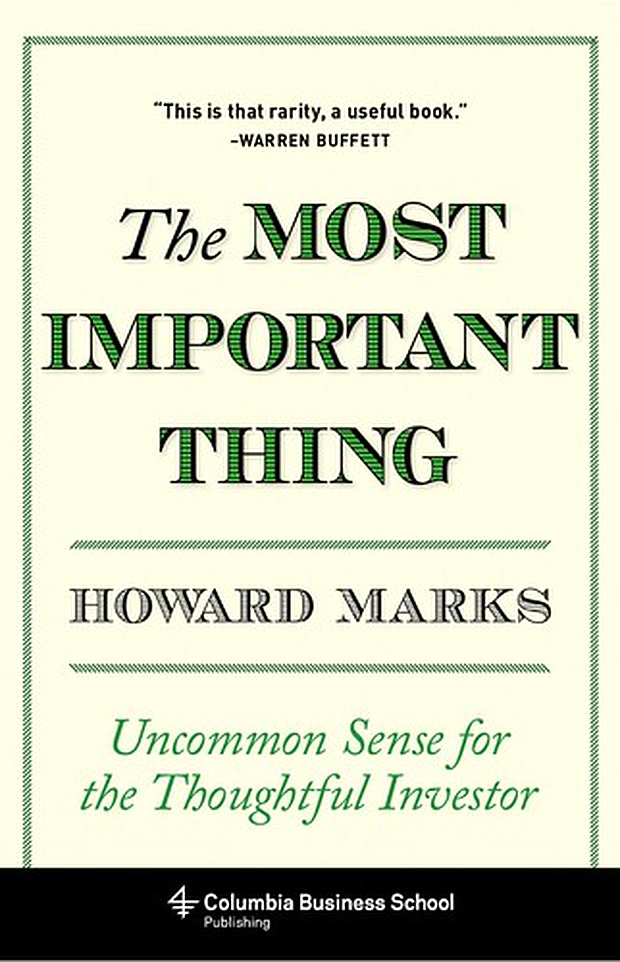
The Most Important Thing
Get on Amazon →
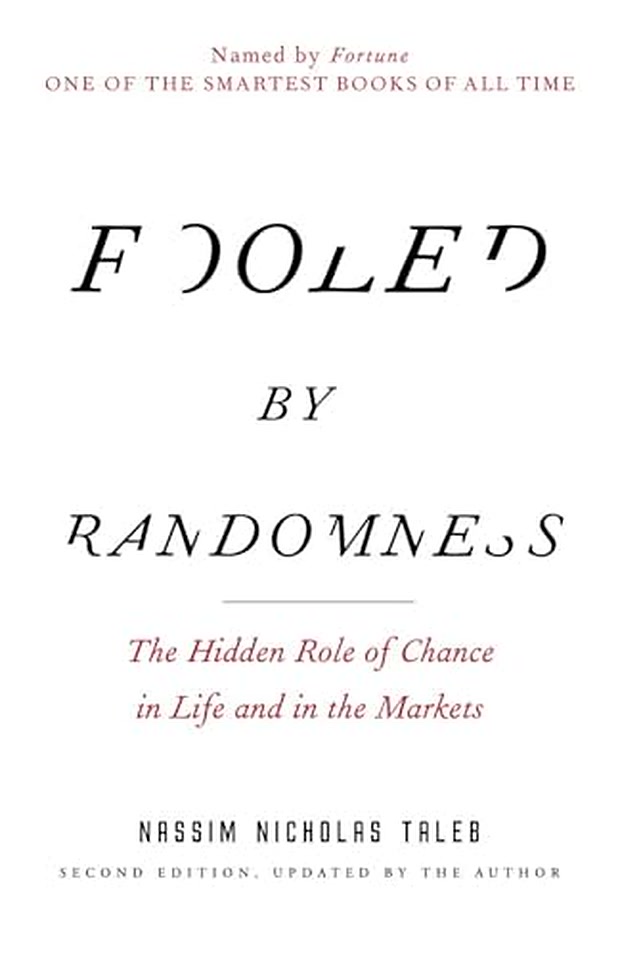
Fooled by Randomness
Get on Amazon →
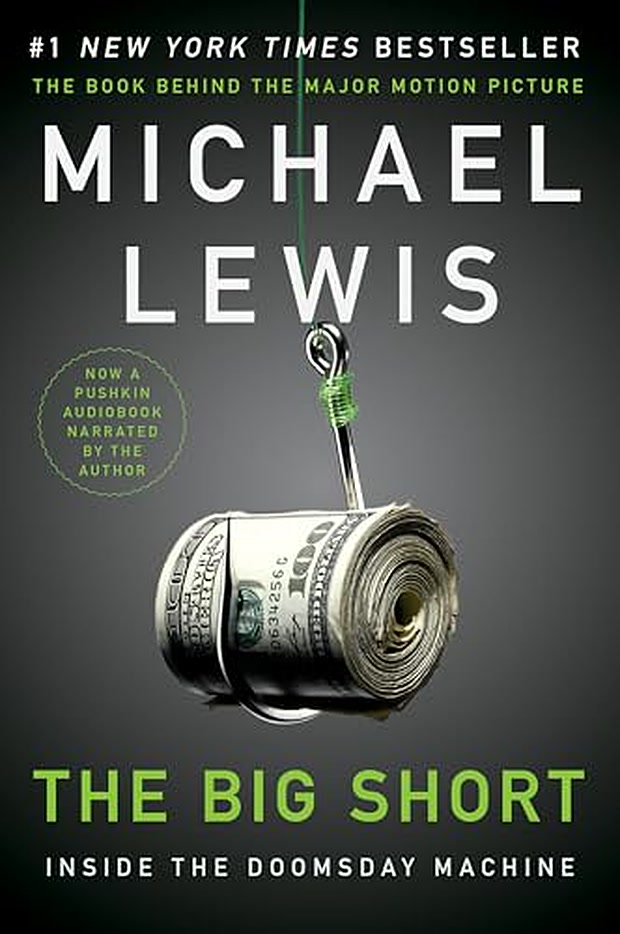
The Big Short
Get on Amazon →
As an Amazon Associate I earn from qualifying purchases.