Howard Marks
2006 10 19 The New Paradigm
© Oaktree Capital Management, L.P.
All Rights ReservedMemo to: Oaktree Clients
From: Howard Marks Re: The New Paradigm
When I was a kid, no one ate kiwi fruit or heirlo om tomatoes – or had ever heard of them, for
that matter. And then, all of a sudden, they were everywhere. The same is true for the word
“paradigm”: no one had heard the word, and th en one day it was part of everyday speech,
especially that of management c onsultants and other savants.
“Paradigm” seems to invariably be used along with the word “new.” No one ever talks about the
old paradigm. Just as there’s newness to the word, there’s usually ne wness to the subject it
describes. And there’s usually a connotation that the new pa radigm represents progress.
I believe a new paradigm has taken hold in the i nvestment world, bringing with it vast changes –
and not necessarily for the better. The situation today is very different from that of just five or
six years ago, and the implications for the future are nothing short of profound. But I haven’t
seen this overall subject given much attention.
UThe Good Old Days
In the old days – meaning prior to the current millennium – the investment world was different from that of today in a number of important ways:
Risk capital was in limited supply .
Risk aversion was reasonably present, such th at in order for risky investments to be
undertaken, that risk aversion had to be overcome by high promised returns. The
reluctance to make risky investments also mean t that they had to be supported by research
and analysis performed by skeptical experts.
There was a particular aversion to new, unproven and “alternative” forms of
investment . Fiduciary caution was an overarching consideration. With the returns from
U.S. equities expected to handily exceed the overall return needs of pension funds and
endowments, alternative investments were someth ing of an exotic luxur y: tempting but also
non-essential and somewhat forbidding.
Because the amounts of capital pursuing alternative investments were limited, investors had
negotiating power and were able to insist on, among othe r things, an incentive system that
aligned their interests with thos e of their money mangers, in which fixed fees merely covered
managers’ expenses and incentive fees offered managers the hoped-for brass ring.
© Oaktree Capital Management, L.P.
All Rights ReservedUThe Great New Days
In my view, all of the elements listed above have changed drastically in the last few years.
(You’ve seen some of this from me before, but not all in one place.)
The stock market’s losses in 2000-02 substantially cooled investors’ ardor for equities.
Instead of 9-11%, U.S. stocks now are unive rsally expected to return just 5-7%. Thus
pension funds and endowments that need 8% or more are looking elsewhere for return.
That “elsewhere” means non-traditional market niches such as buyouts, venture capital,
hedge funds, real estate and em erging market equities and debt.
This stretch for return has overcome innate caution. Any aversion to the risks entailed in
these markets has been wiped away by the combin ation of (1) the perceived paucity of return
in traditional stocks and bonds , (2) the high returns achieved recently in the alternate
markets, and (3) the failure of risk to turn in to loss in the last few years. Recent successes
have erased from the collective consciousness any reluctance to undertake the new, unproven
or risky.
As a result, large amounts of money are de manding access to the alternative markets.
However, these markets are much smaller than the traditional stock and bond markets that
now seem uninteresting. (T he Financial Times reported on September 11 that according to
JPMorgan, the alternative investment world amounts to $3 trillion, while the size of the
mainstream bond and equity world is estimated at $60 trillion.) Thus the amounts people are
trying to invest can overwhelm these markets. For this reason, investors may attach more
importance to the ability to put large sums to work than to being able to attain historic
returns and risk premiums, clear high due diligence hurdles, or structure fee arrangements that channel managers’ en ergies for the benefit of clients.
For now, the high level of liquidi ty is creating a “virtuous cycle.” The inflows have (1)
given rise to asset appreciation, high return s and further demand, and (2) made it easy for
weak companies to finance their way out of troub le, thus contributing to the impression that
the level of risk is low.
The business model for managers in these a reas has been completely altered by these
developments . Because the amounts under management are so large (and the ability to
charge high management fees is so great), managers can get rich off management fees and
deal fees alone. For managers, then, high returns m ay be a nice-to-have, not a need-to-
have, and avoiding endangering the fee mach ine can become a greater preoccupation.
It is my view that, in combination, these deve lopments have had a number of undesirable effects
on the investment environment such that:
© Oaktree Capital Management, L.P.
All Rights Reserved Willingness to bear risk is up.
Insistence on high risk prem
iums is down.
Skepticism is down, and there’s widespr ead willingness to suspend disbelief.
Demand for t-crossing and i-dotting is in retreat.
Quantity can replace quality as the sine qua non for portfolio construction.
I’ll provide a few examples below to illustrate what I think is going on in the alternative markets.
UBuyouts: Where’s the Magic?
A startling revolution has taken pl ace among buyout funds in the last year or so. Let’s take a
look at how we got here. So many of the big-name, highl y leveraged buyouts of the late 1980s went bankrupt in 1990 –
Macy’s, Federated, National Gypsum, etc., etc. – th at the industry had to r ecreate itself, dropping
the discredited word “leveraged” and the prev iously ubiquitous acronym LBO. Instead, the
industry began to call what it doe s “buyouts” or “private equity.” It switched its model from
loading massive leverage on venerable, multi-billion dollar companies to the mantras of “platform and buildup” and “c onsolidate the industry.”
In the 1990s, the low levels of leverage permitted by chastened lenders kept the buyout boys from closing any landmark acquisitions, but al so from loading on enough debt to render their
companies vulnerable to distress. In order to lose huge amounts of capital, buyout funds had to
venture into the tech and tele com arenas, and relatively few rose to the occasion. Thus buyout
funds got through the 2002 debt debacle largel y unscathed. The buyouts of the 1990s did not
give rise to a high level of ba nkruptcies, but neither were the re turns spectacular, even with
leveraged equity in a rising stock market. The pioneers of the buyout business – like KKR, Warburg Pincus and Apax Partners – enjoyed the spectacular success that can come with early entry and good ex ecution. But as a result of the
trends since the mid-1980s, results for most buyout funds have been anything but spectacular. As I mentioned in “Dare to be Great,” from 1980 to 1997 the typical fund performed just in line
with the unleveraged S&P 500. So what’s happened since then?
The stock market declined for three consecuti ve years for the first time since the 1930s.
Buyout funds did okay.
Expectations for returns from stocks have been almost halved.
Financial engineering (in an extremely benign capital ma rket) has enabled buyout funds
formed in the last few years to report sky-high internal rates of return on their early winners.
As a result of the above, the demand for funds in the buyout field – and especially “big buyout” –
is absolutely booming. I believe that in 2000, KKR couldn’t get $10 billion for its Millennium
Fund and closed at $6+ billion instead. Their cu rrent fund is at $15 billion, and that on top of $5
billion they raised through a pub lic offering in Amsterdam earlier this year. Several funds have
© Oaktree Capital Management, L.P.
All Rights Reservedbeen raised with capital in el even figures, and $15 billion has become the new $5 billion. $6
billion is considered a mid-sized fund, and $2-3 billion feels like sm
all-fry.
What’s behind the boom? As elsewhere in the in vestment business, the buyout managers talk a
great game, and the best have produced excelle nt results over the year s – although perhaps not
always as good as they intimate. In 1999, I explained distressed de bt investing to a state pension
fund and said I thought we could make 20% before fees. “Buyout fund x was just in here,” they
said, “and they think they can make 30%.” I’m confident that most 1999 vintage buyout funds
didn’t make 30%. But in the last couple of years, cheap money made avai lable by avid lenders – willing even to
lend money that would be paid out immediately to stockholders, increasing indebtedness but not
adding to assets, revenues or profits – has enabled buyout funds to shrink their equity investments and supercharge their IRRs. Not always larger dolla r profits or higher ratios of
terminal value to committed capital, but higher reported rates of return – probably in many cases
on small amounts of equity for brief periods of time (See “You Can’t Eat IRR”). But people are turned on by high percentage return s, and the dollars have followed.
I believe the largest pools of investment capital have given up on getting the returns they need
from now-debased equities and have turned to buyouts and the like for help. I imagine a thought
process that goes like this: “H istorically, good buyout funds have had returns in the high teens
net of fees. Even though the environment isn’t what it used to be, it should be a lay-up for them to reach the low teens. I’d even be happy with 10%; it would certainly help me with my 8%
required return. And I can put a billion to work in one phone call.” Well, I’m not sure many buyout firms have produced historic average return s in the high teens.
(According to Bloomberg, “U.S. buyout funds pr oduced returns of 13.3% during the past two
decades.”) And even if the best did, that doesn’t mean earning even low teens will be easy in the
environment ahead. Finally, I’m not convinced that returns in the low te ens are enough to make
it worth bearing the risk that comes with leverage , illiquidity and competition for deals. But the
money flowing into buyout funds makes it clear that I’m in the minority.
UThe Outlook for Buyout Returns
Investors – in any field – can make money in four broad ways: buy cheap, add value, apply
financial engineering and sell dear. Let’ s examine each one as it applies to buyouts.
UBuying cheap U – The golden age of buyouts lasted from approximately the mid-1970s to the mid-
1980s. What was the environment like as that period began?
The stock market was in a te rrible slump, with Business Week heralding “The Death of
Equities.”
Companies could be bought cheaper through the st ock market than they could be built for.
Historically, before the age of leverage, one company could buy another only if the would-be
acquirer was larger than the target. Thus the competition to acquire was limited.
© Oaktree Capital Management, L.P.
All Rights Reserved As the LBO era dawned, only a few organi zations had the incl ination and know-how
required to buy compani
es bigger than themselves.
Buyout funds were tiny, and their modus operandi consisted of paying bargain prices for
small, little-known companies or orphaned divisi ons of larger companies with stable cash
flows.
Today’s environment bears little resemblance to th at one. As I mentioned in a memo earlier this
year, I’d heard a buyout mogul say, “It’s our job to buy good companie s at fair prices and make
them better.” I doubt he was content with fair-priced purchases thirty years ago.
Listed companies are cheaper today than they were in 1999, but not nearly as cheap as in
1976. The P/E ratio on the S&P 500 is 17.5 today versus 10.3 at the in ception of the LBO
movement three decades ago.
To deploy unspent capital that in August was estimated by The Financial Times at $297
billion, buyout funds will have to acquire companies worth roughly $1.5 trillion in the years
ahead. That’s a few percent of a ll of the world’s stock markets.
The buyout funds are competing with each other to spend their capital, and they also have to
compete against strategic corporate buyers th at have enjoyed strong profitability and are
cash-rich. (Nevertheless, buyout funds often out bid strategic buyers, who in theory should be
able to pay more because they can combine the acquiree’s operations with their own and
garner efficiencies.)
In some cases, activist shareholders and cas h-swollen hedge funds are pushing managements
(and boards under increased scrutiny) to demand higher prices before turning over their
companies to buyout funds, and escalating purcha se prices are frequently the result.
Under this combination of circumstances, are there still bargains to be found? Here’s the big question that’s nagging at me: Everyone is convinced that investing in listed U.S. equities at
today’s prices will produce gross returns of 5-7% in the years ahead. If that’s true, then
how can buyout funds go into that same mark et, pay substantial co ntrol premiums over
their target companies’ stoc k prices, and generate double-digit annual returns after
deducting 2-4% per year in management fees, de al fees and incentive fees? Will there be
enough “value added” and financial engineering to bridge that gap?
UAdding value U – The buyout funds claim that they’ll be ab le to create gains by making companies
better. But many companies have been working hard for years to improve their efficiency and profitability. There’s always room for improveme nt, but it’s a lot harder to make money this
way than by buying something cheap a nd selling it at a fair price. As in everything else, the
best managers will add substantial value, but if it was easy enough for everyone to do it, it probably would have been done already.
UFinancial engineering U – Between the two, I’d rather be t on fundamental improvement than
smoke and mirrors. Withdrawing e quity in order to leverage up the IRR doesn’t add any value.
It couldn’t be done in the stingier debt market of five years ago, and it may not be doable five
years from now if a business slowdown shows lende rs its folly. Rising interest rates would be a
negative, and factoring in a mo re restrictive capital market would ring the bell on radical
financial engineering for a while.
© Oaktree Capital Management, L.P.
All Rights ReservedUSelling dear U – Of course, you can always hope to sell at valuation multiples higher than you
paid, but it’s not reasonable to count on being able to do so all the time. Purchase multiples
below the historic norms could buttress such an expectation, but we’re not there now. Today’s
valuation multiples are being supported by low interest rates (prices of financial instrumenas demanded yields decline, and vice versa), and higher interest rates would be expected to
reduce sale prices for companies. And as th e subject companies get bigger and bigger, the
number of possible buyers shrinks. For the $30 billion companies that are being talked about
today, the stock market may be the only exit, and that’s something that can’t be counted on ye
in and yeats rise
ar-
r-out.
So in contrast to the description of the golde n days of buyouts on the previous page, today we
have:
A buyout phenomenon that everyone’s aware of and eager to play.
A stock market that can’t be described as cheap.
Heavy competition to buy target companies.
Dependence on financial engine ering based on low interest rates and generous capital
markets that may not stay that way forever.
We also see companies being sold from one buyout fund to another. What does that imply? In
most transactions, one party’s right and the other’s wrong. Gene rally, the buyer can ’t be getting
a bargain unless the seller is ac cepting less than he should. A nd shouldn’t the seller know the
company best (and be expected to have made th e available improvements) ? So are the selling
buyout funds being generous? Are buyers overpaying? Or are the transactions motivated by a
desire to lock in incentive fees and generate further deal fees? If there is a free lunch, where’s it
coming from? I’ll leave t hose questions to you.
Buyout prices have been rising as a multiple of company earnings, and companies are being
bought with greater proportions of debt in an attempt to squee ze out higher returns on the buyout
firms’ equity. As companies become more highly geared, the outcomes become more dependent on a favorable environment. As they say in Las Vegas, “The more you bet, the more you win
when you win.” But, simply put, when you increase leverage, the probability of getting into a jam increases and the consequences of that jam worsen. Certainly this is not a cautious,
capital-starved environment for buyouts in which people have girded for tough times.
I have to admit it: if I could push the fast-forwa rd button and see how a movie ends, it would be
this one. Like most “silver bullets,” I think buyouts will fail to live up to the highest expectations of those who’re making it th e darling of the investment world today.
I find the outlook for funds in the “big buyout” ca tegory particularly intr iguing. Certainly the
managers spin a convincing tale: Because there are so few buyers capable of tackling the biggest
transactions, the competition to buy will be limited and transaction prices will be kept low. The
few big funds will tend to join forces in “cl ub deals,” further precluding bidding wars. And,
based on the supposed correlation between corporat e bigness and inefficiency, it’s claimed that
vast gains will be wrought from streamlining the acquired companies. We’ll see.
© Oaktree Capital Management, L.P.
All Rights ReservedUHow About Real Estate?
The other day, I was privileged to hike with a fr iend who I consider one of the very best value-
added real estate investors, Dean Adler of Lubert -Adler. I thought I was listening to a tape of my
worrisome self. Dean told a ta le that I found scary – even tho ugh I don’t stand to lose a penny if
his warnings hold true. Here’s what he says is going on in the real estate arena:
As in other parts of the world of investment and finance, the ability to borrow is what’s keeping
the wheels turning. And the ability to borrow for r eal estate investments is under the control of a
group of people called appraisers. Dean’s firm spends months performing in-depth analysis on the properties it owns and wants to
finance, and on those it wishes to buy. Then it ta kes the data to lenders . . . who don’t care. All
that matters, they say, is what the appraiser thinks . If the appraiser says your property is worth
100, you can borrow 80. But if he says it’s worth 50, you can only borrow 40. Interestingly, the data generated by Lubert-Adler through months of analysis is dismissed by the
lender, but the opinion of the appraiser – who spends perhaps a week or two looking at the
property – is accepted unquestioningly. But – I have to say it – if the appraiser was as good as
Dean at putting values on property, wouldn’t he be a leading real es tate investor rather than an
appraiser? The real estate story has other ne gative aspects. The first is that whereas I posit being able to
borrow 80% of appraised value, it has become possible to borrow more than 100%, as lenders
will finance not just the purchase price, but develo pment and other expenses as well. In “Field
of Dreams,” they said “If you build it, they will co me.” In real estate, it’s more like, “If you’ll
lend them money, they will buy or build.” Just imagine what goes through the heads of real
estate dreamers when the capital markets allow them to take risks w ith other people’s money.
Lastly, Dean pointed to construc tion loans. These short-term (a nd, in today’s market, low-rate)
loans bear the substantial risks associated with de lays, cost overruns and the like. And yet they
are being made by hedge funds that lack real estate expertise, experience and infrastructure.
If having a sense for the behavior going on around us can be high ly instructive, as I feel it
can, then these observations from the real estate industry should be cautionary . As I often
quote Warren Buffett as saying, “The less prudence with which others conduct their affairs, the
greater the prudence with which we should conduct our own affairs.” Dean Adler’s description
of the state of affairs in real estate doesn ’t suggest there’s a lot of prudence out there,
meaning it’s time for us to apply our own.
UGive Me Structure
Ten years ago, we would raise $100 from a clie nt and use it to buy $100 worth of high yield
bonds. We still do it that way, but in many quart ers, that $100 is used as the equity for a
structured investment vehicle, su ch as a CDO, CBO or CLO, in which it supports the purchase of
$1,000 worth of (management fee-generating) bonds.
© Oaktree Capital Management, L.P.
All Rights Reserved
Collateralized Debt Obligations, Bon
d Obligations and Loan Obligations ar e entities that collect
capital from investors and lenders with which to c onstruct portfolios of the relevant instruments.
The capital structure of the entity is tiered, so that the providers of capital have varying priorities
in terms of being repaid and participating in losses.
The senior-most lender enjoys security from the entire portfolio, and beca use his loan is thus
heavily over-secured and highly rated, he demand s only a low rate of re turn. The second-most-
senior loan is a bit less well secu red and less highly rated, and thus the rate demanded on his debt
is a bit higher, and so forth. Because the interest rates promised to the senior lenders are below
the average coupon on the portfolio, there should be a lot of cash left over for the junior lenders
and the equity investors – if things go well. But th e equity is also in the first-loss position, so it’s
truly a make-it-or-b reak-it proposition.
Vast sums have been raised for this “silver-bullet” solution to the problems of allocating risk, leveraging returns and putting money to work. Clearly, the key to seeing all this work out lies in
enough credit expertise bei ng present for risks to be contro lled and defaults minimized. But
today the necessary ingredient for the establishm ent of these structured vehicles isn’t credit
expertise, but the ability to structure the entity so as to win high-enough ratings on the senior
tranches to attract capital and permit a lot of leverage. This distinction is highly significant. In a
clear analogue to real estate appraisers, the pe ople controlling the all-important credit spigot are
the financial structurers assembling the entitie s and the CDO analysts at the credit rating
agencies. In a June 2 article entitled “Str uctured Complacency,” the often-br illiant “Grant’s Interest Rate
Observer” went into great (and, as usual, cr itical) detail on this phenomenon. As to the
popularity of structured vehicles, it wrote, “Credit markets are sanguine. Structured credit is
proliferating. Could the first fact be related to the second?” And as a key part of this trend,
it says, “Financial engineering is displacing credit analysis.” What’s the difference?
“Financial engineering is the sc ience of structuring cash flows; credit analysis is the art of
getting paid.”
Why the declining interest in credit analysis? Grant’s advances the thesis that it is linked to
disintermediation, in which many lenders no long er hold on to the loans they make, but more
often syndicate or sell them onward to other pr oviders of capital. Hold ing the keys in this
process are the risk manager who structures th e entity based on statistical likelihoods and the
rating agency that applies the stamp of approval for buyers la cking direct knowledge of the
underlying instruments and the ability to understa nd the structure. Grant’s quotes the IMF’s
2006 Global Financial Stability Report:
Not surprisingly, the development of struct ured credit markets has coincided with
the increasing involvement of people with advanced fi nancial engineering skills
required to measure and manage these of ten complex risks. In fact, for many
market participants, the application of such skills may have become more
important than fundamental credit analysis. . . .
© Oaktree Capital Management, L.P.
All Rights ReservedDiscussions with market participants rais ed qu
estions as to whether the increased
focus on structuring skills, relative to “credit” analysis, may itself present a
concern.
The structurers are “risk managers.” They a ssemble mathematical models that extrapolate
historic default rates and recovery rates (which may or may not have relevance in today’s
environment). They look at probabilities, expe cted values and correlati ons. But they count
heavily on the statistical propert ies of the universe as it has been and may know rather little
about the actual assets cont ained in the portfolios. Of course, this sort of reliance on
statistically derived expectations was behind the undoing of Long Term Capital Management in 1998 – of which so little seems to be remembered.
Grant’s describes an interview with a junior analys t at a rating agency whose job it is to monitor
the health of a large number of CDOs each day, plugging numbers into an Excel spreadsheet.
According to Grant’s, “he doubts that many people really understand what these structures own,
how their assets are correlated, or what might happen to them in the liquidation portion of a credit cycle.” To wrap up, Grant’s quotes Mich ael Lewitt of Harch Capi tal Manager, a manager
of bank loans:
. . . having a credit market priced on a non-credit basis – meaning priced off
quantitative and arbitrage bases, and not on credit fundamentals – is not a healthy
thing.
Interestingly in this connection, Wachovia Structured Products report s that as of April, of the 47
Collateralized Loan Obligations that had gone fu ll cycle, 30 generated pos itive returns for their
equity. Put the other way around 17, or 36%, had lost money. I doubt that was the expectation
on which they were sold. A nd that in relatively good times.
My favorite investment adage warns about the th ings “the fool does in the end.” Clearly,
turning over the administration of credit to appraisers, raters and structurers who know
relatively little about the underlyi ng assets they’re dealing with – and who are hired hands
without their own capital at risk – signals a dangerous late stage of the inevitable cycle.
UIt’s Time to Hedge
Given the laxness, euphoria and credulousness th at I detect in the ma rket for money today,
it’s time for caution. Where better to find it than in funds that hedge?
Well, of course, today the term “hedge f und” has nothing to do with hedging and
everything to do with incentive fees. In no way does that label connote risk control. And
whereas the shortcomings of the structured entities described above go along with the activities
fitting their charter, most hedge funds have unlimited charters a nd can roam free in search of
return. Here are a few recent trends:
Hedge funds are making “second lien loans” in large numbers. In some cases, however,
there are no assets left (after th e claims of first lien loans) to have a lien against. They may
© Oaktree Capital Management, L.P.
All Rights Reserved 10 or may not be made by people who have previously been lenders. Those people may or may
not possess workout experience. And it ’s an open question how hedge funds holding large
portfolios of small loans will behave when companies get into financial hot water. Lately
I’ve heard mention that hedge funds might be making these loans to gain control of
companies that default. But it isn ’t clear to me how appreciation will routinely be wrung
from loans that are made at par and subsequently become non-performing.
Since I moved to Los Angeles in 1980, my friends in “The Industry” have been unanimous in
one piece of advice : never invest in movies. Yet The Wall Street Journal of April 29 carried
a story headlined, “Defying the Odds, Hedge Funds Bet Billions on Movies.”
For decades, movie studios have gladly accepted millions of dollars from a group
of investor s collectively dismissed as “dumb money”: deep-pocke ted dentists, oil
tycoons and other wealthy individuals eager for a piece of the glamorous but
high-risk game of film production. But the biggest influx of money in Hollywood
these days is coming from sharks, not suckers: hedge funds, private equity funds
and investment banks.
Take the example of “Poseidon,” which was co -financed by hedge fund-backed Virtual
Studios. It has brought in gross revenues of $180 million worldwide since May against its
production budget of $160 million, meaning that after the deduction of at least half the
revenues for distribution charges, advertising costs and exhibitors’ fees , it’s still a big loser.
If there’s one thing I’ve never claimed to understand, it’s how you put a price on a highly
improbable disaster. Thus I have a lot of respect for anyone who can do a consistently
superior job of underwriting catastrophe insurance against earthquakes, hurricanes and
terrorist events. Is the right premium for insuring a Caribbe an hotel against hurricanes $1
million or $5 million, given that the loss may be zero or $100 million? The difficulty of
setting these premiums isn’t keeping hedge funds from filling the gap in the “cat insurance”
market.
Along similar lines as catastrophe insurance, hedge funds are among the leading writers of
Credit Default Swaps, the equivalent of issuing insurance against bond defaults. Hedge
funds find it attractive to write this coverage for multi-year periods, perhaps in part because
the premiums are taken into earnings each year, adding to returns and giving rise to incentive
fees, while the defaults are likely to come later. As in any form of risk transfer, the
ultimate profitability of this proposition will depend on how well the insurers know the
risks and on what they’re able to charge in terms of premium s. When lots of hedge
funds are eager to sell CDS, however, premiums are driven down, and they can easily prove
inadequate when defaults occur down the road.
In recent months we’ve seen hedg e funds take major losses (sometimes prompting them to
close their doors) in natural gas trading and unhedged e merging market equities. I’ve read of
hedge funds that trade in carbon dioxide emissions and one backing a fledgling fashion
designer. And hedge funds are making the construction loans that Dean Adler discussed.
© Oaktree Capital Management, L.P.
All Rights ReservedNone of these activities is impr udent in and of itself. But th ey all involve substa
ntial risk
and should be undertaken only by people possessing the essent ial edge: sufficient expertise
in the relevant field to be able to know when the opportunities are truly attractive.
UWhy This Appetite for Risk?
In my memo on hedge funds of two years ago, I cited an insightful piece from Byron Wien of
Morgan Stanley called “In Praise of Hedge Fund Vo latility.” In it, he observed that many hedge
funds have become asset gatherers for whom the retention of assets and the receipt of
management fees have become more important than the achievement of high returns and the
earning of incentive fees. Thus low volatility has supplanted high return in the pantheon of
virtues. In my view, this trend has reached beyond hedge funds to additional corn ers of the alternative
investing world. The concept of management fe es sufficient to “pay the light bill” seems
obsolete. For example, even at just 1¼% pe r annum, a $15 billion buyo ut fund can generate
more than $1 billion of management fees over its lifetime. Add to that the “deal fees” and
“monitoring fees” commonly charged and it’s ea sy to picture managers becoming wealthy
irrespective of performance. Ind eed, the ancillary fees can be so massive that even where some
or all of them must be applied to offset management fees, managers can receive total fees that far
exceed the stated management fee percentage. Of course, if a fund can generate $1 billion or more in fees, you as its manager would love to
perpetuate that flow. While you don’t need high returns in order to get rich, it would be nice to
be able to repeat this proce ss, so returns should be good enough to permit further funds to be
raised. But the notion of managers who are entirely dependent on high returns for the
achievement of their financial dreams may to so me extent have become a thing of the past.
So what’s the new paradigm?
First, raise a lot of money.
Second, try for a rate of return that clients will find acceptable.
Third, don’t take enough risk to possibly preclude an encore.
Fourth, invest as fast as is prudently possibl e, so that another fund can be raised while
the market remains accommodating.
I believe this last point may be part of the reason for managers’ ever- growing willingness to
invest in large transactions and afield from the tried-and-true. In view of today’s incentive
structure for managers, speed and size can count for more than investment excellence. Some
managers will sell out knowingly, even proactively. Others may be influenced more insidiously. And some will be egged on by clients emphasizing th eir desire to invest large amounts of money
with low volatility and downplaying the need for high returns. Managers who do not want to be so affected (and their clients) must strongly resist this trend. Recognizing it is the first step in
doing so.
11
© Oaktree Capital Management, L.P.
All Rights Reserved* * *
It doesn’t give me pleasure to talk about an environm
ent in which risk aversion is in short
supply, risk premiums are skimpy and danger lurks. Or in which there’s a new paradigm capable of contributing to a misalignm ent of interests between i nvestors and their managers.
But it is what it is. Take a look at the lists of elements on pages 2, 3 (top), 6 and 11 and tell me
which ones you think aren’t described accurately. If you agree that the investment world of
today is captured in those lists, then the prescr iption is unambiguous: it’s time for caution
and risk control.
The workings of free capital markets require th at in order to overcome investors’ innate
aversion to risk, seemingly riskier investments must offer the possibility of higher returns
providing “risk premiums.” But when risk av ersion is at cyclical lows, risk premiums
needn’t be generous; people will invest anyway. Too many people trying to dine at the buffet
simultaneously can lead to a disorderly proces s and skimpy portions. I recommend that you look
twice at the cost of admission and – if you do decide to partake – proceed carefully.
For the last few years, my mantra has been “spe cial niches, special people.” By the “special
people” part I mean it’s important to find manage rs who possess the skills required to safely
pursue return in high-priced markets. It’s at least as important in the current environment,
however, that they also can be counted on to resi st the conditions describe d above in the interest
of serving their clients.
October 19, 2006
12
© Oaktree Capital Management, L.P.
All Rights Reserved 13Legal Information and Disclosures
This memorandum expresses the views of the author as of the date indicated and such views are subject to
change without notice. Oaktree has no duty or obligation to update the information contained herein. Further, Oaktree makes no representation, and it should not be assumed, that past investment performance is an indication of future results. More over, wherever there is th e potential for profit there
is also the possibility of loss. This memorandum is being made av ailable for educational purposes only and should not be used for any
other purpose. The information contained herein do es not constitute and should not be construed as an
offering of advisory services or an offer to sell or solicitation to buy any securities or related financial
instruments in any jurisdiction. Certain inform ation contained herein concerning economic trends and
performance is based on or derived from informatio n provided by independent third-party sources.
Oaktree Capital Management, L.P. (“Oaktree”) believes that the sources from which such information has been obtained are reliable; however, it cannot g uarantee the accuracy of su ch information and has
not independently verified the accuracy or completeness of such information or the assumptions on which
such information is based.
This memorandum, including the information cont ained herein, may not be copied, reproduced,
republished, or posted in whole or in part, in an y form without the prior written consent of Oaktree.
Recommended Reading
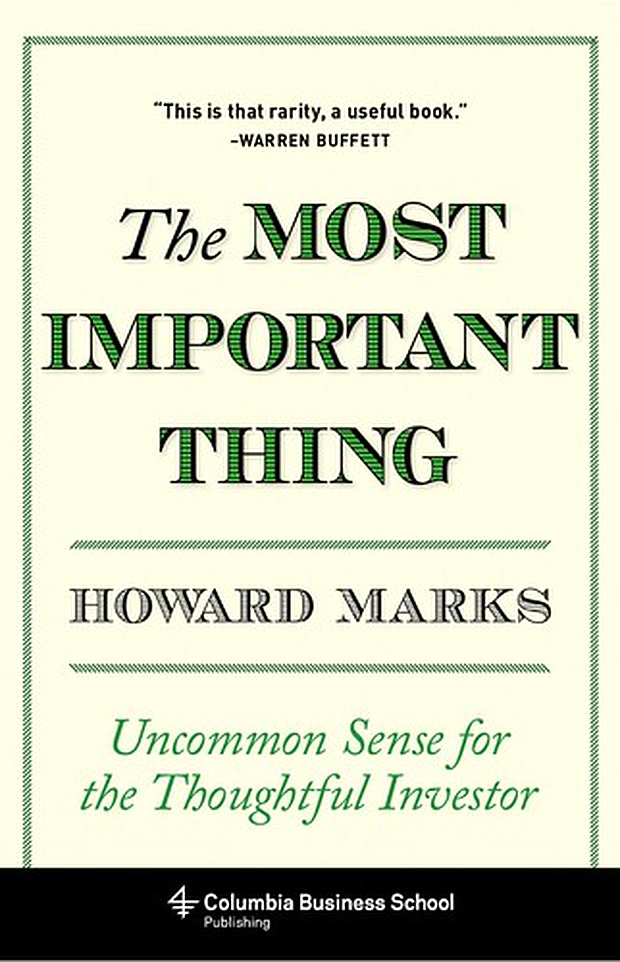
The Most Important Thing
Get on Amazon →
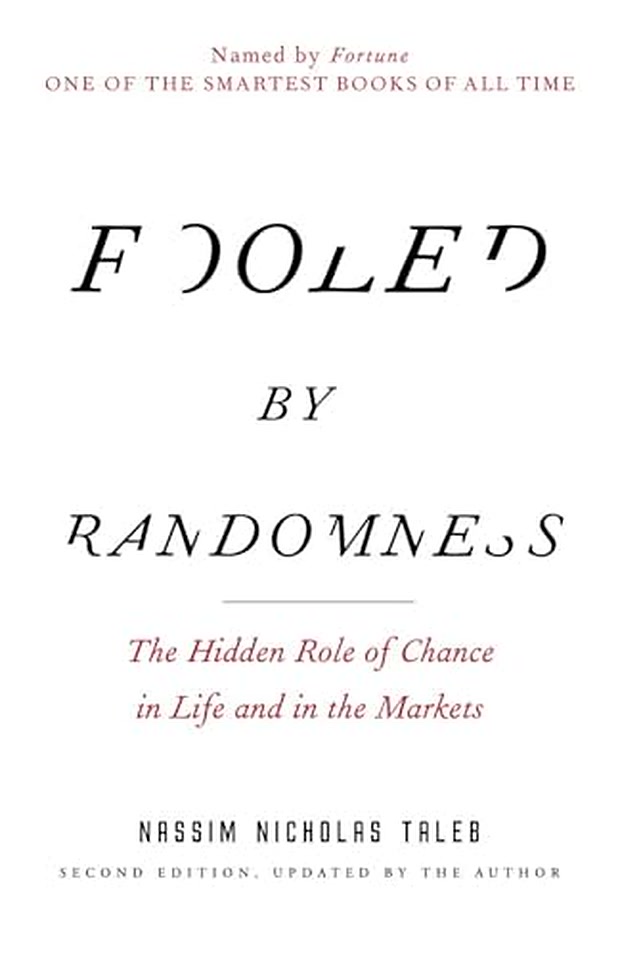
Fooled by Randomness
Get on Amazon →
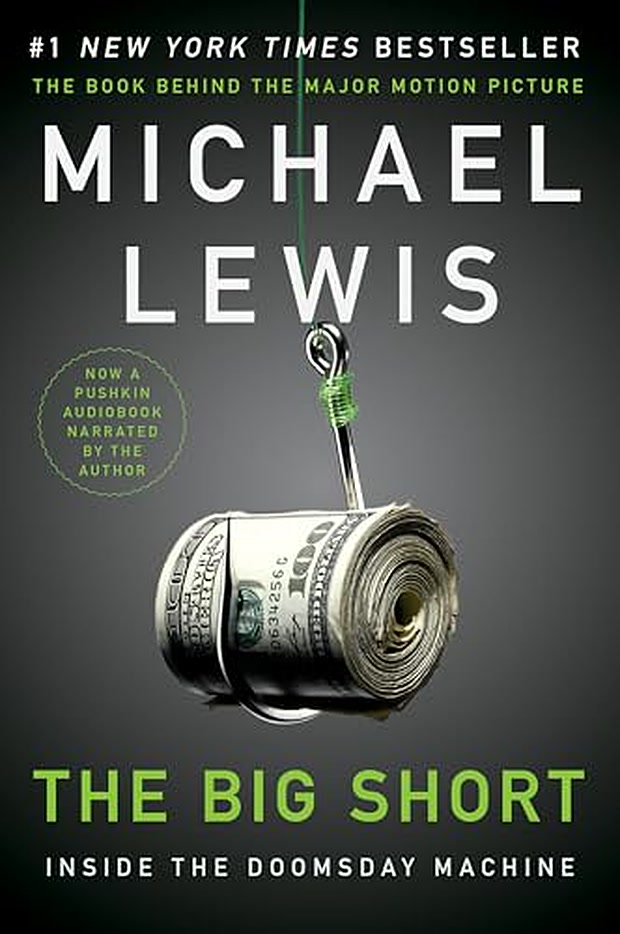
The Big Short
Get on Amazon →
As an Amazon Associate I earn from qualifying purchases.