Howard Marks
2005 05 06 There They Go Again
© Oaktree Capital Management, L.P.
All Rights ReservedMemo to: Oaktree Clients
From: Howard Marks Re: There They Go Again
Contributing to . . . euphoria are two fu rther factors little noted in our time
or in past times. The first is the extreme brevity of the financial memory. . . . There can be few fields of hum an endeavor in which history counts
for so little as in the world of finance. Past experience, to the extent that it
is part of memory at all, is dismissed as the primitive refuge of those who do not have the insight to appreciate the incredible wonders of the present.
John Kenneth Galbraith A Short History of Fi nancial Euphoria, Viking, 1990
The above observation has appeared in lo ts of my memos, second only to Warren
Buffett’s reminder that our need for prude nce in a given situ ation is inversely
proportional to the amount of prudence being di splayed by other investors. Neither of
these favorite quotations says much for the average investor: Buffett urges us to adopt behavior that is the opposite of John Q. Investor’s, and Galbraith points out how prone
John Q. is to repeating the mistakes of the past. It may sound cynical, but most outstanding investors – especially members of the “us school” (see “Us and Them,” May 7, 2004) – understand that the path to superior results lies in taking advantage of other people’s mist akes. (The alternative is to think everyone
can succeed simultaneously.) It’s when most i nvestors take a trend to excess, or the price
of an asset to an extreme, that the few people smart and resolute enough to abstain from herd behavior can make truly exceptional profits.
I think both Buffett’s and Galb raith’s dim views of the averag e investor are well founded.
Although there exist a few rule s and reminders that can make it easier to avoid the
costliest investing mistakes, most investors rarely heed them.
Investors truly do make the same mistakes ove r and over. It may be different people
doing it each time, and usually they do it in new fields and in connection with new assets,
but it is the same behavior. As Mark Twain said, “History doesn’t repeat itself, but it
rhymes.” Rarely is the same error repeated in back-t o-back years. Usually enough time passes for
the repetitive pattern to go unnoticed and for th e lessons to be forgo tten. Often it’s a new
generation repeating the errors of their fore fathers. But the patterns are there, if you
observe with the benefit of objectivit y and a long-term view of history.
© Oaktree Capital Management, L.P.
All Rights Reserved
Why do the mistakes repeat? That’s a good question, but not much of a mystery. First,
few investors have been around long enough to recognize reoccurrence of the errors of
twenty or forty years ago. And second, the gr eed that argues for ignor ing “the old rules”
easily trumps caution; hope truly does spring et ernal. That’s especi ally tr
ue when the
good times are rolling. The tendency to ignore the rules invariably reaches its apex in
periods when following them has cost people mone y. It is thus, as Galbraith points out,
that those who harp on the lessons of the past are dismissed as old fogies. What are some
of the recurring mistakes investors make?
It’s Different This Time – Trends in investing are carri ed to their greatest (and most
punishing) extremes by the belief that someth ing has changed – that rules that applied
in the past have been rendered obsolete by new circumstances. (E.g., the traditional
standards for reasonable valu ations weren’t applicable to shares in tech companies
whose products were likely to change the world.)
It Can’t Miss – The fact is, anything can miss. There’s no asset so good or trend so
strong that you can’t lose m oney betting on it. No investment technique is guaranteed
to deliver high returns or keep risk low. Smoothly functioning markets don’t permit
the combination of high return and low risk to persist – good results bring in buyers
who raise prices, lowering fu ture returns and elevating risk . It’ll never be
otherwise.
The Explanation Couldn’t Be Simpler – By this I mean to poke some fun at
investors’ tendency to fall for stories that seem true on the surface but ignore the
workings of markets. The stage was se t for some of the greatest debacles by
platitudes that were easy to swallow – but too simplistic and, in the end, just plain
wrong. These include “For a company with good enough growth prospects, there’s no such thing as too high a price” (1969 a nd 1999) and “Emerging markets are a sure
thing because of the terrific potential for growth in per capita consumption” (1994).
This Tree Will Grow to the Sky – The fact is, no trend wi ll go on unabated forever.
Most trends are limited by cycles, wh ich are caused by people’s reaction to
developments. Buyers, sellers and competitors respond to trends, altering the current
landscape and the future.
The Positives of Today Will Still Be Positives Tomorrow – From time to time,
some combination of optimism and greed convinces people that the favorable
elements in the current environment – res ponsible for today’s high asset prices – will
stay that way. But (a) things usually turn less rosy, and (b) even before they do,
investors take prices to levels that are too high even for today’s positives.
Past Returns Are a Good Guide to Future Returns – The greatest bubbles stem
from the belief that high returns in the pa st foretell high returns in the future. The
most successful investors – the longest-term survivors – believe in just the opposite:
regression to the mean. The things that have appreciated the mo
st will slow down (or
© Oaktree Capital Management, L.P.
All Rights Reserved 3 decline), and those that lagged will catch up or move ahead. Instead of being
encouraged by months or years of price appreciation, investors should be
forewarned .
It’ll Always Beat the Cost of Borrowing – Speculative behavior usually features the
belief that assets will always appreciate faster than the rate of interest paid on money
borrowed to buy them with. We saw a lot of this in the inflationary 1970s. But for
the most part, statements including the words “always” and “never” are usually a
sign of trouble ahead .
The Supply/Demand Picture Doesn’t Matter – The relationship between supply
and demand determines the price of everything. The higher the demand relative to
the supply, the higher the price for a given asset or strategy. And, the higher the
price, the lower the prospective return (all else being equal). Why can’t
investors remember these two absolute rules?
Higher Risk Means Higher Return – There are times, especially when the
prospective returns on low-risk investments appear inadequate, when people reach for
more return by going out further on the risk curve. They forget that riskier
investments don’t necessarily bring higher returns, just higher projected returns.
Forgetting the difference can be fatal.
Anything’s Better Than Cash – Because it entails the least risk, the prospective
return on cash invariably is lower than all other investments. But that doesn’t mean
it’s the least desirable. There are times when the valuations on other investments are
so high that they entail too much risk.
It May Be Too Good to Be True, But I Don’t Want to Miss Out – There’ve been
lots of times in my career when people knew something was unlikely to keep working
but jumped on the bandwagon anyway. Usually they did so because they thought
there was a little bit more left in the trend, or because not being aboard – and
watching from the sidelines while others got rich – had become too painful.
If It Stops Working, I’ll Get Out – When people invest despite obvious danger
signs, they usually do so under the belief that they’ll be able to get out when the
market turns down. They rarely ask how it is that they’ll know to sell before
others do, or to whom they’ll sell if everyone else figures it out simultaneously .
As I sit here in 2005, the picture seems “as plain as the nose on your face.” Investors
have found new darlings – real estate, private equity, hedge funds and crude oil – to
replace the favorites of ancient history (that is 1999) – technology-media-telecom,
biotech and venture capital funds. As I read articles about the new favorites, I find
myself saying one thing over and over: “There they go again.”
Is it really that hard to remember the events of six years ago? Or is it just so easy to
overlook them for the sake of hoped- for profit? Whichever it is, I’m going to take some
© Oaktree Capital Management, L.P.
All Rights Reservedtime below to go through these areas and cite some rule violations I see occurring. (I’m
not saying that these investme
nt areas are withou t merit. It’s just that I wince when I see
uncritical analysis and unsupported conclusions.)
Let’s take the example of real estate. Almost twenty years ago, real estate was the site
of many classic mistakes, and lots of m oney lost. In the mid-1980s, institutional
investors charged into real estate, under banners like “The y’re not making it any more”
and “It’s a good inflation hedge.” Wh at they missed was the fact that:
while it’s true that no one’s making more land, there’s a lot left to develop, and
easy access to capital enables market-g lutting buildings to be built on it,
something’s only an inflation hedge if bought at a fair price to start with, and
unlike the 1970s, inflation wouldn’t be an issue for the next twenty years, and
thus inflation protection wasn’t worth paying up for.
Tax reform in 1987 reduced the demand for tax shelter purposes, and the economic
slowdown of the early 1990s turned real estate into a basket case. They Ustill U weren’t
making any more land, but that didn’t help institutional investors avoid huge losses.
Today, real estate seems to be the site of i nvesting error again – with no one harking back
to the last time around. This is especially true in private homes, with individuals rather
than professionals doing most of the “inves ting.” They’re lining up to buy houses (often
before they’re built) that they never expect to occupy, for holding periods too short to
repay the transaction costs in the absen ce of substantial appreciation, and they’re
financing them with maximum floating-rate mortgages, minimum amortization and little
or no money down. On March 25, 2004, The New York Times comp ared attitudes toward home buying today
and the “dot-com frenzy” of the late 1990s:
. . . perhaps the most troubling similari ty, some analysts say, is the claim
that the rules have somehow changed. In an echo of the blasé attitude that “new economy” investors took towa rd unprofitable companies, the
growing ranks of real estate investors are buying houses they never expect to be able to rent at a profit. Inst ead, they think the prices of houses will
just keep rising.
This paragraph points up a key error. In 1999, impassioned investors bought dot-com
stocks, not to participate in the underlying comp anies’ profit streams, but to sell them at
higher prices. But what could be depended on to make their prices go higher, if not
favorable trends in profits? In the same way, rational inve stors won’t count on being able
to sell a house at a profit because someone else will pay more for it, but rather because of an increase in its economic value (which usually can be seen in the obtainable rent).
© Oaktree Capital Management, L.P.
All Rights ReservedIn that vein, The Wall Street Journal of March 22 carried a story com
paring the cost of
buying and renting. A study of 21 markets by Torto Wheaton Research had found that
rent on the average two-bedroom apartment was well below the mortgage payment on the
median home. Now certainly the two may not be comparable, and the study ignored such
factors as down payments, tax deductions , property taxes, maintenance costs and
appreciation. But the most important observa tion is that, based on national averages, the
relationship has changed substant ially over the last four years: rent now averages 92% of
mortgage payments, down from 102% in 2001. This relative increase in mortgage payments indicates that today, home prices are based
on lower “cap rates.” The capitalization rate on a piece of real estate is the yield implicit
in the sale price. Thus a cap rate is anal ogous to the earnings yield on a stock, which in
turn is the reciprocal of its p/e ratio. Bottom line: home prices have risen substantially
relative to the underlying (or implicit) cash flows. According to another study, by M/PF
YieldStar, the price of the average home rose 16.4% in 2003-4, while the average rent
was flat. Certainly real esta te valuation ratios are up.
Why are homebuyers paying these higher valuat ions? Here are some answers, in the
form of statements quoted in the New York Times article cited above. How many of the
investor errors enumerated on pages 2-3 do you see below?
It’s driven by the same forces [as drove the dot-com stocks]: that investments can’t go bad; that it has th e potential to make you rich; that
you’ll regret it if you don’t do it; that it looks expensiv e but really is not.
. . . a limited supply of land coupled w ith demand from baby boomers and
foreigners [will] prolong the boom indefinitely. I don’t think prices are going to fall, and I don’t think they’re even going
to be flat. It really is a very hot real estate market, and I don’t know how long it’s
going to continue. But in the s hort run, why not profit from it?
I look at this as a short-term investme nt and plan to unload it as soon as
things look dangerous.
I’d bet none of the people quoted above lost mone y in the last real es tate cycle or learned
the lessons of the past. It’s for that reason that they’ re prone to mistake the up-leg of
yet another cycle for a new and permanent miracle. And so it goes .
The commercial, retail and residential prope rties that professionals buy have escalated
also – although not as crazily or with as mu ch disregard for valuation. Nevertheless, cap
rates are down in response to the general decline in interest rates, demanded returns and
risk premiums. With returns on Treasury bonds at 4-5%, fully l eased class “A” office
buildings apparently look good at 6-7%.
© Oaktree Capital Management, L.P.
All Rights Reserved
As usual, James Grant s
upplies a trenchant analysis, this time in the April 25 issue of
Forbes. His summary of what’s going on in real estate highlights time-honored mistakes
that are being repeated:
Markets look forward, except when they look backward. At this moment the real estate market is looking backward. . . . Mistaking the past for the future, people are pouring money into houses,
shopping centers, office buildings, hotels, anything with a front door and a roof. They are paying some of the fanciest prices on record.
Property bulls come in all sizes, shapes and net worths. “We are living with the greatest liquidity ever,” an eminent REIT promoter was quoted as
saying in March in the New York Sun. “We’re not going to have a crash
in the real estate market, th ere is too much liquidity.”
Liquidity is a term of art. It means lots of money. It can also mean – and,
in 2005, does mean – “low interest rates,” “E-Z financing terms,” “low dollar exchange rate” and “value invest ors go away.” In an evident state
of liquidity-induced euphoria, a Miami Realtor recently proclaimed to The
New York Times, “South Florida is working off a totally new economic
model than any of us has ever experienced in the past.”
Not true. The “South Florida economic model” is the oldest in the book.
An excess of dollars leads to a drop in interest rates. And a drop in
interest rates to a rise in real estate prices. And a rise in prices to massive
new building. Only later does the same surplus of dollars cause a rise in the inflation
rate. This leads to a rise in interest rates. And to a drop in real estate prices, with the market now oversupplied by all that new building.
In other words, we see some instances where investors in real estate are:
failing to recognize the tran sitory nature of the f actors supporting prices,
taking comfort from rising prices while they should be alarmed,
overlooking the lessons of history, and
declaring “it’s different this time.”
As Grant points out, “over the last ten years, bricks and mortar had a cash on cash return
averaging 3.3 percentage points above the yield on the ten- year Treasury note. . . .
Today, the yield is just 1 percentage point mo re than that not-very-high number (the ten-
year is quoted at 4.5%).” In other words, properties used to provide a solid 3.3% spread
over perhaps 6% on the ten-year, for a tota l return approaching 10%. Now there’s a
narrow 1% spread over a low base rate . . . fo r a total current return of 5.5%. The bottom
© Oaktree Capital Management, L.P.
All Rights Reservedline is that investors in r
eal estate to day have to stress value consciousness and
selectivity.
It’s not my intention here to pick on real estate in particular or to suggest that it’s worse
than other markets. It’s just that the ar ticles being written about it provide such good
examples of some investors’ error-proneness. As I wrote in October, I think we’re seeing much of the same in hedge funds . Investors
here are ignoring price also – this time not relating to the underlying assets, but to fund
managers’ services. Out of frustration with public, long-only equiti es (based with the
usual hindsight on the 2000-02 debacle), they’re looking for the silver bullet in “alpha
managers” and “absolute return strategies.” And they’re suspending disbelief – just like
they do at the movies – to accept that it’s possible each year to find thousands of new above-average managers who are capable of piloting thousands of new hedge funds to
high returns with low risk in increasingly competitive markets. In recent weeks, private equity has shown up as the belle of the ball. Managers who
startled the world with $3-6 billion funds a few years ago are pursuing $8-10 billion this time with good success. They’re able to get it because of recent performance swollen by
generous capital market conditions, aided by the assertion that few funds will be big
enough to compete for the mega-deals. I don’ t say these arguments are invalid, but I
wonder if investors are worrying enough about some potentially troubling factors:
the fact that the funds’ mana gers are targeting their lowe st returns ever – even though
few of their past funds may have achieved their targets,
the impact on the market for companies of five new funds with $50 billion to spend –
and the possibly underrated likelihood that additional managers will crowd into the
“mega” space (I still hold that when the best are closed, the rest will be funded), and
the effect on the managers themselves of $100-plus million per year in non-
performance-based fees.
Lastly, the recent price surge has made crude oil fertile ground for simplistic platitudes
and the resulting investor error. Not only aren’t they making any more, but our
consumption increases every day; rapid gr owth in China and India implies massive
further increases in demand; and much of th e supply is in unreliable hands. None of
these factors can be disputed. The key quest ion is, “What do they make oil worth?”
I think it’s important to note that, unlik e cash flow-positive companies and profit-
producing companies, it’s hard to state the in trinsic value of a comm odity or currency.
Are you persuaded by the arguments above? Sure you are – I am, too. Do they make oil a buy today, at $51 a barrel? Certainly. But we ren’t they just as true a month ago, when
oil hit $58? Didn’t they make it a buy then, too? Just as with gold and the Euro, it’s hard
to say what the right price is to reflect a given set of fundamentals, and whether the
© Oaktree Capital Management, L.P.
All Rights Reservedmarket price is too high or t oo low. This inab
ility allows prices to fluctuate much more
than fundamentals, and makes profitable investment in these things challenging.
* * *
Lately I’ve been speaking a lot from my la st general memo, “Risk and Return Today”
(October 27, 2004). In it I expressed my view that (1) the Capital Ma rket Line today is
“low and flat,” meaning prospective returns in almost all markets are among the lowest
we’ve ever seen, and risk premiums the narro west, and (2) if prosp ective returns should
rise, it’ll likely happen through price declines. Nobody yet has said they disagree with
these statements, and I don’t thi nk they’re just being polite.
But the hard question is, “Wha t can we do about it?”
Invest as if it’s not true. The trouble with this is that “wishing won’t make it so.”
Simply put, it doesn’t make sense to expect traditional returns when elevated asset
prices suggest they’re not avai lable. I was pleased to get a letter from Peter Bernstein
in response to my memo, in which he said something wonderful: “The market’s not a
very accommodating machine; it won’t provide high returns just because you need
them.”
Invest anyway – accepting relative returns (and the possibility of capital losses.)
Invest anyway – ignoring short-run risk and focusing on the long run. This isn’t
irrational, especially if y ou accept the notion that market timing and tactical asset
allocation are difficult. But before taki ng this path, I’d suggest that you get a
commitment from your investment committee or other constituents that they’ll ignore
short-term losses.
Hold cash – but that’s tough for people who n eed to meet an actuarial assumption or
spending rate; who want their money to be “f ully employed” at all times; or who’ll be
uncomfortable (or lose their jobs) if they have to watch for long as others make
money they don’t.
Concentrate your investments in “special ni ches and special people,” as I’ve been
droning on about for the last couple of years. But that gets harder as the size of your
portfolio grows. And identifying managers with truly superior talent, discipline and
staying power certainly isn’t easy.
The truth is, there’s no easy answer for inve stors faced with skimpy prospective returns
and risk premiums. But there is one course of action – one classic mistake – that I most
strongly feel is wrong: reaching for return .
© Oaktree Capital Management, L.P.
All Rights ReservedGiven today’s paucity of prosp ective return at the low-risk end of the spectrum and the
solutions being ballyhooed at the high-risk end, ma
ny investors are moving capital to
riskier (or at least less traditional) invest ments. But (a) they’re making those riskier
investments just when the pros pective returns on those investments are the lowest they’ve
ever been; (b) they’re accepting return incremen ts for stepping up in risk that are as slim
as they’ve ever been; and (c) they’re signing up today for things they turned down (or did
less of) in the past, when the prospective returns were much higher. This may be exactly
the wrong time to add to risk in pursuit of mo re return. You want to take risk when
others are fleeing from it, not when they’re competing with you to do so.
“If you can’t get the return you need from safe investments, make risky investments.” When put that way, it doesn’t make much sense. In fact, it reminds me of my father’s
joke about the inveterate gambler who said, “I hope I break even, because I need the
money.”
* * *
If you look back at the recurring mistakes listed at the beginning of this memo, you’ll see some common threads. They all express wish ful thinking, an inevit able part of human
nature. They stem from an excessive proclivity to believe the positives – and disregard the negatives – prompted by the desire to make money. The key ingredients in being able to avoid these mistakes should be pillars in everyone’s investment approach:
awareness of history,
belief in cycles rather than unabated, unidirectional trends,
skepticism regarding the free lunch, and
insistence on low purchase prices that provide lots of room for error.
Adherence to these things – all parts of the canon of defensive investing – invariably will
cause you to miss the most exciting part of bull markets, when trends reach irrational
extremes and prices go from fair to excessive. But they’ll also make you a long-term
survivor. I can’t help th inking that’s a prerequisite for investment success.
May 6, 2005
© Oaktree Capital Management, L.P.
All Rights Reserved 10Legal Information and Disclosures
This memorandum expresses the views of the author as of the date indicated and such views are
subject to change without notice. Oaktree has no duty or obligation to update the information contained herein. Further, Oaktree makes no rep resentation, and it should not be assumed, that
past investment performance is an indication of future results. Moreover, wherever there is the
potential for profit there is also the possibility of loss. This memorandum is being made available for educational purposes only and should not be used
for any other purpose. The information contai ned herein does not constitute and should not be
construed as an offering of advisory services or an offer to sell or solicitation to buy any
securities or related financial instruments in any jurisdiction. Certain information contained herein concerning economic trends and performan ce is based on or derived from information
provided by independent third- party sources. Oaktree Capita l Management, L.P. (“Oaktree”)
believes that the sources from which such informa tion has been obtained are reliable; however, it
cannot guarantee the accuracy of such inform ation and has not independently verified the
accuracy or completeness of such information or the assumptions on which such information is
based. This memorandum, including the information cont ained herein, may not be copied, reproduced,
republished, or posted in whole or in part, in any form without the prior written consent of
Oaktree.
Recommended Reading
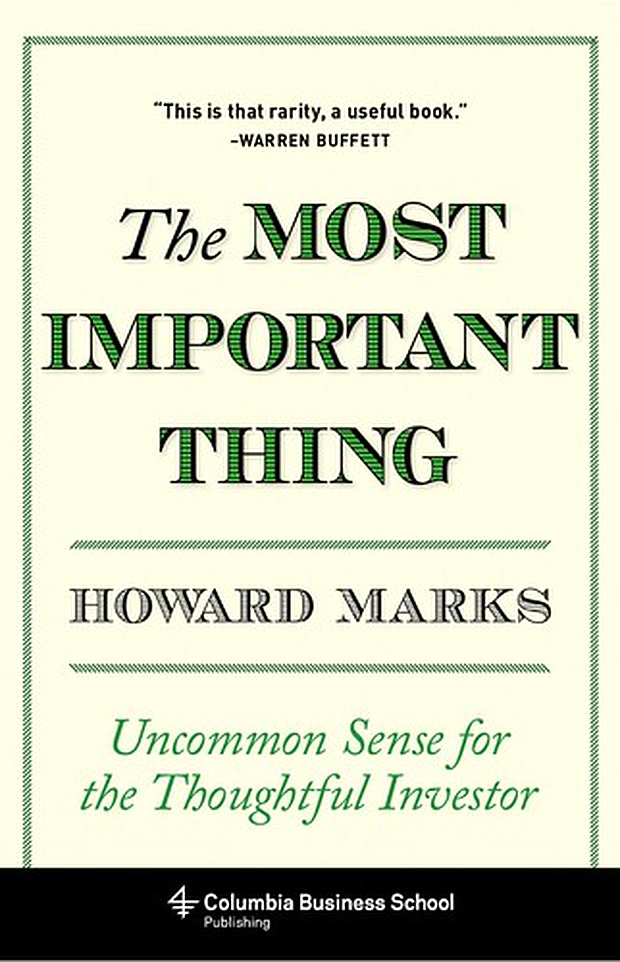
The Most Important Thing
Get on Amazon →
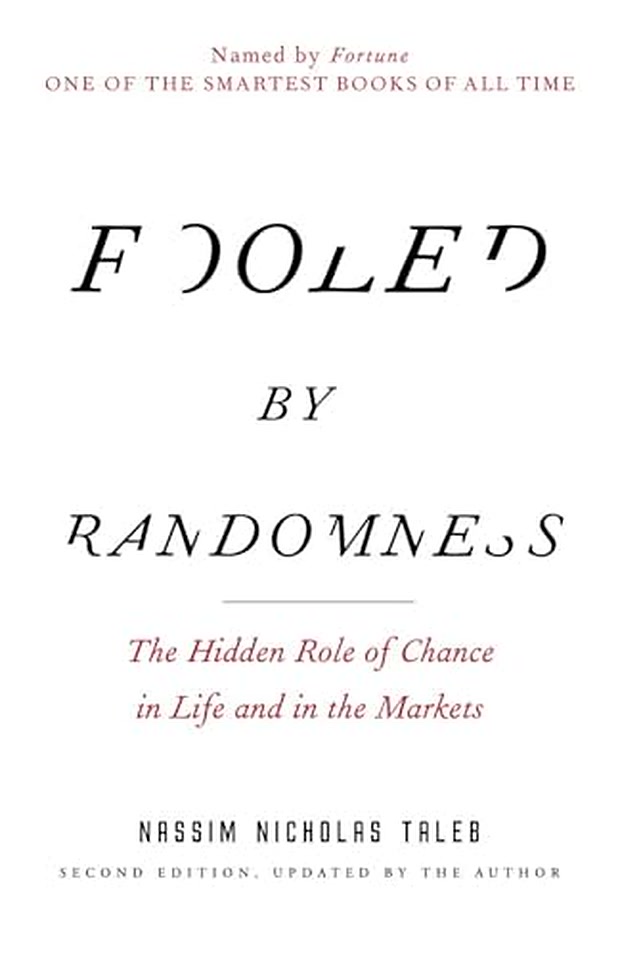
Fooled by Randomness
Get on Amazon →
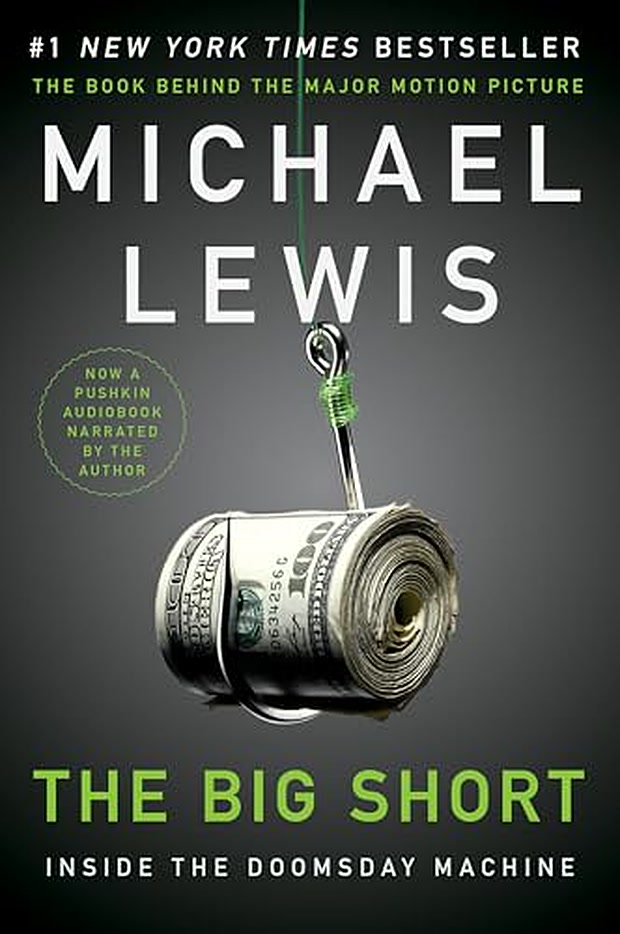
The Big Short
Get on Amazon →
As an Amazon Associate I earn from qualifying purchases.