Howard Marks
2003 10 02 The Feelings Mutual
© Oaktree Capital Management, L.P.
All Rights ReservedMemo To: Oaktree Clients
From: Howard Marks Re: The Feeling's Mutual
Throughout the recent, seemingly endless series of scandals, complaints, settlements,
indictments and meltdowns involving corporati ons, auditors, brokerage firms, investment
banks and hedge funds, the mutual fund indus try remained untouched. That held true
until September 3, when the Attorney General of New York State announced that Edward
Stern of hedge fund Canary Capital Partne rs had paid $40 million to settle charges
relating to improper dealings between Canary and a number of mutual funds. Since then,
sordid disclosures involving mutual funds seem to be emerging on a regular basis.
UThe Canary That Swallowed the Cat
What did Canary do wrong? It admitted to "mutual fund timing" and "late trading." Both
of these tactics take advantage of what I w ould call "temporal disconnects" in the process
through which the price for transactions in mutu al fund shares is set. A fund's Net Asset
Value is supposed to reflect the per-share valu e of the assets held in the fund's portfolio,
so that people buying or selling fund shares at that NAV pay or receive a fair price for
their portion of the fund's por tfolio. However, the proce ss is non-dynamic, in that the
NAV is set just once a day based on the underlyi ng securities' latest closing prices and
isn't updated for events that occur subsequent to the market closings or subsequent to the
time of the calculation. Canary acted to prof it from instances when security prices used
to calculate the NAV had become "stale."
Most forms of market timing consist of peopl e undertaking trades in order to implement
their views regarding the future direction of security prices. Mutual fund timing is
different, however, because the fund timer acts to profit from events that occurred in the past. The opportunity for mutual fund timing arises from the fact that every fund's Net Asset Value is calculated as of the close of trad ing at 4:00 p.m. Eastern Time, and orders for
fund shares entered up to that time are executed at that price. (Under the rules, orders placed after 4:00 p.m. are executed at the next day's NAV.) In brief, the mutual fund
timer acts to take advantage of knowledge that a security price f actored into a fund's
NAV is out-of-date and not reflective of recent ev ents. For an example, think of a mutual
fund that holds a U.K. stock, the trading of which ceased at 4:30 p.m. London time.
Since 4:30 p.m. London time is equivalent to 11:30 a.m. in New York, it's the stock's price at 11:30 a.m. Eastern Time that'll be us ed to calculate the NAV at 4:00 p.m. Thus a
timer has 4½ hours in which to watch for a development rendering the London closing
price obsolete, be it a general market moveme nt or a company-specific event. In extreme
© Oaktree Capital Management, L.P.
All Rights Reservedcases involving infrequently traded securi ties, a timer may gain an advantage from
knowledge that security prices haven' t been updated for days or weeks.
At first glance, this all appears relatively benign. It is not improper in itself to trade on
knowledge that the prices of some fund holdings are stale. All investors have potentially
equal access to this information, and they all have the same ability to enter orders for
fund shares up to 4:00 p.m. Eastern Time. Furt her, most of these situations involve small
pricing imperfections that relate to a small portion of the fund's por tfolio, and trading on
them isn't likely to materially change the return on a long-term investment in the fund. However, these trades can be highly prof itable if the impact is magnified through
minimization of the holding period. (E.g., taki ng advantage of a 1¢ error in a $10 NAV
will add just .1% to the annual return if the fund shares ar e held for a year, but taking
advantage of a new 1¢ disparity every da y will increase the a nnual return by 25%!)
Obviously, then, the key to achieving unusua l profits through mutual fund timing lies in
rapid-fire trading. The problem is that "knowledge-advantaged short-term trading" is inimical to the
interests of a fund's other holders – in essence, these tactics permit a bystander to
occasionally dart into the game and appropriate for himself some profit that
otherwise would accrue to the fund's long-term investors (and also to run up the
fund's costs). There are tools the funds can us e to discourage short-term trading: they can
impose exit fees, turn away investors based on their past behavior, or revoke trades.
Many funds have policies of fighting short- term traders, and those policies and the
actions the funds will take are set forth in th eir prospectuses. That's where the problem
comes in.
The complaint against Canary Capital states that, "Canary entered into agreements with
dozens of mutual fund families allowing it to time many different mutual funds." Some
of these funds ignored or contravened the polic ies stated in their pr ospectuses, and some
accepted compensation for doing so. It is thes e actions on the part of the funds – and
what Canary did to induce them – that are improper. Late trading is highly analogous to fund timing – it's another form of "knowledge-
advantaged short-term trading." However, in this form it consists of placing a buy or sell
order for a mutual fund after the 4:00 p.m. d eadline, for execution at the previously set
NAV, in contravention of the SE C's "forward pricing rule." This is done in order to
profit from developments that have occurred since 4:00 p.m. and thus are not reflected in
the security prices underlying the NAV set at that time.
Consider the example of a mutual fund that ha s 4% of its portfolio in a stock that closed
today at $40. An hour after the close, the company announces startlingly good earnings.
A "late trader" may conclude that the stoc k will trade tomorrow at $50, and thus that,
everything else being equal, tomorrow's NAV will be higher by 1% (the 25% stock price
increase multiplied by the 4% position in the stock). Thus at 5:30 he enters an order to buy the fund at today's NAV, implicitly buying the company's shares at $40 and trusting
© Oaktree Capital Management, L.P.
All Rights Reservedthat the NAV will rise tomorrow. On average, th ese trades can be high ly profitable . . . if
the holding period is short enough.
Late trading is less ambiguous than fund timing. It's wrong (and illegal), and no one
should be able to do it. It, too, takes away so me of the profit that s hould have gone to the
fund's long-term holders. Again, Canary made improper arrangements that allowed it to divert those profits to itself. Eliot Spitzer compared these two tactics to "betting today on yester day's horse races." I
seem to recall gamblers call ing this "past-posting"; see the classic movie "The
Sting" for a tutorial. You'd be surprised ho w easy it is to win when you bet on races
that already have taken place. All you need is a way to get the bet down. And
although making the bet may not be illegal in itself, the things you have to do to get
someone to take the bet probably will be. Canary found mutual fund companies that were willing to permit fund timing and late trading in exchange for cap ital commitments and fees. In exchange for benefits for
themselves, they were willing to assign some of their in vestors' profits to Canary.
The relatively open manner in which these arrangements were negotiated, documented and communicated to senior managers (who seem not to have taken exception) suggests
to me that the people involved were more st upid (and/or ethically t one-deaf) than they
were larcenous. Regardless, however, the schemes went forward, and the NY Attorney
General says Canary made "tens of millions of dollars" in this fashion. (Two additional
examples have come to light this week. A portfolio manager at Alliance Capital was suspended on suspicion of permitting late trading in his mutual fund in exchange for commitments of capital to his hedge fund, perhap s to increase the incentive fees in which
he would share. Also, a former trader at hedge fund Millennium Ca pital pled guilty to
engaging in after-hours mutual fund trading.)
UIs This A Big Deal?
The money Canary made from these machinations, while very meaningful to Canary, probably represents a "flesh wound" for the funds' investors. Even "tens of millions"
wouldn't materially change the investors' re turn when spread over a number of billion-
dollar mutual funds and a three-year period. Spitzer's complaint cites an academic study estim ating that these tactics divert $4 billion
of profits per year from their rightful owne rs, the funds' long-term investors. Again, a
large absolute sum but not material in re lative terms: $4 billion equates to six one-
hundredths of a percent of the $7 trillion total invested in mutual funds – $6 per $10,000.
On September 19, the Wall Street Journal c ited research estimating that in the fund
classes where fund timing might be most prof itable, it could reduce investors' annual
returns by 1-2%.
© Oaktree Capital Management, L.P.
All Rights ReservedSo the damage done to an individual share holder, or all of them put together, isn't
enormously material relative to the amount i nvested, or even the annual return. And by
the time the plaintiff’s lawyers subtract th eir fees, the damages won for the aggrieved
parties aren't likely to be noticeable.
It remains to be seen whether these tactics were widespread. In any case, I believe they're likely to be less so hereafter. The bottom line for me is that the Canary case, and the
existence of fund timing and late trading, doesn 't mean the mutual fund game is stacked
against the investor. So does that mean the mutual fund industry is free from major
shortcomings? I don't think so.
UThe Client Comes First!
Just as in other corners of the money ma nagement industry, mutual fund companies face
opportunities to make tradeoffs between their ow n welfare and the welfare of their clients
. . . the two of which are far from identical. There's no question that the in terests of clients should come first. Like lawyers,
executors and trustees, money managers are fi duciaries. They hold positions of trust and
owe a special duty to their clients. They are not supposed to "split the loaf" between
themselves and their clients. Rather, the whole loaf must go to the client, in whose
favor all conflicts of in terest should be resolved. This is different from automobile
sales, for instance, where it's completely acceptable – and univers ally understood – that
the salesman will try to negotiate a higher sale price for a car in order to generate more
revenue for his employer and more commission dollars for himself. Nobody's surprised
to hear that car salesmen aren't fiduciaries. But besides being fiduciaries, mutual fund companies – like other money management
firms – are for-profit organizations and mark eting machines whose ultimate goal is to
collect assets and make money. (There's at least one conspicuous exception: the
Vanguard Group – whose Convertible Securi ties Fund we run – is a not-for-profit
company owned by the investors in its funds ). Jack Bogle founded the Vanguard Group
and is a constant gadfly on the subject of mutu al fund company behavior. In an article in
the New York Times of September 14, he put it simply:
The Investment Company Act says that the interests of fund shareholders must be
placed ahead of all others, but the intere sts of managers have taken precedence.
UWho Protects the Clients' Interests?
In theory, a mutual fund is entirely separate and independent from the company that
organizes it. The fund company doesn't "own " the fund or have th e "right" to be its
adviser. The directors of the fund are s upposed to supervise the conduct of the fund,
© Oaktree Capital Management, L.P.
All Rights Reservedchoose the adviser and revisi t their decision annually. I would characterize this
arrangement as largely a legal fiction.
The website of the Investment Company In stitute, an industry lobbying group, states the
following:
The directors or trustees of a mutual fund, as in the case of other types of companies, have oversight responsibility for the ma nagement of the fund's
business affairs. . . . Under state law, di rectors . . . are expected to exercise sound
business judgment, establish procedures and perform oversight and review
functions, including evaluating the performance of the investment adviser . . .
Directors also owe a duty of undivided loyalty to the fund.
Overlaying state law duties is the fund amental concept of the 1940 Act that
independent fund directors se rve as watchdogs for the sh areholders' interests and
provide a check on the adviser and other pe rsons closely affili ated with the fund.
In my opinion, a number of significant issues surround mutual fund directors:
First and foremost, I am highly skeptica l of their collective performance, given
that it is unheard of for a fund compan y to be terminated as the investment
adviser of one of its funds. Have you ever heard of fund company XYZ being
relieved of its duties as adviser of the XYZ Fund? From the fact that it never
happens, we're supposed to believe that in every case the independent directors
review the award of the management contract and conclude that XYZ continues to be
the best possible manager for the fund. Can we possibly believe this process takes place? And that the fund company never deserves to be replaced?
It seems unlikely that some of the directors in big fund families can know enough
about all of their funds to make informed decisions. For example, the New York
Times mentioned that the ch airman of one fund board m onitors 191 funds, and that a
director oversees 60. How much can thes e directors know about the operation of
each fund?
There is good reason to question the indepe ndence of some of the funds' "independent
directors." A good number of them are former employees of the fund companies.
How likely are they to take away an advisory contract from their former firms? And
how likely is an independent director to rema in a director after he votes to fire XYZ
as the manager of the XYZ Fund?
Lastly, as in the case of corporations, there's the paradox of director compensation.
Being a good director involves a lot of work, and it probably won't be done without a
lot of compensation. But if the compensation is high enough, direct ors will want the
job too badly to allow them to rock the boat. The board chairman referred to above was paid $816,000 last year. How likely is he to vote to fire the management
company?
© Oaktree Capital Management, L.P.
All Rights ReservedThe September 14 Times article included the fo llowing statements from observers of the
mutual fund industry:
Mutual fund directors sit on too many boa rds, and they are paid too much money
for the time they devote to each indivi dual portfolio. Under existing law the
investment adviser is able to exercise a pervasive influence over the board.
(Lewis D. Lowenfels, a securities lawyer at Tolins & Lowenfels)
Directors certainly aren't doing much. We don't see much in the way of fee
reductions – we see fee increases. When funds do terribly badly we don't see any management changes. We see director s' pay going up every year, and we see
some pay that is just bey ond the rule of reason, often pa id to former executives of
the management company. Fund boards onl y meet four times a year on average
and they are still dominated heavily and intellectually by affiliated directors. (John C. Bogle)
There were also a number of quotes fr om fund management company spokesmen:
The Putnam trustees have a long record of independence. They were the first to
have an independent nominating committee and the first to have an independent
chairman. (John A. Hill, Chairman of Putnam's board) The Fidelity board always is conscientious and diligent in the service of the fund
shareholders. We are proud to have on our board individuals who have the
highest standards of integrity and business ethics. (V incent Loporchio, Fidelity
spokesman)
Our fund directors are without exception distinguished leaders from business and
government whose experience and insight serve our fund shareholders well.
(Phillip J. Purcell, Morgan Stanley CEO and fund director)
These protestations of diligence and indepe ndence would mean a lot more to me if
the directors of these funds had a histor y of occasionally terminating the fund
company as investment adviser.
UIssues Regarding Marketing
Ever since I was a teenager, I' ve heard that "mutual funds aren't bought; they're sold." In
this regard they're like many other consumer goods. People don't decide they need them
and figure out which one is the best. Ofte n, rather, people are convinced to buy mutual
funds through salesmanship. Mutual fund families are money-raising mach ines. They include some of the best
marketing companies in America. But some of their excellence serves to enhance their
treasuries at the possible expense of their clients.
© Oaktree Capital Management, L.P.
All Rights Reserved Of course, the industry stands for the delivery of active investment management to
the masses (although some firms also provi de passive management through index
funds). Sales are achieved on the basis of comparisons against other mutual funds.
Little is said about the long-run ability (o r inability) of funds to beat the market.
Some mutual fund families offer so many funds , of such an amazing variety, that it's
not illogical to wonder whether their motiv ations don't include a desire to always
have something in the top quartile, and something to advertise with four stars.
The funds in the bottom quartile, on the othe r hand, have a striking tendency to be
merged out of existence – causing their performance records to disappear.
The industry can be criticized for hyping (and selling) funds in whatever market
sector is "hot." Certainly we don't see any warning labels to the effect that "hotness"
can be synonymous with elevated prices, a nd thus with the potential for subsequent
losses. The mutual funds that were on ma gazine covers during the tech bubble buried
their clients . It's not a coincidence that th e average fund investor does worse
than the average fund; it's because investor money is constantly being lured into the
funds that have been performing best, and thus are the most precarious.
Lastly, compensation arrangements at mutual fund sales organizations can be adverse
to the clients' best interests. For example, there may be incentives to steer capital to a
brokerage house's in-house-managed funds as opposed to selling competing funds –
because a dollar invested in an in-house fund brings the firm more profit. Once I
described a fund to a marketer in terms of its current yield, yield to maturity and yield
to call. He said, "Forget a bout that; let's talk about the thing that matters most: YTB"
. . . meaning "yield to broker." There was no doubt where his motivation came from.
UIssues Regarding Expenses
Most mutual funds operate in "efficient ma rkets," where it's hard for one portfolio
manager to get an edge versus the others. It's rare in the long run for any fund to beat its
market benchmark or the other funds of sim ilar riskiness in its ni che. In efficient
markets, expense minimization is the surest rout e to better net results, and it's for this
reason that Jack Bogle pioneered the creation of index mutual funds. The performance of
an index fund is certain to mi rror that of the market, and expenses truly are minimized.
But almost all mutual funds are actively ma naged, and their expenses are anything but
minimized.
The average mutual fund carries investment management fees far above those paid by
institutional investors, even those in vesting far smaller amounts of money.
© Oaktree Capital Management, L.P.
All Rights Reserved The administrative expenses borne by the f unds are high and, most significantly, have
not demonstrated a tendency to decline in percentage terms as the size of funds has
increased. That is, they haven't reflected any economies of scale.
Many fund shareholders pay continuing marke ting charges. Why should the costs of
selling funds be borne by the shareholders? The usual response is that a bigger fund
benefits its shareholders. But then, s houldn't increasing size result in a declining
expense ratio?
Even as the total assets of the top 25 equity funds were increasing 845 times over the
last 51 years, the average expense rati o rose from .64% of assets to 1.50%, an
increase of 134%. (Source: "The Mutual Fund Industry in 2003: Back to the
Future," by John C. Bogle)
As the total assets of the top 25 equity funds grew from $2.2 billion in 1951 to $1.9
Utrillion U in 2002, the charges for managing and admi nistering a dollar of assets more than
doubled. One wonders how many of the "diligen t, independent" dire ctors resisted those
increases.
* * *
Are mutual funds good for America? In delivering market participation to retail
investors and capital to America's compan ies, they're invaluable. In hyping hot
investments and charging high fees for m odest performance, they provide no great
service. Are mutual funds safe vehicles for investing? They're no safer than the markets in
which they invest, or passive funds. But cost aside, they're not much worse.
Are mutual funds scandal-ridden? The Canary Capital incident doesn't worry me, but
I think the long-term structural issues discussed above are very troubling.
Mutual funds are a good thing overall, and they could be made even better. But that will
require a conscious decision to always place the interests of fund shareholders above
those of the fund companies. In many cases, that's going to take a while. October 2, 2003
© Oaktree Capital Management, L.P.
All Rights ReservedLegal Information and Disclosures
This memorandum expresses the views of the author as of the date indicated and such views are
subject to change without notice. Oaktree has no duty or obligation to update the information contained herein. Further, Oaktree makes no rep resentation, and it should not be assumed, that
past investment performance is an indication of future results. Moreover, wherever there is the
potential for profit there is also the possibility of loss. This memorandum is being made available for educational purposes only and should not be used
for any other purpose. The information contai ned herein does not constitute and should not be
construed as an offering of advisory services or an offer to sell or solicitation to buy any
securities or related financial instruments in any jurisdiction. Certain information contained herein concerning economic trends and performan ce is based on or derived from information
provided by independent third- party sources. Oaktree Capita l Management, L.P. (“Oaktree”)
believes that the sources from which such informa tion has been obtained are reliable; however, it
cannot guarantee the accuracy of such inform ation and has not independently verified the
accuracy or completeness of such information or the assumptions on which such information is
based. This memorandum, including the information cont ained herein, may not be copied, reproduced,
republished, or posted in whole or in part, in any form without the prior written consent of
Oaktree.
Recommended Reading
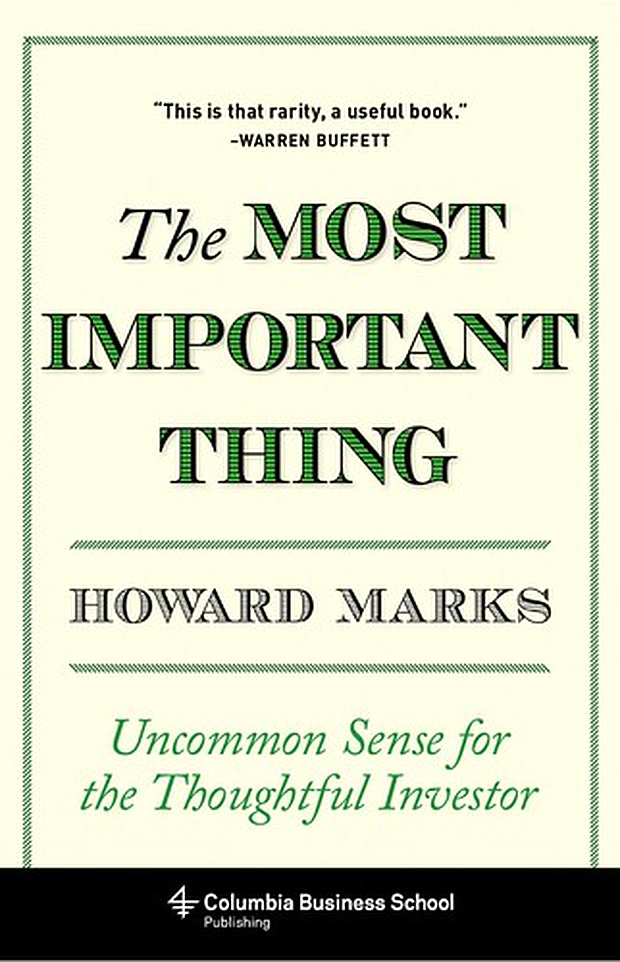
The Most Important Thing
Get on Amazon →
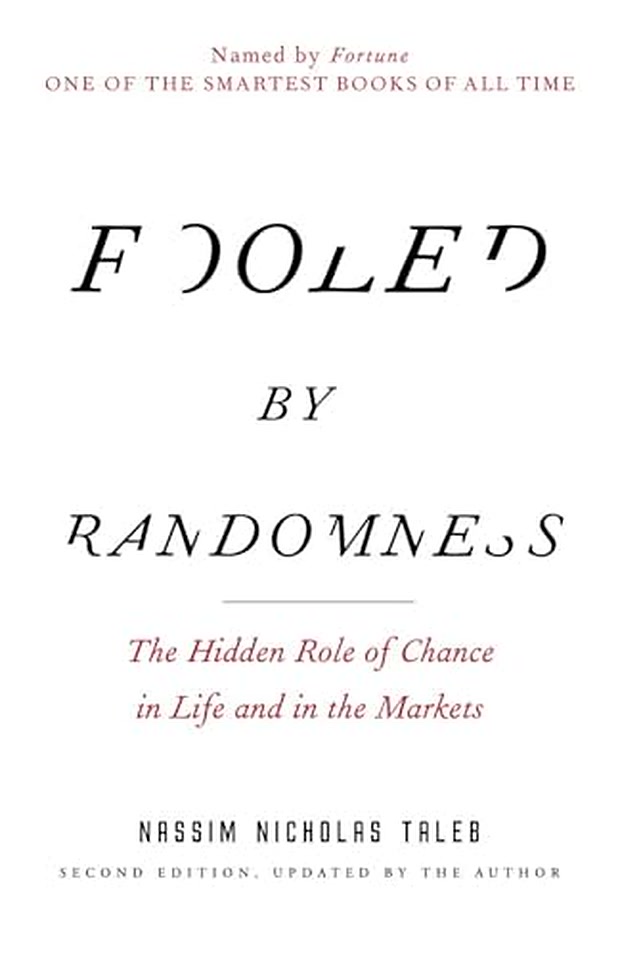
Fooled by Randomness
Get on Amazon →
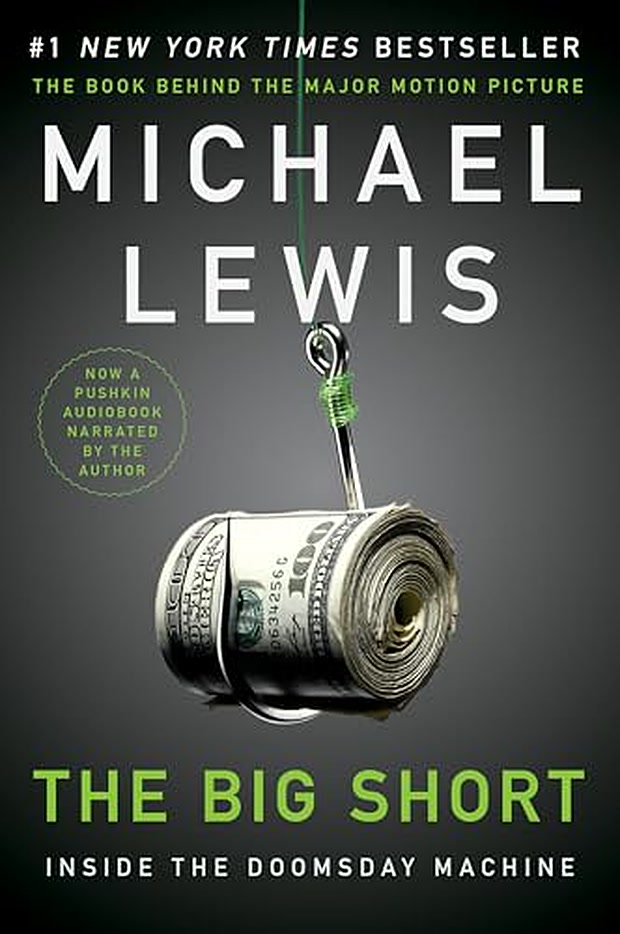
The Big Short
Get on Amazon →
As an Amazon Associate I earn from qualifying purchases.