Howard Marks
2003 09 05 Whats Your Game Plan
© Oaktree Capital Management, L.P.
All Rights ReservedMemo to: Oaktree Clients
From: Howard Marks Re: What’s Your Game Plan?
As the summer ends, my thoughts turn to the tennis game I’ve been hoping to improve,
the baseball season that’s moving toward a c onclusion, and the football season that’s just
getting started. It’s enough to remind me of th e role sports play in our lives . . . and in
our thoughts about investing.
UHow Oaktree Plays the Game
Sometimes I feel I should apologize for the frequency with which I use sports metaphors
to express my views on investing. And I worry that they’ll fall flat in Europe and Asia.
But that doesn’t seem to stop me.
“The key to investment success isn’t hittin g home runs; it’s avoiding strikeouts and
inning-ending double plays.” I say this over and over . . . and over . . . as you’ve no
doubt experienced. But I truly believe it.
Investing is a testosterone-laden worl d where too many people think about how good
they are and how much they’ll make if they swing for the fences and connect. Ask some
I-know-school investors to tell you what ma kes them good, and you’ll hear a lot about
home runs they’ve hit in the past and the home runs-in-the-making that reside in their
current portfolio. How many talk about consis tency, or the fact that their worst year
wasn’t too bad? One of the most striking things I’ve noted over the last 35 years is how brief most
outstanding investment careers ar e. Not as short as the care ers of professional athletes,
but shorter than they should be in a physically non-destructive vocation.
Where are the leading competitors from the days when I first managed high yield bonds 25 or 20 years ago? Almost none of them are around anymore. And astoundingly, not one of our prominent distressed debt competitors from the early days 15 or even 10 years ago remains a leader today. Where’d they go? Many disappeared because organizational flaws rendered their game plans unsustainable. And the rest are gone because they swung for the fences but struck out instead. That brings up something that I consider a great paradox: I don’t think many investment
managers’ careers end because they fail to hit home runs. Rather, they end up out of the
© Oaktree Capital Management, L.P.
All Rights Reservedgame because they strike out too often – not because they don’t have enough
winners, but because they have too many losers. And yet, lots of managers keep
swinging for the fences.
They bet too much when they think they ha ve a winning idea or a correct view of the
future, concentrating their portf olios rather than diversifying.
They incur excessive transaction costs by changing their holdings too often or
attempting to time the market.
And they position their portfolios for favor able scenarios and hoped-for outcomes,
rather than ensuring that they’ll be able to survive the inevitable miscalculation or
stroke of bad luck.
At Oaktree, on the other hand, we believe firmly that “if we avoid the losers, the
winners will take care of themselves.” That’s been our motto since the beginning, and
it always will be. We go for batting average, not home runs. We know others will get
the headlines for their big victories and spectac ular seasons. But we expect to be around
at the finish because of consistent good pe rformance that produces satisfied clients.
UFor Me, It Started With Tennis
In July, Larry Keele and I met with the Dire ctors of the Vanguard Convertible Securities
Fund to report on Oaktree’s performance as th e fund’s manager. I was extremely pleased
to see Charles Ellis of Greenwich Associates, one of the great thinke rs in the investment
field, whom I hadn’t come across in many year s. I was especially pleased to have a
chance to tell him about the seminal part his 1975 article, “The Loser’s Game,” had
played in the development of my thinking. The article employed a metaphor that was
simple but profound. Charley’s article described the perceptive anal ysis of tennis containe d in “Extraordinary
Tennis for the Ordinary Tennis Player” by Dr . Simon Ramo, the “R” in TRW. Ramo
pointed out that professional te nnis is a “winner’s game,” in which the match goes to the
player who’s able to hit the most winners: fast-paced, well-placed shots that his opponent
can’t return. But the tennis the rest of us play is a “loser’s game,” with the match going to the player who hits the fewest losers. The winner just keeps the ball in play until the
loser hits it into the net or off the court. In other words, in amateur tennis, points
aren’t won; they’re lost. I recognized in Ramo’s loss-a voidance strategy the version of
tennis I try to play. Charley took Ramo’s idea a step further, appl ying it to investments. His views on market
efficiency and the high cost of trading led him to conclude th at the pursuit of winners is
unlikely to pay off. Instead, you should try to avoid hitting losers. I found this view of
investing absolutely compelli ng. I can’t remember saying, “E ureka; that’s the approach
for me,” but the developments over the last th ree decades certainly suggest his article was
an important source of my inspiration.
© Oaktree Capital Management, L.P.
All Rights ReservedBecause of his conviction that markets ar e efficient, Charley recommended passive
investing as the best way to end up the winne r – let others try the tough shots and fail.
Oaktree’s view is a little different. Although we believe in the exis tence of inefficient
markets as well as efficient ones, we still view the avoidance of losers as a wonderful
foundation for investment success. Thus we diversify our portfolios, limit the
fundamental risk we’ll take, try to buy things that provide downside protection, and
emphasize senior securities. We, too, try to win by not losing.
UWhich Team Do You Want Out There?
I recently came up with a ne w sports metaphor that handily illustrates a crucial choice
each investor has to make. It goes like this: Think about a football game. The offense has th e ball. They have four tries to make ten
yards. If they don’t, the referee blows the wh istle. Off the field goes the offense and on
comes the defense, whose job it is to st op the other team from advancing the ball.
Is football a good metaphor for your view of investing? Well I’ll tell you, it isn’t for
mine. In investing there’s no one there to bl ow the whistle; you rarely know when to
switch from offense to defense; and there aren’t any time-outs during which to do it.
No, I think investing is more like the “football” that’s played outside the U.S. – soccer.
In soccer, the same eleven players are on the field for essentially the whole game. There
isn’t an offensive squad and a defensive squa d. The same people have to play both ways
. . . have to be able to deal with all eventu alities. Collectively, those eleven players must
have the potential to score goals a nd stop the opposition from scoring more.
A soccer coach has to decide whether to field a team that emphasizes offense (in order to score a lot of goals and somehow hold the othe r team to fewer) or defense (hoping to shut
out the other team and find the net once), or one that’s balanced. Because the coach
knows he won’t have many opportunities to switch between offensive and defensive
personnel during the game, he has to come up with a winning lin eup and stick with
it.
That’s my view of investing. Few people (if any) have the ability to switch tactics to
match market conditions on a timely basis. So investors should commit to an approach –
hopefully one that will serve them through a variety of scenarios. They can be
aggressive, hoping they’ll make a lot on the winn ers and not give it back on the losers.
They can emphasize defense, hoping to keep up in good times and excel in bad times. Or they can attempt to balance offense and defe nse, giving up on tactical timing but aiming
to win through superior security se lection in both up and down markets.
Oaktree’s preference for defense is clear. In good times, we feel it’s okay if we just keep
up with the indices (and in the best of times we may even lag a bit). But even average
investors make a lot of money in good tim es, and I doubt many managers get fired for
© Oaktree Capital Management, L.P.
All Rights Reservedbeing average in up markets. Oaktree portf olios are set up to outperform in bad times,
and that’s when we think outperformance is e ssential. Clearly, if we can keep up in good
times and outperform in bad times, we’ll have above average results over full cycles with
below average volatility, and our clients w ill enjoy outperformance when others are
suffering. We think that’s a winning long-term combination.
Our game plan is built around defense. But that’s not enough. We still need players with superior skills.
UFinding Your Role Model
An article in the Wall Street Journal of August 8, entitled “Great ness in Our Midst,”
supplied the immediate impetus for this mem o. It attempted to determine “who’s the
greatest living baseball player?” I’m no expe rt on baseball, but I liked the Journal’s
analytical approach and loved its conclusions. Of the five players discussed, Barry Bonds cam e in fifth. “If you’re looking for a peak-
value player – a guy to play one season as we ll as anyone ever has – this is your guy. His
past two campaigns have been other-worldly . . .” Bonds has a ton of ability, but he has
yet to prove that he’s “the greatest.” Lots of fen ce-swinging investors have had
otherworldly years, but few ha ve completed outstanding careers.
Stan Musial placed fourth: outstanding at the plate, but below average on defense
according to the Journal. It’s tough to be the best without strong defense.
The #3 pick was Willie Mays. He ended his ca reer with excellent stats in many offensive
categories and he was an outst anding fielder, having made what has to be the most
famous catch in baseball history. Surprisingly, however, “in a career full of
milestones, such as 3,000 hits and 600 ho mers, Mr. Mays doesn’t own a single
significant major-league record.” Records aren’t what it’s about; I think its
competence, consistency, and an absence of weaknesses.
I like the way Ricky Henderson made it to r unner-up. “Walks aren’t sexy and steals
aren’t trendy,” but Henderson holds the career record in both, and they positioned him to score. “And no one’s done this more often than Mr. Henderson.” It’s kind of like being a steady performer in an unfashionable ni che like convertibles, underdeveloped real
estate or power infrastructure. The Journal’s pick for greatest living player: Henry Aaron. Unlike Willie Mays, the Journal says, “Hammerin’ Hank holds more impo rtant records than any player in history:
home runs, runs batted in, to tal bases, extra-base hits a nd Aggregate Bases,” (which it
defines as the sum of hits, extra bases, walks and steals). And I l ove the way he did it:
“Mr. Aaron’s best seasons don’t compare with those of Messrs. Bonds, Mays or
Musial, but he played at a high level long er than any player in the history of the
game.” In my book, that’s the definition of #1.
© Oaktree Capital Management, L.P.
All Rights Reserved
Few people, in any field, can hope to have talents and abilities lik e these men. But each
of us can try to apply the same work ethi c, and we can select our role models and
decide how to conduct ourselves professionall y. I want an Oaktree that’s like Willie
and Hank. An exceptional career, even if it does n’t result in entries in the record
books. Or a number of records, but for a lifetime, not a single great year .
“Steady Eddie” Murray was inducted into the Ba seball Hall of Fame just six weeks ago.
He drove in at least 75 runs a year for a major league-record 20 consecutive seasons.
I’d like Oaktree’s play to be described as “Steady Eddie.”
Sandy Koufax was pretty steady, too. In th e six years 1961-66, he was named an All-Star
six times and led the league in earned run average five times, in strikeouts per inning five
times, in hits allowed per inning five times, in hits and walks allowed per inning four
times, in shutouts three times, in innings pitche d twice, in won-lost percentage twice, and
in complete games twice. He pitched a no-hit game every year from 1962 to 1965, and the last of those was a perfect game. Over that period, he essentia lly had no weaknesses.
And, of course, I can’t fail to mention Cal Ri pken, Jr. He played all of his 21 seasons
with the Orioles, a great oddity in a time wh en there’s little consta ncy. And speaking of
constancy, Cal is well known for his reco rd of playing in 2,632 consecutive games,
spanning a 15-year period. He also play ed 8,243 innings without missing one. Always
there for his teammates and fans, he was chos en to start at shorts top in 17 consecutive
All-Star games.
These are my baseball heroes. They personify my aspirations for Oaktree.
UPlaying Within Yourself
An expression from the broadcasting booth that’s relevant to investing relates to the need to avoid pushing too hard. “Playing within yourself,” they call it. It means not trying to
do things you’re not capable of, or things that can’t be accomplished within the
environment as it exists.
When the defenders drop back to cover the deep receivers, the intelligent quarterback throws short passes until they move up. Th at opens up the downfield routes, enabling
him to complete the long bomb. “He’s taking what they give him,” the commentators
say, approvingly. It’s what we all must remember to do.
We simply cannot create investment opportunitie s when they’re not there. In its first
year, our newest distressed debt fund produ ced a 64% net IRR that’s eye-popping . . . and
impossible to replicate any time soon. So what should we do now? Rather than take
profits and distribute the proceeds, should we prolong our holding periods or try to repeat
our gains in new positions? And would it be smart to raise a big new fund? None of
these, if the prospective re turns on our holdings are inad equate and new investment
© Oaktree Capital Management, L.P.
All Rights Reservedopportunities are limited.
The dumbest thing we could do is to insist on perpetuating our high returns – and give
back our profits in the process. If it ’s not there, hoping won’t make it so. All we ever
can do is take what they give us.
UWhat’s Better, Investing or Sports?
When people ask me what I like so much about investing, I usually go to the well for more comparisons to sports.
It’s competitive – some succeed and some fail, and the distinction is clear.
It’s quantitative – you can see the results in black and white.
It’s a meritocracy – in the l ong term, the better returns go to the superior investors.
It’s team-oriented – an effective group can accomplish more than one person.
It’s satisfying and enjoyable – but much more so when you win.
Many of the things that make sports fun to watch and participate in are the same things
that make investing a great area in which to work. However, Warren Buffett came up
with one way in which the investor has it better than the athlete. In Berkshire Hathaway’s 1997 Annual Report, Buffett talked about Ted Williams – the
“Splendid Splinter” – one of the greatest hitter s in history. A factor that contributed to
his success was his intensive st udy of his own game. By breaking down the strike zone
into 77 baseball-sized “cells” and charting his results at the plate, he learned that his
batting average was much better when he only we nt after pitches in his “sweet spot.” Of
course, even with that knowledge , he couldn’t wait all day for the perfect pitch; if he let
three strikes go by without swinging, he’d be called out. Way back in the November 1, 1974, issue of Forbes, Buffett pointed out that investors
have an advantage in that regard, if they’ll ju st take advantage of it. Because they can’t
strike out looking, investors n eedn’t feel pressured to act. They can pass up lots of
opportunities until they see one that’s terrific.
Investing is the greatest business in the world because you never have to swing.
You stand at the plate; the pitcher throws you General Motors at 47! U.S. Steel at
39! And nobody calls a strike on you. There’s no penalty except opportunity. All day you wait for the pitc h you like; then, when the fielders are asleep, you
step up and hit it.
Buffett’s approach, like that of Williams, rewards patience, selectivity and a
superior understanding of the underlying pr ocess. These are some of the things
Oaktree likes to emphasize.
© Oaktree Capital Management, L.P.
All Rights ReservedUBack to Tennis for the Wrap-up
Just as this memo was going into the home stretch, the Wall Street Journal’s Allan Barra
greeted the start of the U.S. Open tennis tourna ment with an article about Pete Sampras.
For me, it provided the ultimate investment/sports metaphor.
Mr. Sampras will need no future historians to make his case as the greatest tennis player of our time. His career cred entials – the 14 Grand Slam singles
championships; the 63-7 record in Wimbledon and seven Wimbledon titles in
eight years; the 71-9 record at the U.S. Open with 87 consecutive service games
won there; the six straight seasons of being ranked No. 1 – do that admirably.
. . . Sampras the player wasn’t alwa ys exciting. Mr. Sampras’s outstanding
quality was always his uncanny consistency. Was there an athlete of the past 10
to 12 years whose greatness has been ha rder to capture in highlights? His
highlights were hard to distinguish from his lowlights . As I wrote in the Wall
Street Journal a few years ago: “The de finitive book on the man would have to be
titled ‘Pete Sampras: The Dullness of Excellence.’ But who would buy it?”
(August 26, 2003; emphasis added)
The sentence I’ve bolded struck me as pa rticularly thought provoking. You could read it
as saying “his best moments weren’t much be tter than his worst moments” – not a very
stirring thought. Alternatively, you could read it as “his worst moments were almost
as good as his best.” In my view, that would describe a terrific money management
career. We hope people will say it about Oaktree.
* * *
I’m always careful to point out that there are many game plans capable of leading to
success. Offense or defense. Home runs or batting average. Go for the long bomb, or pick them apart with short passes. Battle from the baseline or rush the net. There are as
many choices as there are sports metaphors. But the best game plan will only take you as
far as the starting line or th e first pitch. Once the game is underway, it comes down to
skillful execution. The best strategy in the world won’t pay off without skillful
blocking and tackling.
And having a talented, discipli ned team that stays together – a rarity in sports or
investing – doesn’t hurt.
September 5, 2003
© Oaktree Capital Management, L.P.
All Rights ReservedLegal Information and Disclosures
This memorandum expresses the views of the author as of the date indicated and such views are
subject to change without notice. Oaktree has no duty or obligation to update the information contained herein. Further, Oaktree makes no rep resentation, and it should not be assumed, that
past investment performance is an indication of future results. Moreover, wherever there is the
potential for profit there is also the possibility of loss. This memorandum is being made available for educational purposes only and should not be used
for any other purpose. The information contai ned herein does not constitute and should not be
construed as an offering of advisory services or an offer to sell or solicitation to buy any
securities or related financial instruments in any jurisdiction. Certain information contained herein concerning economic trends and performan ce is based on or derived from information
provided by independent third- party sources. Oaktree Capita l Management, L.P. (“Oaktree”)
believes that the sources from which such informa tion has been obtained are reliable; however, it
cannot guarantee the accuracy of such inform ation and has not independently verified the
accuracy or completeness of such information or the assumptions on which such information is
based. This memorandum, including the information cont ained herein, may not be copied, reproduced,
republished, or posted in whole or in part, in any form without the prior written consent of
Oaktree.
Recommended Reading
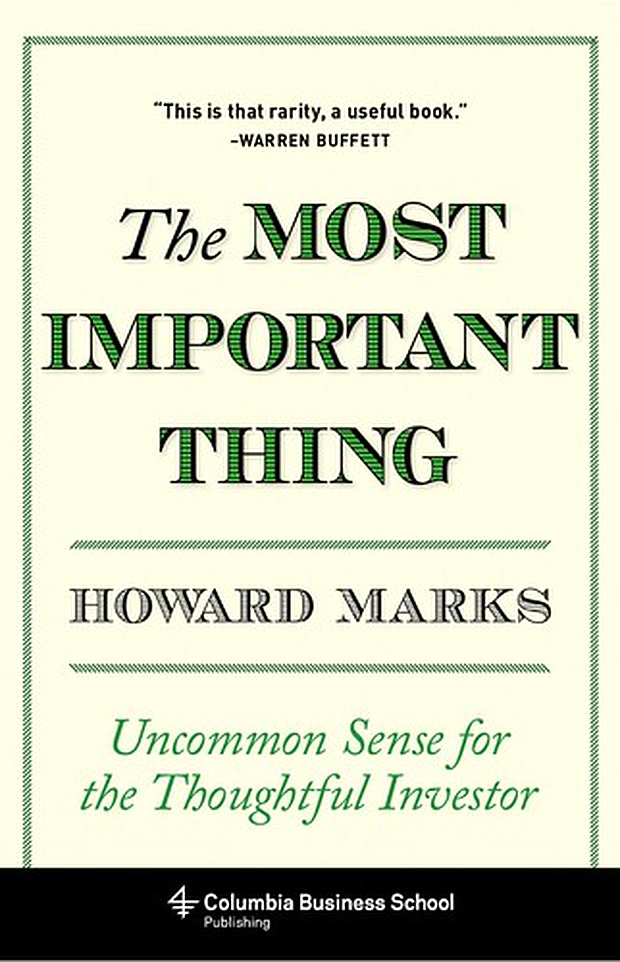
The Most Important Thing
Get on Amazon →
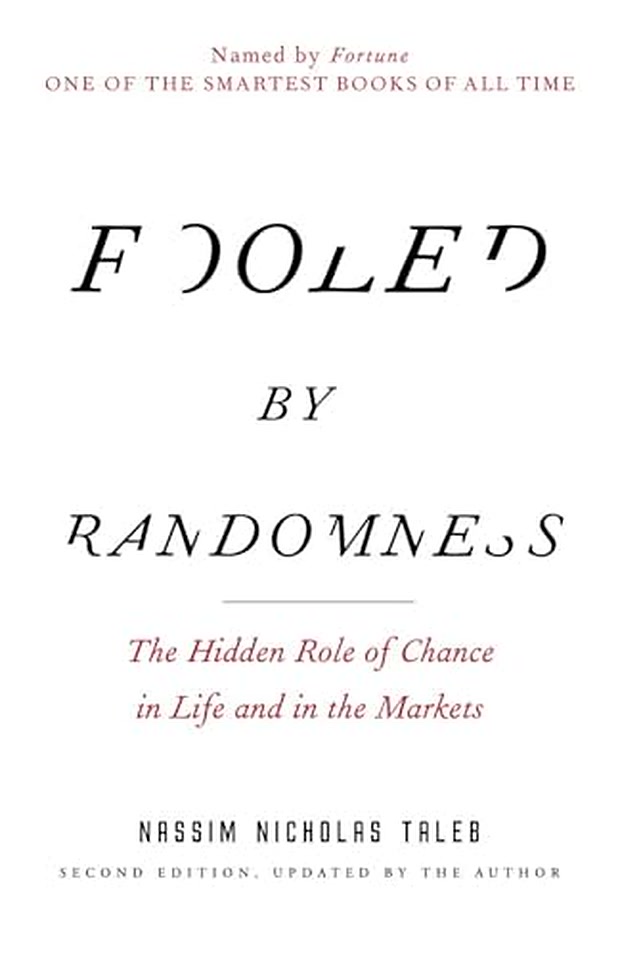
Fooled by Randomness
Get on Amazon →
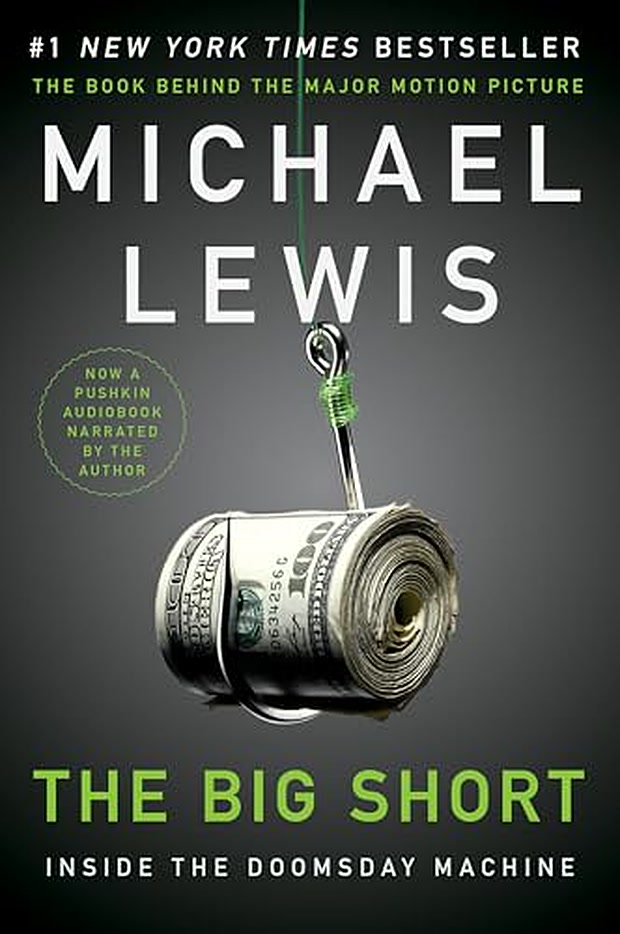
The Big Short
Get on Amazon →
As an Amazon Associate I earn from qualifying purchases.