Howard Marks
2003 07 01 The Most Important Thing
© Oaktree Capital Management, L.P.
All Rights Reserved
Memo to: Oaktree Clients From: Howard Marks Re: The Most Important Thing
As I meet with clients and prospects, I repe atedly hear myself say, “the most important
thing is x.” And then ten minutes later it’s, “the most importa nt thing is y” (and then z,
and so on). Am I being disingenuous? Am I confusing the unimportant with the
important? Is it that I can’t make up my mind? Or is memory loss setting in? I hope (and believe) it’s none of these things. If I have to come up with an explanation, maybe it’s that I have strong feelings on a lot of subjects. Whatever the reason, I
thought I’d collect in one place the precepts th at guide Oaktree. Some might be more
important than others, but in my view each one qualifies as “the most important thing.” The most important thing – above all – is the relationship be tween price and value.
For a value investor, price has to be the starting point. It has been
demonstrated time and time again that no asset is so good that it can’t
become a bad investment if bought at too high a price. And there are few
assets so bad that they can’t be a good investment when bought cheap
enough.
When people say flatly, “we only buy A” or “A is a superior asset class,” that
sounds a lot like “we’d buy A at any price . . . and we’d buy it before B, C or D at
any price.” That just has to be a mistake. No asset class or investment has the
birthright of a high return. It’s on ly attractive if it’s priced right .
Hopefully, if I offered to sell you my car, you’d ask the price before saying yes or
no. Deciding on an investment without car efully considering the fairness of its
price is just as silly. Bu t when people decide without disciplined consideration of
valuation that they want to own something, as they did with tech stocks in the late
1990s – or that they simply won’t own something, as they did with “junk bonds”
in the 1970s and early 1980s – that ’s just what they’re doing.
During the course of my 35 years in this business, investors’ biggest losses have come when they bought securities of what they thought were perfect companies –
where nothing could go wrong – at prices assuming that degree of perfection . . . and more. They forgot that “good company” isn’t synonymous with “good investment.” Bottom line: there’s no such thing as a good idea regardless of
price!
On the way to work the other day, I hear d an “expert” tell a radio commentator
© Oaktree Capital Management, L.P.
All Rights Reservedhow to invest in today’s stock market. “Figure out which industries have been
doing best, and pick out th e leading companies in those industries. The
professionals know which they are, so thei r stocks will sport P/E ratios that are
higher than the rest. But that’s okay: do you want the best companies or the
worst?” My answer’s simple: I want the best buys .
The most important thing is a solidly based, st rongly held estimate of intrinsic value.
To value investors, an asset isn’t an ephemeral concept you invest in because
you think it’s attractive (or think others will find it attractive). It’s a tangible object that should have an intrinsic val ue capable of being ascertained, and if
it can be bought below its intrinsi c value, you might consider doing so.
Thus intelligent investing has to be built on estimates of intrinsic value. Those estimates must be derived rigorously, base d on all of the available information.
And the level of belief in estimates of intr insic value has to be high. Only if the
estimate is strongly held will a manager be able to do the right thing.
If there’s no conviction, a drop in th e price of a holding can weaken the
investor’s faith in the estimate and ma ke him fail to buy more, or maybe even
sell, just when a lower price should lead him to increase his position. And
price appreciation, which under most circ umstances should prompt a review of
a holding’s retention, can tend instead to seduce the investor into raising the
target price and possibly buying more.
As expressed by David Swensen of Yale, “. . . investment success requires
sticking with positions made uncomfort able by their variance with popular
opinion. Casual commitments invite casual reversal, exposing portfolio
managers to the damaging whipsaw of buying high and selling low.”
You may wonder from time to time about the high level of confidence exhibited
by your managers. But bear in mind that the most profitable investments are unconventional, and maintaining unconventi onal positions can be lonely. When
you buy something you think is cheap and then see its price fall, it takes a strong
ego to conclude it’s you who’s right, not the market. So ego strength is
necessary if a manager is going to be ab le to make correct decisions despite
Swensen’s “variance from popular opinion.”
Oh yeah, one last thing: those strongly -held views had better be right. Few
things are more dangerous than an in correct opinion held with conviction
and relied on to excess.
The most important thing is investing defensively.
© Oaktree Capital Management, L.P.
All Rights ReservedOaktree follows a clearly defined route that it trusts will bring investment success:
If we avoid the losers, the winners will take care of themselves. We think the
most dependable way for us to generate the performance our clients seek is by
avoiding losing investments. We don’t claim that this is the only way to invest well; others may choose more aggressive approaches, and they may work for
them. This is the way for us.
Investing defensively can cause you to mi ss out on things that are hot and get
hotter, and it can leave you with your bat on your shoulder in trip after trip to
the plate. You may hit fewer home runs than another investor . . . but you’re
also likely to have fewe r strikeouts and fewer inning-ending double plays. The
ingredients in defensive investing incl ude (a) insistence on solid, identifiable
value at a bargain price, (b) diversifi cation rather than c oncentration, and (c)
avoidance of reliance on macr o-forecasts and market timing.
Warren Buffett constantly stresses “margin of safety.” In other words, you
shouldn’t pay prices so high that they presuppose (and are reliant on) things going
right. Instead, prices should be so low th at you can profit – or at least avoid loss –
even if things go wrong. Purchase prices below intrinsic value will, in and of
themselves, result in larger gain s, smaller losses, and easier exits.
“Defensive investing” sounds very erudite, but I can simplify it: Invest scared!
Worry about the possibility of loss. Worry that there’s something you don’t
know. Worry that you can make high quality decisions but still be hit by bad luck
or surprise events. Investing scared will prevent hubris; wi ll keep your guard up
and your mental adrenaline flowing; will make you insist on adequate margin of
safety; and will increase the chances that your portfolio is prepared for things
going wrong. And if nothing does go wrong, surely the winners will take care of
themselves.
The most important thing is avoiding bad years.
Preparing for bad times is akin to attempting to avoid individual losers, and equally important. Thus time is well spent making sure the downside risk of
our portfolios is limited. There’s no need to prepare for good times; like
winning investments, they’ll take care of themselves.
The mantra “beat the market” has been vast ly overdone in the last 25 years, when
outperforming an index has become the sine qua non of good management. But
why should this be the case? Keeping up with the market while bearing less
risk is at least as great an accomplish ment, although few people talk about it
in the same glowing terms.
At Oaktree we believe strongly that in the good times, it’s good enough to
be average . In good times, the average investor makes a lot of money, and that
© Oaktree Capital Management, L.P.
All Rights Reservedshould suffice. In good times the greates t rewards are likely to go for risk
bearing rather than for caution. Thus, to beat the averages in good times, we’d
probably need to accept above -average risk . . . risk that could turn around and
bite us in a minute.
There is a time when it’s essential that we beat the market, and that’s in bad
times. Oaktree and its clients don’t want to succumb to market forces in bad
times and participate fully in the loss es. And because we don’t know when the
bad years will come, we insist on inve sting defensively all of the time.
Our goal is to generate performance that is average in good times (although we’ll accept more) and far above average in bad times. If in the long run we can accomplish this simple feat (which time has shown isn’t simple at all), we’ll end up with (a) above-market performance on average, (b) below-market volatility,
(c) highly superior performance in th e tough times, helping to combat people’s
natural tendency to “throw in the towe l” at the bottom, and thus (d) happy
clients. We’ll settle for that combination.
The most important thing is facing up to the limits on your knowledge of the macro-
future.
Investing means dealing with the future – anticipating future developments and
buying assets that will do well if those de velopments occur. Thus it would be
nice to be able to see into the future of economies and markets, and most investors
act as if they can. Thousands of economi sts and strategists are willing to tell us
what lies ahead. That’s all well and good, but the record i ndicates that their
insights are rarely s uperior, and it’s never clear why they’re willing to give away
gratis their potentially valuable forecasts.
One thing each market participant has to decide is whether he (or she) does or does not believe in the ability to see into the future: th e “I know” school
versus the “I don’t know” school. Th e ramifications of this decision are
enormous.
If you know what lies ahead, you’ll feel free to invest aggressively, to concentrate
positions in the assets you think will do best, and to actively time the market,
moving in and out of asset classes as your opinion of their prospects waxes and
wanes. If you feel the future isn’t knowable, on the othe r hand, you’ll invest
defensively, acting to avoid losses rather than maximize gains, diversifying more
thoroughly, and eschewing e fforts at adroit timing.
Of course, I feel strongly that the latter course is the right one. I don’t think
many people know more than the consensu s about the future of economies and
markets. I don’t think markets will ever cea se to surprise, or thus that they can
be timed. And I think avoiding losses is much more important than pursuing
© Oaktree Capital Management, L.P.
All Rights Reservedmajor gains if one is to achieve the absolute prerequisite for investment
success: survival.
The most important thing is being mindful of cycles (and where we stand in them).
We must never forget about the inevitability of cycles. Economies and world
affairs rise and fall in cycles. So does co rporate performance. The reactions of
market participants to these developments also fluctuate cyclically. Thus price
swings usually overstate th e swings in fundamentals. When developments are
positive and corporate profits are high, inve stors feel good and often bid assets to
prices that more than reflect their in trinsic value. When developments are
negative, on the other hand, panicky investors are prone to sell them down to
overly cheap levels. So prices sometimes represent high multiples of peak prospects (as they did with technology stocks in the ‘90s), and sometimes low multiples of trough prospects.
Ignoring cycles and extrapolating trends is one of the most dangerous things
an investor can do. People often act as if companies that are doing well will do
well forever, and investments that are outperforming will outperform forever, and
vice versa. Instead, it’s the opposite that’s more likely to be true.
The most important thing is contrarian behavior.
Because of the fluctuation of both fu ndamental developments and investor
behavior, assets are sometimes offered for sa le at bargain prices and at other times
at prices that are too high. A techni que that works most dependably is putting
money into things that are out of favor.
Although investors often seem not to grasp it, it shouldn’t be hard to understand:
only unpopular assets can be truly cheap. And those that are in favor are likely to be dear.
For example, one of the best reasons for the profitability of distressed debt over
the years is that there’s no such thing as a distressed company everybody loves. By the time they’ve made their way to our arena, distressed debt companies can no longer be on what I call “the pedestal of popularity.” We buy at low dollar
prices from depressed owners at a ti me when corporate performance is well
off from the top. Not a bad formula. Certainly that doesn’t have to mean that
the investment’s cheap enough, but at least there’s a low probability it’s pumped
up on hot air (or investors’ ardor).
The momentum player buys what’s up and bets that it’ll keep going up. The style
devotee buys one thing whether it’s up or down. But the contrarian, or value
investor, buys something that other people aren’t interested in, in the belief that
it’s cheap and will become less cheap someday. There’s no sure recipe for profit,
© Oaktree Capital Management, L.P.
All Rights Reservedbut I think this one stacks the cards in your favor. As Sir John Templeton put it,
“To buy when others are despondently selling and to sell when others are
euphorically buying takes the greatest courage but provides the greatest
profit.”
The most important thing is patient opportunism.
At Oaktree we try to sit on our hands . We don’t go out with a “buy list”; rather,
we wait for the phone to ring (while we do our research and analysis). If we call
the owner and say, “You own x and we want to buy it,” the price will go up. But if the owner calls us and says, “We’re stuck with x and we’re looking for an exit,” the price will go down. Thus, rather th an initiating transactions, we react
opportunistically.
One of our mottos is “we don’t look for our investments; they find us.” In
general, that means investing from th e bottom up, not from the top down – from
the list of things that are available chea p, not in things we think it’d be great to
have a position in. When you’re a top- down investor, you predetermine that a
given percentage of the portfolio should be invested in a certain sector, and then
you proceed to look for the best bargains in that sector. The bottom-up investor
has no such preconception; he looks for th e best bargains, regardless of where
they can be found. Sector allocation falls out largely of its own accord (but hopefully with concentrations held to tolera ble levels).
The most important thing is saying what you’ll do, and doing it.
The world of investing – where we deal with an unknown future – is filled with
vagaries. Trying hard will take you only so far; no one is wise enough to get it
right every time; and even the most well-intentioned manager will make mistakes on occasion. Therefore, if you’re going to have successful relationships, effort, wisdom and good inte ntions aren’t enough. A relationship
also needs a solid foundation.
In my opinion, that foundation comes best when managers tell clients exactly
what they can do and will do . . . and then do it. Managers should be aware
that usually they’re not hired to pursue pr ofit any way they can think of. Instead,
it’s to play a specific role in the clie nt’s manager lineup and impart specific
attributes to the portfolio. Promising too much, or doing things outside one’s
charter, are surefire means to unhappiness.
If every manager described his or her activ ities in explicit terms, and then stuck
entirely to what had been described, th e vast majority of problems between
managers and clients would be avoided.
© Oaktree Capital Management, L.P.
All Rights Reserved
The most important thing is pres erving investment flexibility.
This sounds like a good idea, but of course it can be the polar opposite of the
explicitness recommended above. Given th at it’s impossible to know what the
future will look like, however, it can be unwise to define too narrowly the
tactics and strategies you’ll apply.
Clients want managers to be specific so that they’ll know what to expect and
have a high probability of getting what they signed on for. But excessive
specificity can hamstring the manager. How can these two points be reconciled?
In our funds over the years, we’ve made numerous successful investments that weren’t foreseen when the funds were formed. I think the key to bridging
this gap is to be very specific about your philosophy, goals and investment style, and to restrict as little as possi ble the specific strategies and tactics
you’ll employ.
Once a manager has earned the trust of hi s (or her) clients, he may be granted
leeway to change tactics so as to be ab le to adapt to changing market conditions.
And clients can be confident that they’ll get the investing style they want without
limiting the tactics used to get it. In the end it should be borne in mind that
there must be flexibility in order for a manager to be able to act opportunistically, and opportunism (a pplied skillfully) is an absolute
necessity if one expects to keep up with changing market conditions.
The most important thing is refusing to manage too much money.
The investment management business is plagued by a dilemma: Good
performance can bring more money, and too much money can bring bad
performance.
There, I’ve said it!! – at the risk of being thrown out of the money managers’ union. All managers want to manage more than $1, or $1 million, and so they grow their assets. And certainly the first dollar of growth doesn’t doom performance to mediocrity. But it absolutely cannot be argued that there isn’t
a point at which incremental capita l causes performance to decline.
One of my favorite incidents occurred when our local charity’s investment
committee was looking for a new manager. When I asked one candidate whether his firm had a limit on assets under management, he said, “We don’t see any reason for a limit.” But when I asked why their relative performance had declined
precipitously in recent years, he said, “Well, we used to manage a lot less
money.” Less than insightful, I th ink (and he didn’t get the job).
© Oaktree Capital Management, L.P.
All Rights Reserved
I can assure you that turning away mone y is the hardest thing for a manager
to do, but it’s also one of the most important. For the last twenty years we’ve
put limits on our strategies and turned away money, and we’re extremely glad we
did.
The most important thing is understanding th e implications of market efficiency.
I believe strongly that some markets are quite efficient, me aning the collective
actions of informed, diligent investors te nd to make assets in those markets sell
where they should. Assets become priced such that their pros pective returns are
fair relative to the perceived risk – but only fair. Clearly, if assets are priced
fairly, it’s hard to find bargains. And if it’s hard to find bargains, there’s no
reason to go to the trouble (and expense) of active management. In efficient
markets, few investors are capabl e of regularly outperforming the
benchmarks and each other, and the range of investor performance is quite
tight. In mainstream, large-capitalization stocks, for example, the management
fees and transaction costs entailed in ac tive management don’t seem to be earned
back with any regularity.
But I also believe in the existence of re latively inefficient markets. In these
markets, information may not be disseminated evenly; investors may not be
objective or many in numbers; and unco mmon expertise may be required. Under
these circumstances, assets can be mispri ced relative to their intrinsic value,
relative to their risk, and relative to each other. And discernible mispricings are
a necessary condition for profitable active management. Only if mispricings
exist such that they can be exploited by skillful managers can consistent
outperformance be possible.
Finance theory holds that because it takes higher prospective returns to induce investors to make riskier investments, ri sk and apparent prospective return must
be correlated. It also holds that since investors can’t add to returns through active
management, the only way to increase retu rns is by accepting more risk. This
makes great sense with regard to markets that are efficient. And it highlights a
final attraction of less efficient market s: that risk and return need not be so
perfectly correlated. Thus, in inefficient markets, “low risk” doesn’t have to
mean “low return.” In fact, I think ou r team’s greatest accomplishment is
having demonstrated over a long period of time that low risk and high
returns can go hand in hand (and, in fact , that low risk can lead to higher
returns).
Because of my views on market efficiency and its ramifications, I made a conscious decision 25 years ago to work exclusively in markets I believe are
inefficient. It’s there that hard work and skill can pay off dependably. Common
sense (and the record) suggest that if investors are going to earn superior risk-
© Oaktree Capital Management, L.P.
All Rights Reservedadjusted returns, it’s not likely to be by doing the same things everyone else is
doing. The best and most safely earned profits are apt to be found outside
the mainstream, not inside.
The most important thing is being leery of leverage.
The key elements in Oaktree’s investme nt approach include focusing on what’s
out of favor; ascertaining intrinsic valu e and trying to buy for less; and adding
value by working with asse ts once we own them. If done well, these things can
simultaneously increase prospective return and reduce risk. Leverage, on the other hand, increases prospective return and
Uincreases U risk.
There’s nothing magic about leverage. It increases upside potential, but it also
reduces or eliminates the margin of safet y. Leverage is just an application of
the Las Vegas maxim, “The more you bet, the more you win when you win.” But I think people tend to omit “. . . and the more you lose when you lose.”
As Warren Buffett puts it, “It’s a very sad thing. You can have somebody whose
aggregate performance is terrific, but th ey have a weakness – maybe it’s alcohol,
maybe it’s susceptibility to taking a little easy money – it’s the weak link that
snaps you. And frequently, in the financial markets, the weak link is
borrowed money” (emphasis added).
At Oaktree we believe it may be okay to use leverage to take advantage of
unusually generous profit opportunities, but it’s dangerous to use leverage to
try to wring big returns out of small profit margins.
The most important thing is acknowledging the impact of uncontrollable factors.
Defensive investing, insistence on value, and shying away from leverage --
they’re all important. And much of the reason they’re important stems from
the fact that so little of short-term performanc e is under our control.
Clients say, “We expect you to be in th e top quartile after x years.” What
can we do to satisfy those marching orders?
We can try hard, but we don’t do any more for the client who wants top
quartile performance than we do for the one who wants us to be above the median.
We can put together the best portfol io we can, but doing so will have only
limited impact on our relative performance. How we perform in relative terms will depend largely on what our competitors do.
We can follow all of our guiding principles and execute with skill, but the
© Oaktree Capital Management, L.P.
All Rights Reservedperformance of the portfolio will be highly dependent on the environment that
unfolds.
We can do everything for the best of reasons, but we can get unlucky (or our
competitors can get lucky).
And that’s my point. There are a lot of moving parts in this machine, and
many of them are beyond our control.
We build portfolios based on the intrinsic values we see and the developments we think will unfold. But uncontrollable factors will have a profound impact on
the results. It’s essential to remember that the fact that something’s probable
doesn’t mean it’ll happen, and the fact that something happened doesn’t mean it
wasn’t improbable. So we educate our clients as to what they can fairly
expect, and we count on them to bear in mind the difference between probabilities and outcomes.
If we see that a manager has reported a good year, it’s hard to know whether to attribute it to skill, luck, or the fact that the manager’s style was the right one for
that moment. Additional years of data can reduce the role of random factors, but
numbers can never lead to certainty. T hus the matter of choosing managers can’t
be entirely quantitative; instead, it has to rely heavily on a meeting of the minds.
The most important thing is telling it like it is.
Given the vagaries involved in the investment process – and they are legion – a
thorough understanding based on high quali ty communications is key in client-
manager relationships.
The investment management business employs a lot of people whose job it is to communicate with clients and pr ospects. I’ve met a lot of them, and
they’re articulate, intelligen t and personable. Their j ob is to put their firms’
best foot forward. But how?
There’s a lengthy continuum – or is it a slippery slope? – from candor, through
“spin,” to gilding the lily, and ending in deceit. A nd in 35 years I’ve watched
people operate at every point along that continuum.
When Oaktree was formed in 1995, we established constructive communications as one of our key busine ss principles. Among the elements we
stress are these:
Remember that candor and thorough understanding do more to build a
strong, long-term relationship than forcing every development into a
positive light.
© Oaktree Capital Management, L.P.
All Rights Reserved Don’t take credit for things th at go right for the wrong reason.
Admit when things go wrong – without hiding behind excuses.
Communicate not just the facts, but also an honest interpretation.
As you know, communicating both inside and outside Oaktree constitutes a major
part of my job. It’s also the source of a great deal of my satisfaction.
The most important thing is maintain ing constructive personnel principles.
Personnel turnover is endemic to the investment management industry and
poses an enormous threat to long-term excellence. My career got its start at
an institution where large numbers of raw recruits were trained each year, under
the assumption that there would always be significant attrition. Because any
greatness was expected to emanate more from the institution than from the individuals, however, people were co nsidered fungible and turnover was
accepted.
But investing greatness, if it is to be attained, must come from people.
Investing is an art, not a science, and few people can master that art.
Superior investing is not democratic or egalitarian . If an organization is to be
the best, it must find, train and retain th e best. Not only does turnover drain off
your best people, but it also takes thei r institutional memory and leaves you
bogged down in hiring and training their replacements.
We always have placed great emphasis on preventing turnover, and the results
are visible – in the very small number of senior professiona ls who have moved
on to other employment in my 25 years in portfolio management, and in the
investment performance that my long-te rm colleagues have produced. The keys
have been (a) hiring team-oriented players who care about something other than just making top dollar, (b) creating a colle gial environment in which such quality
people will want to work, (c) avoiding stifling bureaucracy, internecine office
politics, destructive competition, and ove remphasis on short-term results, and (d)
always sharing the fruits of our success.
This is one of the few areas where th ere is a magic formula: be fair.
Oaktree’s founders always say it’s our goa l to own less and less of a firm that
becomes worth more and more. We think sharing ownership with key colleagues – rather than zealously holdi ng onto it – is key in building a great
firm.
The most important thing is acknowledging the difficulty inherent in keeping a
partnership intact, and going way out of your way to make it work.
The statistics on divorce suggest that successful long-term unions are far from universal. Certainly in the high-oc tane investment management world,
partnerships form and break up with regular ity. But it doesn’t have to be that way.
© Oaktree Capital Management, L.P.
All Rights Reserved
Last month I was privileged to celebr ate the twentieth anniversary of my
partnership with Sheldon Stone, who join ed me as an analyst at Citibank,
moved with me to TCW, and has run our high yield bond portfolios since 1985.
I found a quote from Andrew Kilpatrick’s “Of Permanent Value” with which to
mark that occasion, and Shel and I ag ree it’s a pretty good formula for a
successful partnership.
I think you’ll probably start looking fo r the person that you can always
depend on; the person whose ego does not get in his way; the person
who’s perfectly willing to let someone el se take credit for an idea as long
as it works; the person who essentially wouldn’t let you down; who
thought straight as oppos ed to brilliantly.
Our success in retaining 100% of our senior partners since 1983, and in
maintaining harmony, is something I think about a lot. In doi ng so, I’ve identified
some of the major impediments to a smooth-running partnership.
First, conflicts of demeanor or styl e can have a very negative effect on
cohesiveness. In the bull market, the aggressive partner says, “That wet blanket’s
holding us back.” In the bear market, the cautious partner says, “That animal’s
getting us killed.” Many of Wall Street’s greatest flar e-ups have been attributed
to “culture clashes,” such as the mid-1980s battle between traders and investment
bankers that brought Lehman Brothers’ i ndependence to an end. I can honestly
say that all of Oaktree’s leaders subscrib e equally to the principles on which our
firm operates.
Second, a partnership is problematic if partners don’t respect each other’s
contribution. “I can handle all I do and all of wh at he does” is a statement with
dire portent. In contrast , our interaction at Oaktre e is highly symbiotic, and
we’re fortunate enough to appreciate that fact. I know my pa rtners do a better
job of portfolio management than I ever did. And they’re glad to have me out
visiting our clients, so they can stay back and manage their portfolios.
Last, any partnership can be imper iled by the wrong kind of partner. There
are a lot of people in the investment bus iness about whom we might say, “He’s a
jerk, but he can make you a lot of mone y.” And those people tend to get hired,
because the profits they’ll make are so tempting. But the only way to avoid
rancor, strife and divisive debate is to work with people you respect and like (and
vice versa), and who value working toge ther in harmony above making the most
money and winning every argument.
So the recipe’s simple: shared values and complimentary skills; mutual
respect and an appreciation for each other’s contribution; and people with whom you enjoy associating.
© Oaktree Capital Management, L.P.
All Rights ReservedThe most important thing is having something you stand for.
At a recent manager symposium, Roz Hewsenian of Wilshire Associates listed ten things a manager needs in order to survive a period of contracting asset prices and revenues. I’ve sa ved one of them for last: a mission other than
Assets Under Management.
Every day, investment managers are required to:
negotiate the uncertainties entailed in investing,
manage their businesses in a changing environment,
deal constructively with talented, aspiring employees, and
keep client relationships solid, even though there’ll always be unsuccessful
investments.
To be able to do all of these things simultaneously, it helps to have a set of
guiding principles and a well-thought-out approach. With these you can know
how to set your course. You can arrive at decisions that reflect a consistent set
of values. And your clients will know what your firm stands for and what to expect from you; nothing paves the way for a mutually successful
relationship better than reasonabl e and deliverable expectations.
Here – unlike in personnel policies – there is no ma gic formula. There are
many ways to answer the myriad questi ons that arise in doing the things a
manager has to do. It matters less which answers you arrive at, than that your
answers are well thought out, internally consistent, principled, and firmly
adhered to. What I’ve described above are the answers that Oaktree considers
“the most important things.”
So that’s the list. On reviewing it, I fi nd I’ve touched on all six tenets of Oaktree’s
investment philosophy, and most of our busine ss principles as well. We’re committed to
sticking to these eighteen poi nts through thick and thin. Doing so takes solid
commitment applied with a deft touch – not obstinacy, but insight. This is especially
true in negotiating the conflic ts: being clear about your inve stment intentions but not
surrendering investment flexib ility; holding fast to your views but stopping short of
hubris. And maybe that’s the nineteenth point: never think it’ll be easy .
July 1, 2003
© Oaktree Capital Management, L.P.
All Rights ReservedLegal Information and Disclosures
This memorandum expresses the views of the author as of the date indicated and such views are
subject to change without notice. Oaktree has no duty or obligation to update the information contained herein. Further, Oaktree makes no rep resentation, and it should not be assumed, that
past investment performance is an indication of future results. Moreover, wherever there is the
potential for profit there is also the possibility of loss. This memorandum is being made available for educational purposes only and should not be used
for any other purpose. The information contai ned herein does not constitute and should not be
construed as an offering of advisory services or an offer to sell or solicitation to buy any
securities or related financial instruments in any jurisdiction. Certain information contained herein concerning economic trends and performan ce is based on or derived from information
provided by independent third- party sources. Oaktree Capita l Management, L.P. (“Oaktree”)
believes that the sources from which such informa tion has been obtained are reliable; however, it
cannot guarantee the accuracy of such inform ation and has not independently verified the
accuracy or completeness of such information or the assumptions on which such information is
based. This memorandum, including the information cont ained herein, may not be copied, reproduced,
republished, or posted in whole or in part, in any form without the prior written consent of
Oaktree.
Recommended Reading
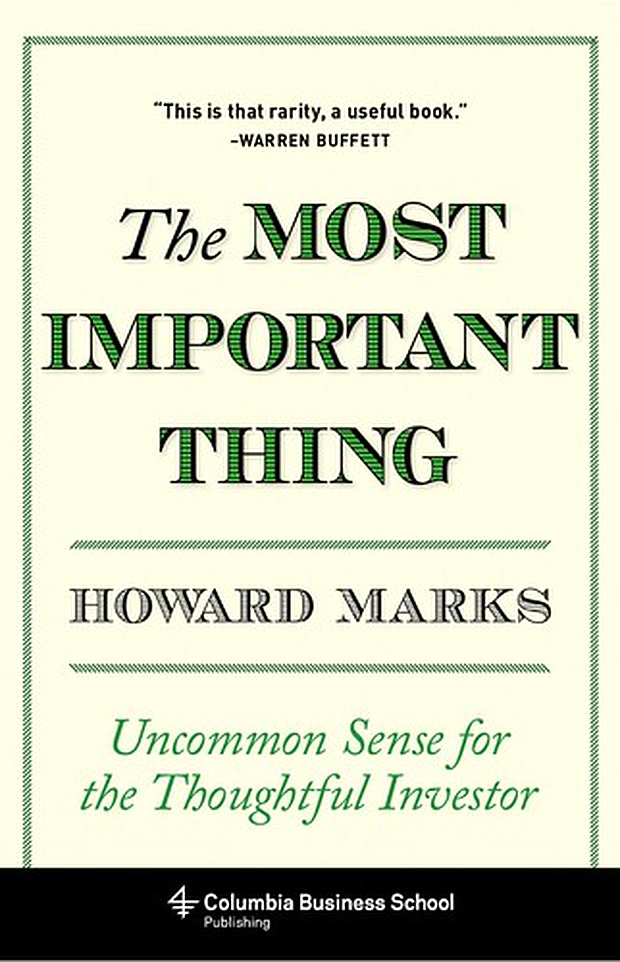
The Most Important Thing
Get on Amazon →
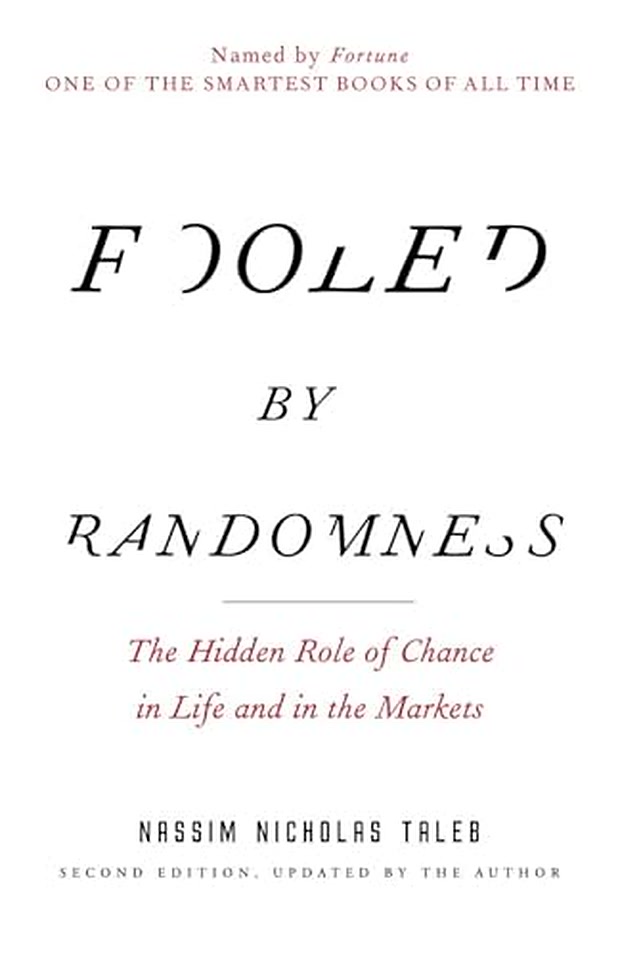
Fooled by Randomness
Get on Amazon →
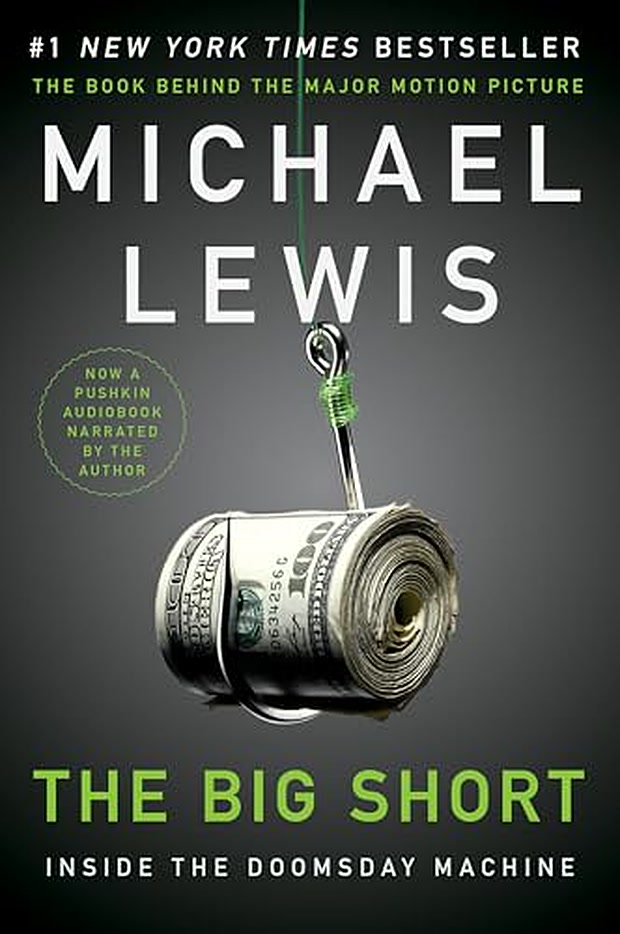
The Big Short
Get on Amazon →
As an Amazon Associate I earn from qualifying purchases.