Howard Marks
2002 09 04 Etorres Wisdom
© Oaktree Capital Management, L.P.
All Rights ReservedMemo to: Oaktree Clients
From: Howard Marks Re: Etorre's Wisdom
My memos evoke a wide variety of reactions. One I hear most often is "where do these
ideas come from?" This memo will serve as a good example: it was inspired by a ride I took this summer with my son Andrew. That, in turn, reminded me of a clipping that's
been sitting in my file s since the early 1970s.
The newspaper article, entitled "The laws that rule frustrating lives," enumerates a dozen
principles that we suspect are at work on our bad days. Here are a few examples:
Everyone knows the first, Murphy's Law: If anything can go wrong, it will.
Fewer people, however, are conversant with O'Toole's Commentary: Murphy was an
optimist.
There's a lot of truth in The Unspeakable Law: As soon as you mention something, if
it's good, it goes away; if it's bad, it happens.
Every parent of a toddler has seen The Law of Selective Gravity in action: An object
will fall so as to do the most damage.
But the one that's least controvertible is Etorre's Observation: The other line moves
faster.
While I was driving with Andrew he asked, as fifteen-year-olds are prone to, "Dad, why
do you always have to drive in the slow la ne? Why don't you switc h to that one; it's
moving faster?" As I wound up for a lengthy explanation, I recognized in his comment
the greatest imaginable metaphor for investor behavior.
What is it like to drive on our crowded highways?
We often sit there, frustrated, watching cars whiz by in the adjacent lane.
However, if we change to the faster lane, it slows down just as the one we left speeds
up.
Sometimes a lane-jumper shoots past us, but we know deep down that drivers who
constantly shift from one lane to another are unlikely to reach a given point much
before we do.
I think there are many ways in which the experience of drivers on a crowded highway is similar to that of investors. I'll touch on them below, and on what I see as the reasons
(and the lessons).
UFinding Your Way on an Efficient Highway U – Some people find it difficult to understand
the concept of efficient markets, and how efficiency makes it hard for investors to
outperform. It's really for this that a crowded highway is the perfect metaphor.
© Oaktree Capital Management, L.P.
All Rights Reserved
Most drivers share the same goal: we want to ge t there as quickly as possible, with safety.
A few people drive like slowpoke s, sacrificing speed for excessive safety, and a few
others are maniacs who keep the pedal down wi thout a care. The vast majority of us,
however, conduct ourselves reasonably but r eally would like to cut our travel time.
As we drive along, we see from time to time that another lane is movi ng faster than ours.
Just as obviously, however, we know that jumpi ng to that lane is unlikely to bring much
net improvement. And that's where the metaphor comes in. If I could switch to the faster lane while
everything remained unchanged, doing so would cut my travel time. But everyone sees
which lane is moving fastest, and if everyone switches into that lane, that will make
it the slow lane. Thus the collective actions of drivers alter the environment. In fact,
they create the environment. In April 2001, I wrote the following in "Safety First . . ."
Over the years, performance has constant ly improved in areas like golf. That's
because while the participants develop new tools and techniques, the ball never
adjusts and the course doesn't fight b ack. But investing is dynamic, and the
playing field is changing all the time. The actions of ot her investors will affect the
return on your strategy. Just as nature abhors a vacuum, markets act to eliminate
an excessive return.
What I meant is that, unless the Greens Committee changes the layout, a golf course is a
static environment. The actions of golfers don't change the game. If I try a certain
approach to a hole – or even if everyone does – that won't alter the effectiveness of the
approach.
In contrast, highways – like markets – are dynamic environments. What the other participants do on a given day goes a long way toward determining wh at will and will not
work for us. When people flock to the fast lane, they slow it down. And with the lane
they left suddenly less crowded, it speeds up.
UThis is how the "efficient market" in
travel acts to equalize the speed of the vario us lanes, and thus to render ineffective
most attempts at lane-picking. Efficient securities markets work the same way to
eliminate excess returns U.
Everyone knows what has worked well to date. Just as they know which lane has been
moving fastest, they know which securities ha ve been performing best. Most people also
understand there is no guarantee that past performance will continue. What is a little less
widely understood, however, is that past returns influence investor behavior, which in turn alters future performance.
While investors have the option of switching into the securities that have been performing
best, most know the outperformance isn't likely to last forever. It takes a little more
© Oaktree Capital Management, L.P.
All Rights Reservedinsight, however, for them to comprehend that their switching will be, in itself, among the
things that change performance. When people switch to the be tter-performing group,
their buying bids up the prices of those s ecurities. That bidding-up prolongs the
outperformance somewhat, but it also reduces the prospective return and increases the
probability of a correction. (The higher the price you pay, the worse your prospects for profit. This seems like a simple concept, but it's forgotten once in a while – as it was in
the tech bubble.) At the same time, the switchers will sell wo rse-performing securities to finance their
move into the hot group. That will lower the prices of the laggards, and at some point
they'll be so cheap that they become destined to outperform.
UFor How Long Will the Fast Lane Go Fast? U – The pedal-to-the-metal momentum crowd
saw the tech and telecom stocks moving fastest in 1999 and extrapolated their outperformance to infinity. In essence, they assumed one lane could go faster forever. Of
course, they ignored the fact that the stocks were being bid up to prices from which
collapse would be inevitable. They also failed to notice that the "s low lane" value stocks
they were selling would eventually become primed for acceleration.
How long can outperformance continue? How long can one lane be the fastest, one
strategy be the best? Clearly, there's no rule. The moment um players behind the bubble
proved with certainty that fast rising stocks will keep rising until they stop. They also
proved, to their surprise, that few people are capable of getting off just as the upward
trajectory peaks out. As I've said many times, anything can work for a while, but nothing can work forever.
Sometimes large cap works, and sometimes small cap works. Sometimes domestic works, and sometimes international work s. Sometimes buying leaders works, and
sometimes buying laggards works. Wall Street has pushed out some incredible gibberish
over the years, but nothing quite like that em bodied in another yellowed clipping from
1976 (maybe this is why there's no more Loeb, Rhoades):
A continuing pattern of consolidation a nd group rotation suggests that increasing
emphasis should be placed on buying stoc ks on relative weakness and selling
them on relative strength. This would be a marked contrast to some earlier periods where emphasizing relative stre ngth proved to be effective.
I guess that's a fancy way to say that someti mes the stocks that have been doing best
continue to do best, and sometimes the stocks that have been doing worst start to do best.
(Really, I don't make this stuff up.)
UThe Tactics Others Adopt U – The fact that crowded highways are efficient allocators of
space doesn't mean people don't try to beat them. How often do we see the guy in the souped-up '67 Mustang careen back and forth just in front of us, changing lanes every minute and cutting off half the cars on the road? But does he get there any faster?
Should he expect to?
© Oaktree Capital Management, L.P.
All Rights ReservedOf course, the analogy to invest ing holds beautifully. Knowing which lane to drive in has
nothing to do with which lane has been going fastest . To chart the best course, one must
know which one will go fastest. As usual, outperforming comes down to seeing the
future better than others, which few drivers on crowded highways can do.
So half the time the lane-jumper moves into a fast-moving lane that keeps going fast, and
half the time into one that's just about to sl ow down. And the slow lane he leaves is as
likely to speed up as it is to stay slow. Thus the "expected value" of his lane changing is
close to zero. And he uses extra gas in hi s veering and accelerating, and he bears a higher
risk of getting into an accident. Thus the returns from lane changing appear modest and
undependable – even more so in a risk-adjusted sense. There are lots of investors in our heavily populated markets who believe (erroneously, in
my opinion) they can see the future, and thus that they can get ahead through market
timing and short-term trading. Most markets pr ove to be efficient, however, and most of
the time these machinations don't work. Still, investors keep guessing at which lane on the investment highway will go fastest. They are encouraged by the successes they r ecall and the gains they dream of. But their
recollection tends to overstat e their ability by exaggerati ng correct moves and ignoring
mistakes. Or as Don Meredith once said on Monday Night Footba ll, "they don't make
them the way they used to, but then again they never did." So most investors go on trying to time market s and pick stocks. When it works, they
credit the efficacy of their strategy and their skill in executi ng it. When it doesn't, they
blame exogenous variables and the foolishness of other market part icipants. And they
keep on trying. In the ultimate form of capital punishment, th e hyper-tactician – on the road or in the
market-stands a good chance of repeatedly jump ing out of the thing that hasn't worked
just as it's about to start working, and into the thing th at has been working moments
before it stops.
This is why it's often the case that the p erformance of investors in a volatile fund is
worse than the performa nce of the fund itself . On its face this seems illogical . . . until
you think of the unlucky lane-jumper described just above. People of ten jump into a hot
fund toward the end of a period of good perfor mance, when overvaluation in the market
niche (or hubris on the manager's part) has set the stage for a fall, and when the great
results have brought in so much money th at it's impossible to keep finding enough
attractive investments. By the time a hot fund falls, it's usually much larger than it was
when it rose, and thus a lot more money is lo st on a 10% drop than us ed to be made on a
10% rise. It's in this way that the collec tive performance of a f und's investors can be
worse than that of the fund.
There are prominent examples of money managers who starte d small, made 25% a year
for 25 years, got famous and grew huge, and then took a 50% loss on $20 billion. I often
© Oaktree Capital Management, L.P.
All Rights Reservedwonder whether their investors enjoyed Uany U cumulative profit over th e funds' entire lives.
Just as lane-jumping is risky on the roa d, following the hot trend is risky in the
investment world.
UIsn't There a Way to Make Good Time? U – If crowded highways are truly efficient, and the
fast lane is destined to slow down, is there no way to do better than others?
My answer is predictable: find the inefficienci es. Go where others won't. Do the things
others avoid. We all have our tricks on the road. We'll take the route with the hazards
that scare away others – after we've made sure we know the way around them. Or we'll take the little-known back road. We'll go through the industria l area, leaving the
beautified route to the masses. Or we'll driv e at night, while others prefer the daylight.
All of these things are analogous to the search for inefficiency in investment markets. At
Oaktree we invest in things that others find frightening or unseemly – like junk bonds,
bankruptcies and non-performing mortgages. We spend our time in market niches that others ignore – like busted and internationa l convertibles, and di stressed debt bought for
the purpose of obtaining control over companies. We try to identify opportunities before
others do – like European hi gh yield bonds and power infrastr ucture. And we do things
that others find perilous, but we approach them in ways that cut the ri sk – like investing in
emerging markets without making sink-or-swi m bets on the direction of individual
countries' economies and stock markets. I continue to believe there are ways to earn superior returns without commensurate risk,
but they're usually found outside the mainstream.
UA shortcut that everyone knows
about is an absolute oxymoron U, as is one that's found wher e the roads are well marked
and mapped. The route that's little known, una ttractive or out of favor may not be the one
that's most popular or least c ontroversial. But it's the one that's most likely to help you
come out ahead. September 4, 2002
© Oaktree Capital Management, L.P.
All Rights ReservedLegal Information and Disclosures
This memorandum expresses the views of the author as of the date indicated and such views are
subject to change without notice. Oaktree has no duty or obligation to update the information contained herein. Further, Oaktree makes no rep resentation, and it should not be assumed, that
past investment performance is an indication of future results. Moreover, wherever there is the
potential for profit there is also the possibility of loss. This memorandum is being made available for educational purposes only and should not be used
for any other purpose. The information contai ned herein does not constitute and should not be
construed as an offering of advisory services or an offer to sell or solicitation to buy any
securities or related financial instruments in any jurisdiction. Certain information contained herein concerning economic trends and performan ce is based on or derived from information
provided by independent third- party sources. Oaktree Capita l Management, L.P. (“Oaktree”)
believes that the sources from which such informa tion has been obtained are reliable; however, it
cannot guarantee the accuracy of such inform ation and has not independently verified the
accuracy or completeness of such information or the assumptions on which such information is
based. This memorandum, including the information cont ained herein, may not be copied, reproduced,
republished, or posted in whole or in part, in any form without the prior written consent of
Oaktree.
Recommended Reading
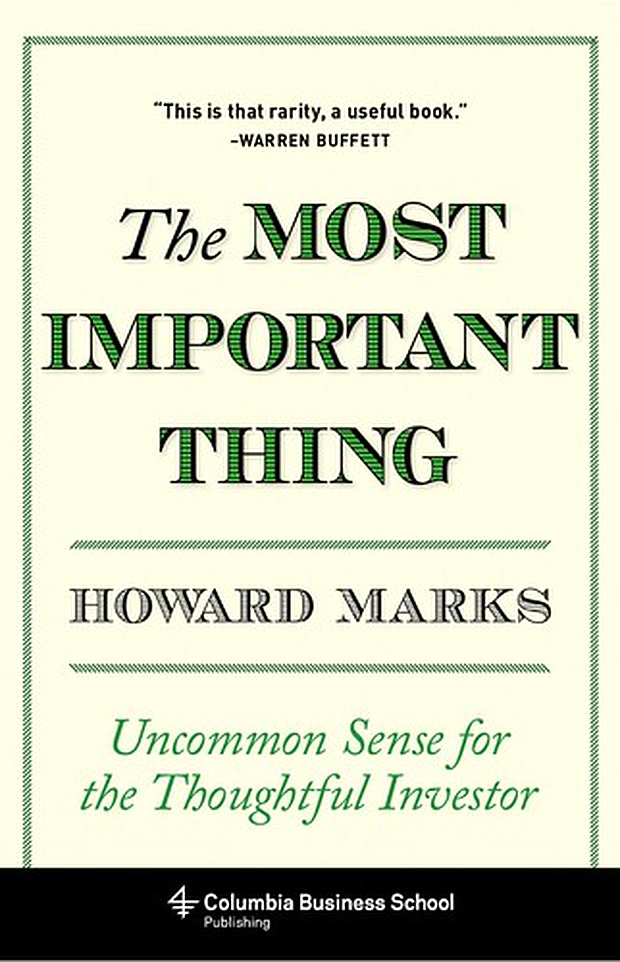
The Most Important Thing
Get on Amazon →
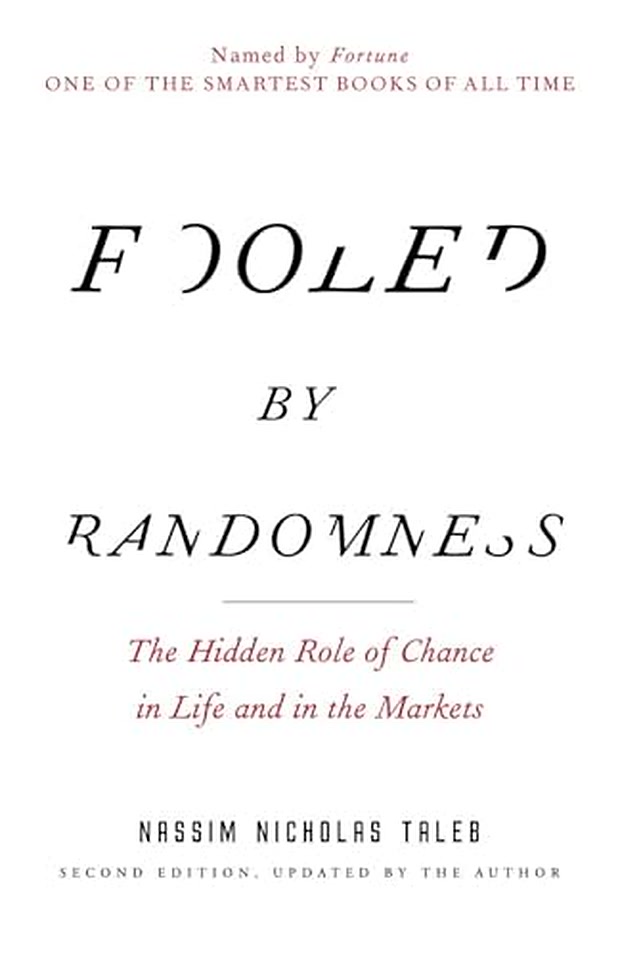
Fooled by Randomness
Get on Amazon →
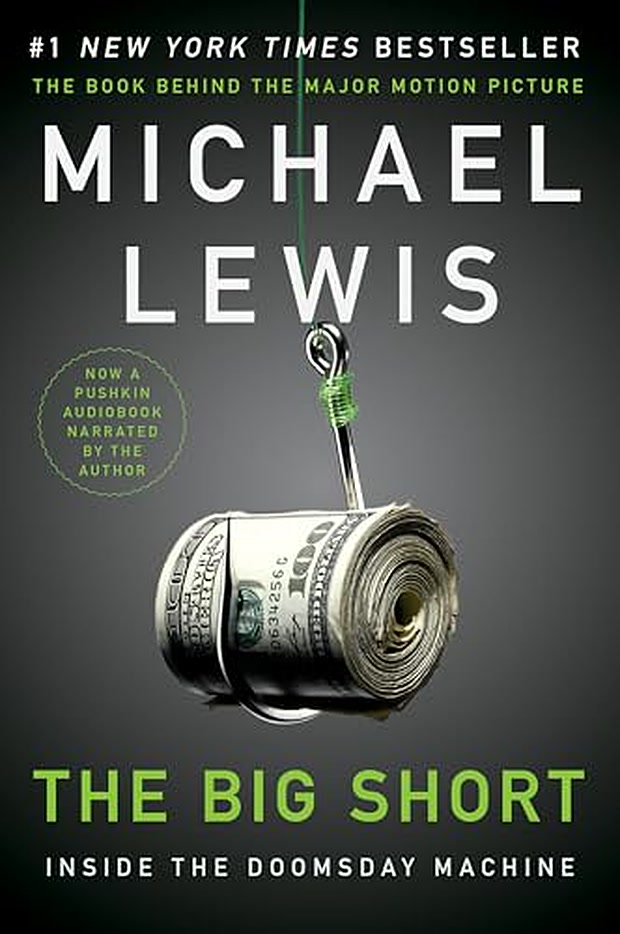
The Big Short
Get on Amazon →
As an Amazon Associate I earn from qualifying purchases.