Howard Marks
2001 10 04 What Lies Ahead
© Oaktree Capital Management, L.P.
All Rights ReservedMemo to: Oaktree Clients
From: Howard Marks Re: What Lies Ahead?
Writing my client memos gives me great sati sfaction. I appreciate the opportunities to
share my views with you as well as your receptivity to them. Setting down my "Notes from New York" did me a lot of good as my way of dealing with post-attack issues
outside the investment arena. I must admit that I haven't been looking fo rward to writing a memo about the economic
and investment implications of the attacks. Many of my views are negative, and I'm no
economist. But I want to give you the benefit of my thinking, such as it is.
ULooking to the Future U – All of economics, business and investing entails dealing with
the future. Economists predict future c onditions. Businesspeople build and manage
organizations so as to profit in the coming e nvironment. And, of course, investors try to
figure out what things will come to be wort h in the years ahead and act accordingly.
Other professions deal more w ith the past (e.g., accountants an d historians) or the present
(doctors and lawyers), but it is our job to cope with the future. That's what makes investing interesting, challenging and occasionally lucrative. If it didn't require us to reach conclusions about th e future, or if the fu ture wasn't uncertain,
then everyone's returns would be the same – but not very high. We achieve high returns
on occasion
Ubecause U we deal with an uncertain future, and it's Ubecause U the future is
uncertain that superior i nvestors can get an edge.
The process of investing consists entirely of divining the future – in terms of profits
and values – and translating that future in to prices that should be paid today .
Obviously, doing so requires a view of what the world will look like tomorrow and how
businesses and their products will fare in that world.
We each make thousands of judgments a day based on our understanding of what's normal. We turn the right faucet for a dri nk because that's where the cold water always
has been. We tend to buy anothe r car – or another tube of t oothpaste – of the same brand
because we were happy with the last one. We cross the street on a green light because we
trust on-coming drivers to stop on red. We must make assumptions like these, even though we know they won't hold true all the
time. If we had to start from scratch every time we faced a decision, the result would be
paralysis. Thus we start by assuming that the things that worked in the past are likely to
work in the future, but we also make allowa nces for the possibility that they won't.
© Oaktree Capital Management, L.P.
All Rights ReservedWe do the same in our roles as investors. We expect well-managed companies with good
products to make money and be valued accordi ngly. We assume companies that have the
money will service their bonds. We count on the economy to recover from slowdowns
and grow over time.
So most of our actions depe nd on extrapolation. Certainl y in investing, we rely on
forecasts that assume the future will look a lot like the past. And most of the time they're
right. My main quibbles with forecasters are two:
1. While most forecasts call for a future that's a lot like the past, the truly valuable
forecasts are those that call for radical change. Forecasters rarely make such forecasts, however, and those who do are rarely right.
2. Most forecasters present their work as de serving more credence than it does. In
short, they rarely say, "Here's my forecas t, and if I were you, I'd take it with a
grain of salt."
Even today, forecasters are out there with pr edictions for the economy and the market that
are based primarily on history. And yet it seem s to me that the future may be less likely
to look like the past than it has until now, and that things we've never even considered
before have a chance of happening. Immediately after the attacks, there began to appear articles citing how long it has taken
the market to recover after past crises. But who's to say those precedents are at all
relevant? For example, I read that the mark et sagged for five months after Iraq's invasion
of Kuwait but made up all of that ground, a nd then some, soon thereafter. But that
experience had a very favorable outcome. We all want this one to be as good and as
quick, but are we willing to bet that it will? We all want a feeling of assurance. We want to live in a world where the future seems knowable and decisions that extrapolate nor malcy can be depended on. We want to
believe life in this country will return to th e carefree days pre-September 11. We want to
believe our leaders will be able to keep th e ship upright and mana ge their way out of
problems. So I think we're eager to embrace pr edictions that these things will hold true.
But is it prudent today in making decision s regarding the future to assume a return
to the status quo?
UThe New Future U – It seems to me that today we know even less about the future than we
usually do, and that's never a lot.
1. About terrorism. How much of what we have to worry about stems from Osama bin Laden and al Qaeda, and how much rela tes to other groups? How much of bin
Laden's plans and resources went into the September 11 attacks, and how much
remains on tap? Is bin Laden a diabolic al genius against whom we're powerless,
or a paper tiger who got lucky? Are ther e additional shoes left to drop? Will
there be a high-profile att ack once a year? Or will Mi ddle East-style violence
© Oaktree Capital Management, L.P.
All Rights Reservedintrude into our regular existence? Are chemical and biologic al weapons a real
threat?
2. About our response. Can we find bin Laden? Can we capture him and his
henchmen? Will our military actions be successful, and can they be undertaken
without extensive co llateral damage? Can we pursu e justice without alienating
people and nations? Will terrorists move to punish our actions? Will their doing
so shake our resolve, or that of our allies?
3. About the economy. How deep a recession ar e we in for? How long will it last?
What will prompt a recovery, and what shape will it take? Will industries like airlines and hotels be permanently depr essed, or will they return to pre-9/11
normalcy? When will liquidity and a desire to buy things return? Can we rely on normal cyclical patterns in these things? Will these elements be set back again if there is further terrorism?
Who among us can say he knows the answers to these questions? And who can say
the future is foreseeable without those answers?
Many of these questions take us into unchart ed territory where no one can say what will
happen. The possible answers include some that could profoundly affect the economy and the markets, and they worry me. Some of the greatest dilemmas in investing
surround highly unlikely events with highly negative implications . It's hard to know
what to do about them, but we should at least be aware of their existence.
We have no alternative to assuming that the future will look mostly like the past, but we
also must allow for the fact that we face a range of possible futures today that is wider than usual. In other words, I feel we must allow for greater-than-normal uncertainty.
UThe Role of Confidence U – The basic building block underl ying all economic activity is
the individual spending unit, be it a business or a household. Each of these units builds
into its decisions expectations regarding the fu ture. And those expectations are shaped to
a great extent by the data, opinions and emotions that add up to confidence . Sometimes I
think in the economy, conf idence is all there is.
When people are confident, they extrapol ate prosperity and borrow and buy. They
assume an upward-sloping future and want to jump on board. They worry that if they
don't buy something today, it'll cost them more tomorrow. That is, they are concerned
about the cost of inaction. When their confidence fades, they worry a bout losing jobs and defer purchases. They
may prefer to build cash or pay down debt . They're willing to wait before buying, and
they assume there'll be anothe r chance to buy cheaper. In other words, they figure that if
they don't act, they won't miss out on much. Opportunity costs just don't seem that important.
© Oaktree Capital Management, L.P.
All Rights ReservedWho would say that confidence wasn't shaken by the events of September 11? Words we
would have applied to our domestic security before, like insulated, invulnerable and
impregnable, now seem to be out the window. Who doesn't feel at l east a little less safe
than a month ago? Thus most people are less full of the positive feelings that are required
for a purchasing or investing decisio n, and on average they may "hunker down."
Many economic units have concluded that in this more uncertain world, greater cash
reserves are in order – for rati onal as well as emotional reasons. Individuals fear that jobs
will be lost, hiring will be slow, and bonuses an d raises will be less generous – and they
know they've saved too little and tapped thei r home equity to keep spending. Home and
car purchases will be deferred. Business invest ment will be slow, especially given that
capacity utilization was low and falling even prior to September 11. Each of these
decisions will take away a pot ential source of growth from the economy and contribute to
a slowdown. That's what makes for the down- leg of the economic cycle (and we believe
one has been well under way for several months). And when every expenditure that can be dela yed has been delayed, the decline will slow
and then stop. Then one person will conclude it's not going to get any worse, or prices
any lower. One potential buyer will come off the sidelines and place an order; one
worker will be hired to fill that order; and one manufacturer will buy a new machine in anticipation of increased business. And one person will decide to buy a share in a
business, or even try to start one. And that's what gets the up-leg going.
It's all based on the ebb and flow of psychology. In my opinion, the key question is "How long will it take to restore conf idence?" I don't claim to have the answer, but I think it
may be a while.
UStimulative Actions U – The federal government has act ed boldly to combat economic
weakness, as it has been doing all year. All economic trends start at the margin, and that's
where the government's actions can help. Th ey can keep things from getting as bad as
they otherwise would have gotten – but they cannot call the tune.
Immediately providing a record amount of liquidity to the financial system prevented
some problems that otherwise would have arisen given the damage to our infrastructure.
Difficulties in the movement of funds and set tlement of securities transactions were
avoided, enabling the system to work and Americans to maintain faith in it. Prompt monetary action worked again to avert a potential crisis, as it did in 1987 and 1998.
Fiscal policy, which relates to taxing a nd spending, also will have an impact.
Government spending is stimulative, in that it uses money to purchase goods or to pay
people who may turn around and spend it. Deficits put more money into the economy than they take out in taxes. (This is unlik e the surpluses we thought we were heading for,
which are restrictive because the government ta kes out more than it puts back.) In the
weeks since the terrorist atta cks, the administration has a nnounced programs sufficient to
consume the surplus that had been projected for the current fiscal year. These include
$40 billion in emergency funds, $15 billion in subsidies and loans for the airlines, and
© Oaktree Capital Management, L.P.
All Rights Reserved$60-$75 billion for "economic revival." In the s hort run, as CSFB says, this will "create a
buffer to the slowdown in activity." (The long- term effects may be less positive, in that
deficits and the Treasury borrowing required to support them can lead to inflation, higher
interest rates and crowding out of non-government borrowers).
Interest rate reductions also can help ease the contraction, an d we may see more of them.
They will work at the margin, but I don't e xpect them to give the economy much of a
boost in the short run. One of the most vi vid phrases in the bu siness vocabulary is
"pushing on a string," and that's what rate reductions can am ount to in a hunkered-down
world. Will low interest rates get people to buy homes and cars if they've lost their willingness to spend? Will they work with people who realize they have inadequate
savings and are overly indebted? Will they ca use businesses to invest in expansion if
they already have capacity sitting idle? No one knows the answers to these questions, but they should not be assumed to be
overwhelmingly positive. A discouraging anal ogy can be seen in Japan's decade-long
doldrums. The government has pushed intere st rates nearly to zero and keeps pumping
money into the system. But every time the cautious Japanese citizen gets a few yen he puts it in the bank, and economic growth fails to revive. Hopefully, a difference may lie
in Americans' higher propensity to spend. So in the end, I feel it all goes back to c onfidence. Consumer and business spending will
pick up at some point, and the government can encourage it, but it can't make it happen.
UInvestor Reaction U – On September 17, after a four-d ay hiatus, the nation's financial
markets reopened, with the Dow falling 685 points, or 7%. When I heard about that first
day's loss, my reaction was immediate: "Tha t's not so bad – just a quarter of the
percentage decline in the crash of 1987." And after declining fu rther in that first week of
trading, stocks have recove red most of their losses.
Clearly, the interest rate cuts are helping stoc k prices. They make investors feel the Fed
is doing something to improve the outlook. They contribute to economic activity at the margin. By reducing floating-rate mortgage payments they leave people with more
spending money. And by lowering fixed income returns they reduce the competition that
comes from cash and bonds, thus making stoc ks more attractive in relative terms.
But no one knows what the economic future will look like. No one knows what corporate earnings will be in 2001 or 2002, although they a ppear likely to decline. In addition,
geopolitical uncertainties dot the horizon. T hus with the Dow off less than 6% from its
September 10 pre-attack close, I wonder whether investors weren't shaken enough, or
whether complacency has returned too quickly. The Dow has risen 10% since th e start of the recovery on September 24, including 200+
points this week. The stock market seems to be saying "Well, I'm glad that's over." Frankly, I worry about attitudes like those di splayed in an article in yesterday's Wall
Street Journal:
© Oaktree Capital Management, L.P.
All Rights Reserved
Stock Investors Show a "Comfort" Le vel; Rate Cut Spurs 113.76-Point Rise
. . . the Fed said the Sept. 11 terrorist attacks "have significantly heightened"
uncertainty in an already weak economy. Yet despite the Fed's concern, signs are spreading that some professional investors are gradually putting money back into stocks. "The market has reached a level that makes people feel a lot more comfortable that we have seen the worst of what could happen," . . .
I can't tell you how much I hope we've seen the worst , both in terms of world events
and in the markets. But I am not willing to bet heavily on that assumption. And if I'm
supposed to be more afraid when others are le ss afraid, articles like this one tell me there's
plenty to worry about. I always stress that investment s must leave a substantial margin for error and allow for
the possibility that negatives will arise. The terrorist attacks, while certainly not
imaginable, show the importance of allowing for adverse surprises. Only when asset
prices are clearly at irrationall y low levels can this caution be ignored. In my view, with
investors' sangfroid having bounced back so st rongly, most stocks aren't at such levels.
USo What Do We Do Now? U – We could assume that the combination of further
weakening of the already-weak economy plus continued terrorism will make for a very difficult environment. If we then based our investment process on that assumption, we would hold cash and make very few commitments. I call this "single scenario investing."
The problem, obviously, is that arranging our portfolio so that it will succeed under a
scenario as negative as that means setting it up to fail under most others. We do not
believe in basing our actions on macro-forecasts, as you know, and we certainly don't think we could ever be that right. Thus Oaktree will continue to invest under the assumption that tomorrow will look a lot
like yesterday – an assumption that to date has always proved correct.
At the same time, we will continue to insist on an investment process that anticipates
things not always going as planned, and on selections that can succeed under a wide
variety of scenarios. As long-term clients know, this part of the story never changes. In
the current environment, we will allow a very substantial margin for error.
We will continue to work only in inefficient markets, because we feel it's there that low
risk needn't mean low returns, and upside potential can coexist with downside protection.
And we will continue to strive for healthy returns in good mark ets and superior returns in
bad markets. We do not promise to beat the markets when they do well, but we also don't think that's an essential part of excellence in investing.
UWill I Ever Drop My Cautionary Stance? U – On September 24 the Los Angeles
Business Journal printed excerpts from an inte rview with me (and a pretty accurate one
© Oaktree Capital Management, L.P.
All Rights Reservedoverall) under the title "A Bear 's Eye View." Because I wasn 't crazy about that title, I
was glad soon thereafter to receive the follo wing e-mail from my partner Steve Kaplan:
I have never viewed you as, nor do I believe you are, a pessimist. To the contrary,
I think you have an optimistic view when it comes to things you believe you can
control. . . . Your caution revolves around the uncontrollable, for which you
recognize that a lot of the judgments of the so-called experts are in large part pure
guesswork.
I greatly appreciate Steve's comments, and I th ink – and hope – he got it right. I have no
interest in being a pessimist or a bear, and I don 't like to think of myself that way. I just
may be more impressed by the unknowability of the future than most people. When I
reflect on all of the mottoes I use, it seems ha lf of them relate to how little we can know
about what lies ahead. Am I right or wrong in being this cautious? No one can say. Does my mindset, and
Oaktree's resultant approach to investing, cost us profits in good years? Probably. Are
we well prepared for bad times and untoward developments, and are we happy with that?
Absolutely. If we insist on a degree of defensiv eness that turns out to be excessive,
the worst consequence should be that your profits will be a little lower than they
otherwise might have been. I don't thin k that's the worst thing in the world . And in
the end, I think the skill, expe rience and discipline of Oaktree's people will continue to
make up for its lower risk profile and keep our long-term returns more than competitive. The longer I'm in this business, the less I beli eve in investor agility. Most people seem
stuck in positions as bulls, bears or something in between. Most are always aggressive or
always defensive. Most either always feel th ey can see the future or never feel they can
see the future. Most always prefer value or always prefer growt h. Few people's psyches
are flexible enough to allow them to switch from one way of thinking to another, even if
they theoretically possessed the needed perspicacity. Rather, most people have a largely
fixed style and point of view, and the most they can hope for is skill in implementing it –
and I don't exempt Oaktree and myself from that observation. But that's not so bad. It's my conclusion that if you wait at a bus stop long enough, you're
sure to catch your bus, while if you keep wandering all over the bus route, you may miss
them all. So Oaktree will adhere steadfastly to its defensive, risk-conscious
philosophy and try to implement it with skil l and discipline. We think that's the key
to successful long-term investing – esp ecially in today's uncertain environment .
October 4, 2001
© Oaktree Capital Management, L.P.
All Rights ReservedLegal Information and Disclosures
This memorandum expresses the views of the author as of the date indicated and such views are
subject to change without notice. Oaktree has no duty or obligation to update the information contained herein. Further, Oaktree makes no rep resentation, and it should not be assumed, that
past investment performance is an indication of future results. Moreover, wherever there is the
potential for profit there is also the possibility of loss. This memorandum is being made available for educational purposes only and should not be used
for any other purpose. The information contai ned herein does not constitute and should not be
construed as an offering of advisory services or an offer to sell or solicitation to buy any
securities or related financial instruments in any jurisdiction. Certain information contained herein concerning economic trends and performan ce is based on or derived from information
provided by independent third- party sources. Oaktree Capita l Management, L.P. (“Oaktree”)
believes that the sources from which such informa tion has been obtained are reliable; however, it
cannot guarantee the accuracy of such inform ation and has not independently verified the
accuracy or completeness of such information or the assumptions on which such information is
based. This memorandum, including the information cont ained herein, may not be copied, reproduced,
republished, or posted in whole or in part, in any form without the prior written consent of
Oaktree.
Recommended Reading
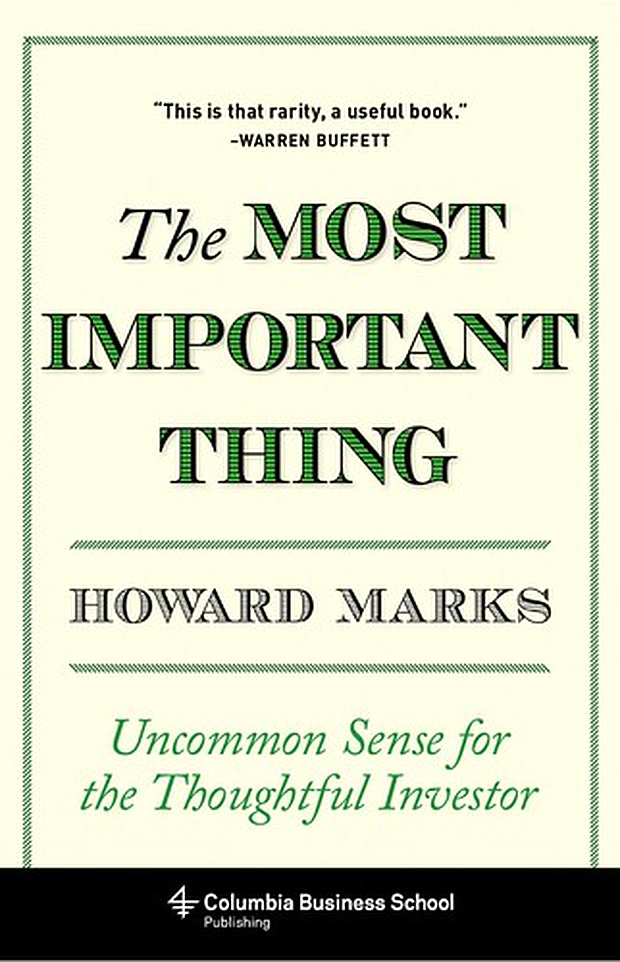
The Most Important Thing
Get on Amazon →
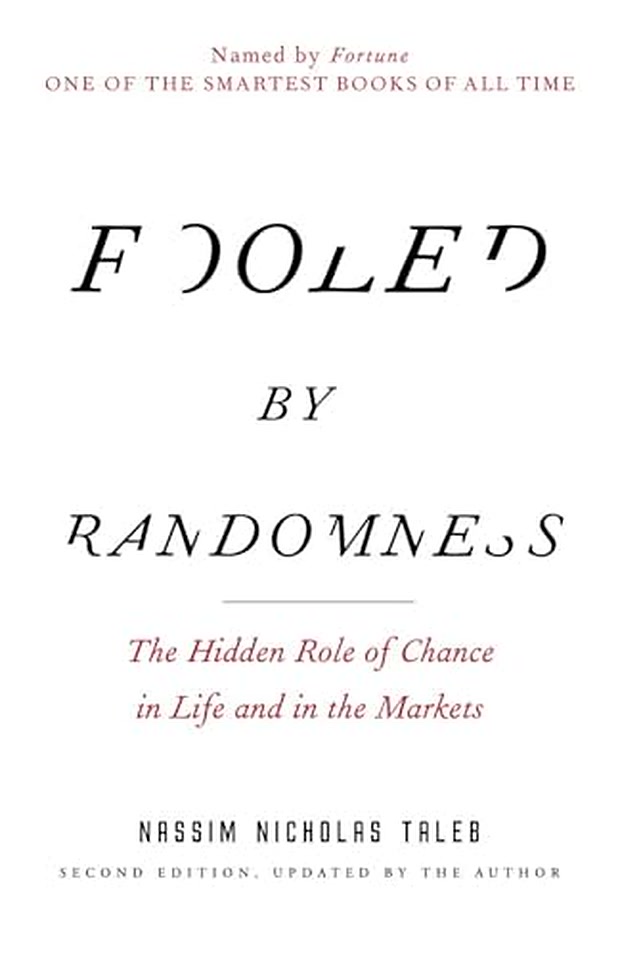
Fooled by Randomness
Get on Amazon →
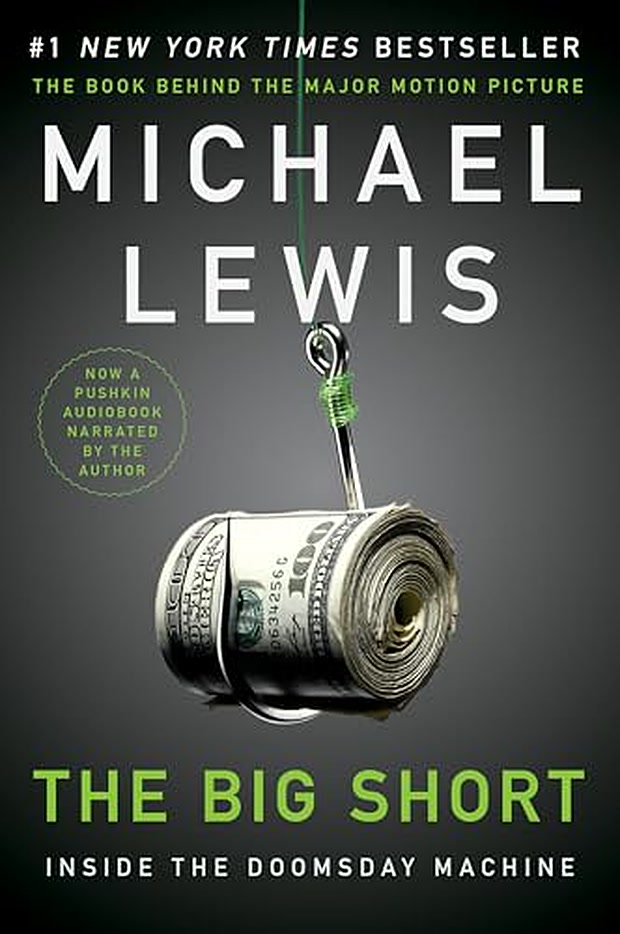
The Big Short
Get on Amazon →
As an Amazon Associate I earn from qualifying purchases.