Howard Marks
2001 09 16 Notes From Ny
© Oaktree Capital Management, L.P.
All Rights ReservedMemo to: Oaktree Clients
From: Howard Marks Re: Notes from New York
Maybe you've already read enough about last week's events, in which case you should feel free to discard this memo. There is no moral obligation to k eep reading when doing
so brings pain. Each of us can decide when enough is enough. By now most of us know all we need to about Tuesday's events at the World Trade Center and the Pentagon. I will not recount the fact s relating to these ev ents, but rather the
thoughts they have left me with. I spent Tuesday through Friday in New York – like so many, against my will. I had no
plans for a memo on this subject. But when I woke up Saturday, at home for the first
time in a week, thoughts of New York monopoliz ed my mind. My way of dealing with
them is to turn them into sentences and paragraphs. This memo may not include much that is ne w to you but, as usual, I will attempt to pull
together my own thoughts and what I've hear d and read elsewhere. It won't touch on
recommendations for investing or predictions for economies and markets. Its contents
will range from trivial descriptions of New Yo rk after the attack to hopefully-meaningful
observations on the big-picture ramifications th at have been seen and that may follow.
Lastly, I certainly do not wish to write anything that offends. But nerves are frayed, and
unintended offense might be taken, for which I apologize. I mean only the best, and I
hope it comes out that way.
UMy Role U – I was merely a bystander at the even ts of last week. I was affected
emotionally and logistically, but not involved. My father and daughter, both of whom
live in New York, were safe. I had no friends or colleagues at the World Trade Center.
As for me, I had arrived at midnight Monday after a dinner in Clev eland. I planned to
speak to a Pensions East forum on Tuesday morning and then fly to Berlin to participate in an Institutional Investor conference.
UThe Events U – The crashing of planes into the WT C and the Pentagon represented the first
large-scale foreign attack on continental United States soil. It wa s daring, well planned,
coordinated and startlingly successful. It show ed how the fruits of progress – the world's
great airliners – can be used against us. It showed how, in this age, a handful of men
from a smallish, amorphous enemy can cause dest ruction totally disproportionate to their
number or materiel.
© Oaktree Capital Management, L.P.
All Rights ReservedI was struck by a New York Times article saying these terrorists are not insane. They are
extremists who follow a dogma that most Musl ims do not. They are highly indoctrinated
and perhaps brainwashed. But they are intel ligent, highly trained soldiers who will carry
out orders to destroy what they believe is th eir enemy. We count on ot hers to act in their
own self-interest; this makes them predictable and helps us know how to deal with them.
It is not there in the case of the terrorists, in that they care little about their own survival.
This adds greatly to the danger they pose.
UReaction U – I left Oaktree's New Yo rk office Tuesday afternoon to collect my daughter
and the children of friends in a natural desire to assure safety and feel the sorely-mis
ability to create order. I walked north thr ough streets that were st rangely normal but not
quite. The tourists were there, with their cameras and maps. There was no smoke and no
ash. There were a few more people than us ual, and almost all were moving in one
direction: north, away from the WTC. Th ere was no screaming or crying, no running or
panic, just occasional knots of people gathered around radios. sed
Only knowledgeable onlookers would have detected the differences. Few people were talking. Eyes didn't meet – which is not unusual in New York. There clearly were no
smiles. The words that came to mind were "subdued," "somber" and "enervated," and
they stayed with me all week. St ress and tension were everywhere.
Some things were very different, and some th at were the same felt different. The absence
of airliners overhead was obvious, and the effect was dramatic when fighter jets replaced
them. Sirens were heard more clearly in the absence of competing noise, and they
seemed more ominous – as was the case in Los Angeles during the riots and earthquakes.
Pedestrian and vehicular traffic was light th e first night, and it grew only gradually.
Grocery stores were crowded; sidewalk rest aurants were populated; it was clear life
would go on.
Each of us found his or her individual lim it on how much we wanted to read, watch and
talk about these events. At the same time, how ever, it seemed inappropriate to talk about
or do anything else. In my limited sample, the kids found it easier to move on to other
topics – and I was so glad to see that their lives, albeit probably changed forever, would
rebound.
UCommunication U – My cell phone and Blackberry wirele ss e-mail device were absolutely
essential. I was again reminded to ask "How did we ever get along without these things?"
It was very hard to make phone calls on Tuesday, but that, too, got a little better each day.
My Blackberry always worked and made it possi ble for me to keep in contact with my
Oaktree colleagues. Spam e-mail was absent that first day, but it also came back. Resumes, start-up business proposals and offerings of money manageme nt firms for sale seemed incredibly
inappropriate on the one hand, but I guess they, too, are part of th e return to normalcy.
© Oaktree Capital Management, L.P.
All Rights ReservedURetaliation U – Armed response was, of course, one of the first issues to arise after the
crashes. The President promised it Tuesday even ing, and it is on the minds of us all. But
no one should underestimate the challenges invo lved. The terrorists are amorphous, as I
said, and pervasive. They exist everywhere but have no headquarters. They are dedicated
but wear no uniform and fly no flag. They will not be easy to find or deal with. In the
past we believed in the invincibility of the U.S ., and thus in our ability to root out evil and
prevail. There is still positive evidence on this subject, but also evidence to the contrary.
The Gulf War was one of our swiftest and most decisive triumphs. We were also able to
calm the hostilities in the Balkans. On the other hand, Vietnam showed how hard it is to
deal with a guerilla en emy who melts into the scenery, and last week's events strongly call
into question the efficacy of our intelligence effort. The nations of the world – even most of t hose in Middle East – have been quick to
express horror and swear th eir support of the U.S. Ho w many mean it, and how many
have done it falsely to a void our wrath? I certainly hope it's the former.
The swiftness and forcefulness of our respons e will depend to a grea t deal on how willing
we are to diverge from some American id eals, and thus will require some difficult
decisions. How sure will we have to be before we take action? Will we accept the risk of
losing world support if we make mistakes? Are we willing to kill non-combatants? Are
we willing to bear casualties am ong our own servicemen and women?
Centuries of immunity from attack on our soil, and decades of relative safety in a world in
turmoil, have allowed Americans to enjoy the luxuries of moral certitude, personal freedom and safety. With our apparent wall of invulnerability penetrated, we will have to
debate the extent to which these luxuries will be dispensed with.
UOur Tactics U – There is bound to be review and debate regarding the tactics we will
employ in pursuit of safety and justice. In the recent past, there has been a rise in the
position I paraphrase as "we will do no evil, even in the inte rest of doing good." Thus it
was decided that the CIA would not perfor m assassinations or employ "intelligence
assets" with records of crimes or human rights violations.
These principled stances may come to be viewed as luxuries we can no longer afford.
When prosecutors obtain cooperating testimony, it is usually from criminals – because
that's who the targets of prosecution associate with, and that's who can be turned against them. It is now clear that we need intel ligence regarding upcomi ng terrorist operations,
and that intelligence must come from inside te rrorist cells. People we might not wish to
associate with – perhaps only terrorists themselv es – can best gain that access. They may
be the ones most able to pe netrate the obstacles posed by language and the close-knit
nature of the cells. Can we afford not to employ them?
UCivil Liberties and Scapegoating U – These events and thei r aftermath may make us
conclude that full civil liberties and full dom estic security may be mutually exclusive.
© Oaktree Capital Management, L.P.
All Rights ReservedOver the last eight years, Ma yor Giuliani cut New York's mu rder rate by two-thirds using
tactics that eroded civil libert ies in high-crime areas. Pe ople were stopped and frisked on
the street, and there were roving squads of undercover policemen – including those who
mistakenly killed Amadou Diallo. Giuliani wa s assailed as a fascist, especially by the
high-minded New York Times. But I detect ed two common threads last week: "his
emergency preparations were appropriate, not excessive," and "he's the kind of mayor
we'll need in the years ahead."
Depending on how far and in what ways the te rrorist campaign spreads, we might begin
to see armed personnel where people gather. An d they might need to be able to search
those they suspect. We may see surveillance cameras, computer facial and fingerprint recognition and the use of profiling. Internet and telephone privacy may be abridged. Travel will be less convenient, and our borders may be made less porous. These subjects
are likely to be hotly deba ted, but the debate is certai n to be conducted from a new
perspective. And I think the answers are likely to be different from what they would
have been a week ago .
One of my reflexes on Tuesday was to think a bout a recent movie, "The Siege." In it, a
New York police detective tries to cope with a Muslim reign of terro r in New York. At
the same time, members of an outraged populace pursue vigilante justice against Middle Easterners, and the President sends in the army, led by an all-business general. He
declares martial law, suspends civil li berties and rounds up New Yorkers based on
ethnicity. It's not a great movi e, but it is as relevant as "Wag the Dog" was to Bill
Clinton's impeachment-eve bombing raids. You' ll be glad to know it e nds with the threat
defused and American ideals preserved.
There will be – already has b een – violence against American s of Middle Eastern origin.
But know this: People say that if we let stocks fall, if we don't rebuild the Towers, or
if we don't return to normalcy, then our enem ies will have won. All of this is true,
but if the events of the week are able to turn Americans against Americans and
erode the values that have made this country great, they also will have won.
UHysteria and Miscommunication U – I witnessed, first-hand, th e ability of emotion and
fragmentary information to combine for error. On Thursday after noon, I heard that three
or four men in pilots' uniforms had been stoppe d trying to board planes . By early evening
it had grown to seven. But on Friday it turned out to have been one.
I actually listened as the existence of a recent government report on terrorism was interwoven with thoughts that it might be unsafe for President Bush to visit New York, as
well as a few other elements, to support a warning that chemical or biological weapons would be unleashed on Friday. Hysteria is natural in crises, but hopefully it will subside – while hopefully vigilance will remain.
UHeroism U – As Dickens suggested, the worst of times can bring out the best. I am
incredibly moved by the accounts of people in careers based on bearing risk to help
others, and of everyday people who rose to great heights.
© Oaktree Capital Management, L.P.
All Rights ReservedFriday's Wall Street Journal ca rried an incredible, eloquent tr ibute to the bravery of New
York's firemen. It said " In the academy, recruits learn th at a firefighter performs but
one act of bravery in his career, and that 's when he takes the oath of office.
Everything after that, it is said , is simply in the line of duty. " I cannot read this
without being moved profoundly.
Last week proved that America is rich in heroes: The man who carri ed a woman he didn't
know down fifty flights of WTC stairs. The people who drove hundreds of miles to offer
their services in the rescue and cleanup effort. And the ultimate heroes, the passengers who crashed United flight 93 in Pennsylvania rath er than let it be used as another terrible
bomb. Who among us could crash the plane we're on to save hundreds or thousands of
strangers?
ULoss U – As I wrote last week, Oaktree was fortunate in having no losses. Teresa
O'Hagan's husband and his four brothers ar e New York firemen; some were m
incommunicado for periods of time, but all turned up safe. I lost it when I spoke with her
and felt the emotion flowing through both of us. Noreen Keegan and Zenobia Walji have
husbands who are policemen, and they, too, are fine. It took a while longer, but Eric Livingstone's girlfriend and Nilsa Vera s's mother also proved to be safe. issing or
Most of us, however, knew someone who was not as lucky, and that brings it home. For
me it was David Alger, head of Fred Alge r Management Inc., with whom I shared a
podium in March. I have read only good things about him.
These events clearly prove that "random violence" does not mean "spread evenly." I am struck by the incredible pockets of loss. Some WTC tenant firms had no losses, but
Cantor Fitzgerald and Fred Al ger lost huge percentages of their employees. More than
300 New York firemen are missing and presumed dead, including entire fire companies. Oaktree's Kevin Clayton lives in an area from which many people commute to lower Manhattan. Thus ten people are missing from his parish, and well more than 100 from
the nexus of towns that includes his. The lo ss of thousands of peopl e in a few minutes –
and the localized, concentrated losses – are things I hope never to live through again.
UThe Results U – They say every cloud has a silver lining, but it's hard to see the good in this
one. The tales of heroism and sacrifice have been wonderful, but I'd rather not have had
occasion to read them. At the same time, and equally incredibly, these events have brought the worst of Americans out from under their rocks. I am sickened to hear of the copycat bomb scares,
phone calls designed to pry the social security numbers of the missi ng from their grieving
families, and phony contribution scams. The loss of life has been massive. The financial cost – to rebuild New York and the Pentagon, to the airlines, for stepped-up s ecurity, and for business lost – will be
enormous.
© Oaktree Capital Management, L.P.
All Rights ReservedThe wonderful feeling that the U.S. was insu lated and impregnable has been breached.
The vulnerability to attack of our everyday life has been made clear. Life here may never
seem as carefree. Last week I told my son Andrew that, incredibly, the Berlin conference
was still going on as usual. He said "What' s so incredible? Each time there's been a
bombing somewhere in the world, life here ha s gone on without skipping a beat." In
many ways, we now have been dragged into a reality that is commonplace throughout the
world – which may well have been one of the terrorists' objectives.
Last week's events proved that money, position and technology are not the most powerful or important things in our lives. The cornerstones of our lives were shown to be
family, faith and principle, friends and colleagues we know we can count on, and the American spirit. These are the things we have to be thankful for . . . maybe now, we
realize, more than ever.
September 16, 2001
© Oaktree Capital Management, L.P.
All Rights ReservedLegal Information and Disclosures
This memorandum expresses the views of the author as of the date indicated and such views are
subject to change without notice. Oaktree has no duty or obligation to update the information contained herein. Further, Oaktree makes no rep resentation, and it should not be assumed, that
past investment performance is an indication of future results. Moreover, wherever there is the
potential for profit there is also the possibility of loss. This memorandum is being made available for educational purposes only and should not be used
for any other purpose. The information contai ned herein does not constitute and should not be
construed as an offering of advisory services or an offer to sell or solicitation to buy any
securities or related financial instruments in any jurisdiction. Certain information contained herein concerning economic trends and performan ce is based on or derived from information
provided by independent third- party sources. Oaktree Capita l Management, L.P. (“Oaktree”)
believes that the sources from which such informa tion has been obtained are reliable; however, it
cannot guarantee the accuracy of such inform ation and has not independently verified the
accuracy or completeness of such information or the assumptions on which such information is
based. This memorandum, including the information cont ained herein, may not be copied, reproduced,
republished, or posted in whole or in part, in any form without the prior written consent of
Oaktree.
Recommended Reading
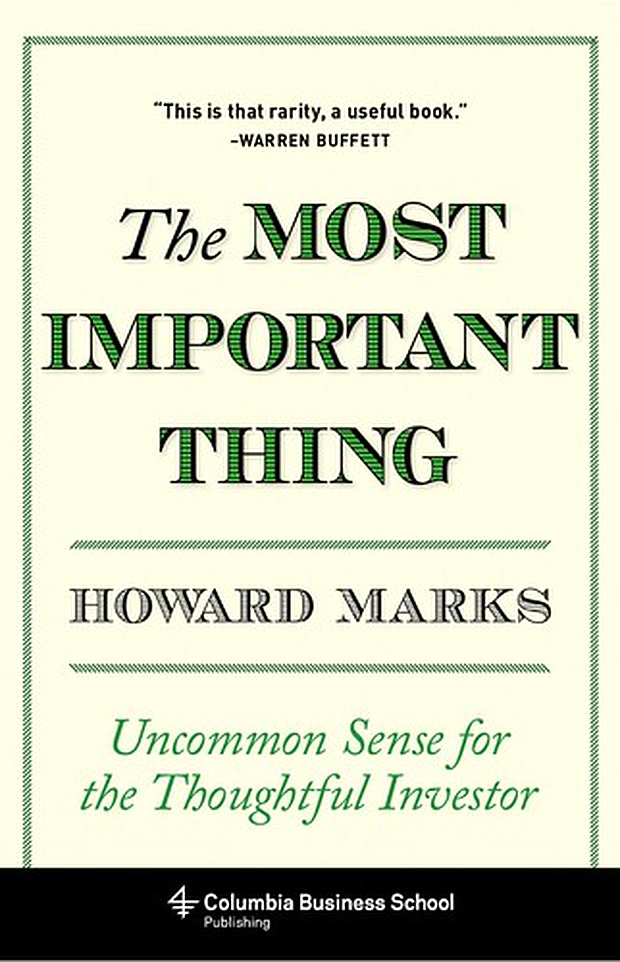
The Most Important Thing
Get on Amazon →
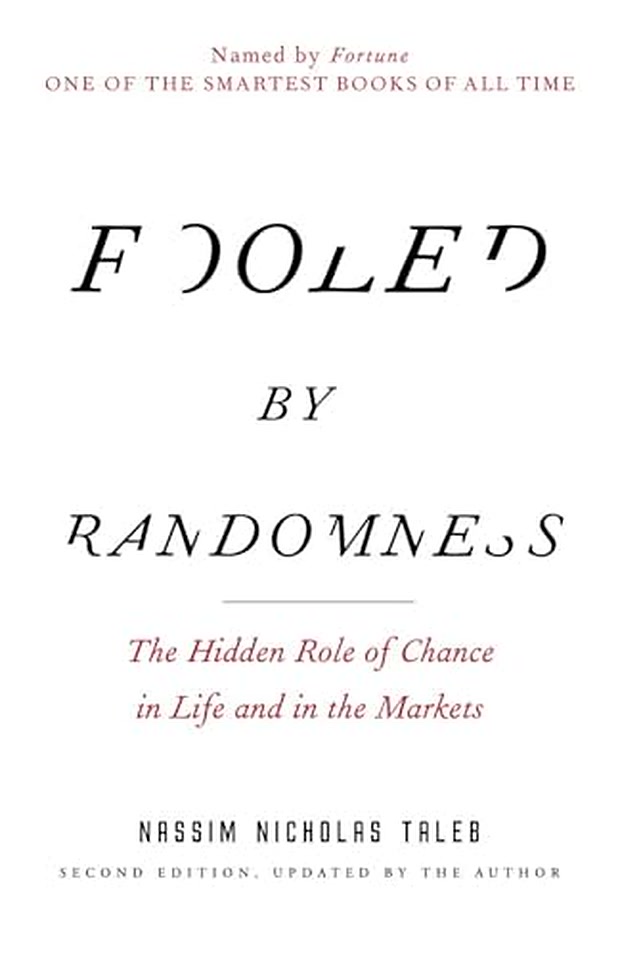
Fooled by Randomness
Get on Amazon →
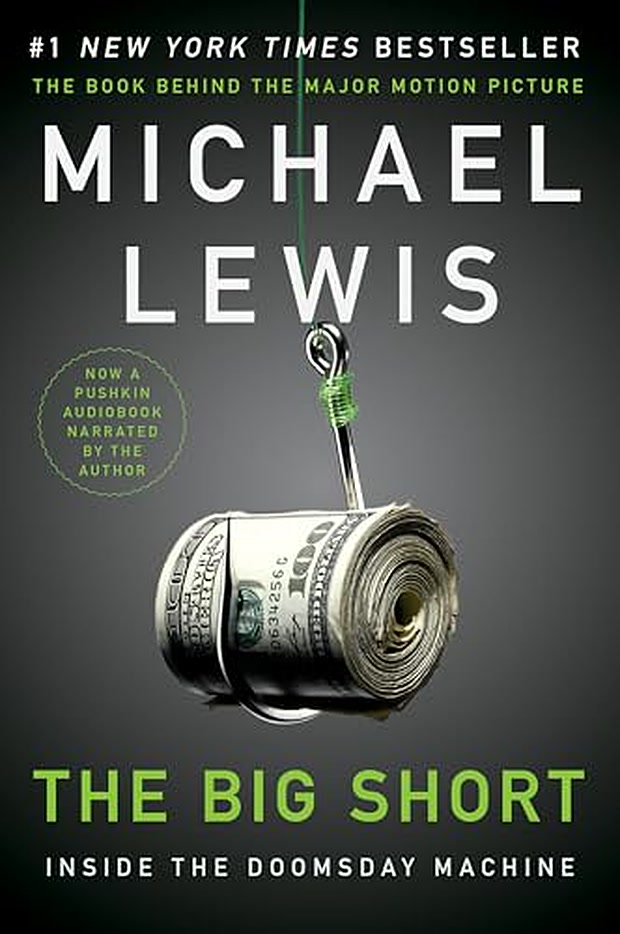
The Big Short
Get on Amazon →
As an Amazon Associate I earn from qualifying purchases.