Howard Marks
1998 10 09 Genius Isn 39 T Enough
© Oaktree Capital Management, L.P.
All Rights ReservedMemo to: Oaktree Clients and Friends
From: Howard Marks Re: Genius Isn't Enough (and Other Lessons from Long-Term Capital Management)
On September 24, The Wall Street Journal carried an excellent fr ont-page article regarding the
inability of the "crack team" of economic policy makers led by Messrs. Rubin and Summers to
halt the slide of the emerging markets' economies and currencies. Heading the column was a
quotation from David Halberstam's account of the U.S. involvement in Vietnam, The Best and
The Brightest :
If there was ever anything that bound men ... together, it was the
belief that sheer intelligence a nd rationality could answer and
solve everything.
Across the page -- just a few columns away -- wa s another excellent article, this time on the
subject of Long-Term Capital Management. I think the Halberstam quotation is just as relevant
to this one. The saga of Long-Term Capital is well known by now. My purpose here is not to discuss the
facts, although I'll do so briefly, but rather the lessons to be learned. Long-Term was the
creation of former Salomon Brothers vice chai rman John Meriwether, along with several other
well-respected ex-Salomon Partners, a former vice chairman of the Federal Reserve, and a pair
of Nobel prize winners. It was formed to enga ge in bond arbitrage, the systematic exploitation
of bond mispricings. By purchasing underval ued bonds and selling short overvalued bonds
affected by similar factors, gains would be earn ed consistently and wit hout exposure to market
risk. The intellect and accomplishments of Long-Term's managers, and its strong annual
returns, compelled investors to invest and fr eed them from feeling they had to understand
exactly what the fund did. The fund's appr oach may not have been fully delineated to
investors, its portfolio was never disclosed, and the managers' actions were not even reported after the fact; 40% annual returns were enough to keep investors satisfied.
You've probably heard us say that bond investin g is a game of inches. So then how was Long-
Term able to earn returns of 40% or more mo st years? The answer was leverage: they
borrowed enough money to buy bonds worth many tim es their equity. It is now known that
Long-Term's general partners' cash equity wa s increased through borro wings to roughly $1.5
billion and paired with $3.1 billion of limited pa rtners' capital. This $4.6 billion of equity was
somehow sufficient to enable Long-Term to hold investments totaling about $150 billion and
long and short positions in derivatives believed to have had an aggregat e "notional value" of
$1.25 trillion!
© Oaktree Capital Management, L.P.
All Rights ReservedWhen your investments so greatly exceed your equity, it doesn't take a big drop in security
prices to wipe out that equity. Between August 1 and late September, price declines on all
bonds other than Treasurys, appreciation on Tr easury bonds (which Long-Term had shorted to
offset its exposure to interest rates on "long" positions), and declines on equities (it had invested heavily in takeover stocks) were sufficient to erase 90% of Long-Term's equity. Further, if margin calls had caused its vast positions to be dumped on the world's unsteady
markets, the proceeds might have been less th an the amounts borrowed, causing write-offs at
the banks and brokers that had provided Long-Term's credit and perhaps destabilizing them.
Incredibly, articles about Long-Term describe its possible forced liquidation with phrases like
"threat to the stability of the world financial system ... “ (T he Wall Street Journal, September
29). These conditions gave rise to the restructuring and additi onal investment agreed to by 14
financial institutions. That's the background; now for the lessons. The techniques employed at Long-Term have been variously described as "rocket science" or
“black box.” Computers were used to scan thous ands of securities to detect instances where
historic relationships had been violated and profit could be earn ed on the return to the norm;
these are referred to as "convergence trades." Assumedly, Long-Term used models to assess the probability of history reassert ing itself and the risk to the overall portfolio of individual
relationships going the wrong
way. Thus would they determine the amount of risk and leverage
that could safely be taken on. In his wonderful book, Against the Gods,
Peter Bernstein shows how development of the study
of probability made possible both informed gambling and informed investing (along with other forms
of decision making concerning the future). Bu t the products of this pursuit remain mere
probabilities, or reasonable expectations. Like ly events sometimes fail to occur, and unlikely
events sometimes do. Or, as my friend Bruce Newberg says when I get the one improbable roll of the dice needed to beat him in backga mmon, “there can be a big difference between
probability and outcome.” If you are conscious of the difference between a likely outcome and
a certain one, you may not want to bet the ranch. The same is true in the world of investments; put simply, relationships that are supposed to hold
sometimes fail to do so. This may happen because markets and systems don't work (in the Crash of 1987, portfolio insurers couldn't get thei r stop-loss sales off), be cause external events
aren't fully anticipated (inverse floaters tanked in 1994 because interest rates rose at annual
rates of 600 or 700 basis points that had been considered impossible), or simply because of the unreliability of the human participants (scared peopl e often fail to step forward with cash at the
times that matter most). A relationship's failure to hold often comes just when faith in it has reached an excessive level and huge sums have been bet on it. For whatever reason, we have
seen m
any instances when probabilistic models turned out not to have made sufficient
allowance for an “improbable disaster.”
As Long-Term's Meriwether wrote in his September 2 letter to investors, “the Fund added to its positions in anticipation of convergence, yet ... the trades diverg ed dramatically.” In other
words, sometimes things that are cheap just get cheaper and things that are dear get dearer.
© Oaktree Capital Management, L.P.
All Rights ReservedFor free markets to operate at equilibrium, there must be healthy tension between two
motivating factors: fear and gr eed. If a participant feels both, greed will push him to take
chances but fear will put limits on the risk he assumes. However, the two are not always in
balance -- one or the other is ofte n in the ascendancy. For the last few years, too little fear has
been present, and greed and risk-taking have dominated. Long-Term's managers' brainpower
may have let them consider their process foolproo f, so that they felt too little fear and took on
too much risk. In every era, one prominent pa rticipant becomes emblematic, and Long-Term is
likely to be known for a long time as the "poster boy" of the 1990s.
I think investors are always looki ng for “the silver bullet.” They seek a course of action that
will lead to large profits without risk -- and thus they pursued Nifty-Fifty investing in the
1970s, portfolio insurance in the ' 80s and market-neutral strategies in the '90s. Often, they
align themselves with "geniuses" who they hope will make it easy for them -- be it Joe
Granville, Elaine Garzarelli, David Askin or John Meriwether.
But the silver bullet doesn't exist. No strate gy can produce high rates of return without some
risk. And nobody has all of the an swers; we’re all just human. Brilliance, like pride, often
goes before the fall . Not only is it insufficient to enab le those possessing it to control the
future, but awe of it can cause people to follo w without asking the questions they should and
without reserving enough for the ra iny day that inevitably comes. This is probably the greatest
lesson of Long-Term Capital Management. Th ere are others, which I'll review below.
1) As I've written before, "volatility + leverage =
dynamite." The main cause of Long--
Term's collapse probably wasn't its security selec tion, or the declines in its markets, but rather
its leverage. On average, its positions may have declined just a few percent. But when your assets exceed 25 times your equity, even a 4% price decline is enough to wipe you out.
Nowadays, most people use the word "leverage" interchangeably with "debt." But it's better
understood in the sense I first learned: the extent to which a change in the top line is magnified by the time it reaches the bottom line. That's why the British call it "g earing." In Las Vegas
they say “the more you bet, the more you win when you win.” They never add
"… and the more you lose when you lose.” Levera ge is just a way to let you bet more than
your capital, and it exposes you to more of the go od and more of the bad. Leverage can truly
be dynamite.
None of Oaktree's portfolios use leverage to invest more than our capital (although our
Emerging Markets Fund will be able to do so to a limited extent). We have reviewed several
opportunities for leverage, but in the risk-toler ant climate prevailing until recently, we didn't
find base returns worth leveraging up. For exampl e, despite repeatedly being invited to do so
over the last five years, we declined to or ganize CBOs (leveraged hi gh yield bond portfolios).
This followed from our conviction that leverage should never be used in an attempt to
turn
low spreads into wide ones , only to take advantage of already-wide spreads . The
managers of Long-Term used enormous leverage in an attempt to profit hugely from minute
spreads, and it eventually did them in.
© Oaktree Capital Management, L.P.
All Rights Reserved2) Hedge funds offer no magic per se . As we described in our April piece on alternative
investments, hedge funds carry on ly two common threads: privat e partnership status and a fee
mechanism through which general partners share in net gains. The hedge fund investor's
birthright certainly does not include either high returns or low risk.
But the hedge fund structure can have ramifica tions which investors (such as Long-Term's)
seem to recognize only after problems arise. Our memo entitled "Risk In Today's Markets"
(February 17, 1994) asked the following about 'til-then successf ul hedge funds:
With the average stock or bond returning 10-15% last year, how did some
hedge funds make 70% or more? It was through bold and heavily-leveraged plays ...What would have happened if the managers' calculations had proved wrong? ... Do the hedge fund aficionados know how much risk th ey are taking?
For how long are they tying up their m oney? How much do they know about
the strategies being employed?
We never hope that our warnings wi ll turn out to be needed, but we usually feel it is inevitable.
The case of Long-Term demonstrates that he dge funds represent no panacea and often hold
significant drawbacks. The c1osed-end struct ure should be entered into only after the
underlying strategy has been reviewed in depth a nd confidence in the managers has been fully
justified. 3) “If it seems too good to be true, it probably is." This old saw goes out of style from time
to time, but it makes a comeback each time a get-rich-quick scheme is exposed. Many "riskless" arbitrage, hedge and market-neutral st rategies have turned out to involve more risk
than was let on. When I was a kid, I saw in a 1930s movie that th e Rothschilds built their fortune because their
exclusive use of carrier pigeons allowed them to simultaneously buy a currency at one rate in
London and sell it at a different rate in Paris. That's pure arbitrag e: trading the same asset at
different prices at the same time. But as soon as you deal in different assets that have less than a 100% probability of moving in
tandem, you introduce “basis risk,” or the risk that the assets being arbitraged won't go in the
anticipated directions. That's what killed Long-Term; their bonds' yields diverged when they
were supposed to converge. Historic relationshi ps proved to be less dependable than had been
thought. 4) “
It's always something.” That's what Roseanne Rosanada na used to say on Saturday Night
Live, and it's very true -- eventually, somethi ng always goes awry. Any course of action which
depends on everything going right is unsafe, but such an expect ation has to have been behind
Long-Term’s 25-plus times leverage. Warren Buffe t, with his insistence on "margin for error,"
would never make such a bet (although he was will ing in the hours just before the restructuring
to join Goldman Sachs and AIG in a low-ball bid of $250 million for Long-Term at a time
when its net worth is thought to have been $600 million).
© Oaktree Capital Management, L.P.
All Rights ReservedIn “Are You an Investor or a Speculator” (S eptember 3, 1997), we wrote:
What could cause a market decline? A drop in investor confidence -- perhaps
the commodity that's most freely availabl e today -- would likely be the key, but
the reason is hard to foresee. “We're not expecting any surprises,” people
say, and that has become our new favorite oxymoron. Surprises are never expected -- by definition -- and yet they 're what move the market….The next
surprise could be geo-political (oil embargo, war in Korea), economic (tight
money, slowing profit growth), or intern al to the market (competition from
bonds at higher interest rates, discovery of a fraud), but it's most likely to be something that no one has anticipated -- including us.
When I was a kid, my dad used to joke about the habitual gambler who finally heard about a
race with only one horse in it. He bet the rent money on it, but he lost when the horse jumped over the fence and ran away. There is no sure thing , only better and worse bets, and anyone
who invests without expecting something to go wrong is playing the most dangerous game
around. 5) “Never confuse brains with a bull market.” When the 1990s began, the economy and the
stock market were at very low
levels. As a result, success came easily, risk-bearing paid off
and the highest returns often went to those who took the most risk. They and their strategies
were accepted as the best. In my opinion, (a) the three ingredients behind success are timing, aggressiveness and skill, and
(b) if you have enough aggressiveness at the right time, you don't need that much skill. But those who have attained thei r success primarily through well- timed aggressiveness can't be
depended on to repeat it -- especially in t ough times. When an investment track record is
considered, it's essential that the relative roles of these three factors be assessed.
6) Change in the availability of credit is a powerful force , and the longer I'm in the
investment business, the more I respect the role of the credit cycle. For example, although we
hope we added value through our implementation, our 1990 distressed debt funds earned their
50% gross returns largely becau se (a) fear and the government 's actions closed the credit
window, (b) the LBOs of the 1980s couldn't refina nce their debt and defaulted in droves, and
(c) that debt could therefore be bought for a s ong. A significant recessi on contributed to the
conflagration, but whereas a generous capital ma rket would have let companies finance their
way out of trouble (as they did from 1993 thr ough mid-1998), a tight one brought them down in
1990-92. The product of lenders is money, and it's their job to move it off the shelves. Because money is
the ultimate undifferentiable commodity, lenders can compete for market share in boom times
only by taking on bigger risks than the next guy, charging less interest or accepting looser
terms. All of these tactics turn on a dime wh en things get tough, inf licting great pain and
causing lending to contract.
© Oaktree Capital Management, L.P.
All Rights ReservedIn times of easy money, companies prosper that should not, just as deserving companies fail
when money's tight. Easy money was key in Lo ng-Term's early success and later collapse.
The bankers and brokers let the General Partne rs lever up their equity capital and take on far
out-sized positions. They loaned amounts of money that were unsafe both for Long-Term
Capital and for themselves. I assume that, seduced by Long-Term's brilliance, they did so
without knowing how much it had borrowed in to tal or what its portf olio looked like.
The violent swings of the cred it cycle -- usually far more vol atile than the underlying economy
-- are behind many of the extreme occurrences in the business and invest ment world. Excessive
lending contributed greatly to booms preceding th e collapses in real estate in 1989-92 and
emerging markets in 1997-98, just as tight lending added to the bankruptcies of 1990-92. Look
around the next time there's a crisis; you'll probably find a lender. 7) “How Quickly They Forget.” While it would be great (and ve ry profitable) to be able to
see the future, the truth is that few of us can. But you don't have to be prescient to be able to
invest intelligently while avoiding the most dange rous hazards. Knowledge of the past will get
you a good part of the way there. The relevance of the lessons of Long-Term has nothing to do with knowledge of the future.
Leverage is always dangerous. Something always goes wrong eventually. Those who see high
returns often mistake risk bearing for genius. The swings of the credit cycle can overwhelm all
other factors. Every boom carries within itself the seeds of decline (jus t as every bust lays the
groundwork for recovery). Forget forecasting -- you'll be well ahead if you simply bear in
mind the lessons of the past. We've all heard George Santayana's famous obs ervation that "Those who cannot remember the
past are condemned to repeat it." And yet, how many of today's mistakes are just replays of the
past? Thirty years ago, the stocks of "the best companies" reached P/Es of fifty and more from
which they eventually collapsed. Ten years a go, highly leveraged investments were financed
with bridge loans which investment bankers were stuck with when the financing window
closed. Five years ago, banks got into big trouble with derivatives. All of these are causing
problems again in 1998 for those who forgot histor y or rationalized its irrelevance in the "new
paradigm." I've previously recommended John Kenneth Galbrait h's excellent little book, A Short History of
Financial Euphoria . Although I don't appreciate its swipes at high yield bonds, I consider it
must reading for anyone who wants to think and invest against the grain. Galbraith says:
Contributing to ... euphoria are two further factors little noted in our time or in past times. The first is the extreme brevity of the financial memory. In
consequence, financial disaster is quic kly forgotten. In further consequence,
when the same or closely similar circum stances occur again, sometimes in only
a few years, they are hailed by a new, often youthful, and always supremely self-confident generation as a brilliantly innovative discovery in the financial
and larger economic world. There can be few fields of human endeavor in
© Oaktree Capital Management, L.P.
All Rights Reservedwhich history counts for so lit tle as in the world of fina nce. Past experience, to
the extent that it is part of memory at all, is dismissed as the primitive refuge of
those who do not have the insight to appr eciate the incredible wonders of the
present. [Emphasis added]
Amen. People who acknowledge no limits on their ability to know and control the future have
no need to study history. For the rest of us, it's one of the best tools we've got.
* * *
Inability to remember that you can't know what the future holds is a common failing and the
cause of some of the biggest financial difficulties. It's one of the greates t contributors to hubris
-- the over-estimation of what you can know and do.
General Motors's Charles Froland says the peop le of Long- Term Cred it developed "too much
conviction." Henry Kaufman was recently quoted on the subject as saying "there are two kinds
of people who lose money: those who know nothing and those who know everything." Dirty Harry weighed in, saying "a man has to know hi s limitations." I actually think my mother had
it best: "He who knows not and knows not he knows not is a fool; shun him."
Oaktree is built on the following ax ioms (among many others):
-- We can't know everything about the future , and the “bigger picture” the question, the
less we can know the answer.
-- We must always expect that something will go wrong and build in margin for error.
-- When the market embodies too much greed, we must be conscious of the risk that's
present. When it swings too far toward fear , we should take advant age of the bargains
that result.
-- We must constantly remind ourselves of our limitations and dedicate ourselves to the
avoidance of hubris. If our methodologies are valid and our people are talented,
hubris is one of the few things that could make us fail.
The applicability of the lessons of Long-Term is not limited to that company alone. Instead,
they illustrate several of the universal truths in investing. You won't see them forgotten here. October 9, 1998
© Oaktree Capital Management, L.P.
All Rights ReservedLegal Information and Disclosures
This memorandum expresses the views of the author as of the date indicated and such views are subject
to change without notice. Oaktree has no duty or ob ligation to update the information contained herein.
Further, Oaktree makes no representation, and it should not be assumed, that past investment performance is an indication of future results. More over, wherever there is th e potential for profit there
is also the possibility of loss. This memorandum is being made available for educational purposes only and should not be used for
any other purpose. The information contained herei n does not constitute and should not be construed
as an offering of advisory services or an offer to se ll or solicitation to buy any securities or related
financial instruments in any jurisdiction. Certai n information contained herein concerning economic
trends and performance is based on or derived from information provided by independent third-party
sources. Oaktree Capital Management, L.P. (“Oakt ree”) believes that the sources from which such
information has been obtained are reliable; however, it cannot guarantee the accuracy of such
information and has not independently verified the accu racy or completeness of su ch information or the
assumptions on which such information is based.
This memorandum, including the information cont ained herein, may not be copied, reproduced,
republished, or posted in whole or in part, in an y form without the prior written consent of Oaktree.
Recommended Reading
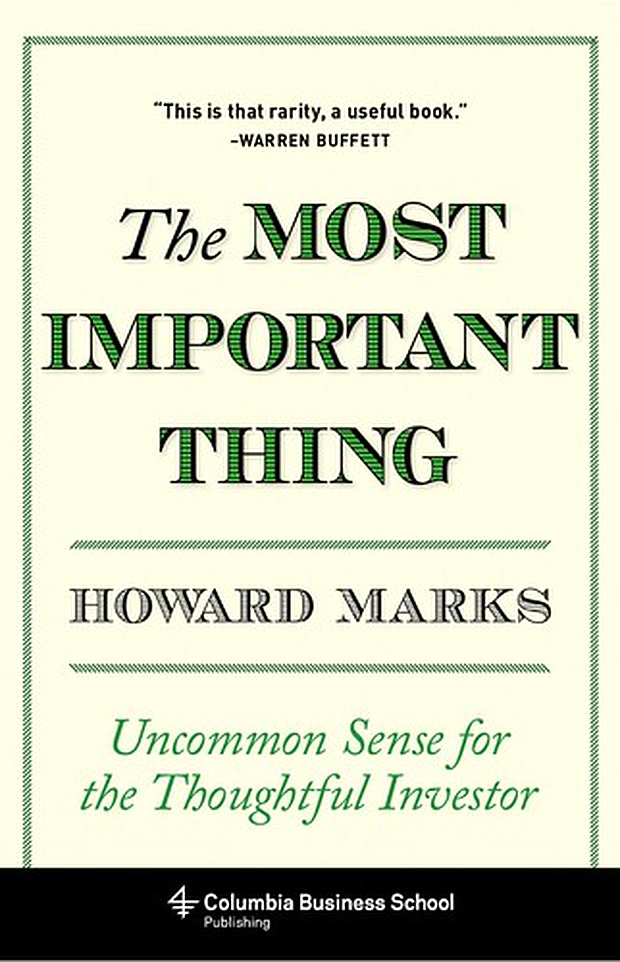
The Most Important Thing
Get on Amazon →
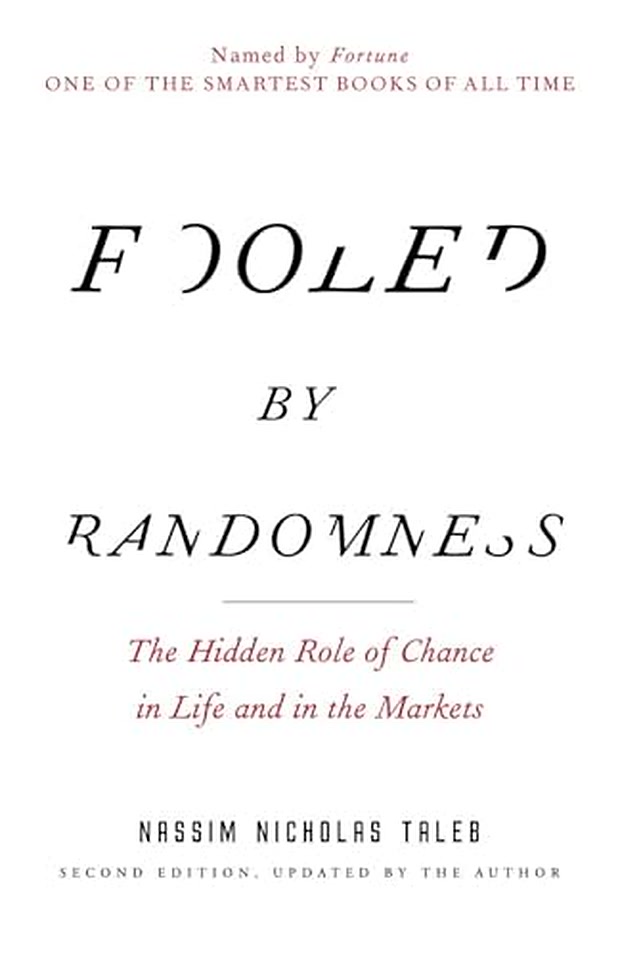
Fooled by Randomness
Get on Amazon →
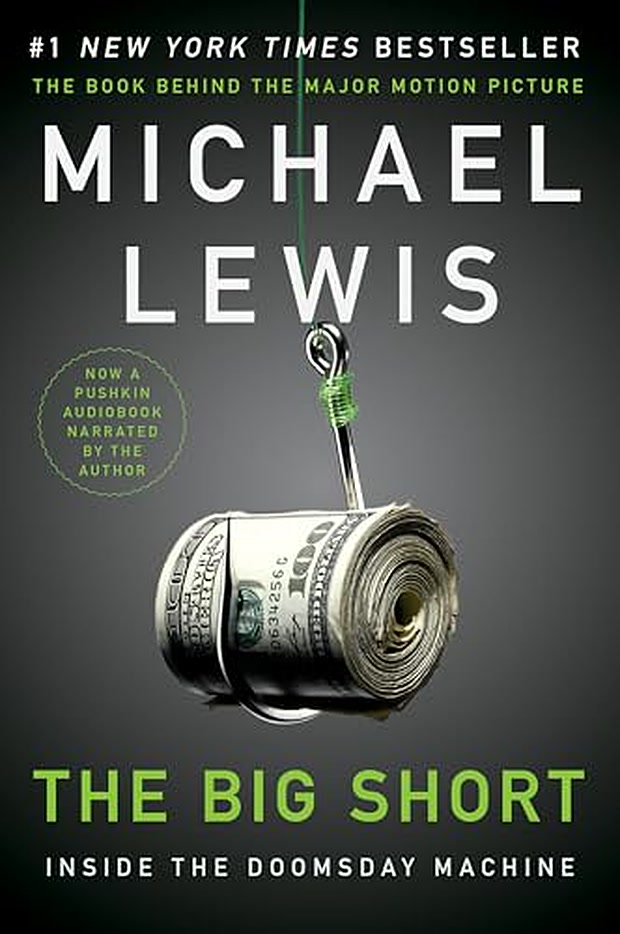
The Big Short
Get on Amazon →
As an Amazon Associate I earn from qualifying purchases.