Howard Marks
1998 01 08 Who Knew
© Oaktree Capital Management, L.P.
All Rights ReservedMemo to: Oaktree Clients and Friends
From: Howard Marks
Re: Who Knew?
For years, I've railed against people who clai m they know what the future holds. And yet,
in my last memo on September 3, 1997, I may actually have made a correct prediction, as
follows:
What could cause a market decline? A drop in investor confidence -- perhaps the
commodity that's most freely available t oday -- would likely be the key, but the
reason is hard to foresee…. The next surp rise might be geopolitical (oil embargo,
war in Korea), economic (tight money, slow ing profit growth) or internal to the
market (competition from bonds at higher inte rest rates, discovery of a fraud), but
it's most likely to be something that no one has anticipated -- including us.
Just the next month, the "Asian meltdow n" came into full bloom, with profound
ramifications for stock and bond markets all around the world.
What this shows is that it's easy to be ri ght about the future . . . if you restrict your
predictions to two: (1) something signifi cant is bound to happen ev entually, and (2) we
never know what it'll be.
* * *
Speaking of what we can know, I was in a cl ient's office in December, cautioning that I
thought we would never reside for long in the investment ni rvana of the new paradigm
where inflation, interest rates, economic grow th, expanding profits and rising stock prices
stay properly aligned. He said, "I'd thi nk a self-professed non-forecaster like you would
never say, ‘never’.”
My response was, "Maybe it's a result of my so bering experience in the 1970s, but there are
plenty of things I'll say "never" to ... on the negative side: Things will never go right
forever. Investors' fondest hopes will never fail to be dashed eventually. Some
unpleasant surprises will never fail to arise."
This sounds terribly negative, as if I think good things are rare a nd only bad things are
bound to happen. But if you think it over, I hope you'll conclude I'm not what our Kevin Clayton calls a "Negative Ned."
© Oaktree Capital Management, L.P.
All Rights ReservedI read decades ago that every bull market has three stages:
The first, when a few far-sighted people begin to believe that some improvement is possible, the second, when most investors come to agree that improvement is actually
underway, and the third, when everyone believes ever ything will get better forever.
If you're going to succeed at all in timing cy cles, the only possible way is to act as a
contrarian: catch some opportuni ties at the bottom, let your op timism abate as prices rise,
and hold relatively few exposed positions when the top is reached. To find bargains at the bottom, you don't have to think that things w ill get better forever; you just have to
remember that every cycle will turn up eventua lly, and that prices are lowest when it looks
like it won't. But it's just as important to av oid holding at (and past) the top, and the key is
not to succumb to the popular delusion that "trees will grow to the sky." What I think is important is that, although ma rkets can be underpriced or overpriced and
yet go on for months or years to become even more so, it's most prudent to be optimistic
when no one else is, and it can be highly profitable. Bu t it can be dangerous to be
optimistic when everyone el se is, and very costly.
* * *
All of the above might be interesting, but of course the crucial question is "Where do we
stand today?" Certainly, the secret's out: something bad can happen -- and has. We see Asian currencies,
economies and perhaps so cial orders in free -fall. But what stri kes me is the fact
that the major U.S. equity indices are just about where they were when I wrote in
September. Our market justifiably benefits from a flight to quality, a nd it is true that many
of our companies may not be directly affected by the Asian turmoil. But are the people
pricing stocks near all-time highs too optimistic, too pe ssimistic, or just right?
What amazes me is that even though people say "the market abhor s uncertainty," it has
been doing rather well despite the large number of things that no one can pretend to fully
understand.
1) How bad will the Asian crisis get, how far will it spread, what solution is possible, and
what will be the second- and third-order ramifications on our economy and companies?
Will governments topple? Will contracts be abrogated? How many people who are
sanguine
about U.S. equities t oday can answer these questions concerning Asia
(and how can you be the former if you can't do the latter)?
© Oaktree Capital Management, L.P.
All Rights Reserved2) Most accounts of the developments in Asia touch on overcapacity, on stiffened
competition from Asian exporters whose prices are now lower in dollar terms because of
devaluations, and on the possibili ty of deflation in the U.S. Even Chairman Greenspan
thought enough of deflation to mention it last Saturday. And yet, who really knows what
these things might mean for economies and co mpanies around the world? In short, is
deflation good or bad? How can you feel comfor table if you can't answer these questions?
3) A reading of the newspapers in the last few months discloses a steady drumbeat of
earnings disappointments and revived restruct urings and layoffs. How strong is our
economy? Are cost increases putting pressure on profits? How much will earnings growth
slow down? These are all questions that indicate that negatives are present in our investment
environment. But they're always there -- sometimes obvious and sometimes not. Prices near highs and optimism in bloom -- that 's a dangerous combination, especially with
perceived risk on the rise. Peter Bernst ein wrote around 1979 that "The great buying
opportunities ... are never made by investor s whose happiest hopes are daily being
realized." And yet many of today's inve stors have only known success, and few appear
seriously chastened by recent developments. This permits me to conclude that this is not a
buying opportunity and, although no collaps e need be imminent, the stock market's
best days are behind it for a while.
Or as our client, Mike Herman, wrote in th e annual report of the Kaufman Foundation, the
Investment Committee of which he chairs: ''It tr uly doesn't get much better than this -- a
statement which in and of itself should inspir e caution, not complacency. If things can't
get much better, logic sugge sts they can only stay the same or get worse."
My bottom line is that while the best bargains are found when it looks like things can't get
better, bargains are hard to find when things can only get worse -- especially if few people
seem to know it. That's why Oaktree always tries to keep in mind where we stand, to buy
avidly only when fear is at a high level, and to util ize asset classes, strategies and tactics
that prepare us for the negatives that ar e always lurking out there somewhere.
January 8, 1998
DJIA
= 7,802
© Oaktree Capital Management, L.P.
All Rights ReservedLegal Information and Disclosures
This memorandum expresses the views of the author as of the date indicated and such views are
subject to change without notice. Oaktree has no duty or obligation to update the information contained herein. Further, Oaktree makes no rep resentation, and it should not be assumed, that
past investment performance is an indication of future results. Moreover, wherever there is the
potential for profit there is al so the possibility of loss.
This memorandum is being made available for educational purposes only and should not be used
for any other purpose. The information contai ned herein does not constitute and should not be
construed as an offering of advisory services or an offer to se ll or solicitation to buy any securities
or related financial instruments in any jurisd iction. Certain inform ation contained herein
concerning economic trends and performance is based on or derived from information provided by
independent third-party sources. Oaktree Capita l Management, L.P. (“Oaktree”) believes that the
sources from which such information has been obtained are reliable; however, it cannot guarantee
the accuracy of such information and has not in dependently verified the accuracy or completeness
of such information or the assumptions on which such information is based.
This memorandum, including the information cont ained herein, may not be copied, reproduced,
republished, or posted in whole or in part, in any form without the prior written consent of
Oaktree.
Recommended Reading
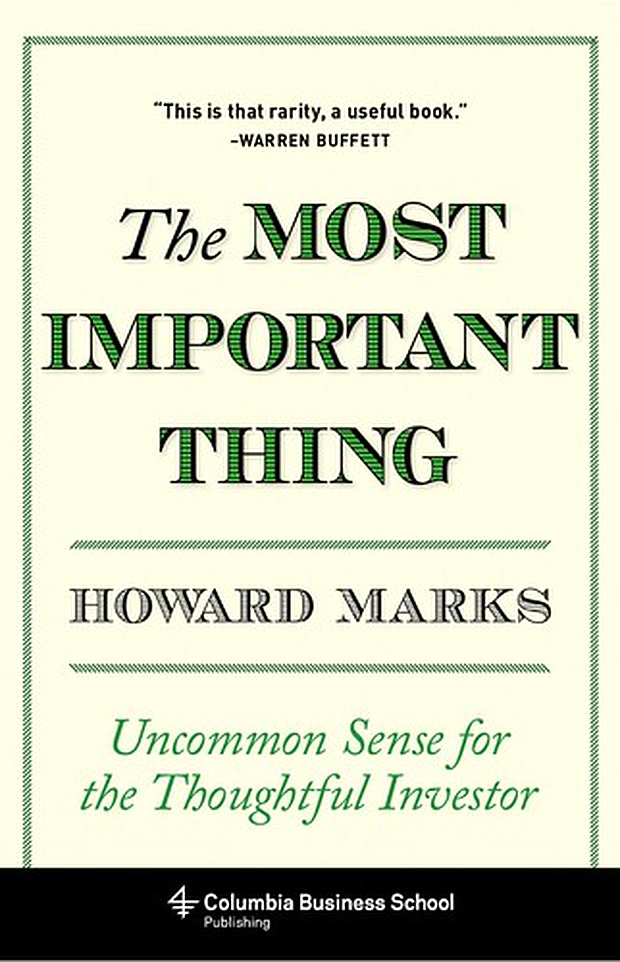
The Most Important Thing
Get on Amazon →
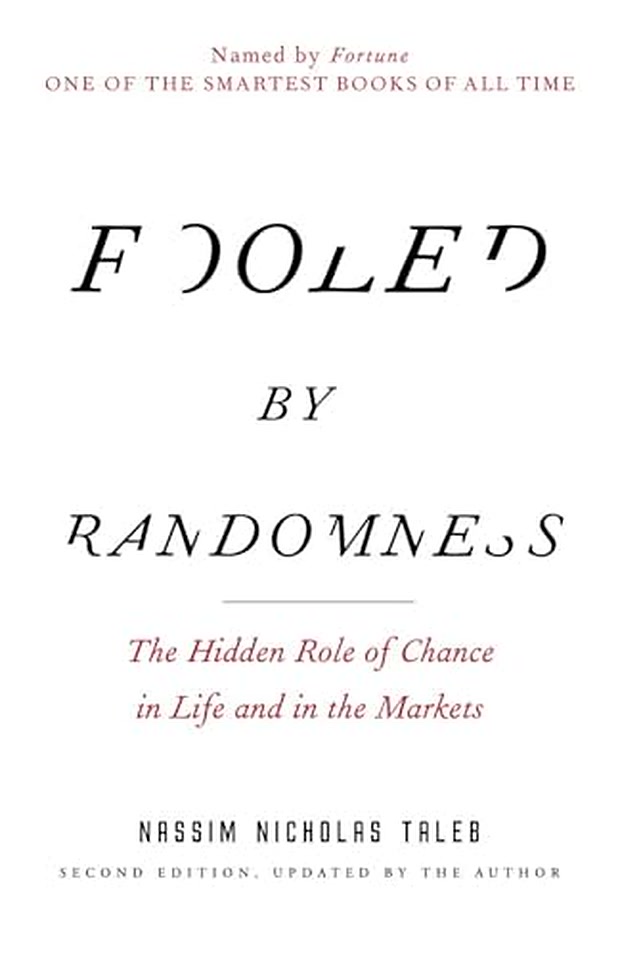
Fooled by Randomness
Get on Amazon →
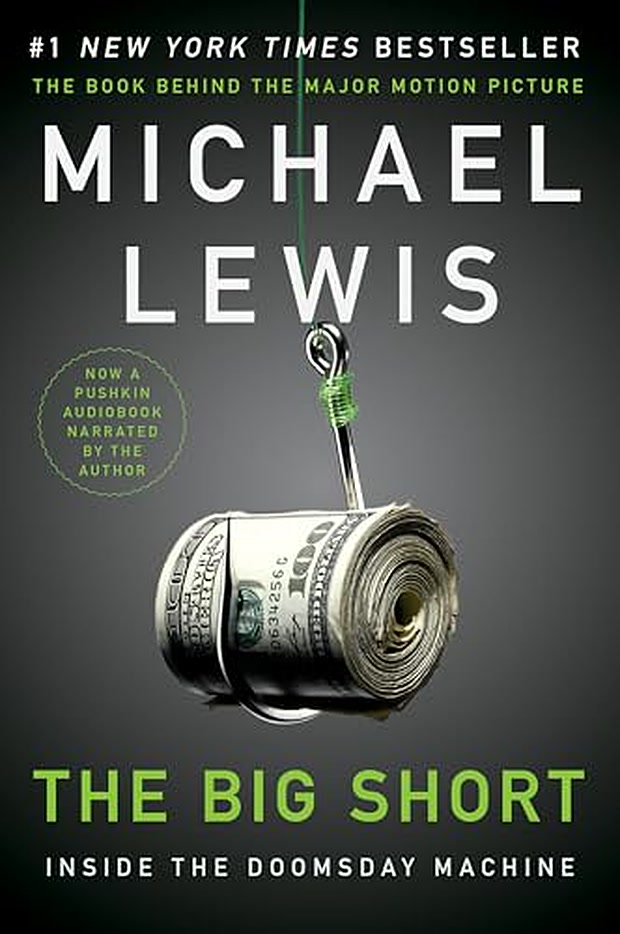
The Big Short
Get on Amazon →
As an Amazon Associate I earn from qualifying purchases.