Howard Marks
1996 11 25 Will It Be Different This Time
© Oaktree Capital Management, L.P.
All Rights ReservedMemo to: Oaktree Clients and Friends
From: Howard Marks
Re: Will It Be Different This Time?
One of my favorite articles, "Why This Market Cycle Isn't Different" by Anise C. Wallace,
appeared in the New York Times. It skeptica lly recounted the rationale being advanced why a
traditional correction of the stock market's meteor ic rise need not take place. Among the reasons
cited were (1) the outlook for continued economic growth, give n that the economy had learned
how to correct itself painlessly, (2) hope for return to a gold standard, (3) optimism regarding world peace, (4) the likelihood of continued buying of U.S. stocks by foreign investors piling up dollars with no better place to go, and (5) the fact that stocks were not overvalued compared to
other assets, which had also appreciated.
This was the optimists' argument. But its flaws became apparent almost immediately after the
article was published ... on October 11, 1987 . By the close on October 19, the market had fallen
by 30%. So much for the bulls' predictions!!
And so much for predicting a future markedly diffe rent from the past. The article pointed out that
some of the arguments did have some truth to them, but it also cited John Templeton's assessment
that people who say things will be different are right only one time out of five. The hard part is
knowing which times those are.
All of this was called to mind ten days ago by an article on the front page of the Wall Street
Journal. Entitled "The Business Cycle is Tamed, Many Say, Alarming Others," it recounts the case currently being made for this remaining a conti nuous, recession-free economic expansion. As its
lead paragraph says,
From boardrooms to living rooms and from government offices to trading
floors, a new consensus is emerging: The big, bad business cycle has been tamed.
The current expansion, at 67 months, has already far exceeded the postwar average.
Nevertheless, 51 of the 53 "t op economists" surveyed by Blue Chip newsletter (my favorite
experts and the subject of my July 22, 1996 memo ) predict growth next year of 1.5% or more.
And the University of Michigan survey finds that among consumers, more expect five more good
years than expect bad times to emerge.
The Chairman of Sears states "There is no natural law that says we have to have a recession."
According to Amoco's Chairman, "I don't see any reason to believe [the recovery] can't go on until
the turn of the century." Sara Lee's CEO says "I don't know what could happen to make a cyclical
downturn." (For a few more quotes like these, see page three.)
© Oaktree Capital Management, L.P.
All Rights ReservedThe article goes on to cite the arguments behind this year's version of "this time it'll be different."
First, because the recovery has been wishy-washy to date, there is no "boom" to "bust." Second,
today's enhanced pace of business has been accommo dated more through flexibility and efficiency
than through brick-and-mortar expansion and inve ntory building. Third, the service economy has
largely supplanted the more cyclical manufacturing sector. Fourth, globalization of the economy
will enhance geographic diversification and provide new sources of demand for goods.
Similarly, we all hear lots of reasons why today's high stock market valuati ons aren't dangerous and
no correction is required. These include the inevitability of 401(k) inflows; the steadfastness of
mutual fund investors; the shortage of stocks which will result from corporate buybacks (in 1987,
the shortage was going to result from the privatization of companies via leveraged buyouts); the vast opportunities presented by technology and the Internet; the improved profit stance of business
after years of downsizing and cost-cutting; the fiscal responsibility imposed on government and the
resulting favorable outlook for the deficit; and the irrelevance of dividend yield and other
traditional valuation parameters. As always, the list appears to grow longer as higher levels are
reached on the Dow.
But I recoil any time I hear a prediction that trees will grow to the sky, or that centuries of
history are irrelevant. When I hear people say the valuation measures of the past no longer
matter, I think John Kenneth Galbraith put it we ll, stating that in a speculative episode,
Past experience, to the extent that it is pa rt of memory at all, is dismissed as the
primitive refuge of those who do not have the insight to appreciate the incredible
wonders of the present. (
UA Short History of Financial Euphoria U, Viking, 1990)
And I feel cyclicality is one of the fe w constants in the economy and markets . Cycles are the
result of human behavior, herd instinct and the tendency to psychological excesses, and these
things are unlikely to evaporate. Galbraith cites "the extreme brevity of the financial memory" in
explaining why markets are able to move to extremes of euphoria and panic. And few adages have been borne out as often as "What the wise man does in the beginning, the fool does in the end." It is rare for trends to be curtailed at a reasonable point before swinging to the excesses from which
they invariably correct.
Today, there are some signs just as worrisom e as the bullish arguments are constructive. We
detect the decline of skepticism and discipline and the aggressive extension of credit which
regularly precede corrections. Capacity expans ion has been strong in some industries, and
construction seems about to resume. Consumer de bt, default and bankruptcy are all at high levels.
Prices being paid in acquisitions are once again high. There's too much money chasing too few deals. The stock market is exhibiting unusually narrow "breadth" (e.g., with the Dow up 76 points
today to 6547, another record, half of all stocks were unchanged or down). Every cocktail party
guest and cab driver just wants to talk about hot stocks and funds.
And there's a final factor I want to mention: capitulation. This is the word I use to describe
investor behavior late in cycles. Investors hold to their convictions as long as they can, but when the economic and psychological pressures beco me irresistible, they surrender and jump
© Oaktree Capital Management, L.P.
All Rights Reserved
on the bandwagon. Given years of above-average performance by stocks, many investors are now
increasing their commitments to equities. A few weeks ago, we learned of an extreme example, a
foundation whose long-term 80% allocation to bonds had been shown to be sorely out of step, so it
threw in the towel and went 100% to equities. Capitulation like this adds to the strength of the trend
(for a while), but it also increases the level of danger. First, it indicates the advanced age of the cycle;
second, it can cause investors to take positions for which they are unsuited; and third, when the last investor has taken his or her maximum equity position, who's left to power a subsequent rise?
As you know, we don't consider ourselves good macro-forecasters (or even people who believe in
forecasting). So we certainly are in no position to say when the recession or market pullback will
start, how bad it will be...or even that there definitely will be one. But we think we're unlikely to be
proved wrong if we say cyclicality is not at an en d but rather is endemic to all markets, and that
every up leg will be followed by a down leg.
In 1988, when we marketed our first distressed debt fund, the greatest obstacle we faced was a
somewhat widespread belief that there would be no r ecession and we'd have nothing to do. The theory
then was that because of "rolling corrections" of individual industries and regions, the entire economy
would never again decline all at once. The Times's 1987 article said that according to some investors, "the prolonged slow-growth environment would not necessarily be followed by a recession." But, of
course, a recession did develop in 1990 (one of the worst since the Depression), we got very busy in
distressed debt, and that 1988 fund produced a gross return of 29% per year.
So we conclude that most of the time, the future will look a lot like the past, with both up cycles and down cycles. There is a right time to argue that things will be better, and that's when the market is on its
backside and everyone else is selling things at give away prices. It's dangerous when the market's at
record levels to reach for a positive rationalization that has never held true in the past. But it's been done before, and it'll be done again.
"There will be no interruption of our present prosperity."
P1
"I cannot help but raise a dissenting voice to th e statements that ... pros perity in this country
must necessarily diminish and recede in the future." P2
“We are only at the beginning of a period that will go down in history as the golden age.” P3
“The fundamental business of the country ... is on a sound and prosperous basis.” P4
__________________________
P P
PE.H.H. Simmons, President, New York Stock Exchange, January 12, 1928 1 Myron E. Forbes, Presiden t, Pierce Arrow Motor Car Co., January 1, 1928
3 lrving T. Bush, President, Bush Terminal Co., November 15, 1928 P P
PPresident Herbert Hoover, October 25, 1929 P
source : UOh Yeah? U, Viking Press, 1932
© Oaktree Capital Management, L.P.
All Rights Reserved* * *
In the interest of full disclosure, I want to mention here that I've been contemplating the
possibility that my views on these matters are t oo cautious and short-sighted. My conclusion is
that I am a product of my experience.
Many of us were raised by parents whose view s were heavily influenced by living through the
Depression. Likewise, I was baptized under fire during my first five years in the investment
industry, when the shares of the best companies in America -- the "nifty-fifty" -- dropped 70% to
90% in the early 1970s and then the entire market lost roughly half its value in 1973-74.
You have to be more than forty-five years old to have been in the business during that last real
bear market in 1973-74. I've heard it said that today "everyone over forty is terrified by the
market, but most of the people running money are under forty." There's a lot of truth to this, and it's interesting to note that relatively few of t oday's investment professionals are in their mid-to-
late forties, a scarcity caused by the tough times in the industry in the 1970s and the resultant
lack of hiring.
Maybe I spend too much of my time worrying about the next bear market; I've been conditioned
to do that. And maybe I'm wrong. But Oaktree's clients needn't worry that we'll manage their
portfolios based on the assumption that a correction is imminent. We believe strongly that "it's one thing to have an opinion but quite another thing to act as if it's right." So while we take some defensive steps in portfolios as our caution gr ows, we're always fully invested and just as
ready for a market rise as we are for a decline.
The bottom line for us is that if Oaktree can continue to match and beat the indices in our inefficient markets despite an overlay of protection against risk that could prove unneeded, I think we're adding real value. That has been our history, and it certainly remains our goal.
November 25, 1996
© Oaktree Capital Management, L.P.
All Rights ReservedLegal Information and Disclosures
This memorandum expresses the views of the author as of the date indicated and such views are
subject to change without notice. Oaktree has no duty or obligation to update the information contained herein. Further, Oaktree makes no rep resentation, and it should not be assumed, that
past investment performance is an indication of future results. Moreover, wherever there is the
potential for profit there is also the possibility of loss. This memorandum is being made available for educational purposes only and should not be used
for any other purpose. The information contai ned herein does not constitute and should not be
construed as an offering of advisory services or an offer to sell or solicitation to buy any
securities or related financial instruments in any jurisdiction. Certain information contained herein concerning economic trends and performan ce is based on or derived from information
provided by independent third- party sources. Oaktree Capita l Management, L.P. (“Oaktree”)
believes that the sources from which such informa tion has been obtained are reliable; however, it
cannot guarantee the accuracy of such inform ation and has not independently verified the
accuracy or completeness of such information or the assumptions on which such information is
based. This memorandum, including the information cont ained herein, may not be copied, reproduced,
republished, or posted in whole or in part, in any form without the prior written consent of
Oaktree.
Recommended Reading
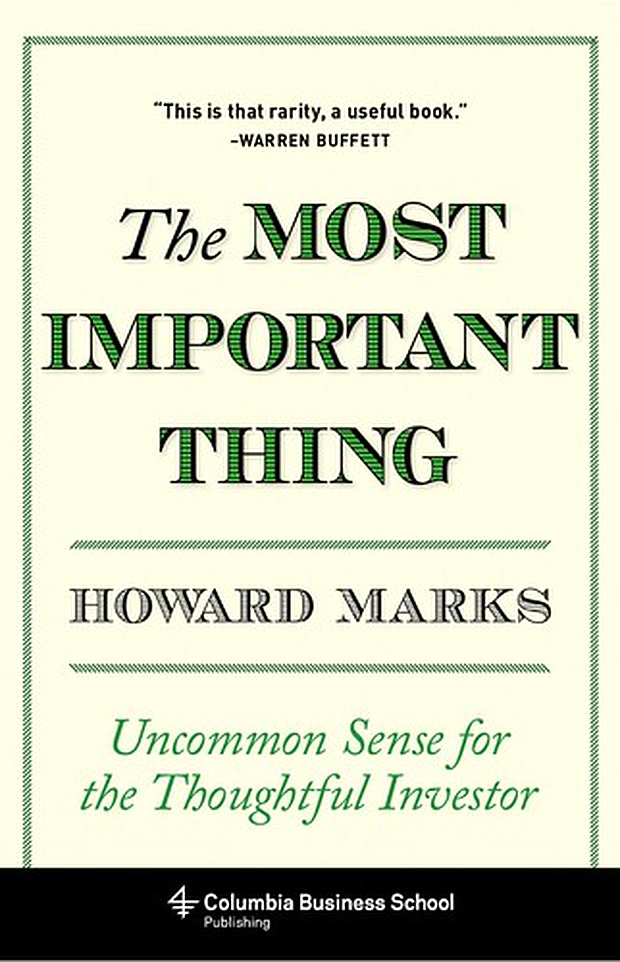
The Most Important Thing
Get on Amazon →
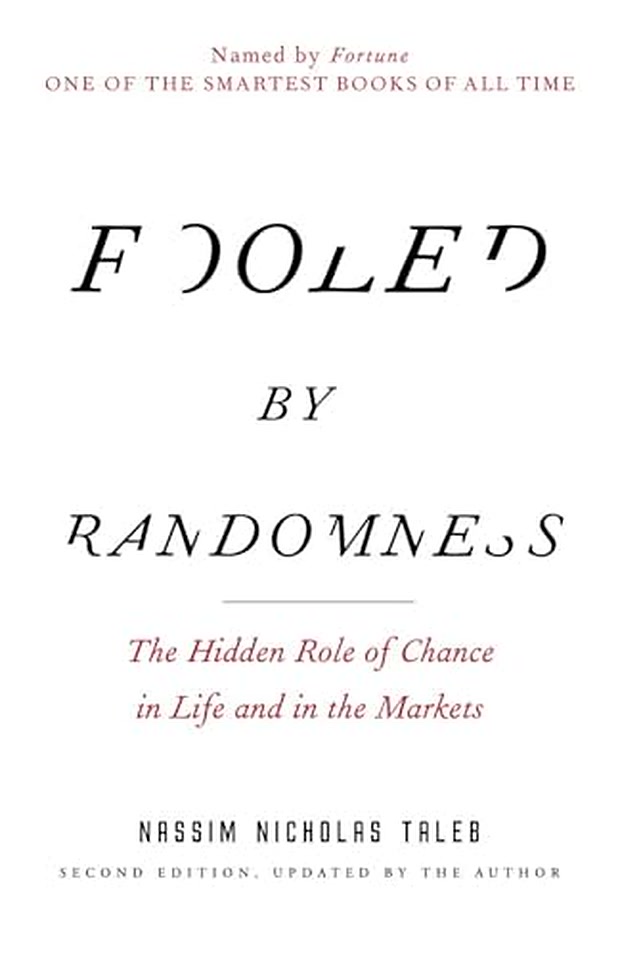
Fooled by Randomness
Get on Amazon →
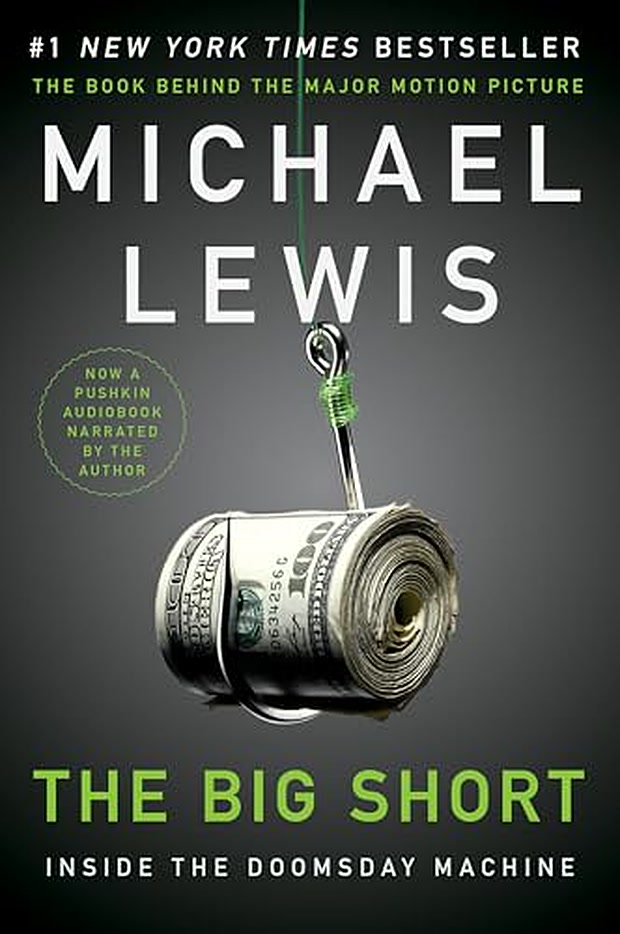
The Big Short
Get on Amazon →
As an Amazon Associate I earn from qualifying purchases.