Howard Marks
1994 04 11 Risk In Todays Markets Revisted
© Oaktree Capital Management, L.P.
All Rights ReservedMemo To: Clients
From: Howard S. Marks, TCW Re: "Risk in Today's Markets" Revisited
Seven weeks ago, we put out a memorandum entitled "Risk in Today's Markets." Its essence was that the excellent returns earne d in risky strategies through 1993 had eroded
the fear factor in many markets and, c oupled with the low yields available on
conservative fixed income investments, had cau sed many investors to take "one giant step
forward" on the risk curve. It also pointed out that just as declining rates had acted to raise prices and generate good returns, rate movements could cut the other way too.
Lastly, it cautioned that when others are ac ting imprudently, driven by greed and without
much fear, it is important that we raise
Uour U level of prudence.
Unfortunately, the events of the interveni ng seven weeks have shown these observations
to be in order. It is the purpose of this follow-up memo to review the developments of
the intervening time period, attempting to make sense out of what has happened and searching for lessons that can be drawn. It 's about understanding basics of investing
which don't come and go. The current "correction" dates from Februa ry 4, when the Federal Reserve Bank raised
short term interest rates a small amount in order to choke off inflationary thought and
action. The air quickly came out of the bond ma rkets, and the declin e has been swift and
deep. Although there were good days for a wh ile as well as bad, th e bond market never
did recover its equilibrium once the rate rise had begun. The yield on the 30-year
Treasury bond rose from 6.21% on January 28 to 7.40% on April 4, with its price falling
14%, from 100.41 to 86.22. The decline spread quickly to other asset classes, and many
investors in riskier strategies suffered harsh consequences.
Some observers protest that economic and industry fundamentals continue to be
favorable. But those positive developments had come to be valued too highly, and the resulting correction of valuat ions has been painful.
UIt's important to note the first lesson,
then: successful investing has at least as much to do with what you pay for an asset as it
does with what that asset's fundamentals are U.
But why did the Fed's half-point bump up in short rates cause such devastation? First, of course, even a small step in terms of policy-related tightening implies there may be much
more to come. More importantly though, th e move suddenly took a big bite out of
investors' optimism and reawakened their f ear. Through January, investors acted as if
nothing could go wrong. That first rate rise se rved to remind them that something could
go wrong -- and had. Thus there has been a swing back from a euphoric extreme.
After the Fed's raising of rates opened their eyes to the negatives, investors also took
notice of the tensions with Korea, Japan and China, the strength of the yen, and
© Oaktree Capital Management, L.P.
All Rights Reserveduncertainty over Whitewater. At the same time, Mexico's stock market had its own
correction, in reaction to the assassination of the leading presidential candidate. The
important lesson to be learned here is that wh enever market participants act as if nothing
can go wrong (or right), that represents an extreme swing of psychology -- of the
pendulum we wrote about in April 1991 -- that must be recognized for what it is and
acted on. As Roseanne Rozanadana used to say on Saturday Night Live, "it's always
something." UInvestment actions predicated on ev erything continuing to go well are
bound to fail U.
If the spark that set off the decline in bond prices was the rate increase, why did the
slump spread to so many other markets, including equities, foreign bonds, and commodities? Where were the benefits of strategic diversification? I would respond citing the following factors:
- First, interest rates affect the value of everything. I nvesting consists of putting
out money today in order to get more b ack at a later date. The "discounted
present value" of the projected future proceeds varies inversely with the
current level of interest rates. Simply put, when rates rise, the present value of
a future dollar declines.
- Another reason the impact of rates is broad stems from the fact that, as I was once told by sid Cottle (of Graham, Dodd and Cottle fame), "Investing is the discipline of relative selecti on." That is, the attractiv eness of x is in part a
function of the price of y. If bonds ch eapen and thus come to promise higher
prospective returns, stocks (or any ot her asset) will appear relatively less
attractive at their old prices and thus must cheapen as well in order for their
prospective returns to regain co mpetitiveness versus those of bonds.
- Further, it used to be, for example, that Americans determined the prices of U.S. stocks based on U.S. economic developments and Europeans determined the prices of European stocks based on European developments. These were local markets then, and they behaved di fferently. Today, investing is more
globalized, and the prices of assets in different countries are determined by
many of the same people, who may respond in common to fundamentals and psychology.
- The last reason many assets have moved t ogether is that in this particular
episode, many hedge funds managers (who, as we will discuss later, appear to have had a disproportionate impact on recent events) were forced by their increased capital to invest aggressively in macro-trends spanning national borders. This small group of hyper-active investors may have hooked markets up to an unusual degree.
For these reasons and others, asset prices ma y prove more highly interconnected than one
had expected.
© Oaktree Capital Management, L.P.
All Rights Reserved
* * *
The most noteworthy feature of the recent corr ection may be the role of some prominent
hedge fund managers. It was reported on Febr uary 25 that George Soros's Quantum Fund
had lost $600 million on its yen position in one day. On April 1, we read that Michael Steinhardt had lost $1 billion of his $5 billi on under management, due largely to the drop
in bond prices, and that in the last two mont hs, investors in Askin Capital Management's
Granite Funds may have lost 100% of their $600 million capital in mortgage backed securities. Hedge funds occupied a meaningful part of our February 17 memo because they were felt
to exemplify (to a power of ten) the risk-tolerant behavior of investors in general. Thus
their subsequent experience can offer us some valuable and highly magnified insights.
The important observations, applicable to all investment behavior, are as follows:
- Words alone mean very little . Just as "portfolio insu rance" turned out in the
1987 Crash not to insure much, today's startling losses i ndicate that many
"hedge funds" don't really hedge enough to make a difference, and that the Granite Fund, which described itself as "market neutral," was anything but.
- Following from the above, we are reinforced in the belief that some investors
don't know what their managers are doing, or how much risk they're taking.
As one "fund of funds" which had invested in the Granite Fund told the Wall
Street Journal, "It's unbelievable. This was touted as a low-risk, low-
volatility, market-neutral investment . We were clearly misled." Only by
really knowing what a manager does ca n you be sure he is right for you ,
but this often comes down to whether the manager truly understands his market, describes it accurately and does what he says he wi ll -- things that
can't be assessed from a marketing brochure.
- Investment strategy really is a two-edged sword , and he who lives by an
aggressive strategy usually can die by it. It proved possible for investors to
become too comfortable with volatility -- when it was on the upside and called "profit." Volatility is a lot less enjo yable when it turns to the downside, but
it's the flip side of the same coin.
- The outcome can actually be worse than symmetrical when incentive fees are involved, as Jan Greer of William Simon & Sons points out. That's because
while hedge fund managers took 20% of last year's big profits, they won't
replace a like percentage of subse quent losses. Usually, due to the
peculiarities of the math, if a portfol io is up 50% one year and down 33% the
next, it's back to where it started. But if the manager takes a fifth of the 50% gain in year 1, a 33% decline in year 2 will leave it 7% under water.
© Oaktree Capital Management, L.P.
All Rights Reserved- As an experienced corporate director told Forbes a few years ago, "I no longer
expect people to do what I tell them to do; I've learned they only do what I
pay them to do." But while a hedge fund manager may have his reputation and some capital at stake, as to fees he is in a heads-we-win-tails-you-lose position. For a manager who is paid a pe rcentage of the profits on a one-year-
at-a-time basis, a single year of inves ting aggressively enoug h at the right time
can make him rich for life. Thus managers should be entrusted with
incentive fee arrangements only if th ey can truly be counted on to add
significant value which is
Unot U accompanied by proportionate risk .
- Volatility + leverage = dynamite . Only now do we see articles pointing out
(after the fact) that if a hedge fund borrows short to buy long Treasury bonds
with 6% "down," a 1% rise in the bonds' yield will wipe out 100% of the
equity in the position.
- When volatile securities have been bought on margin, sale may be forced
if the investor can't come up with more capital during a decline . This is a
big part of what put the Granite Fund under. If you own securities without
borrowing, you may experience a price drop -- which will hopefully prove
temporary -- but you can't be put out of the game.
- One characteristic of many inefficient ma rkets is some measure of illiquidity.
Thus when sales are forced in a chao tic market -- whether by margin calls,
client withdrawals or cold feet -- they can have the effect of contributing to or
exacerbating the decline. Often in this environment, the manager's choices for liquidation will be limited to his highest quality and most marketable holdings. In this way, forced sales can easily contribute to a deterioration of portfolio quality . When the Granite Fund received margin calls, its
manager could only get reasonable bids for securities which perform well
when rates rise. Selling th em cost the fund its hedge.
The prominent hedge funds that attracted the recent atte ntion -- favorable in 1993 and
less so this year -- are multi-billion-dollar entities which, because of their size, often
invest not in the undervalued mi cro-situations on which their early records were built, but
in macro-phenomena all around the world. Thus they provide an important object lesson
to which we want to point. These funds are run by managers who pursue a ggressive returns thr ough the use of highly
leveraged and thus volatile posi tions in large markets, some of which, such as Treasury
bonds, are relatively efficient. In this sense, they represent the opposite of what we
espouse .
Our approach emphasizes the low-risk ex ploitation of inefficient markets , as
opposed to aggressive investment in efficien t ones. We restrict ourselves to markets
where it is possible to know mo re than other investors. We put avoiding losses ahead of
the pursuit of profits. And we do not seek to employ leverage.
© Oaktree Capital Management, L.P.
All Rights Reserved
Inefficient markets must by defi nition entail illiquidity and oc casional volatility, but we
feel unleveraged and expert i nvestment in them offers investors with staying power the
best route to high returns without commensurately high risk. And we also feel investors who are capabl e of observing clini cally can learn some
valuable lessons from the current episode. We look forward to learning along with you. April 11, 1994
© Oaktree Capital Management, L.P.
All Rights ReservedLegal Information and Disclosures
This memorandum expresses the views of the author as of the date indicated and such views are
subject to change without notice. Oaktree has no duty or obligation to update the information contained herein. Further, Oaktree makes no rep resentation, and it should not be assumed, that
past investment performance is an indication of future results. Moreover, wherever there is the
potential for profit there is also the possibility of loss. This memorandum is being made available for educational purposes only and should not be used
for any other purpose. The information contai ned herein does not constitute and should not be
construed as an offering of advisory services or an offer to sell or solicitation to buy any
securities or related financial instruments in any jurisdiction. Certain information contained herein concerning economic trends and performan ce is based on or derived from information
provided by independent third- party sources. Oaktree Capita l Management, L.P. (“Oaktree”)
believes that the sources from which such informa tion has been obtained are reliable; however, it
cannot guarantee the accuracy of such inform ation and has not independently verified the
accuracy or completeness of such information or the assumptions on which such information is
based. This memorandum, including the information cont ained herein, may not be copied, reproduced,
republished, or posted in whole or in part, in any form without the prior written consent of
Oaktree.
Recommended Reading
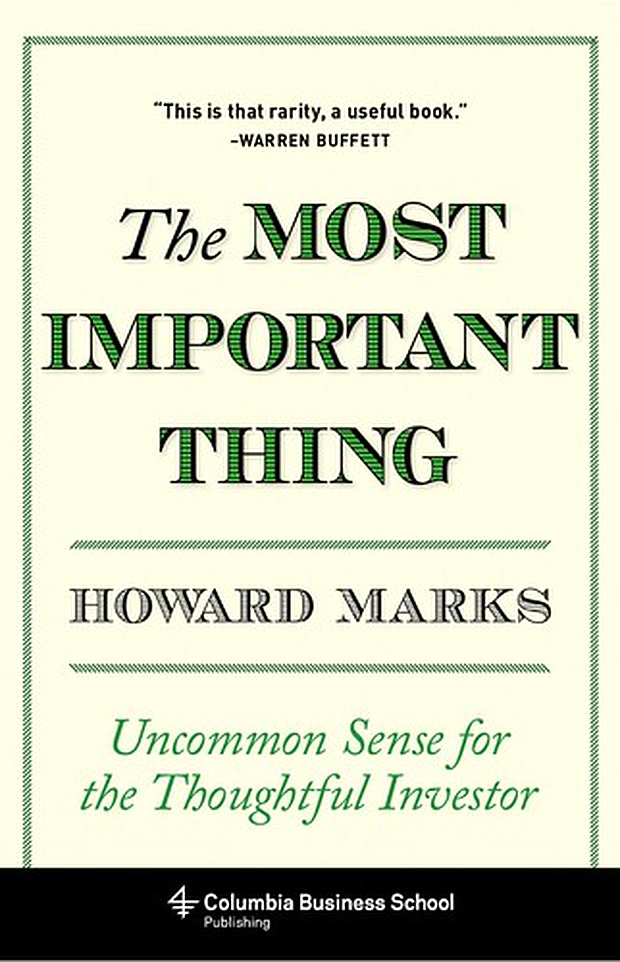
The Most Important Thing
Get on Amazon →
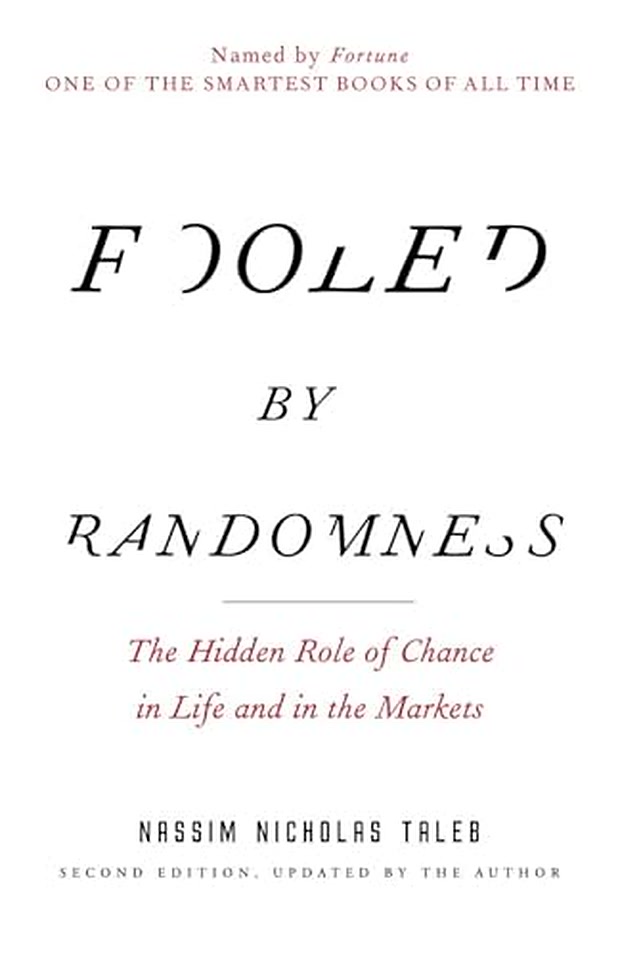
Fooled by Randomness
Get on Amazon →
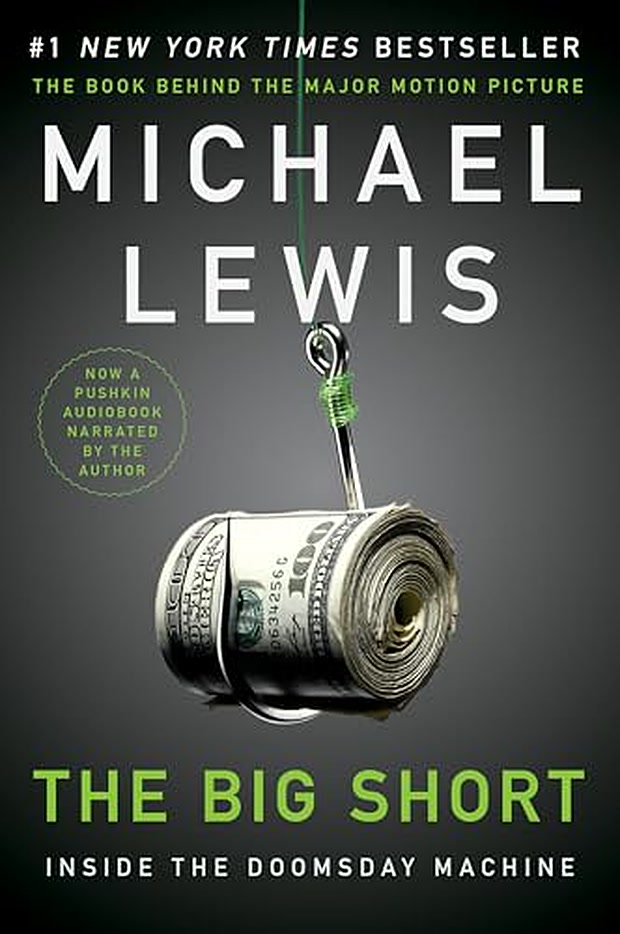
The Big Short
Get on Amazon →
As an Amazon Associate I earn from qualifying purchases.