Howard Marks
1994 02 17 Risk In Todays Markets
© Oaktree Capital Management, L.P.
All Rights ReservedMemo To: Clients
From: Howard S. Marks, TCW Re: Risk in Today's Markets
The ability of the stock market to react so harshly on February 4 to a small, Fed-mandated rise in interest rates, pushing the Dow down 96 points, suggests a lack of
preparedness for negative developments. This prompts me to write to you about certain
risks I feel may be presen t in the markets today.
There are plenty of bullish arguments to be made about the prospects for the economy and corporate profits, and pundits to make th em. While I will not devote space or time to
them, I don't pretend they are nonexistent. And I won't deny the possibility that as an
inherently cautious investor, I sometimes tend to overstate the negatives. What I want to
do, however, is point out the degree to which I feel investors are behaving in a risk-
tolerant manner today, and the implications for all of us.
Two very powerful trends are at work, and have been for the last few years. The first is
the decline in interest rates, which has carried rates to the lowest levels of the last thirty
years and brought on great dissatisfaction with the returns available from low-risk fixed
income investments. The second is the fabulous performance which was produced by
virtually all investments in securities fr om 1991 to 1993. This was a period in which
risk-taking was rewarded, and almost without exception very high returns went to those
who took great risk.
Put these two phenomena together and what do you have? I think the answer is an
environment in which risk-taking is greatly encouraged. It is often said that the market runs on fear and greed, but I believe it usually runs on fear
or greed; that is, at most points in time, one or the other predominates. Right now, because of the two trends cited above, gr eed is greatly elevated and, perhaps more
importantly, fear is in short supply. Thus,
- the money market investor, not content to earn 3% per year, (a negative return after taxes and inflation), turns to notes and bonds,
- the bond investor, unhappy with returns at the shorter (read "l ow-risk") end of
the curve, extends maturities,
- the high grade bond investor drops down in quality,
- the fixed income investor turns to equities,
- the equity investor joins a hedge fund,
© Oaktree Capital Management, L.P.
All Rights Reserved
- the domestic investor looks overseas,
- the international investor emphasizes emerging markets, and
- the traditional bond-and-stock investor s earches for "alternative investments"
likely to repeat the success of the LBO and bankruptcy funds.
And why shouldn't they? The "stick" is th e low prospective return offered in each
investor's traditional bailiwick, and the "carrot" is the high returns earned recently in the
riskier sectors. In brief, "why should I settle for 3% in T-bills when I can get double-digit
returns in stocks?" There are numerous signs of infatuation with -- or non-questioning acceptance of -- the
pursuit of high returns. The torr ential inflow of dollars to mu tual funds is one; I recently
attended a conference at which a fund group re presentative said they were taking in $100
million a day, 90% of it for foreign funds. The rising level of margin debt is another.
Books on investing are reaching the best-sellers list. The names of hedge fund managers
are almost household words. And that brings me, for purposes of illustration, to the subject of hedge funds. When I first got to know the money management comm unity twenty years ago, only a handful of
managers were good enough to command a share of the profits as compensation. Today, according to a recent article in Forbes, there are 800 hedge funds, and some people think being accepted by one of the big na mes is the chance of a lifetime.
I think it's important to remember, though, the symmetrical nature of most investments:
almost every sword is two-edged, and he w ho lives by a risky strategy may die by it.
Investments which will make you a great deal of money when things go well but not lose you a lot when things go poorly are very rare, and their existence must presuppose extremely inefficient markets. With the average stock or bond returning 10-15% last
year, how did some hedge funds make 70% or more? It was through bold and heavily-
leveraged plays on macro-developments such as currency movements. What would have
happened if the managers' calculations ha d proved wrong? The hedge fund manager I
know with the best performance last year, up more than 100%, is said twice in his life to have lost 30% in one day! Do the hedge f und aficionados know how much risk they are
taking? For how long are they tying up their money? How much do they know about the strategies being employed? As the Forb es article pointed out, the sum of the
"information" most hedge fund investors rece ive is a quarterly paragraph reporting the
rate of return. I am not complaining about the fact that th ere are hedge funds, or about their popularity.
My point is simply that the level of risk bor ne by investors is being systematically raised,
often unknowingly and at a time when many valuations are quite high.
© Oaktree Capital Management, L.P.
All Rights ReservedComparison against low interest rates makes low earnings yields and dividend yields
seem tolerable. Likewise, low rates increas e the discounted present value of companies'
future earnings as calculated by valuation m odels. For these reasons and others, many
valuation indicators are at levels today wh ich have proved dangerous and unsustainable
in the past. Just as today's low interest rates are pushing investors toward riskier
securities all along the "food chain" describe d above, however, this sword can also cut
the other way. Warren Buffet said, in one of my favorite adages, "The le ss prudence with which others
conduct their affairs, the gr eater the prudence with which we should conduct our own
affairs." Another adage I'm fond of is, "W hat the wise man does in the beginning, the
fool does in the end." No course of investment action is either wise or foolish in and of
itself. It all depends on the point in time at which it is undertaken, the price that is paid,
and how others are conducting themselves at that moment.
When everyone shrinks from a security because it's "too risky," the few who will buy it can do so with confidence, secure in the know ledge that the price has not been bid up,
and in the likelihood that othe rs will eventually outgrow their fear and jump on the
bandwagon. Today, many prices have been bid up, and the bandwagon is already crowded with wild-eyed investors. It is my view that, first, few of the trends being pursued are at their beginnings; money
has been flowing to today's popular sectors for at least a year or tw o. Second, while some
may argue that prices are not forbiddingly high, it's almost impossible to argue that
they're very low (or that the easy money hasn't already been made). Third, it seems to me
that investors are accepting higher le vels of risk throughout the system.
Here's one illustration: Our cautious high yi eld investing saved clients a lot of money
and heartache in 1989 and 1990. Because we apply in-depth, downside-conscious credit analysis to the high yield segment of the bond market, and define it narrowly, investors
who were chastened by the last decline and don' t want to bear the full brunt of the next
one have hired us repeatedly in the years since. Now, however, we detect increased
interest in more "eclectic" managers w ho will buy cash-paying or non-cash-paying bonds,
going concerns or bankruptcies, convertible or straight bonds, and U.S. or foreign debt. This is just one example, near to us, of the new acceptability of risk -- at what just might
be the wrong time. Too-low interest rates and too- high prices may prove at some point to have set the stage
for a correction. If so, many of the riskier tactics to which recent trends are pushing
investors will increase the extent to which that correction is felt. What course of action,
then, would we argue for? We do not preach risk-avoidance . In fact, the knowing accepta nce of risk for profit is
at the core of much of what we do, and we feel there is an important role today for
investing which is creative and adaptable. But we would take this opportunity to exhort
you to review most critically the risk asso ciated with your curre nt and contemplated
© Oaktree Capital Management, L.P.
All Rights Reservedinvestments, and not to be among those who unc ritically joined the trend toward risk.
Whatever investment opportunities you decide on, we would encourage you to stress
thorough appraisal of th e risks entailed and cautious implementation.
What is it that distinguishes the investme nt opportunities we’d suggest you pursue
today? Not just the offer of high retu rns, but of returns which are more than
proportionate to the risk entailed . The reason we champion inefficient markets (such
as the high yield bonds, convertibles and distress ed debt we're involved with) is that there
exists by definition the potential, if expl oited correctly, for an uncommonly favorable
ratio of return to risk.
Exploitation of opportunities in inefficient markets; insistence on preserving capital;
refusal to pursue maximum return at the cost of maximum risk; specialization rather than dabbling; heavy emphasis on care ful analysis; use of less-risky senior
securities -- these themes have been the co rnerstones of our approach over the years.
They remain highly relevant and should continue to be pursued by all of us, especially at this point in the cycle.
February 17, 1994
© Oaktree Capital Management, L.P.
All Rights ReservedLegal Information and Disclosures
This memorandum expresses the views of the author as of the date indicated and such views are
subject to change without notice. Oaktree has no duty or obligation to update the information contained herein. Further, Oaktree makes no rep resentation, and it should not be assumed, that
past investment performance is an indication of future results. Moreover, wherever there is the
potential for profit there is also the possibility of loss. This memorandum is being made available for educational purposes only and should not be used
for any other purpose. The information contai ned herein does not constitute and should not be
construed as an offering of advisory services or an offer to sell or solicitation to buy any
securities or related financial instruments in any jurisdiction. Certain information contained herein concerning economic trends and performan ce is based on or derived from information
provided by independent third- party sources. Oaktree Capita l Management, L.P. (“Oaktree”)
believes that the sources from which such informa tion has been obtained are reliable; however, it
cannot guarantee the accuracy of such inform ation and has not independently verified the
accuracy or completeness of such information or the assumptions on which such information is
based. This memorandum, including the information cont ained herein, may not be copied, reproduced,
republished, or posted in whole or in part, in any form without the prior written consent of
Oaktree.
Recommended Reading
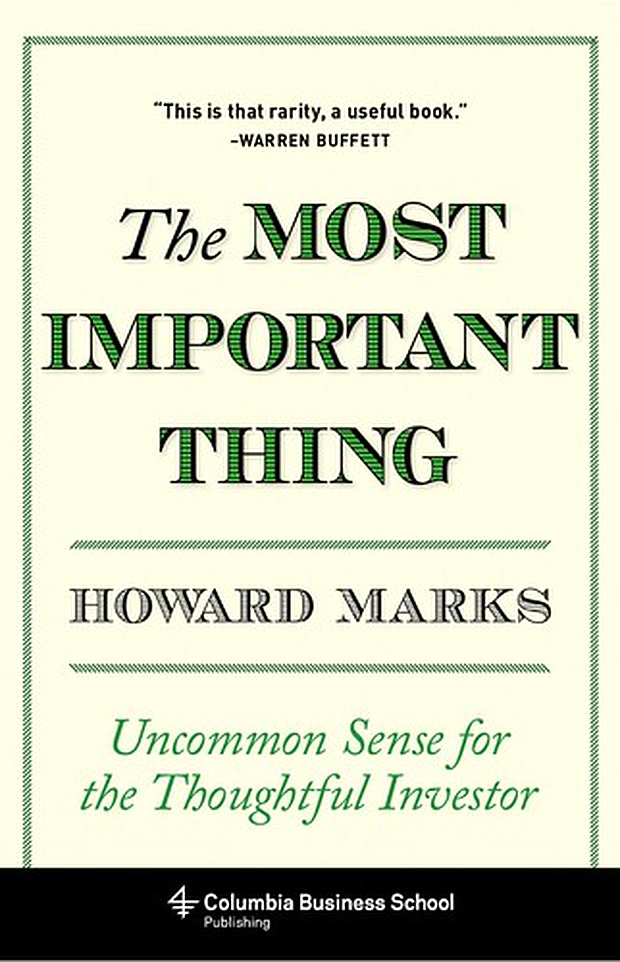
The Most Important Thing
Get on Amazon →
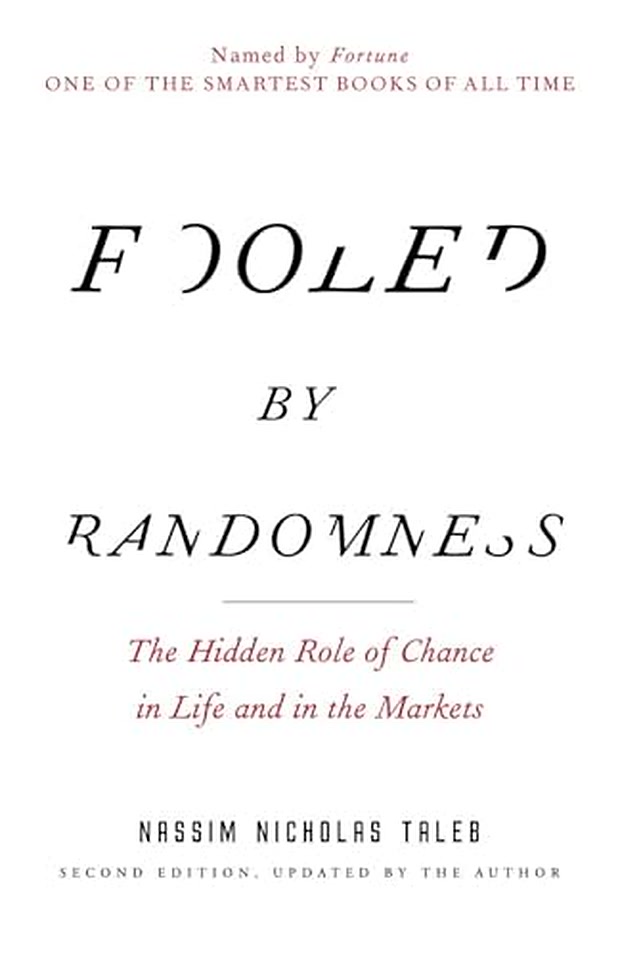
Fooled by Randomness
Get on Amazon →
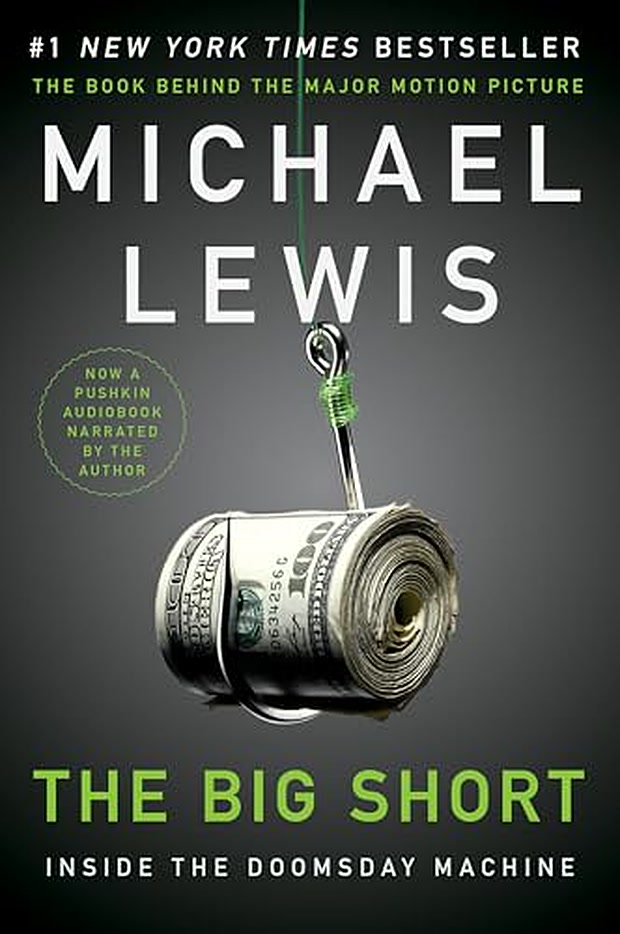
The Big Short
Get on Amazon →
As an Amazon Associate I earn from qualifying purchases.