Howard Marks
1994 01 24 Random Thoughts On The Identification Of Inv Opportunities
© Oaktree Capital Management, L.P.
All Rights ReservedURandom Thoughts on the Identificati on of Investme nt Opportunities
Howard S. Marks -- January 24, 1994
1. No group or sector in the investment world enjoys as its birthright the
promise of consiste nt high returns.
There is no asset class that will do well simp ly because of what it is. An example
of this is real estate. People said, "You should buy real estate because it's a hedge
against inflation," and "You should buy real estate because they're not making any
more." But done at the wrong time, real estate investing didn't work.
2. What matters most is not what you in vest in, but when and at what price.
There is no such thing as a good or bad i nvestment idea per se. For example, the
selection of good companies is certainly not enough to assure good results -- see
Xerox, Avon, Merck and the rest of the "nifty fifty" in 1974. Any investment can be good or bad dependi ng on when it's made and what price
is paid. It's been said that "a ny bond can be triple-A at a price."
There is no security that is so good that it can't be overpriced, or so bad that it
can't be underpriced.
3. The discipline which is most important in investing is not accounting or
economics, but psychology.
The key is who likes the investment now and who doesn't. Future prices changes will be determined by whether it comes to be liked by more people or fewer people in the future. Investing is a popularity contest, and the most dangerous thing is to buy
something at the peak of its popularity. At that point, all favorable facts and
opinions are already factored into its price, and no new buyers are left to emerge.
The safest and most potentially profitabl e thing is to buy something when no one
likes it. Given time its popularity, and thus its price, can only go one way: up.
Watch which asset classes they're hold ing conferences for and how many people
are attending. Sold-out conferences are a danger sign. You want to participate in
auctions where there are only one or two buyers, not hundreds or thousands.
You want to buy things either before they 've been discovered or after there's been
a shake-out.
4. The bottom line is that it is best to act as a contrarian.
© Oaktree Capital Management, L.P.
All Rights Reserved
An investment that "eve ryone" knows to be undervalued is an oxymoron. If
everyone knows it's undervalued, why have n't they bought it and driven up its
price? And if they have bought, how can the price still be low?
Yogi Berra said, "nobody goes to that rest aurant; it's too popular." The equally
oxy-moronic investment versi on is "Everybody likes that security because it's so
cheap."
5. Book the bet that no one else will.
If everyone likes the favorite in a football game and wants to bet on it, the point
spread will grow so wide that the team -- as good as it is -- is un likely to be able to
cover the spread. Take the othe r side of the bet -- on the underdog.
Likewise, if everyone is too scared of junk bonds to buy them, it will become possible for you to buy them at a yield spread which not only overcompensates for the actual credit risk, but se ts the stage for their being the best performing fixed
income sector in the world. That was the case in late 1990. The bottom line is that one must try to be on the other side of the question from
everyone else. If everyone likes it, sell; if no one likes it, buy.
6. As Warren Buffet said, “the less care with which others conduct their affairs,
the more care with which you should conduct yours." When others are
afraid, you needn't be; when oth ers are unafraid, you'd better be.
It is usually said that the market runs on fear and greed. I feel at any given point
in time it runs on fear
Uor U greed.
As 1991 began, everyone was petrified of high yield bonds. Only the very best bonds could be issued, and thus buyers at that time didn't have to do any credit
analysis -- the market did it for them. It s collective fear caused high standards to
be imposed. But when investors are una fraid, they'll buy anything. Thus the
intelligent investor's workload is much increased.
7. Gresham's Law says "bad money drives out good." When paper money
appeared, gold disappeared. It works in investing too: bad investors drive
out good.
When undemanding investors appear, they'll buy anything. Underwriting
standards fall, and it gets hard for demanding investors to find opportunities
offering the return and risk balance they re quire, so they're forced to the sidelines.
Demanding investors must be wil ling to be inactive at times.
© Oaktree Capital Management, L.P.
All Rights ReservedLegal Information and Disclosures
This memorandum expresses the views of the author as of the date indicated and such views are
subject to change without notice. Oaktree has no duty or obligation to update the information contained herein. Further, Oaktree makes no rep resentation, and it should not be assumed, that
past investment performance is an indication of future results. Moreover, wherever there is the
potential for profit there is also the possibility of loss. This memorandum is being made available for educational purposes only and should not be used
for any other purpose. The information contai ned herein does not constitute and should not be
construed as an offering of advisory services or an offer to sell or solicitation to buy any
securities or related financial instruments in any jurisdiction. Certain information contained herein concerning economic trends and performan ce is based on or derived from information
provided by independent third- party sources. Oaktree Capita l Management, L.P. (“Oaktree”)
believes that the sources from which such informa tion has been obtained are reliable; however, it
cannot guarantee the accuracy of such inform ation and has not independently verified the
accuracy or completeness of such information or the assumptions on which such information is
based. This memorandum, including the information cont ained herein, may not be copied, reproduced,
republished, or posted in whole or in part, in any form without the prior written consent of
Oaktree.
Recommended Reading
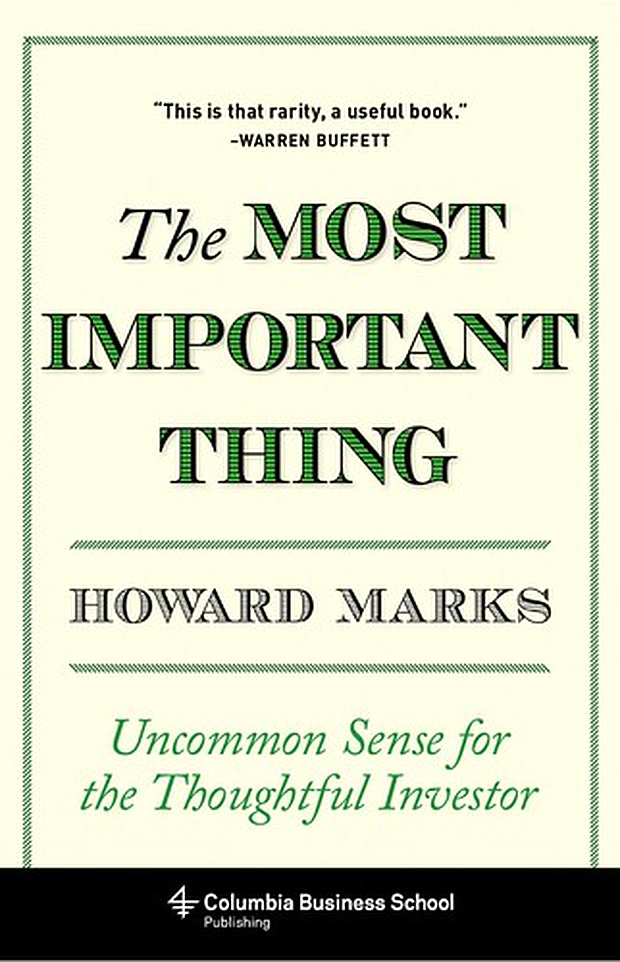
The Most Important Thing
Get on Amazon →
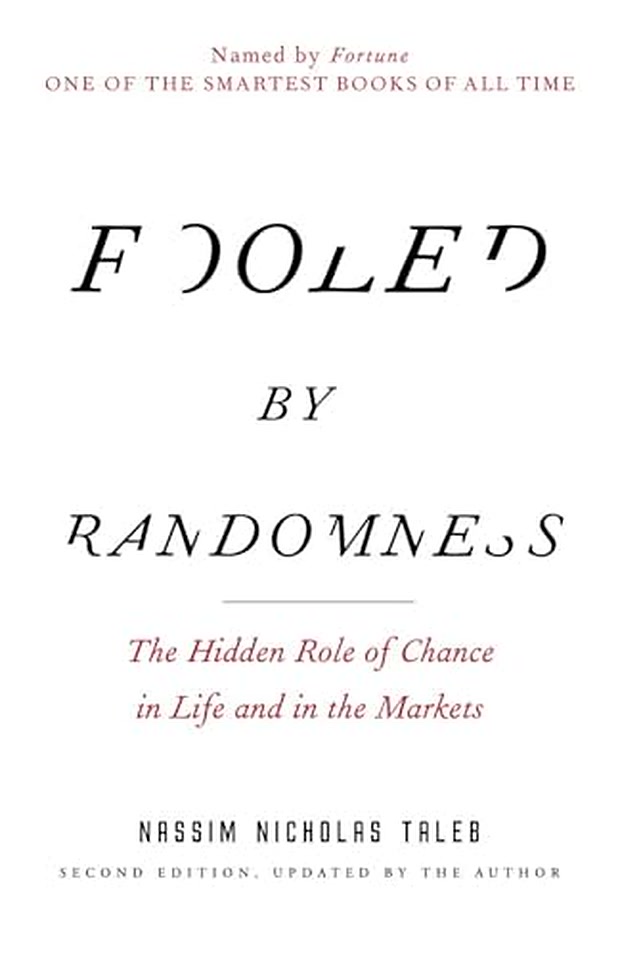
Fooled by Randomness
Get on Amazon →
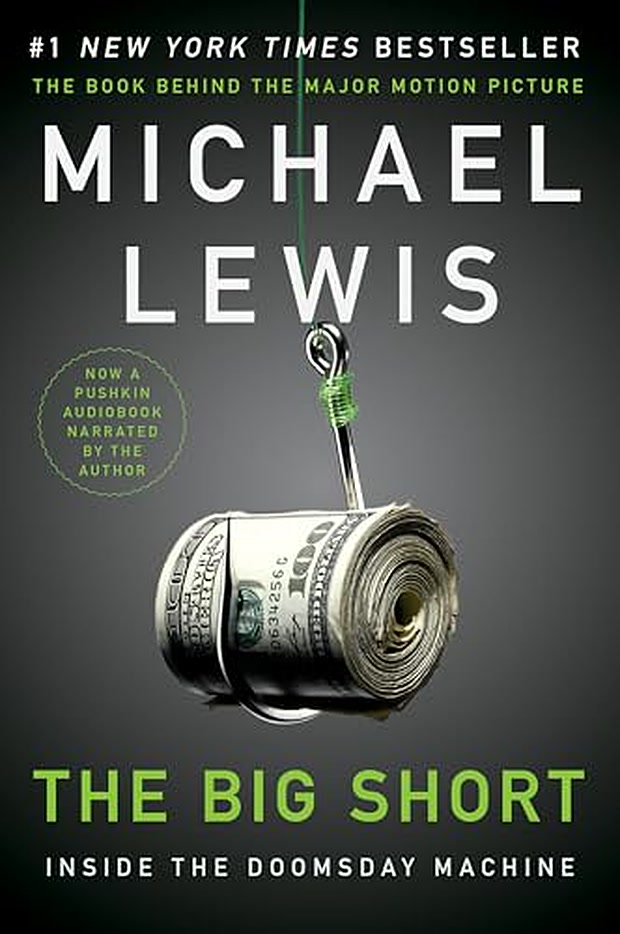
The Big Short
Get on Amazon →
As an Amazon Associate I earn from qualifying purchases.