Howard Marks
1990 10 12 The Route To Performance
© Oaktree Capital Management, L.P.
All Rights ReservedAddendum to Third Quarter Client Letter
From: Howard S. Marks Re: The Route to Performance
We all seek investment performance which is above average, but how to achieve it
remains a major question. My views on the subj ect have come increasingly into focus as
the years have gone by, and two events in late September -- and especially their juxtaposition -- made it even clearer how (and how not) to best pursue those superior
results. First, there was an article in the Wall Street Journal about a prominent money management firm's lagging performance. Its equity results were 1,840 basis points
behind the S&P 500 for the twelve months thr ough August, and as a result its five-year
performance had fallen behind the S&P as well. The president of the firm explained that
its bold over- and under-weightings weren' t wrong, just too early. Here is his
explanation, with whic h I strongly disagree:
If you want to be in the top 5% of money managers, you have to be willing to be in the bottom 5%, too.
The above calls to mind a convertible mutual fund I discussed in my second quarter 1988
letter to convertible clients. The fund held large amounts of common stock in the first
eight months of 1987 and cash after that. As a result, its return was more than 1,600
basis points better than the average convertible fund for th e year, and 945 b.p. ahead of
the second-place fund. In the next half year , its tactics were equally divergent ... but
wrong this time, producing performance whic h was far enough behind to negate the
majority of its 1987 achievement and pull its 18-month results well back into the pack.
My observation at that time mirrored the f und manager quoted above, but from a negative
viewpoint:
. . . in order to strive for performance which is far different from the norm and better, you must do things which expose you to the possibility of being far different from the norm and worse.
These cases illustrate that bold steps taken in pursuit of great performance can just as
easily be wrong as right. Even worse, a co mbination of far above-average and far below-
average years can lead to a long-term r ecord which is characterized by volatility
Uand U
mediocrity. As an alternative, I would lik e to cite the approach of a major mid-West pension plan
whose director I spoke with last month. The return on the plan's equities over the last
© Oaktree Capital Management, L.P.
All Rights Reservedfourteen years, under the direction of this man and his predecessors, has been way ahead
of the S&P 500. He shared with me what he considered the key:
We have never had a year below the 47th percentile over that period or, until 1990, above the 27th percentile. As a result , we are in the fourth percentile for
the fourteen year period as a whole.
I feel strongly that attempting to achieve a superior long term record by stringing together
a run of top-decile years is unlikely to succee d. Rather, striving to do a little better than
average every year -- and through discipline to have highly superior relative results in bad
times -- is:
- less likely to produce extreme volatility, - less likely to produce huge losses which can't be
recouped and, most importantly,
- more likely to work (given the fact that all of us are only human).
Simply put, what the pension fund's record tell s me is that, in equities, if you can avoid
losers (and losing years), the winners will take care of themselves. I believe most strongly that this holds true in my group's oppor tunistic niches as well -- that the best
foundation for above-average long term performance is an absence of disasters. It is for
this reason that a quest for consistency a nd protection, not single- year greatness, is a
common thread underlying all of our investment products:
UIn convertibles U, we insist that our call on potential appreciation be accompanied
by above average resi stance to declines.
UIn high yield bonds U, we strive to raise our relati ve performance by avoiding credit
losses, not by reaching for higher (but more uncertain) yields.
UIn distressed company debt U, we buy only where we believe our cost price is fully
covered by asset values.
There will always be cases and years in wh ich, when all goes right, those who take on
more risk will do better than we do. In the l ong run, however, I feel strongly that seeking
relative performance which is just a little bit above average on a consistent basis -- with
protection against poor absolute results in t ough times -- will prove more effective than
"swinging for the fences." October 12, 1990
© Oaktree Capital Management, L.P.
All Rights ReservedLegal Information and Disclosures
This memorandum expresses the views of the author as of the date indicated and such views are
subject to change without notice. Oaktree has no duty or obligation to update the information contained herein. Further, Oaktree makes no rep resentation, and it should not be assumed, that
past investment performance is an indication of future results. Moreover, wherever there is the
potential for profit there is also the possibility of loss. This memorandum is being made available for educational purposes only and should not be used
for any other purpose. The information contai ned herein does not constitute and should not be
construed as an offering of advisory services or an offer to sell or solicitation to buy any
securities or related financial instruments in any jurisdiction. Certain information contained herein concerning economic trends and performan ce is based on or derived from information
provided by independent third- party sources. Oaktree Capita l Management, L.P. (“Oaktree”)
believes that the sources from which such informa tion has been obtained are reliable; however, it
cannot guarantee the accuracy of such inform ation and has not independently verified the
accuracy or completeness of such information or the assumptions on which such information is
based. This memorandum, including the information cont ained herein, may not be copied, reproduced,
republished, or posted in whole or in part, in any form without the prior written consent of
Oaktree.
Recommended Reading
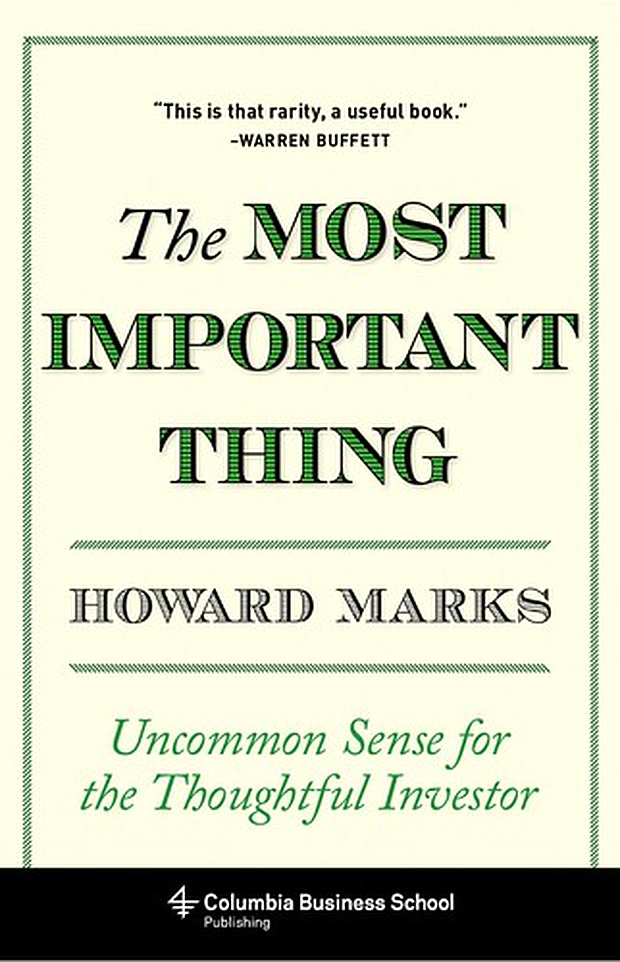
The Most Important Thing
Get on Amazon →
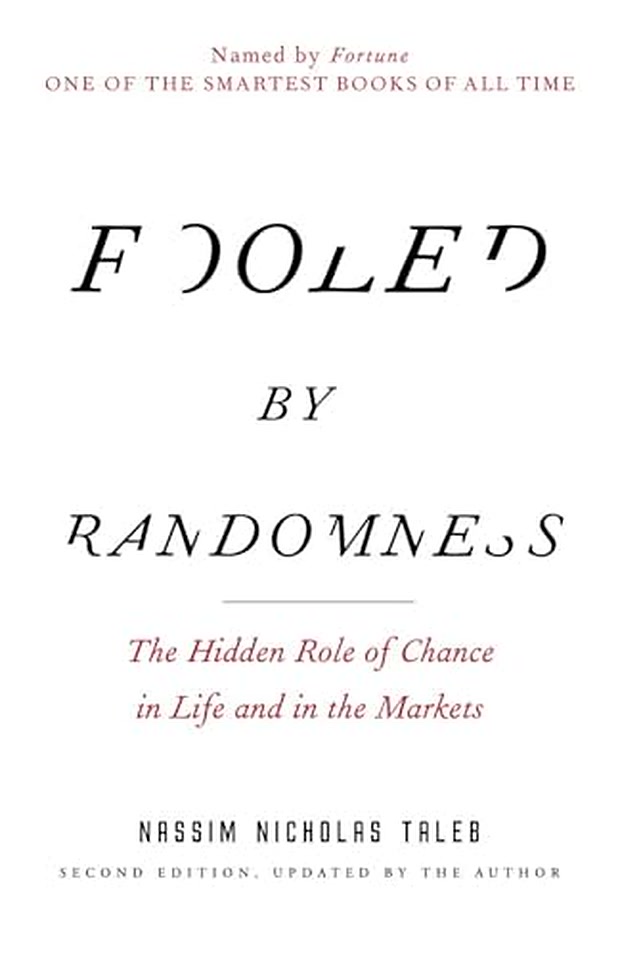
Fooled by Randomness
Get on Amazon →
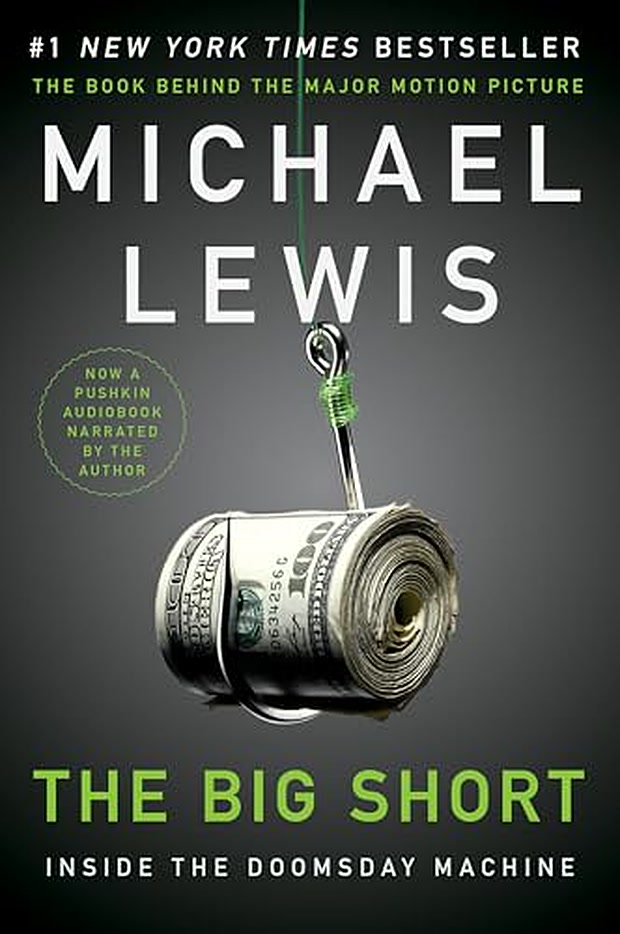
The Big Short
Get on Amazon →
As an Amazon Associate I earn from qualifying purchases.