Charlie Munger
The Psychology of Human Misjudgment
“The Psychology of Human Misjudgment”
delivered by
Charlie Munger
Background
This speech was originally delivered by Charlie Munger to an audience at Harvard University in 1995.
Speech Transcript
I am very interested in the subject of human misjudgment, and Lord knows I’ve created a good bit of it. I don’t think I’ve created my full statistical share, and I think that one of the reasons was I tried to do something about this terrible ignorance I left the Harvard Law School with. When I saw this patterned irrationality, which was so extreme, and I had no theory or anything to deal with it, but I could see that it was extreme, and I could see that it was patterned, I just started to create my own system of psychology, partly by casual reading, but largely from personal experience, and I used that pattern to help me get through life.
Fairly late in life I stumbled into this book, Influence, by a psychologist named Bob Cialdini, who became a super tenured hotshot on a 2,000 person faculty at a very young age. And he wrote this book, which has now sold 300 odd thousand copies, which is remarkable for somebody. Well, it’s an academic book aimed at a popular audience that filled in a lot of holes in my crude system. When those holes had filled in, I thought I had a system that was a good working tool, and I’d like to share that one with you.
And I came here because behavioral economics. How could economics not be behavioral? If it isn’t behavioral, what the hell is it? And I think it’s fairly clear that all reality has to respect all other reality. If you come to inconsistencies, they have to be resolved, and so if there’s anything valid in psychology, economics has to recognize it, and vice versa. So I think the people that are working on this fringe between economics and psychology are absolutely right to be there, and I think there’s been plenty wrong over the years.
Well let me romp through as much of this list as I have time to get through. 24 Standard Causes of Human Misjudgment.
First. Under recognition of the power of what psychologists call reinforcement and economists call incentives. Well you can say, “Everybody knows that.” Well I think I’ve been in the top 5% of my age cohort all my life in understanding the power of incentives, and all my life I’ve underestimated it. And never a year passes, but I get some surprise that pushes my limit a little farther.
One of my favorite cases about the power of incentives is the Federal Express case. The heart and soul of the integrity of the system is that all the packages have to be shifted rapidly in one central location each night. And the system has no integrity if the whole shift can’t be done fast. And Federal Express had one hell of a time getting the thing to work. And they tried moral suasion, they tried everything in the world, and finally somebody got the happy thought that they were paying the night shift by the hour, and that maybe if they paid them by the shift, the system would work better. And lo and behold, that solution worked.
Early in the history of Xerox, Joe Wilson, who was then in the government, had to go back to Xerox because he couldn’t understand how their better, new machine was selling so poorly in relation to their older and inferior machine. Of course when he got there he found out that the commission arrangement with the salesmen gave a tremendous incentive to the inferior machine.
And here at Harvard, in the shadow of B.F. Skinner, there was a man who really was into reinforcement as a powerful thought, and you know, Skinner’s lost his reputation in a lot of places, but if you were to analyze the entire history of experimental science at Harvard, he’d be in the top handful. His experiments were very ingenious, the results were counterintuitive, and they were important. It is not given to experimental science to do better.
What gummed up Skinner’s reputation is that he developed a case of what I always call man-with-a-hammer syndrome, to the man with a hammer, every problem tends to look pretty much like a nail. And Skinner had one of the more extreme cases in the history of Academia, and this syndrome doesn’t exempt bright people. It’s just a man with a hammer and Skinner is an extreme example of that. And later, as I go down my list, let’s go back and try and figure out why people, like Skinner, get man-with-a-hammer syndrome.
Incidentally, when I was at the Harvard Law School there was a professor, naturally at Yale, who was derisively discussed at Harvard, and they used to say, “Poor old Blanchard. He thinks declaratory judgments will cure cancer.” And that’s the way Skinner got. And not only that, he was literary, and he scorned opponents who had any different way of thinking or thought anything else was important. This is not a way to make a lasting reputation if the other people turn out to also be doing something important.
My second factor is simple psychological denial. This first really hit me between the eyes when a friend of our family had a super-athlete, super-student son who flew off a carrier in the north Atlantic and never came back, and his mother, who was a very sane woman, just never believed that he was dead. And, of course, if you turn on the television, you find the mothers of the most obvious criminals that man could ever diagnose, and they all think their sons are innocent. That’s simple psychological denial. The reality is too painful to bear, so you just distort it until it’s bearable. We all do that to some extent, and it’s a common psychological misjudgment that causes terrible problems.
Third. Incentive-cause bias, both in ones own mind and that of ones trusted advisor, where it creates what economists call agency costs. Here, my early experience was a doctor who sent bushel baskets full of normal gallbladders down to the pathology lab in the leading hospital in Lincoln, Nebraska. And with that quality control for which community hospitals are famous, about five years after he should’ve been removed from the staff, he was.
And one of the old doctors who participated in the removal was also a family friend, and I asked him, I said, “Tell me, did he think, here’s a way for me to exercise my talents,” this guy was very skilled technically, “And make a high living by doing a few maimings and murders every year, along with some frauds?” And he said, “Hell no, Charlie. He thought that the gallbladder was the source of all medical evil, and if you really love your patients, you couldn’t get that organ out rapidly enough.”
Now that’s an extreme case, but in lesser strength, it’s present in every profession and in every human being. And it causes perfectly terrible behavior. If you take sales presentations and brokers of commercial real estate and businesses, I’m 70 years old, I’ve never seen one I thought was even within hailing distance of objective truth. If you want to talk about the power of incentives and the power of rationalized, terrible behavior, after the Defense Department had had enough experience with cost-plus percentage of cost contracts, the reaction of our republic was to make it a crime for the federal government to write one, and not only a crime, but a felony.
And by the way, the government’s right, but a lot of the way the world is run, including most law firms and a lot of other places, they’ve still got a cost-plus percentage of cost system. And human nature, with its version of what I call incentive-caused bias, causes this terrible abuse. And many of the people who are doing it you would be glad to have married into your family compared to what you’re otherwise going to get.
Now there are huge implications from the fact that the human mind is put together this way, and that is that people who create things like cash registers, which make most behavior hard, are some of the effective saints of our civilization. And the cash register was a great moral instrument when it was created. And Patterson knew that, by the way. He had a little store, and the people were stealing him blind and never made any money, and people sold him a couple of cash registers and it went to profit immediately.
And, of course, he closed the store and went into the cash register business. With results which are … And so this is a huge, important thing. If you read the psychology texts, you will find that if they’re 1,000 pages long, there’s one sentence. Somehow incentive-caused bias has escaped the standard survey course in psychology.
Fourth, and this is a superpower in error-causing psychological tendency, bias from consistency and commitment tendency, including the tendency to avoid or promptly resolve cognitive dissonance. Includes the self-confirmation tendency of all conclusions, particularly expressed conclusions, and with a special persistence for conclusions that are hard-won.
Well what I’m saying here is that the human mind is a lot like the human egg, and the human egg has a shut-off device. When one sperm gets in, it shuts down so the next one can’t get in. The human mind has a big tendency of the same sort. And here again, it doesn’t just catch ordinary mortals, it catches the deans of physics. According to Max Planck, the really innovative, important new physics was never really accepted by the old guard.
Instead, a new guard came along that was less brain-blocked by its previous conclusions. And if Max Planck’s crowd had this consistency and commitment tendency that kept their old inclusions intact in spite of disconfirming evidence, you can imagine what the crowd that you and I are part of behaves like.
And of course, if you make a public disclosure of your conclusion, you’re pounding it into your own head. Many of these students that are screaming at us, you know, they aren’t convincing us, but they’re forming mental change for themselves, because what they’re shouting out they’re pounding in. And I think educational institutions that create a climate where too much of that goes on are in a fundamental sense, they’re irresponsible institutions. It’s very important to not put your brain in chains too young by what you shout out.
And all these things like painful qualifying and initiation rituals, all those things, pound in your commitments and your ideas. The Chinese brainwashing system, which was for war prisoners, was way better than anybody else’s. They maneuvered people into making tiny little commitments and declarations, and then they’d slowly build. That worked way better than torture.
Sixth. Bias from Pavlovian association, misconstruing past correlation as a reliable basis for decision-making. I never took a course in psychology, or economics either for that matter, but I did learn about Pavlov in high school biology. And the way they taught it, you know, so the dog salivated when the bell rang. So what? Nobody made the least effort to tie that to the wide world. Well the truth of the matter is that Pavlovian association is an enormously powerful psychological force in the daily life of all of us. And, indeed, in economics we wouldn’t have money without the role of so-called secondary reinforcement, which is a pure psychological phenomenon demonstrated in the laboratory.
Practically, I’d say 3/4 of advertising works on pure Pavlov. Think how association, pure association, works. Take Coca-Cola company we’re the biggest share-holder. They want to be associated with every wonderful image, heroics in the Olympics, wonderful music, you name it. They don’t want to be associated with Presidents’ funerals and so forth. When have you seen a Coca-Cola ad, and the association really works.
And all these psychological tendencies work largely or entirely on a subconscious level, which makes them very insidious. Now you’ve got Persian messenger syndrome. The Persians really did kill the messenger who brought the bad news. You think that is dead? I mean you should’ve seen Bill Paley in his last 20 years. He didn’t hear one damn thing he didn’t want to hear. People knew that it was bad for the messenger to bring Bill Paley things he didn’t want to hear. Well that means that the leader gets in a cocoon of unreality, and this is a great big enterprise, and boy, did he make some dumb decisions in the last 20 years.
And now the Persian messenger syndrome is alive and well. When I saw, some years ago, Arco and Exxon arguing over a few hundred millions of ambiguity in their North Slope treaties before a superior court judge in Texas, with armies of lawyers and experts on each side. Now this is a Mad Hatter’s tea party, two engineering-style companies can’t resolve some ambiguity without spending tens of millions of dollars in some Texas superior court? In my opinion what happens is that nobody wants to bring the bad news to the executives up the line. But here’s a few hundred million dollars you thought you had that you don’t. And it’s much safer to act like the Persian messenger who goes away to hide rather than bring home the news of the battle lost.
Talking about economics, you get a very interesting phenomenon that I’ve seen over and over again in a long life. You’ve got two products, suppose they’re complex, technical products. Now you’d think, under the laws of economics, that if product A costs X, if product Y costs X minus something, it will sell better than if it sells at X plus something, but that’s not so. In many cases when you raise the price of the alternative products, it’ll get a larger market share than it would when you make it lower than your competitor’s product.
That’s because the bell, a Pavlovian bell, I mean ordinarily there’s a correlation between price and value, then you have an information inefficiency. And so when you raise the price, the sales go up relative to your competitor. That happens again and again and again. It’s a pure Pavlovian phenomenon. You can say, “Well, the economists have figured this sort of thing out when they started talking about information inefficiencies,” but that was fairly late in economics that they found such an obvious thing. And, of course, most of them don’t ask what causes the information inefficiencies.
Well one of the things that causes it is pure old Pavlov and his dog. Now you’ve got bios from Skinnerian association, operant conditioning, you know, where you give the dog a reward and pound in the behavior that preceded the dog’s getting the award. And, of course, Skinner was able to create superstitious pigeons by having the rewards come by accident with certain occurrences, and, of course, we all know people who are the human equivalents of superstitious pigeons. That’s a very powerful phenomenon. And, of course, operant conditioning really works. I mean the people in the center who think that operant conditioning is important are very much right, it’s just that Skinner overdid it a little.
Where you see in business just perfectly horrible results from psychologically rooted tendencies is in accounting. If you take Westinghouse, which blew, what, two or three billion dollars pre-tax at least loaning developers to build hotels, and virtually 100% loans? Now you say any idiot knows that if there’s one thing you don’t like it’s a developer, and another you don’t like it’s a hotel.
And to make a 100% loan to a developer who’s going to build a hotel. But this guy, he probably was an engineer or something, and he didn’t take psychology any more than I did, and he got out there in the hands of these slick salesmen operating under their version of incentive-caused bias, where any damned way of getting Westinghouse to do it was considered normal business, and they just blew it.
That would never have been possible if the accounting system hadn’t been such but for the initial phase of every transaction it showed wonderful financial results. So people who have loose accounting standards are just inviting perfectly horrible behavior in other people. And it’s a sin, it’s an absolute sin. If you carry bushel baskets full of money through the ghetto, and made it easy to steal, that would be a considerable human sin, because you’d be causing a lot of bad behavior, and the bad behavior would spread. Similarly an institution that gets sloppy accounting commits a real human sin, and it’s also a dumb way to do business, as Westinghouse has so wonderfully proved.
Oddly enough nobody mentions, at least nobody I’ve seen, what happened with Joe Jett and Kidder Peabody. The truth of the matter is the accounting system was such that by punching a few buttons, the Joe Jetts of the world could show profits, and profits that showed up in things that resulted in rewards and esteem and every other thing that human being. Well the Joe Jetts are always with us, and they’re not really to blame, in my judgment at least. But that bastard who created that foolish accounting system who, so far as I know, has not been flayed alive, ought to be.
Seventh. Bias from reciprocation tendency, including the tendency of one on a roll to act as other persons expect. Well here, again, Cialdini does a magnificent job at this, and you’re all going to be given a copy of Cialdini’s book. And if you have half as much sense as I think you do, you will immediately order copies for all of your children and several of your friends. You will never make a better investment.
It is so easy to be a patsy for what he calls the compliance practitioners of this life. But, at any rate, reciprocation tendency is a very, very powerful phenomenon, and Cialdini demonstrated this by running around a campus, and he asked people to take juvenile delinquents to the zoo. And it was a campus, and so one in six actually agreed to do it. And after he’d accumulated a statistical output he went around on the same campus and he asked other people, he said, “Gee, would you devote two afternoons a week to taking juvenile delinquents somewhere and suffering greatly yourself to help them,” and there he got 100% of the people to say no.
But after he’d made the first request, he backed off a little, and he said, “Would you at least take them to the zoo one afternoon?” He raised the compliance rate from a third to a half. He got three times the success by just going through the little ask-for-a-lot-and-back-off.
Now if the human mind, on a subconscious level, can be manipulated that way and you don’t know it, I always use the phrase, “You’re like a one-legged man in an ass-kicking contest.” I mean you are really giving a lot of quarter to the external world that you can’t afford to give. And on this so-called role theory, where you tend to act in the way that other people expect, and that’s reciprocation if you think about the way society is organized.
A guy named Zimbardo had people at Stanford divide into two pieces, one were the guards and the other were the prisoners, and they started acting out roles as people expected. He had to stop the experiment after about five days. He was getting into human misery and breakdown and pathological behavior. I mean it was awesome. However, Zimbardo is greatly misinterpreted. It’s not just reciprocation tendency and role theory that caused that, it’s consistency and commitment tendency. Each person, as he acted as a guard or a prisoner, the action itself was pounding in the idea.
Wherever you turn, this consistency and commitment tendency is affecting you. In other words, what you think may change what you do, but perhaps even more important, what you do will change what you think. And you can say, “Everybody knows that.” I want to tell you I didn’t know it well enough early enough.
Eight. Now this is a lollapalooza, and Henry Kaufman wisely talked about this, bias from over-influence by social proof, that is, the conclusions of others, particularly under conditions of natural uncertainty and stress. And here, one of the cases the psychologists use is Kitty Genovese, where all these people, I don’t know, 50, 60, 70 of them just sort of sat and did nothing while she was slowly murdered. Now one of the explanations is that everybody looked at everybody else and nobody else was doing anything, and so there’s automatic social proof that the right thing to do is nothing.
That’s not a good enough explanation for Kitty Genovese, in my judgment. That’s only part of it. There are microeconomic ideas and gain/loss ratios and so forth that also come into play. I think time and time again, in reality, psychological notions and economic notions interplay, and the man who doesn’t understand both is a damned fool.
Big-shot businessmen get into these waves of social proof. Do you remember some years ago when one oil company bought a fertilizer company, and every other major oil company practically ran out and bought a fertilizer company? And there was no more damned reason for all these oil companies to buy fertilizer companies, but they didn’t know exactly what to do, and if Exxon was doing it, it was good enough for Mobil, and vice versa. I think they’re all gone now, but it was a total disaster.
Now let’s talk about efficient market theory, a wonderful economic doctrine that had a long vogue in spite of the experience of Berkshire Hathaway. In fact one of the economists who won, he shared a Nobel Prize, and as he looked at Berkshire Hathaway year after year, which people would throw in his face as saying maybe the market isn’t quite as efficient as you think, he said, “Well, it’s a two-sigma event.” And then he said we were a three-sigma event. And then he said we were a four-sigma event. And he finally got up to six sigmas, better to add a sigma than change a theory, just because the evidence comes in differently. And, of course, when this share of a Nobel Prize went into money management himself, he sank like a stone.
If you think about the doctrines I’ve talked about, namely, one, the power of reinforcement after all you do something and the market goes up and you get paid and rewarded and applauded and what have you, meaning a lot of reinforcement, if you make a bet on a market and the market goes with you. Also, there’s social proof. I mean the prices on the market are the ultimate form of social proof, reflecting what other people think, and so the combination is very powerful.
Why would you expect general market levels to always be totally efficient, say even in 1973, 4 at the pit, or in 1972 or whatever it was when the Nifty 50 were in their heyday? If these psychological notions are-
Fifty were in their heyday. If these psychological notions are correct, you would expect some waves of irrationality, which carry general levels to … ’til they’re inconsistent with the reason.
Nine. What made these economists love the efficient-market theory is the math was so elegant, and after all, math was what they’d learned to do. To the man with a hammer, every problem tends to look pretty much like a nail. The alternative truth was a little messy, and they’d forgotten the great economist Keynes, whom I think said, “Better to be roughly right than precisely wrong.”
Nine. Bias from contrast caused distortions of sensation, perception, and cognition. Here the great experiment that Cialdini does in his class is he takes three buckets of water. One’s hot, one’s cold, and one’s room temperature. And he has the student stick his left hand in the hot water and his right hand in the cold water. Then he has them remove the hands and put them both in the room temperature bucket, and of course with both hands in the same bucket of water, one seems hot, and the other seems cold because the sensation apparatus of man is over-influenced by contrast. It has no absolute scale. It’s got a contrast scale in it, and it’s scale with quantum effects in it, too. It takes a certain percentage change before it’s noticed.
Maybe you’ve had a magician remove your watch, I certainly have, without your noticing it. It’s the same thing. He’s taking advantage of your contrast type troubles and your sensory apparatus. But here the great truth is that cognition mimics sensation, and the cognition manipulators mimic the watch-removing magician. In other words, people are manipulating you all day long on this contrast phenomenon.
Cialdini cites the case of the real estate broker. You’ve got the rube that’s been transferred into your town, and the first thing you do is you take the rube out to two of the most awful over-priced houses you’ve ever seen, and then you take the rube to some moderately over-priced house and then you stick ’em. And it works pretty well, which is why the real estate salesmen do it. It’s always gonna work.
And the accidents of life can do this to you, and it can ruin your life. In my generation when women lived at home until they got married, I saw some perfectly terrible marriages made by highly desirable women because they lived in terrible homes. And I’ve seen some terrible second marriages, which were made because they were slight improvements over an even worse first marriage.
You think you’re immune from these things, and you laugh, and I wanna tell you you aren’t. My favorite analogy, I can’t vouch for the accuracy of. I have this worthless friend I like to Bridge with, and he’s a total intellectual amateur that lives on inherited money. But he told me once something I really enjoyed hearing. He said, “Charlie,” he says, “If you throw a fog into very hot water, the frog will jump out. But if you put the frog in room temperature water and just slowly heat the water up, the frog will die there.”
Now I don’t know whether that’s true about a frog, but it’s sure as hell true about many of the businessmen I know, and there again, it is the contrast phenomenon.
These are hot-shot high-powered people. These are not fools. If it comes to you in small pieces, you’re likely to miss, so you have to … if you’re gonna be a person of good judgment, you have to do something about this warp in your head where it’s so mislead by mere contrast.
Bias from over-influence by authority. Well here the Milgram experiment is it’s caused … I think there have been 1600 psychological papers written about Milgram. He had a person posing as an authority figure trick ordinary people into giving what they had every reason to expect was heavy torture by electric shock to perfectly innocent fellow citizens. And the experiment has been … he was trying to show why Hitler succeeded and a few other things. So it has really caught the fancy of the world. Partly it’s so politically correct and …
Over-influence by authority has another very … this’ll … you’ll like this one. You got a pilot and a co-pilot. The pilot is the authority figure. They don’t do this in airplanes, but they’ve done it in simulators. They have the pilot do something where the co-pilot who’s been trained in simulators a long time. He knows he’s not to allow the plane to crash. They have the pilot to do something where an idiot co-pilot would know the plane was gonna crash, but the pilot’s doing it, and the co-pilot is sitting there, and the pilot is the authority figure. 25% of the time, the plane crashes. This is a very powerful psychological tendency.
It’s not quite as powerful as some people think, and I’ll get to that later.
11. Bias from Deprival Super Reaction Syndrome, including bias caused by present or threatened scarcity, including threatened removal of something almost possessed but never possessed. Here I took the Munger dog, lovely harmless dog. The one way, the only way to get that dog to bite you was to try and take something out of its mouth after it was already there.
Any of you who’ve tried to do take-aways in labor negotiations will know the human version of that dog is there in all of us. I had a neighbor, a predecessor, on a little island where I have a house, and his nextdoor neighbor put a little pine tree in that was about three feet high, and it turned his 180 degree view of the harbor into 179 and three-quarters. Well they had a blood feud like the Hatfields and McCoys, and it went on and on and on. People are really crazy about minor decrements down.
Then if you act on them, you get into reciprocation tendency because you don’t just reciprocate affection, you reciprocate animosity. And the whole thing can escalate, and so huge insanities can come from just subconsciously over-weighing the importance of what you’re losing or almost getting and not getting.
The extreme business cake here was New Coke. Now Coca-Cola has the most valuable trademark in the world. We’re the major shareholder. I think we understand that trademark. Coke has armies of brilliant engineers, lawyers, psychologists, advertising executives, and so forth. And they had a trademark on a flavor, and they’d spent better part of 100 years getting people to believe that trademark had all these intangible values, too. And people associate it with a flavor, so they were gonna tell people not that it was improved ’cause you can’t improve a flavor. If a flavor’s a matter of taste, you may improve a detergent or something, but telling you’re gonna make a major change in a flavor, I mean … So they got this huge Deprival Super Reaction Syndrome.
Pepsi was within weeks of coming out with Old Coke in a Pepsi bottle, which would have been the biggest fiasco in modern times. Perfect, pluperfect insanity. And by the way, both Goizueta and Keough are just wonderful about it. They just joke. They don’t … Keough always says I must’ve been away on vacation. He participated in every single … he’s a wonderful guy. And by the way, Goizueta’s a wonderful, smart guy, an engineer.
Smart people make these terrible blunders. How can you not understand Deprival Super Reaction Syndrome? But people do not react symmetrically to loss and gain. Now maybe a great Bridge player like Zeckhauser does, but that’s a trained response. Ordinary people subconsciously affected by their inborn tendencies.
Bias from envy/jealousy. Well, envy/jealousy made what, two out of the 10 commandments. Those of you who’ve raised siblings or tried to run a law firm or investment bank or even a faculty. I’ve heard Warren say a half a dozen times, “It’s not greed that drives the world but envy.”
Here again, you go through the psychology survey courses. You go to the index: envy, jealousy. Thousand page book, it’s blank! There’s some blind spots in academia. But it’s an enormously powerful thing, and it operates to a considerable extent at a subconscious level, and anybody who doesn’t understand it is taking on defects he shouldn’t have.
Bias from chemical dependency. Well we don’t have to talk about that. We’ve all seen so much of it, but it’s interesting how it always causes moral breakdown if there’s any need, and it always involves massive denial. It aggravates what we talked about earlier in the aviator case, the tendency to distort reality so that it’s endurable.
Bias from gambling compulsion. Well here, Skinner made the only explanation you’ll find in the standard psychology survey course. He, of course, created a variable reinforcement rate for his pigeons, his mice, and he found that that would pound in the behavior better than any other enforcement pattern. He says, “Ah ha! I’ve explained why gambling is such a powerful, addictive force in the civilization.” I think that is, to a very considerable extent, true, but being Skinner, he seemed to think that was the only explanation.
The truth of the matter is the devisers of these modern machines and techniques know a lot of things that Skinner didn’t know. For instance, a lottery … you have a lottery where you get your number by lot and then somebody draws a number by lot? It gets lousy play. You get a lottery where people get to pick their number, get big play. Again, it’s this consistency and commitment thing. People think that if they’ve committed to it, it has to be good. The minute they’ve picked it themselves, it gets an extra validity. After all, they thought it and they acted on it.
Then if you take slot machines, you get bar, bar, lemon. It happens again and again and again. You get all these near misses. Well that’s Deprival Super Reaction Syndrome, and boy do the people who create the machines understand human psychology.
And for the high IQ crowd, they’ve got poker machines where you make choices, so you can play blackjack, so to speak, with the machine. It’s wonderful what we’ve done with our computers to ruin the civilization.
But anyway, this gambling compulsion is a very, very powerful important thing. Look at what’s happening to our country. Every Indian reservation, every river town, and look at the people who are ruined with the aid of their stockbrokers and others.
Again, if you look in the standard textbook of psychology, you’ll find practically nothing on it except maybe one sentence talking about Skinner’s rats. That is not an adequate coverage of the subject.
Bias from liking distortion, including the tendency to especially like oneself, one’s own kind, and one’s own idea structures, and the tendency to be especially susceptible to being mislead by someone liked.
Disliking distortion. Bias from that. The reciprocal of liking distortion and the tendency not to learn appropriately from someone disliked. Well here again, we’ve got hugely powerful tendencies, and if you look at the wars in part of the Harvard Law School as we sit here, you can see that very brilliant people get into this almost pathological behavior, and these are very, very powerful, basic, subconscious, psychological tendencies or at least partly subconscious.
Now let’s get back to B.F. Skinner, man with a hammer syndrome revisited. Why is man with a hammer syndrome always present? Well if you stop to think about it, incentive caused bias. His professional reputation is all tied up with what he knows. He likes himself, and he likes his own ideas, and he’s expressed them to other people, consistency and commitment tendency. I mean you’ve got four or five of these elementary psychological tendencies combining to create this man with a hammer syndrome.
Once you realize that you can’t really buy your thinking down. Partly you can, but largely you can’t in this world. You’ve learned a lesson that’s very useful in life. George Bernard Shaw said, and a character say in The Doctor’s Dilemma, “In the last analysis, every profession is a conspiracy against the laity.” But he didn’t have it quite right because it’s not so much conspiracy as it is a subconscious, psychological tendency.
The guy tells you what is good for him, and he doesn’t recognize that he’s doing anything wrong any more than that doctor did when he was pulling out all those normal gallbladders. He believed that his own idea structures will cure cancer, and he believed that the demons that he’s the guardian against are the biggest demons and the most important ones. And in fact, they may be very small demons compared to the demons that you face. So you’re getting your advice in this world from your paid advisor with this huge load of ghastly bias. And woe to you!
And only two ways to handle it. You can hire your advisor and then just apply a windage factor like I used to do when I was a rifle shooter. I’d just adjust for so many miles an hour wind. Or you can learn the basic elements of your advisor’s trade. You don’t have to learn very much, by the way, because if you learn just a little and you can make him explain why he’s right. And those two tendencies will take part of the warp out of the thinking you’ve tried to hire down.
By and large, it works terribly. I have never seen a management consultant’s report in my long life that didn’t end with the following paragraph: “What this situation really needs is more management consulting.” Never once! I always turn to the last page. Of course Berkshire Hathaway doesn’t hire them, so … I only do this in sort of a lawyer-istic basis. Sometimes I’m in a nonprofit where some idiot hires one.
17. Bias from the non-mathematical nature of the human brain in its natural state as it deals with probabilities employing crude heuristics and is often mislead by mere contrast. The tendency to overweigh conveniently available information and other psychological rooted mis-thinking tendencies on this list when the brain should be using the simple probability mathematics of Fermat and Pascal, applied to all reasonably attainable and correctly weighted items of information that are of value in predicting outcomes. The right way to think is the way Zeckhauser plays Bridge. It’s just that simple.
And your brain doesn’t naturally know how to think the way Zeckhauser knows to play Bridge. Now you notice I put in that availability thing, and there I’m mimicking some very eminent psychologists … Tversky, who raised the idea of availability to a whole heuristic of misjudgment.
You know, they are very substantially right. Ask the Coca-Cola company, which has raised availability to a secular religion, if availability changes behavior. You’ll drink a hell of a lot more Coke if it’s always available. Availability does change behavior and cognition.
Nonetheless, even though I recognize that and applaud Tversky, Kahneman, I don’t like it for my personal system except as part of a greater subsystem, which is you gotta think the way Zeckhauser plays Bridge. It isn’t just the lack of availability that distorts your judgment. All the things on this list distort judgment. And I wanna train myself to mentally run down the list instead of just jumping on availability. So that’s why I state it the way I do.
In a sense, these psychological tendencies make things unavailable ’cause if you quickly jump to one thing and then because you’ve jumped to it, the consistency and commitment tendency makes you lock in, boom, it’s there. Number one.
Or if something is very vivid, which I’m going to come to next, that will really pound in. And the reason that the thing that really matters is now unavailable and what’s extra vivid wins is … the extra vividness creates the unavailability. So I think it’s much better to have a whole list of things that cause you to be less like Zeckhauser than it is just to jump on one factor.
Here, I think we should discuss John Gutfreund. This is a very interesting human example which will be taught in every decent professional school for at least a full generation. Gutfreund has a trusted employee, and it comes to light not through confession but by accident that the trusted employee has lied like hell to the government and manipulated the accounting system and was really the equivalent to forgery. The man immediately says, “I’ve never done it before. I’ll never do it again. It was an isolated example.” Of course, it was obvious that he was trying to help the government as well as himself ’cause he thought the government had been dumb enough to pass a rule that he’d spoken against. And after all, if a government’s not gonna pay attention to a bond trader at Salomon, what kind of a government can it be?
At any rate, and this guy has been part of a little clique that has made way over a billion dollars for Salomon in the very recent past, and it’s a little handful of people. So there are a lot of psychological forces at work. You know the guy’s wife, he’s right in front of you, and there’s human sympathy, and he’s sort of asking for your help, which is the form which encourages reciprocation, and there are all these psychological tendencies are working. Plus the fact he’s part of group that have made a lot of money for you.
At any rate, Gutfreund does not cashier the man, and of course, he had done it before, and he did do it again. Well now you look as though you almost wanted him to do it again or God knows what you look like, but it isn’t good. And that simple decision destroyed John Gutfreund.
It’s so easy to do. Now let’s think it through like the Bridge player, like Zeckhauser. You find an isolated example of a little old lady in the See’s candy company, one of our subsidiaries, getting into the till, and what does she say? “I never did it before. I’ll never do it again. This is gonna ruin my life. Please help me.” And you know her children and her friends, and she’s been around 30 years and standing behind the candy counter with swollen ankles. In your old age, isn’t that glorious a life? And you’re rich and powerful and there she is. “I never did it before, and I will never do it again.”
Well how likely is it that she never did it before? If you’re gonna catch ten embezzlements a year, what are the chances that any one of them, applying what Tversky and Kahneman called baseline information, will be somebody who only did it this once? And the people who have done it before and are gonna do it again, what are they all gonna say?
Well in the history of the See’s candy company, they always say, “I never did it before, and I’m never gonna do it again.” And we cashier them. It would be evil not to because terribly behavior spreads. … You let that stuff … you’ve got social proof, you’ve got incentive caused bias, you got a whole lotta psychological factors that will cause the evil behavior to spread, and pretty soon the whole damn … your place is rotten, the civilization is rotten. It’s not the right way to behave, and …
I will admit that I have … when I knew the wife and children, I have paid severance pay when I fire somebody, for taking a mistress on a extended foreign trip. It’s not the adultery I mind. It’s the embezzlement. But there, I wouldn’t do it where Gutfreund did it, where they’d been cheating somebody else on my behalf. There I think you have to cashier, but if they’re just stealing from you and you get rid of them, I don’t think you need the last ounce of vengeance. In fact, I don’t think you need any vengeance. I don’t think vengeance is much good.
Now we come bias from over-influence by extra vivid evidence. Here’s one … I’m at least $30 million poorer as I sit here giving this little talk because I once bought 300 shares of a stock, and the guy called me back and said, “I got 1500 more.” I said, “Will you hold it for 15 minutes while I think about it?” In CEO of this company, I’ve seen a lot of vivid peculiarities in a long life, but this guy set a world record. I’m talking about the CEO, and I just mis-weighed it. The truth of the matter is his situation was foolproof. He was soon gonna be dead. I turned down the extra 1500 share, and it’s now cost me $30 million, and that’s life in the big city.
It wasn’t something where stock was generally available, and so it’s very easy to mis-weigh the vivid evidence. Gutfreund did that when he looked into the man’s eyes and forgave the colleague.
22. Stress-induced mental changes, small and large, temporary and permanent. Oh no, no no, I’ve skipped one.
Mental confusion caused by information not arrayed in the mind and theory structures creating sound generalizations, developed in response to the question why. Also mis-influence from information that apparently but not really answers the question why. Also failure to obtain deserved influence caused by not properly explaining why.
Well we all know people who’ve flunked, and they try and memorize, and they try and spout back, and they just … doesn’t work. The brain doesn’t work that way. You’ve got to array facts on theory structures answering the question why. If you don’t do that, you cannot handle the world.
Now we get to Feuerstein, who was the general counsel of Salomon when Gutfreund made his big error. And Feuerstein knew better. He told Gutfreund, “You have to report this as a matter of morality and prudent business judgment.” He said, “It’s probably not illegal. There’s probably no legal duty to do it, but you have to do it as a matter of prudent conduct and proper dealing with your main customer.” He said that to Gu-
… and proper dealing with your main customer. He said that to Gutfreund on at least two or three occasions, and he stopped. And, of course, the persuasion failed, and when Gutfreund went down, Feuerstein went with him. It ruined a considerable part of Feuerstein’s life. Well Feuerstein, was a member of the Harvard Law Review, made an elementary psychological mistake. You want to persuade somebody, you really tell them why. And what did we learn in lesson one? Incentives really matter. Vivid evidence really works. He should have told Gutfreund, “You’re likely to ruin your life and disgrace your family and lose your money.” And is Mozer worth this? I know both men. That would’ve worked. So Feuerstein flunked elementary psychology, this very sophisticated, brilliant lawyer. But don’t you do that. It’s not very hard to do, you know, just to remember that “Why?” is terribly important.
Other normal limitations of sensation, memory, cognition and knowledge. Well, I don’t have time for that. Stress-induced mental changes. Here, my favorite example is the great Pavlov. He had all these dogs in cages, which had all been conditioned into changed behaviors, and the great Leningrad flood came, and it just went right up. The dog’s in a cage, and the dog had as much stress as you can imagine a dog ever having. The water receded in time to save some of the dogs, and Pavlov noted that they’d had a total reversal of their conditioned personality. Well, being the great scientist he was, he spent the rest of his life giving nervous breakdowns to dogs, and he learned a hell of a lot that I regard as very interesting. I have never known any Freudian analyst who knew anything about the last work of Pavlov, and I never met a lawyer who understood that what Pavlov found out with those dogs had anything to do with programming, and de-programming, and cults and so forth. …
Then, we’ve got other common mental illnesses and declines, temporary and permanent, including the tendency to lose ability through disuse. Then I’ve got mental and organizational confusion from say-something syndrome. Here, my favorite thing is the bee, a honeybee. A honeybee goes out and finds the nectar, and he comes back, and he does a dance that communicates to the other bees where the nectar is, and they go out and get it. Well, some scientist who was clever, like B.F. Skinner, decided to do an experiment. He put the nectar straight up. Way up. Well, in a natural setting, there is no nectar way the hell straight up, and the poor honeybee doesn’t have a genetic program that is adequate to handle what he now has to communicate.
You’d think the honeybee would come back to the hive and slink into a corner, but he doesn’t. He comes into the hive and does this incoherent dance, and all my life I’ve been dealing with the human equivalent of that honeybee. And it’s a very important part of human organization to set things up so the noise, and the reciprocation and so forth of all these people who have what I call say-something syndrome don’t really affect the decisions.
Now, the time has come to ask two or three questions. This is the most important question in this whole talk. What happens when these standard psychological tendencies combine? What happens when the situation, or the artful manipulation of man, causes several of these tendencies to operate on a person toward the same end at the same time? The clear answer is the combination greatly increases power to change behavior, compared to the power of merely one tendency acting alone. Examples are: Tupperware parties. Tupperware has now made billions of dollars out of a few manipulative psychological tricks. It was so schlock that directors of Justin Dart’s company resigned when he crammed it down his board’s throat. And he was totally right, by the way, judged by economic outcomes.
Moonie conversion methods. Boy, do they work. He just combines four or five of these things together. The system of Alcoholics Anonymous. A 50% no-drinking rate outcome when everything else fails? It’s a very clever system that uses four or five psychological systems at once toward, I might say, a very good end. The Milgrim experiment. See, Milgrim … It’s been widely interpreted as mere obedience, but the truth of the matter is that the experimenter who got the students to give the heavy shocks in Milgrim, he explained why. It was a false explanation. “We need this to look for scientific truth,” and so on. That greatly changed the behavior of the people. And number two, he worked them up, tiny shock, a little larger, a little larger. So commitment and consistency tendency and the contrast principle were both working in favor of this behavior. So again, it’s four different psychological tendencies.
When you get these lollapalooza effects you will almost always find four or five of these things working together. When I was young, there was a whodunit hero who always said
cherchez la femme
. What you should search for in life is the combination, because the combination is likely to do you in. Or, if you’re the inventor of Tupperware parties, it’s likely to make you enormously rich if you can stand shaving when you do it. One of my favorite cases is the McDonald-Douglas airliner evacuation disaster. The government requires that airliners pass a bunch of tests. One of them is evacuation. Get everybody out, I think it’s 90 seconds or something like that. It’s some short period of time. The government has rules, make it very realistic, so on, and so on. You can’t select nothing but 20-year-old athletes to evacuate your airline.
So McDonald-Douglas schedules one of these things in a hangar, and they make the hangar dark. The concrete floor is 25 feet down, and they got these little rubber chutes, and they got all these old people. They ring the bell, and they all rush out. In the morning when the first test is done, they create, I don’t know, 20 terrible injuries. People go off to hospitals. Of course, they scheduled another one for the afternoon. By the way, they didn’t meet the time schedule either, in addition to causing all the injuries. So what do they do? They do it again in the afternoon. Now, they create 20 more injuries and one case of a severed spinal column with permanent, unfixable paralysis. They’re engineers. These are brilliant people. This is thought over through in a big bureaucracy. … Authorities told you to do it. He told you to make it realistic. You’ve decided to do it. You’d decided to do it twice. Incentive-caused bias. If you pass, you save a lot of money. You’ve got to jump this hurdle before you can sell your new airliner.
Again, three, four, five of these things work together, and it turns human brains into mush. And maybe you think this doesn’t happen in picking investments. If so, you’re living in a different world than I am. Finally, the open-outcry auction. Well the open-outcry auction is just made to turn the brain into mush. You get social proof. The other guy is bidding. You get reciprocation tendency. You get deprival super-reaction syndrome. The thing is going away. I mean, it just absolutely is designed to manipulate people into idiotic behavior.
Finally, the institution of the board of directors of a major human, American company. Well, the top guy is sitting there. He’s an authority figure. He’s doing asinine things. You look around the board, nobody else is objecting. Social proof, it’s okay. Reciprocation tendency, he’s raising the director’s fees every year. He’s flying you around in the corporate airplane to look at interesting plants, or whatever in hell they do, and you go and you really get extreme dysfunction as a corrective decision-making body in the typical American board of directors. They only act, again the power of incentives, they only act when it gets so bad that it starts making them look foolish, or threatening legal liability to them. That’s Munger’s rule. I mean, there are occasional things that don’t follow Munger’s rule, but by and large the board of directors is a very ineffective corrector if the top guy is a little nuts, which, of course, frequently happens.
The second question. Isn’t this list of standard psychological tendencies improperly tautological compared with the system of Euclid? That is, aren’t there overlaps, and can’t some items on the list be derived from combinations of other items? The answer to that is, plainly, yes. Three. What good, in the practical world, is the thought system indicated by the list? Isn’t practical benefit prevented because these psychological tendencies are programmed into the human mind by broad evolution so we can’t get rid of them? Broad evolution, I mean the combination of genetic and cultural evolution, but mostly genetic. Well, the answer is the tendencies are partly good and, indeed, probably much more good than bad, otherwise they wouldn’t be there. By and large these rules of thumb, they work pretty well for man given his limited mental capacity, and that’s why they were programmed in by broad evolution.
At any rate, they can’t be simply washed out automatically and they shouldn’t be. Nonetheless, the psychological thought system described is very useful in spreading wisdom and good conduct when one understands it and uses it constructively. Here are some examples. Karl Braun’s communication practices. He designed oil refineries with spectacular skill and integrity. He had a very simple rule. Remember I said, “Why is important?” You got fired in the Braun company. You had to have five Ws. You had to tell who, what you wanted to do, where and when, and you had to tell him why. If you wrote a communication and left out the why, you got fired, because Braun knew it’s complicated building an oil refinery. It can blow up. All kinds of things happen, and he knew that his communication system worked better if you always told him why. That’s a simple discipline, and boy does it work.
Two, the use of simulators in pilot training. Here, again, abilities attenuate with disuse. Well, the simulator is God’s gift because you can keep them fresh. Three, the system of Alcoholics Anonymous. That’s certainly a constructive use of somebody understanding psychological tendencies. I think they just blundered into it, as a matter of fact, so you can regard it as kind of an evolutionary outcome. But, just because they blundered into it doesn’t mean you can’t invent its equivalent when you need it for a good purpose. Clinical training in medical schools. Here’s a profoundly correct way of understanding psychology. The standard practice is watch one, do one, teach one. Boy, does that pound in what you want pounded in. Again, the consistency and commitment tendency. That is a profoundly correct way to teach clinical medicine.
The rules of the U.S. Constitutional Convention, totally secret, no vote until the final vote, then just one vote on the whole Constitution. Very clever psychological rules, and if they had a different procedure, everybody would have been pushed into a corner by his own pronouncements and his own oratory and his own … and no recorded votes until the last one. And they got it through by a whisker with those wise rules. We wouldn’t have had the Constitution if our forefathers hadn’t been so psychologically acute, and look at the crowd we got now.
Six, the use of granny’s rule. I love this. One of the psychologists who works with the center gets paid a fortune running around America, and he teaches executives to manipulate themselves. Now granny’s rule is you don’t get the ice cream unless you eat your carrots. Well, granny was a very wise woman. That is a very good system. So this guy, a very eminent psychologist, he runs around the country telling executives to organize their day so they force themselves to do what’s unpleasant and important by doing that first, and then rewarding themselves with something they really like doing. He is profoundly correct.
Seven, the Harvard Business School’s emphasis on decision trees. When I was young and foolish, I used to laugh at the Harvard Business School. I said, “They’re teaching 28-year-old people that high school algebra works in real life?” We’re talking about elementary probability. But later, I wised up and I realized that it was very important that they do that, and better late than never. Eight, the use of post-mortems at Johnson & Johnson. At most corporations, if you make an acquisition and it works out to be a disaster, all the paperwork and presentations that caused the dumb acquisition to be made are quickly forgotten. You’ve got denial, you’ve got everything in the world. You’ve got Pavlovian association tendency. Nobody even wants to even be associated with the damned thing, or even mention it. At Johnson & Johnson, they make everybody revisit their old acquisitions and wade through the presentations. That is a very smart thing to do. By the way, I do the same thing routinely.
Nine, the great example of Charles Darwin is he avoided confirmation bias. Darwin probably changed my life because I’m a biography nut, and when I found out the way he always paid extra attention to the disconfirming evidence, and all these little psychological tricks, I also found out that he wasn’t very smart by the ordinary standards of human acuity, yet there he is buried in Westminster Abbey. That’s not where I’m going, I’ll tell you. And I said, “My God, here’s a guy that, by all objective evidence, is not nearly as smart as I am and he’s in Westminster Abbey? He must have tricks I should learn.” And I started wearing little hair shirts like Darwin to try and train myself out of these subconscious psychological tendencies that cause so many errors. It didn’t work perfectly, as you can tell from listening to this talk, but it would’ve been even worse if I hadn’t done what I did. And you can know these psychological tendencies and avoid being the patsy of all the people that are trying to manipulate you to your disadvantage, like Sam Walton. Sam Walton won’t let a purchasing agent take a handkerchief from a salesman. He knows how powerful the subconscious reciprocation tendency is. That is a profoundly correct way for Sam Walton to behave.
Then, there’s the Warren Buffett rule for open-outcry auctions: don’t go. We don’t go to the closed-bid auctions too because they … that’s a counter-productive way to do things ordinarily for a different reason, which Zeckhauser would understand. Four, what special knowledge problems lie buried in the thought system indicated by the list? Well, one is paradox. Now, we’re talking about a type of human wisdom that the more people learn about it, the more attenuated the wisdom gets. That’s an intrinsically paradoxical kind of wisdom. But, we have paradox in mathematics and we don’t give up mathematics. I say damn the paradox. This stuff is wonderfully useful.
By the way, the granny’s rule, when you apply it to yourself, is sort of a paradox in a paradox. The manipulation still works even though you know you’re doing it. I’ve seen that done by one person to another. I drew this beautiful woman as my dinner partner a few years ago, and I’d never seen her before. Well, she’s married to prominent Angelino. She sat down next to me, and she turned her beautiful face up and she said, “Charlie,” she said, “What one word accounts for your remarkable success in life?” Now, I knew I was being manipulated and that she’d done this before, and I just loved it. I never see this woman without a little lift in my spirits. By the way, I told her I was rational. You’ll have to judge yourself whether that’s true. I may be demonstrating some psychological tendency I hadn’t planned on demonstrating.
How should the best parts of psychology and economics interrelate in an enlightened economist’s mind? Two views. That’s the thermodynamics model. You know, you can’t derive thermodynamics from plutonium, gravity, and laws of mechanics, even though it’s a lot of little particles interacting. And here is this wonderful truth that you can sort of develop on your own, which is thermodynamics. Some economists, and I think Milton Friedman is in this group, but I may be wrong on that, sort of like the thermodynamics model. I think Milton Friedman, who has a Nobel prize, is probably a little wrong on that. I think the thermodynamics analogy is over-strained. I think knowledge from these different soft sciences have to be reconciled to eliminate conflict. After all, there’s nothing in thermodynamics that’s inconsistent with Newtonian mechanics and gravity, and I think that some of these economic theories are not totally consistent with other knowledge, and they have to be bent. And I think that these behavioral economics, or economists, are probably the ones that are bending them in the correct direction.
Now, my prediction is when the economists take a little psychology into account that the reconciliation will be quite endurable. Here, my model is the procession of the equinoxes. The world would be simpler for a long-term climatologist if the angle of the axis of the Earth’s rotation, compared to the plane of the Euclyptic, were absolutely fixed. But it isn’t fixed. Over every 40,000 years or so there’s this little wobble, and that has pronounced long-term effects. Well, in many cases, what psychology is going to add is just a little wobble, and it will be endurable. Here, I quote another hero of mine, who of course is Einstein, where he said, “The Lord is subtle, but not malicious.” And I don’t think it’s going to be that hard to bend economics a little to accommodate what’s right in psychology. The final question is if the thought system indicated by this list of psychological tendencies has great value not widely recognized and employed, what should the educational system do about it? I am not going to answer that one now. I like leaving a little mystery.
Thanks for reading. You can get more actionable ideas in my popular email newsletter. Each week, I share 3 short ideas from me, 2 quotes from others, and 1 question to think about.
Over 3,000,000 people subscribe
. Enter your email now and join us.
About the Author
James Clear
writes about habits, decision making, and continuous improvement. He is the author of the #1
New York Times
bestseller,
Atomic Habits
. The book has sold over 25 million copies worldwide and has been translated into more than 60 languages.
Click here to learn more →
Read Next
All Speeches
Recommended Reading

Poor Charlie's Almanack
Get on Amazon →
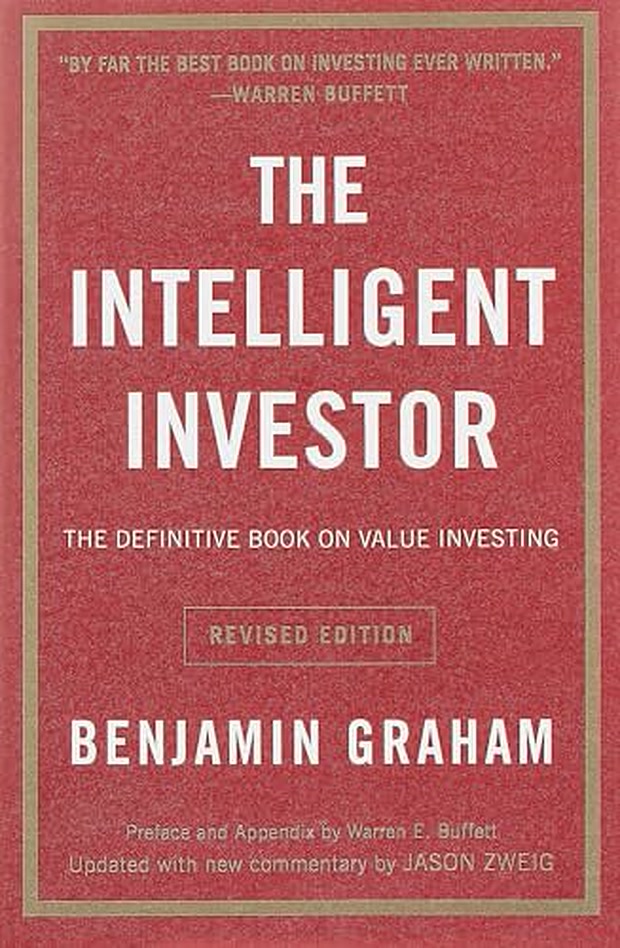
The Intelligent Investor
Get on Amazon →
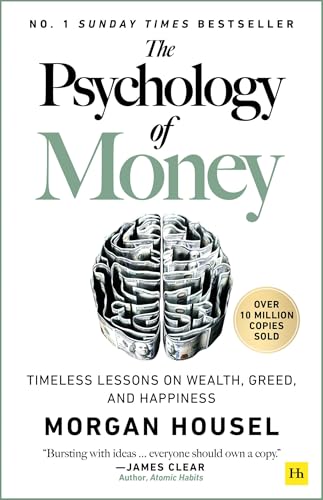
The Psychology of Money
Get on Amazon →
As an Amazon Associate I earn from qualifying purchases.