What if winning at investing means thinking one level deeper than everyone else, and avoiding loss beats chasing gain? Howard Marks shows how.
This is The Most Important Thing by Howard Marks, the co-founder of Oaktree Capital. His famous memos distill a lifetime of value investing into a handful of uncommon ideas.
Go One Level Deeper
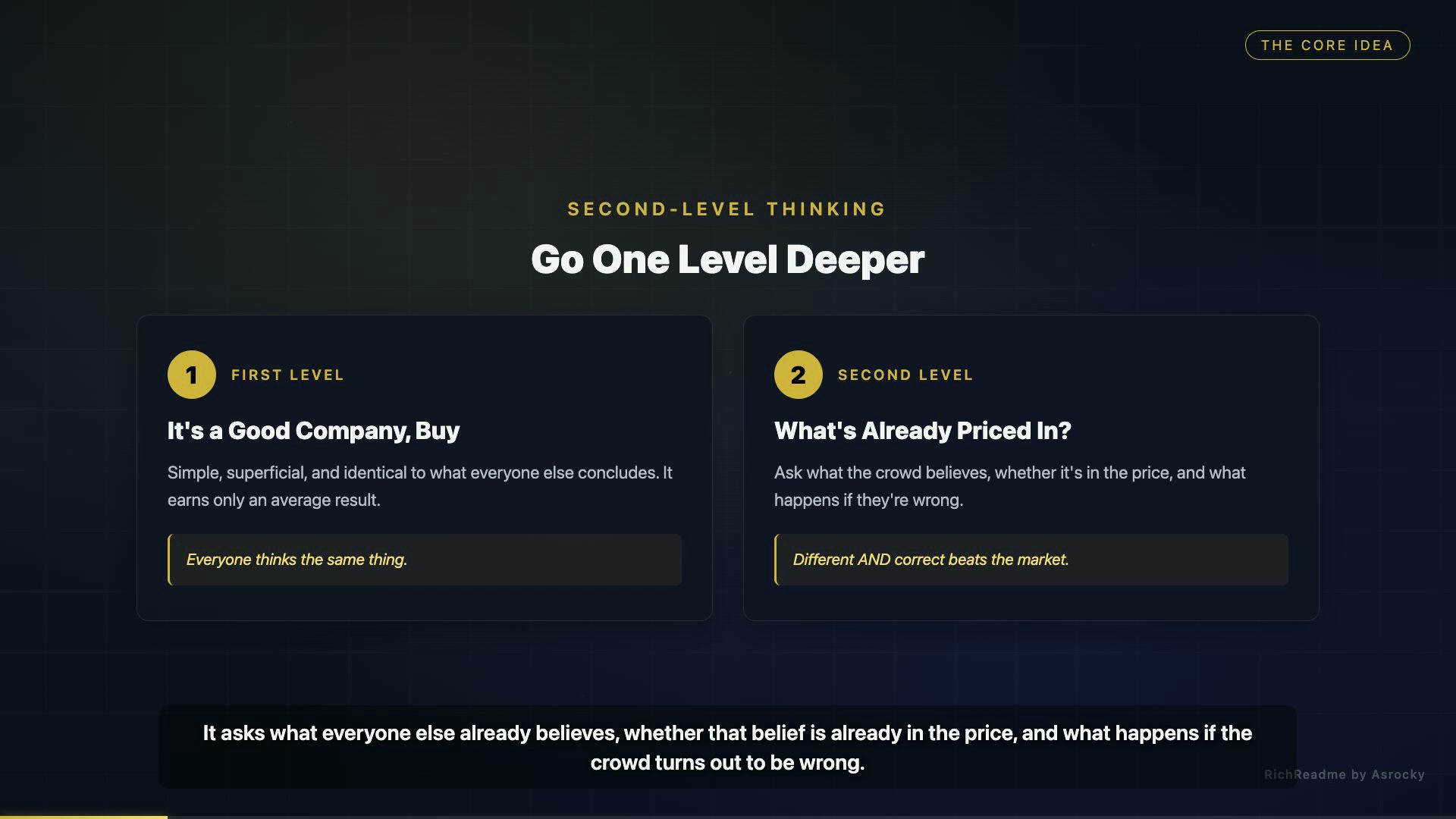
Marks begins with second-level thinking. First-level thinking is simple and superficial. It says this is a good company, so buy the stock. Second-level thinking goes deeper.
It asks what everyone else already believes, whether that belief is already in the price, and what happens if the crowd turns out to be wrong. First-level thinkers all reach the same conclusion and earn the same average result. To outperform, your view has to be both different from the consensus and correct. Being contrarian is lonely, but it is the only path to superior returns.
Risk
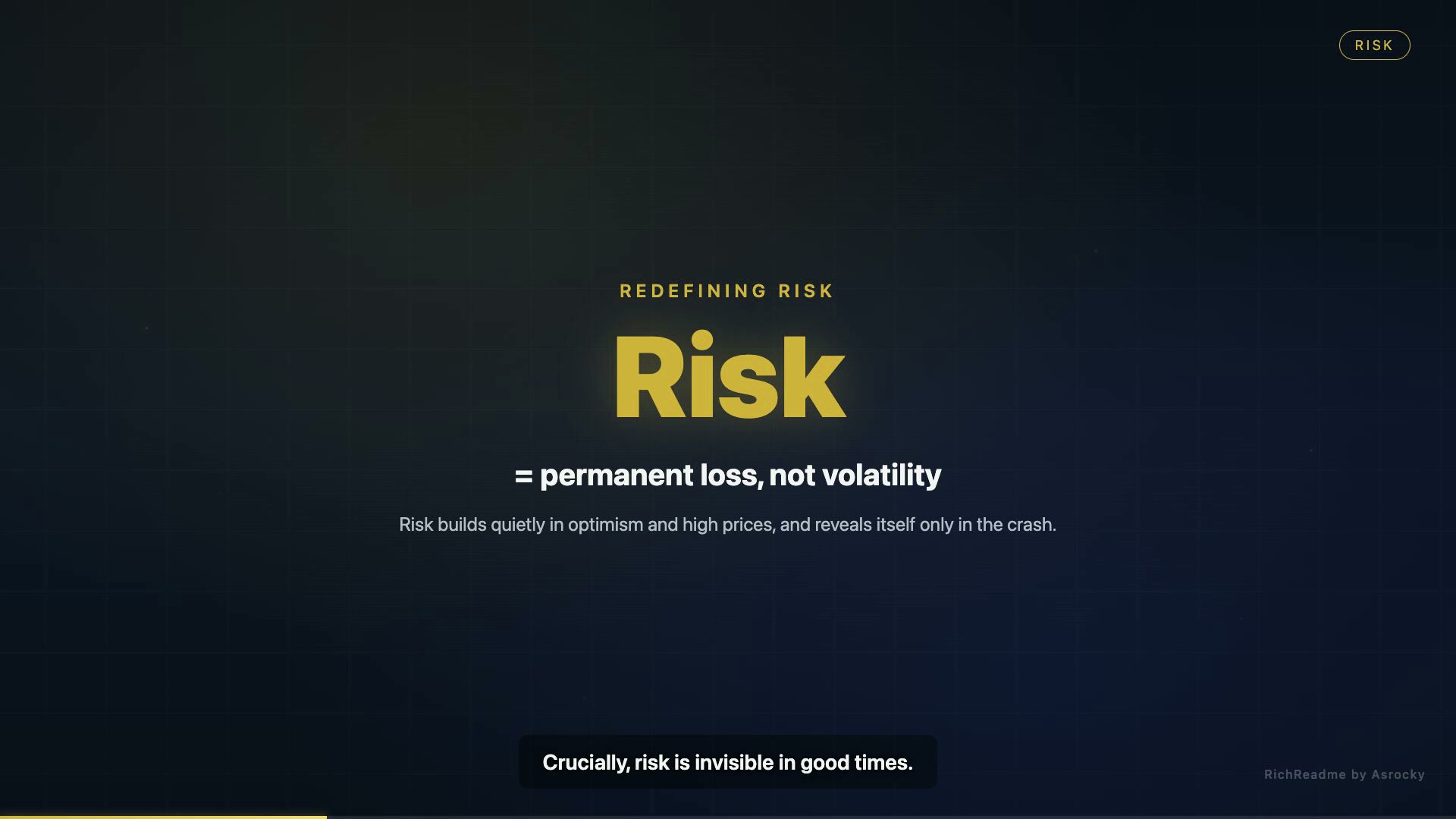
He then redefines risk. Most people think risk means volatility, the up and down wiggle of a price. Marks says the real risk is the probability of permanent capital loss. Crucially, risk is invisible in good times.
It builds up quietly when investors are optimistic and prices are high, and it only reveals itself when the market crashes. The riskiest moment is when everyone feels safe, because that is when assets are most expensive. The safest moment is when fear has already driven prices down.
Markets Swing, They Don't Balance
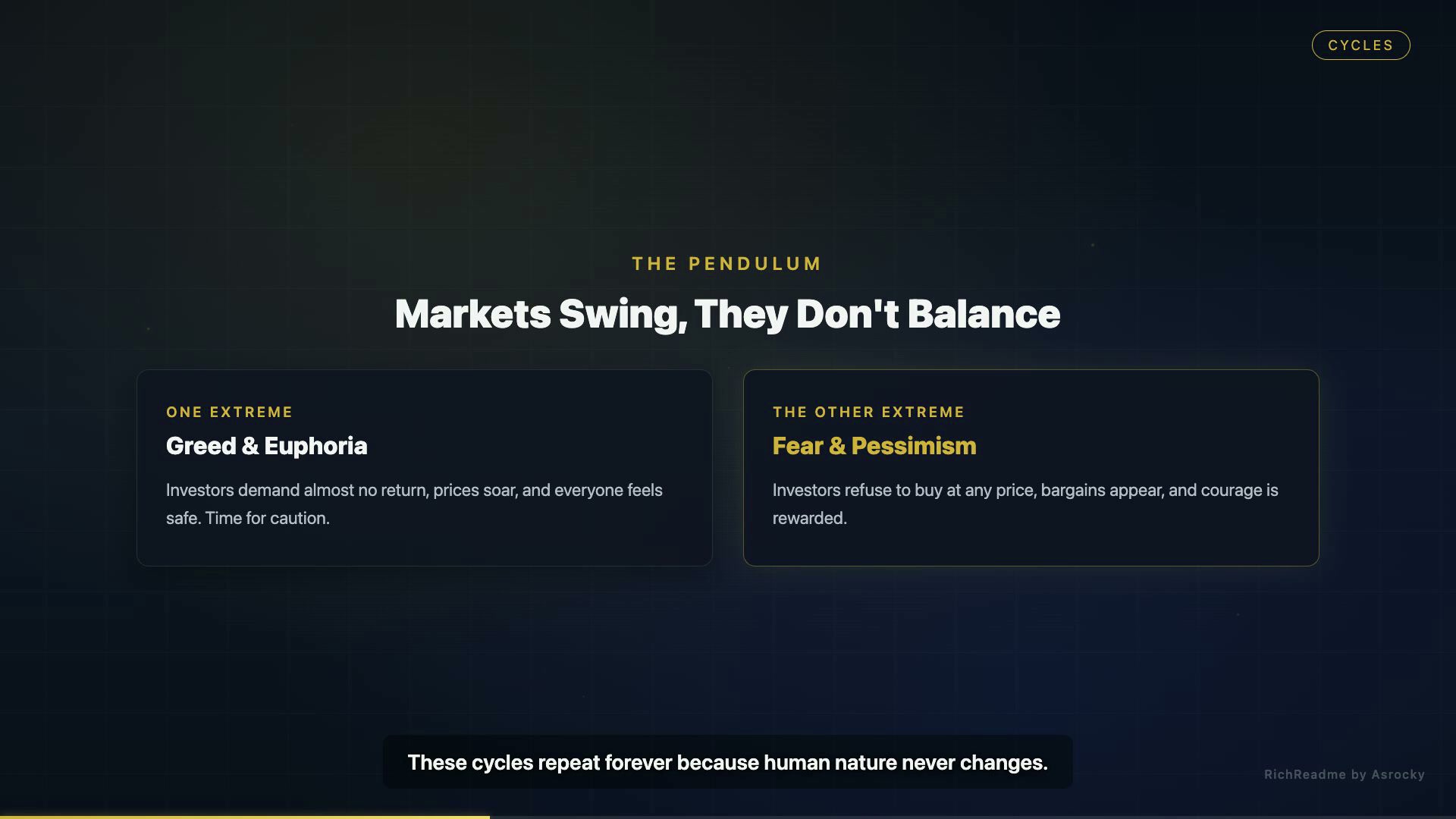
Markets move like a pendulum, rarely resting at the fair-value midpoint. They swing between greed and fear, between euphoria and depression, between demanding almost no return and refusing to invest at any price. These cycles repeat forever because human nature never changes. The disciplined investor learns to locate the pendulum's position.
When it swings toward greedy euphoria, it is time for caution. When it swings toward terrified pessimism and bargains appear, it is time for courage. The cycle itself is predictable, even if its exact timing is not.
Comfort Is Expensive
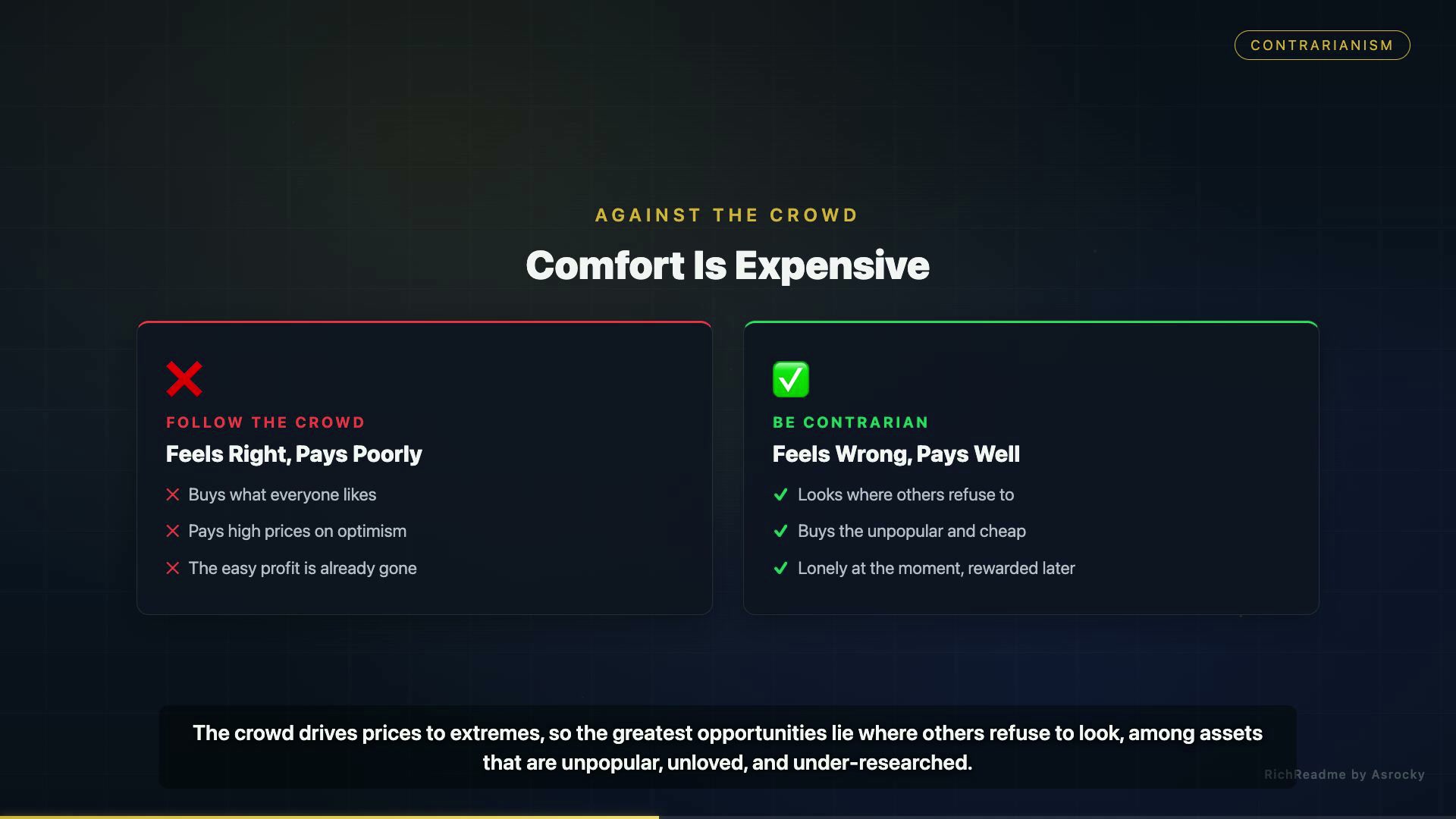
This leads to contrarianism. You cannot do the same thing everyone else does and expect a superior result. The crowd drives prices to extremes, so the greatest opportunities lie where others refuse to look, among assets that are unpopular, unloved, and under-researched.
Buying what everyone likes means paying high prices built on optimistic assumptions. Contrarian investing feels wrong at the moment you do it, which is exactly why it works. If an idea felt comfortable, it would already be crowded, and the easy profit would be gone.
Price
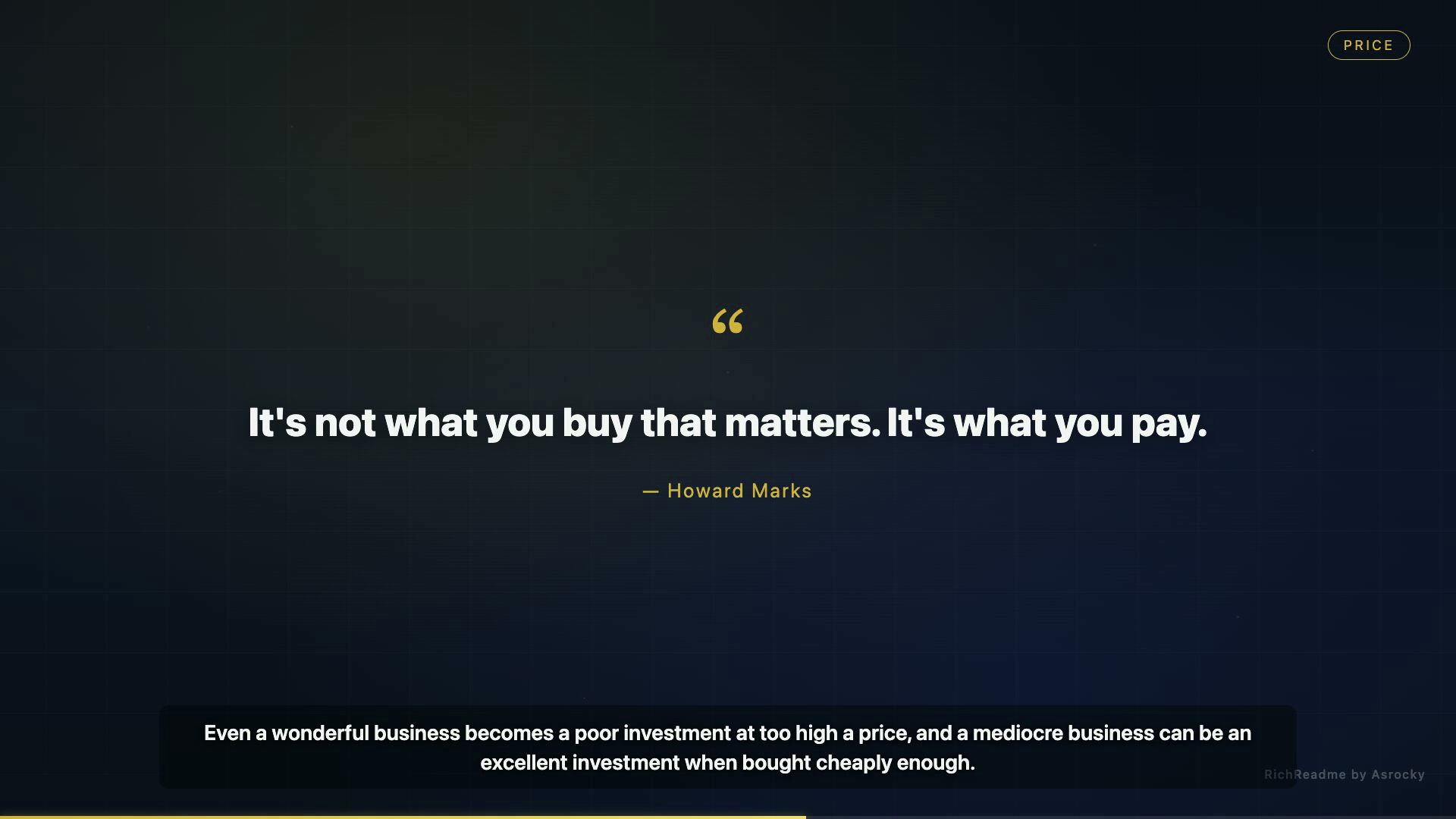
For Marks, price is the essential variable. It is not what you buy that determines your result nearly so much as what you pay for it. Even a wonderful business becomes a poor investment at too high a price, and a mediocre business can be an excellent investment when bought cheaply enough.
He insists on a margin of safety, a gap between price and value that absorbs mistakes and bad luck. The goal is not simply to buy good things. The goal is to buy things well.
Avoid the Losers First
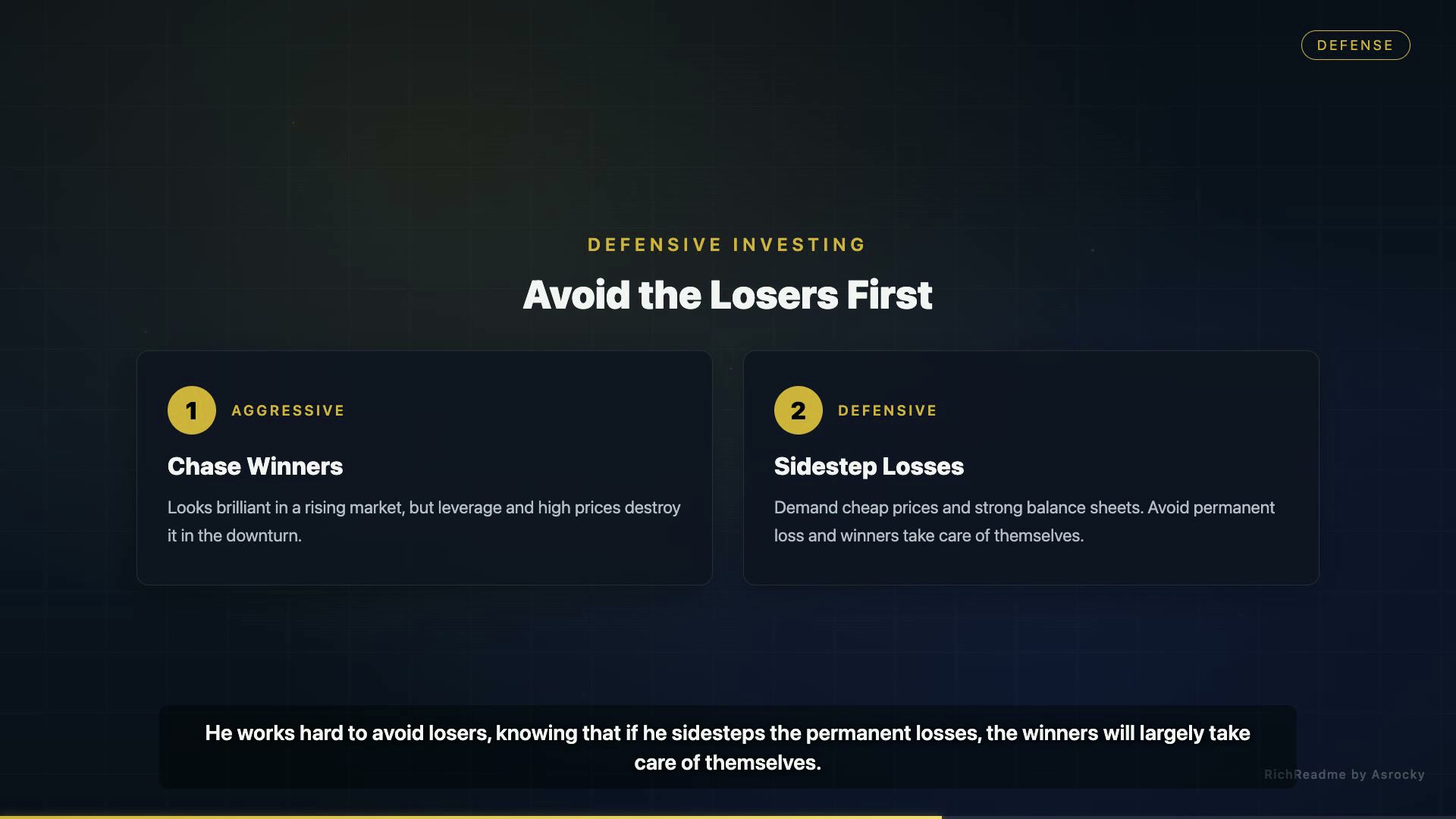
His style is defensive rather than aggressive. He does not chase a handful of spectacular winners. He works hard to avoid losers, knowing that if he sidesteps the permanent losses, the winners will largely take care of themselves.
Defense means demanding cheap prices and strong balance sheets, and refusing the leverage that can force you to sell at the worst possible moment. Aggressive investing looks brilliant in a rising market, but defense is what survives the downturn that always follows.
You Don't Have to Swing
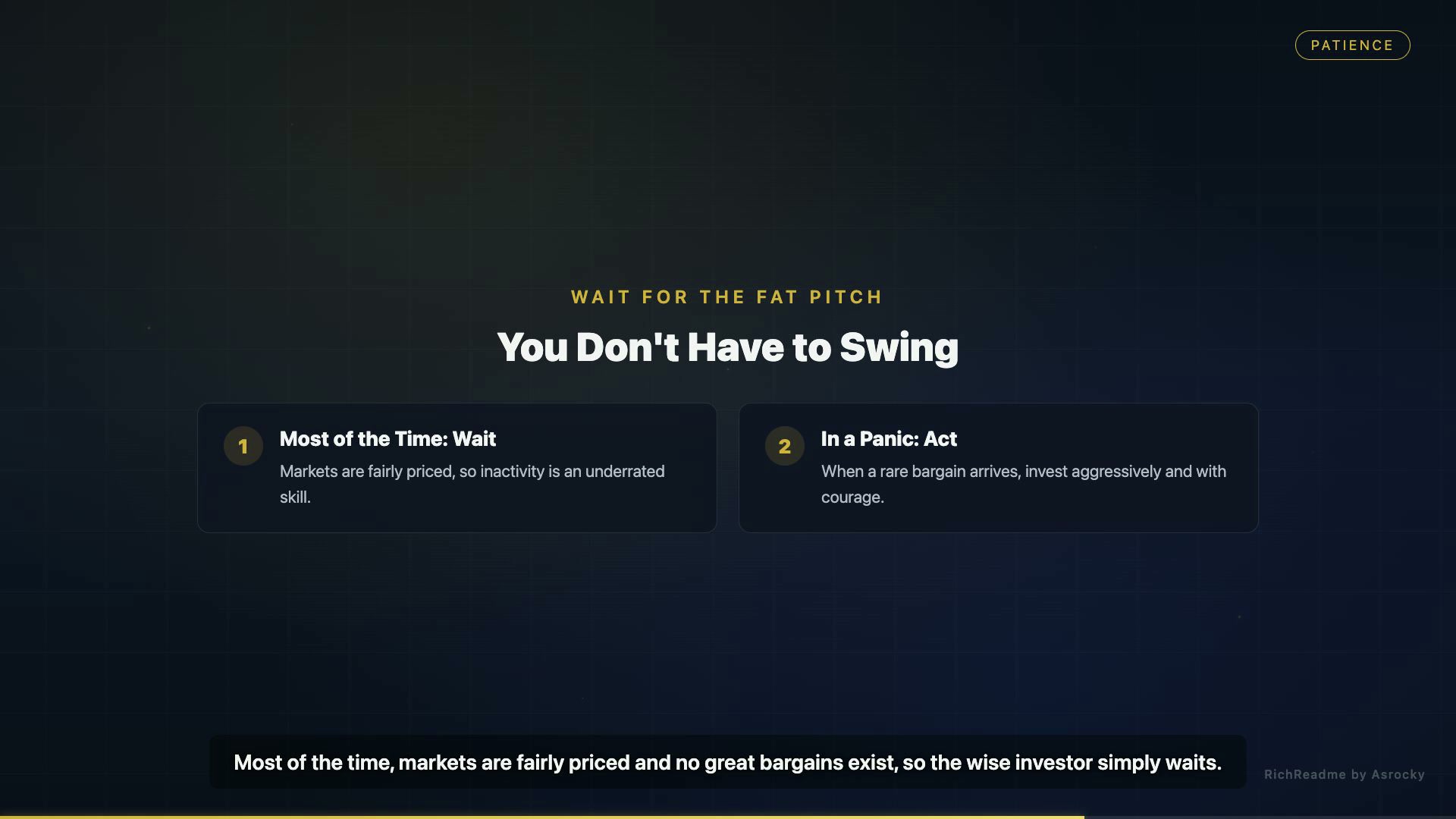
Marks also gives investors a powerful permission. You do not have to be fully invested at all times, and you do not have to swing at every pitch. Most of the time, markets are fairly priced and no great bargains exist, so the wise investor simply waits.
When a rare fat pitch arrives during a panic, that is when you invest aggressively. Patience and inactivity are deeply underrated skills, while forcing money into mediocre deals just to feel busy quietly destroys returns.
You Cannot Predict the Future
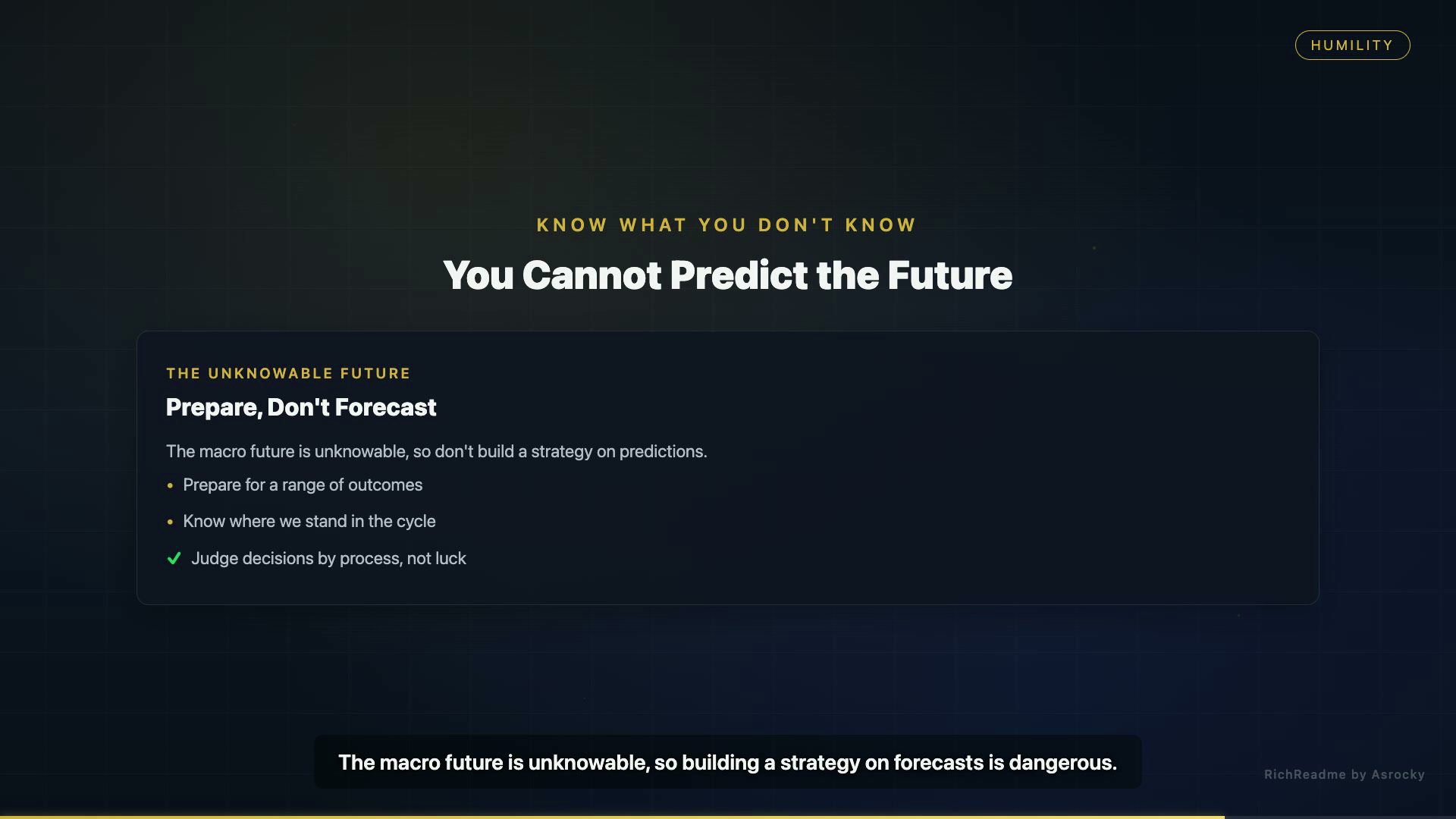
The final thread is humility. Marks insists that we cannot predict the future, and neither can the confident experts on television. The macro future is unknowable, so building a strategy on forecasts is dangerous.
Instead, prepare for a range of outcomes, know where we stand in the cycle, and respond to what is actually happening rather than predicting what will. Knowing your limits, and demanding cheap prices as protection, is itself a powerful advantage.
Three Habits to Adopt Now
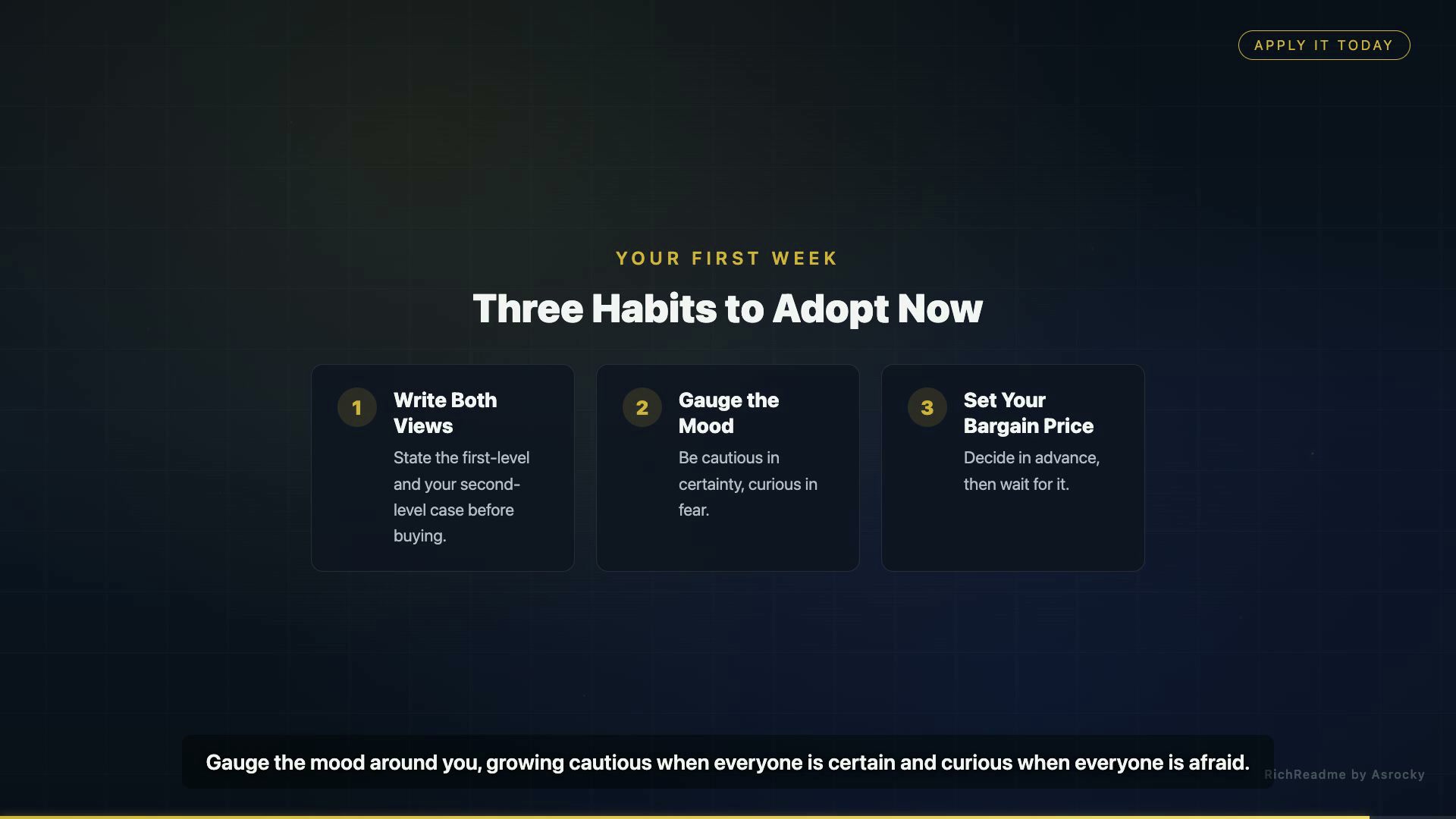
You can apply these ideas with three habits. Before any investment, write down both the obvious first-level view and your different second-level view, and refuse to buy if you cannot name one. Gauge the mood around you, growing cautious when everyone is certain and curious when everyone is afraid. And set the price at which an asset becomes a bargain in advance, then wait for it instead of chasing.
If this made you a calmer, sharper investor, hit like and subscribe. The full book is linked below. Congratulations on finishing this book!
📖 Want the full book?
Get The Most Important Thing on AmazonDisclosure: This post contains affiliate links. If you buy through them, I earn a small commission at no extra cost to you.