What if the greatest investing book ever written tells you to ignore the news, distrust your excitement, and buy boring companies on sale? This is that book.
This is The Intelligent Investor by Benjamin Graham, with modern commentary by Jason Zweig. It is the founding text of value investing and the book Warren Buffett calls the greatest ever written on the subject.
Which Game Are You Playing?
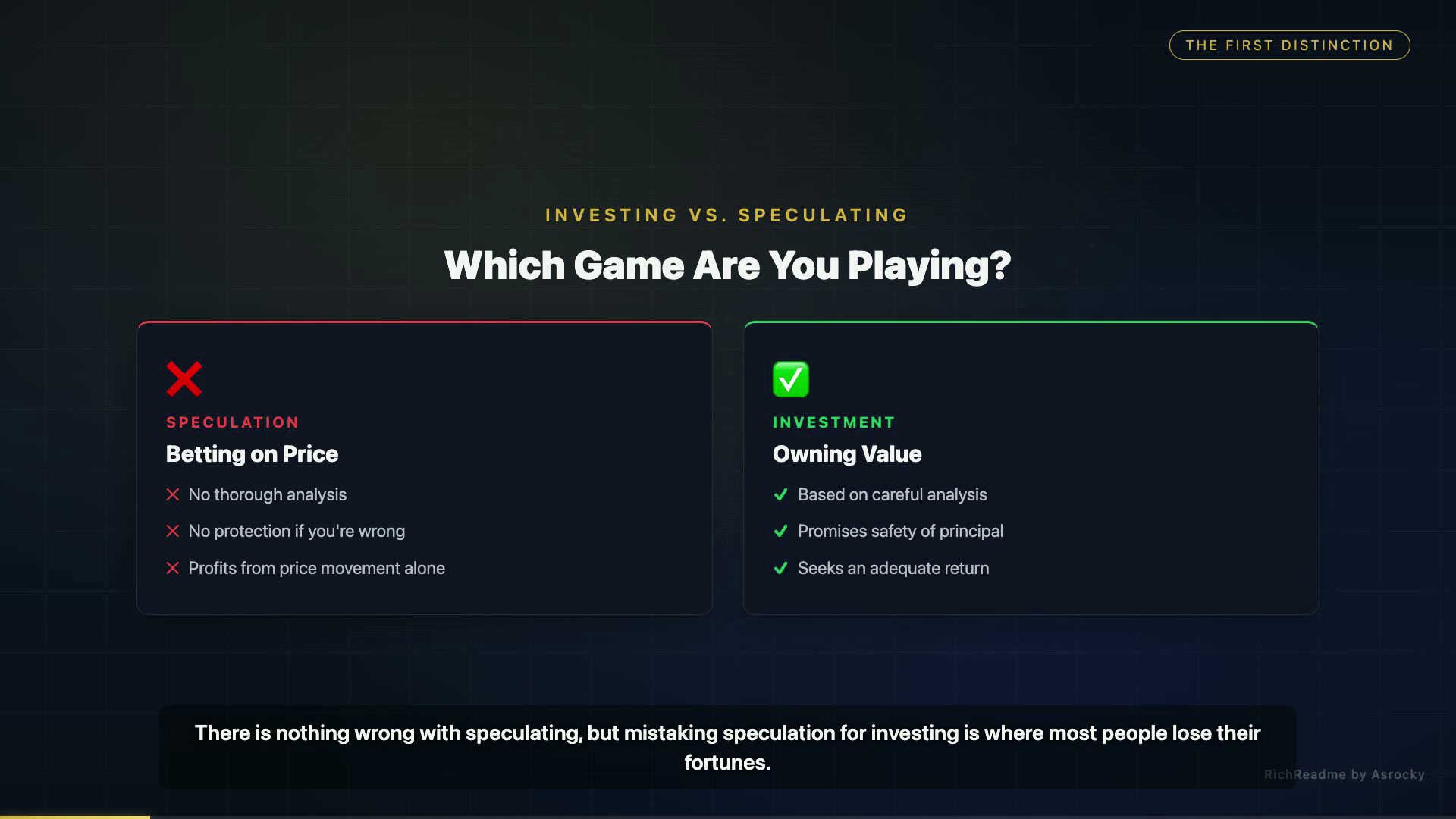
Graham begins by drawing a sharp line. An investment, he says, is an operation that, upon thorough analysis, promises safety of principal and an adequate return. Anything that fails those tests is speculation.
There is nothing wrong with speculating, but mistaking speculation for investing is where most people lose their fortunes. If you cannot explain why you own an asset and what protects you if you are wrong, you are simply betting on price movement. The intelligent investor knows exactly which game he is playing and never confuses the two.
He Serves You, He Doesn't Guide You

His most famous parable is Mr. Market. Imagine you own a share of a business alongside a partner named Mr. Market, who every single day offers to buy your share or sell you his at a price he names. Some days he is euphoric and quotes a generous price. Other days he is depressed and offers almost nothing.
The crucial point is that Mr. Market exists to serve you, never to guide you. You may take his price or ignore him entirely. The emotional crowd treats his moods as instructions. The intelligent investor treats them as opportunities.
The Real Edge
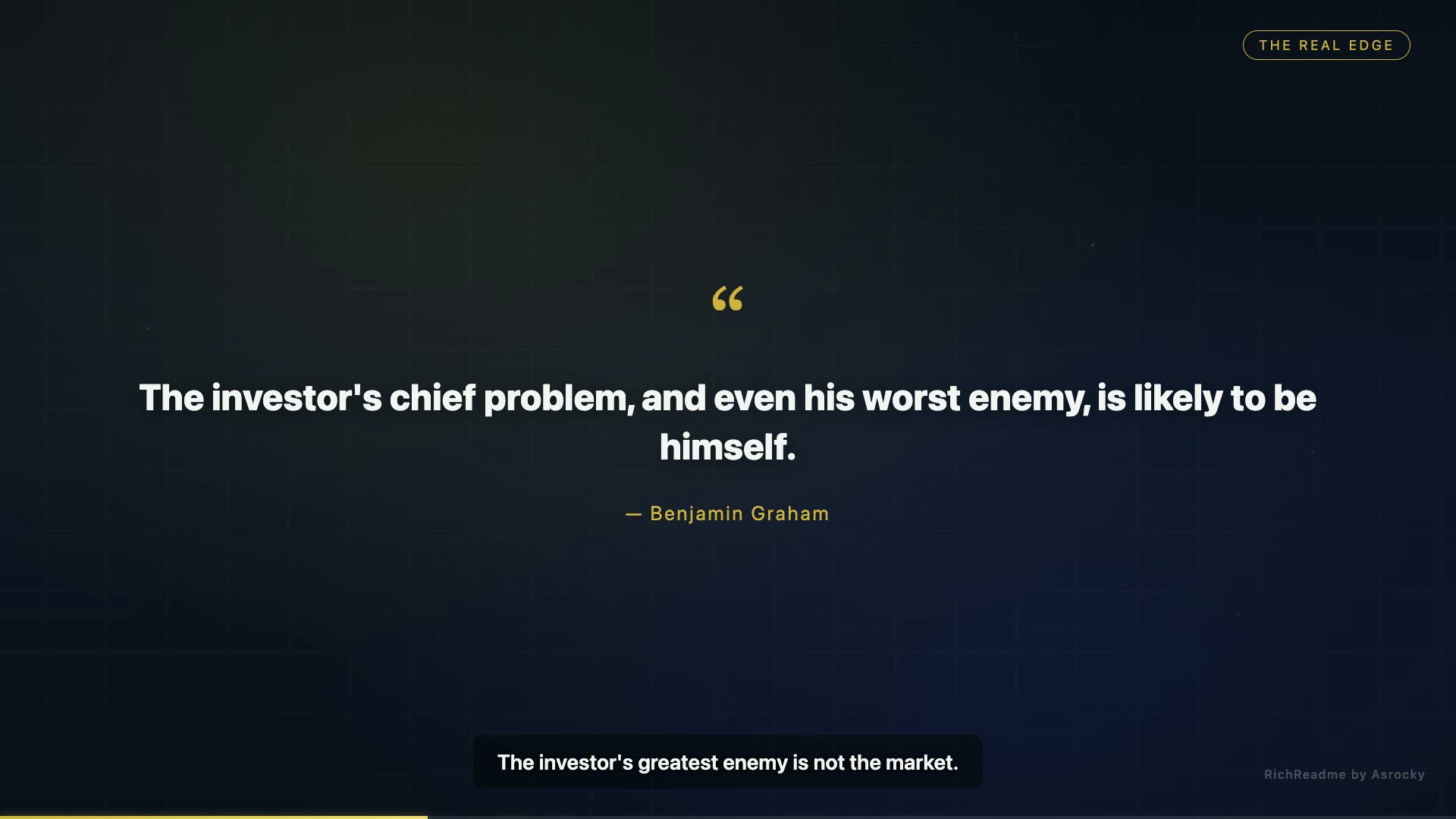
By intelligent, Graham does not mean a high IQ or a talent for forecasting. He means a set of character traits, patience, discipline, a willingness to learn, and above all emotional self-control. The investor's greatest enemy is not the market. It is the investor himself.
Even with a sound method, a person who chases excitement, panics in downturns, or follows the crowd will turn a good plan into poor results. You do not need to be brilliant to succeed. You need to be steady, and to keep your head when everyone around you is losing theirs.
The Core Idea

The central concept of the entire book is the margin of safety. Graham insists on buying an asset only when its market price is comfortably below its estimated intrinsic value. That gap protects you against errors in your analysis, against bad luck, and against the unpredictable swings of human nature.
It is the same engineering principle that makes a bridge rated for ten tons carry only trucks weighing four. You need not predict the future precisely if you have paid a price low enough to absorb a disappointing one. More fortunes have been preserved by this single idea than by any forecast of genius.
Defensive or Enterprising

He describes two kinds of investors. The defensive investor wants safety and freedom from effort, and Graham recommends a simple, permanent mix of high-grade bonds and leading stocks, rebalanced so that stocks sit between a quarter and three-quarters of the portfolio as the market swings. The enterprising investor is willing to do substantial work, hunting for unpopular, cheaply priced companies and special situations.
Both paths can succeed. What fails is the restless middle, the person who wants safety yet chases hot tips, or wants active returns without doing the homework.
What Graham Screens For
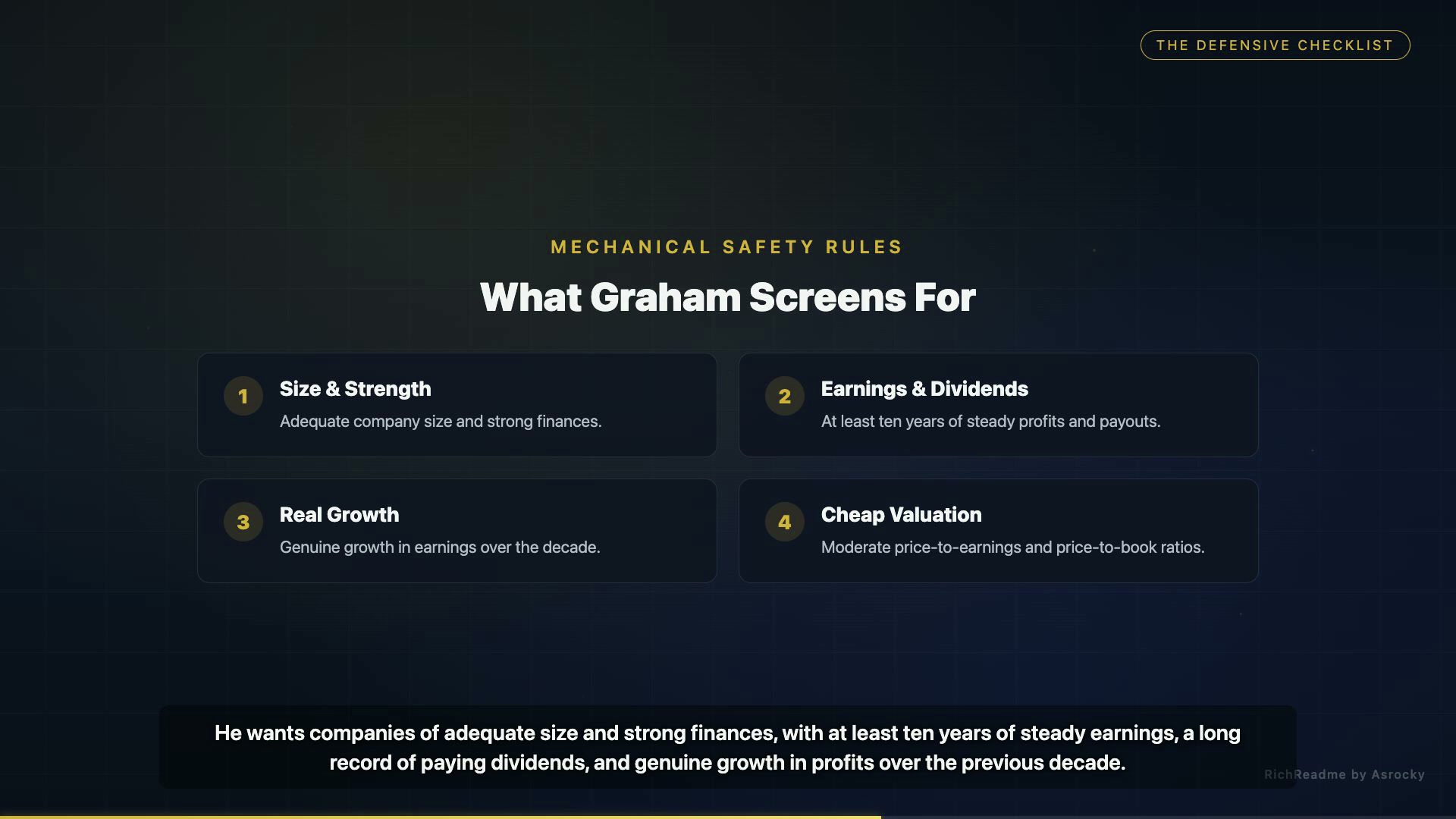
For the defensive investor, Graham offers strict, almost mechanical criteria to keep danger out. He wants companies of adequate size and strong finances, with at least ten years of steady earnings, a long record of paying dividends, and genuine growth in profits over the previous decade. On valuation, he sets simple ceilings, a moderate price-to-earnings ratio and a modest price-to-book ratio, so that you never overpay even for a genuinely good business.
These rules feel dull precisely because they are designed to exclude excitement. Their purpose is not to maximize the upside but to eliminate the stocks most likely to cause permanent loss.
A Plan That Removes Emotion
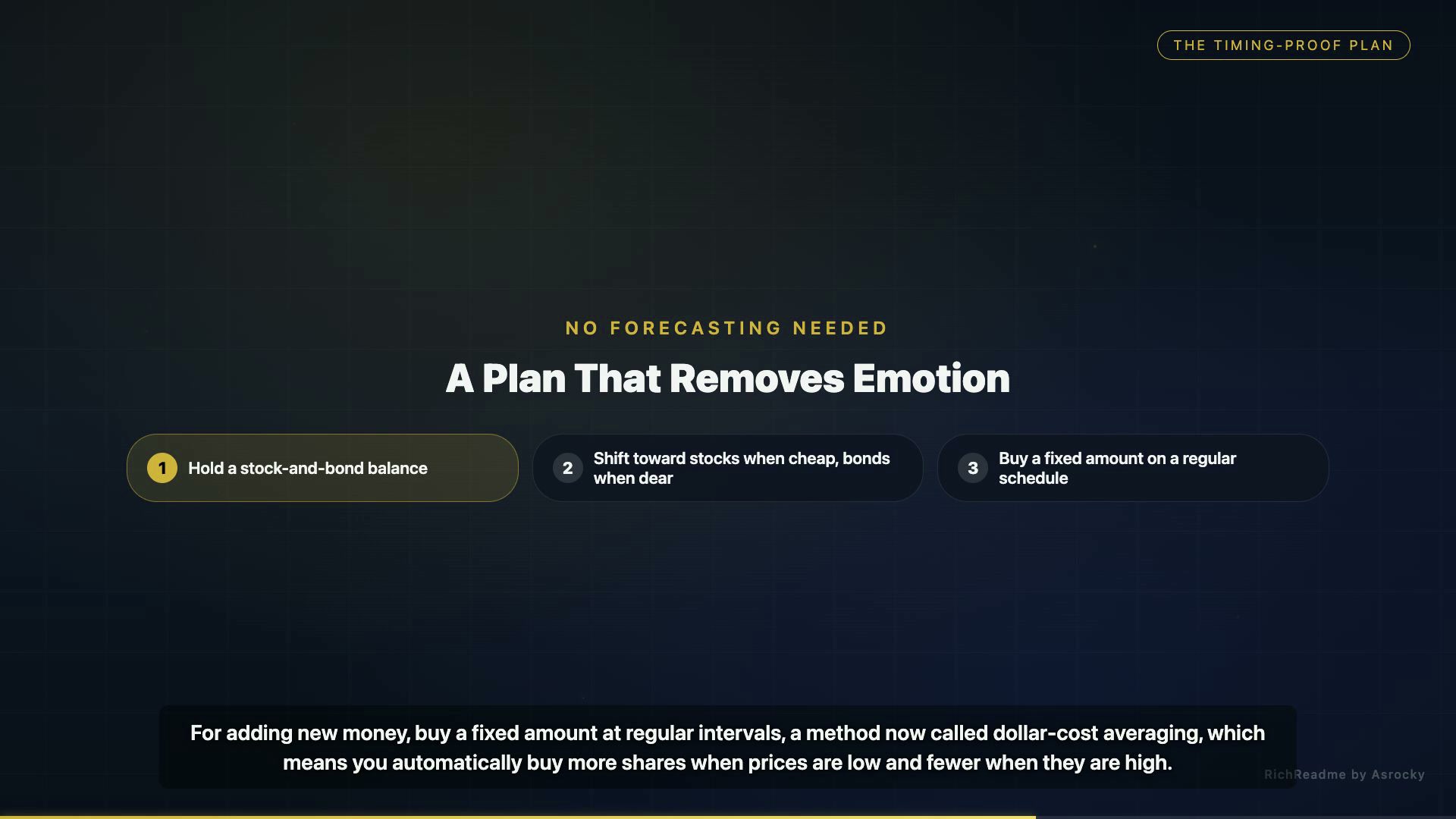
Graham also gives the defensive investor a timing-proof plan. Hold a balance of stocks and bonds, shifting modestly toward stocks when they are cheap and toward bonds when they are dear. For adding new money, buy a fixed amount at regular intervals, a method now called dollar-cost averaging, which means you automatically buy more shares when prices are low and fewer when they are high.
The plan requires no forecasting and works precisely because it removes emotion from the decision. Discipline, rather than prediction, is what carries the ordinary investor through every cycle.
Behavior and the Index Fund
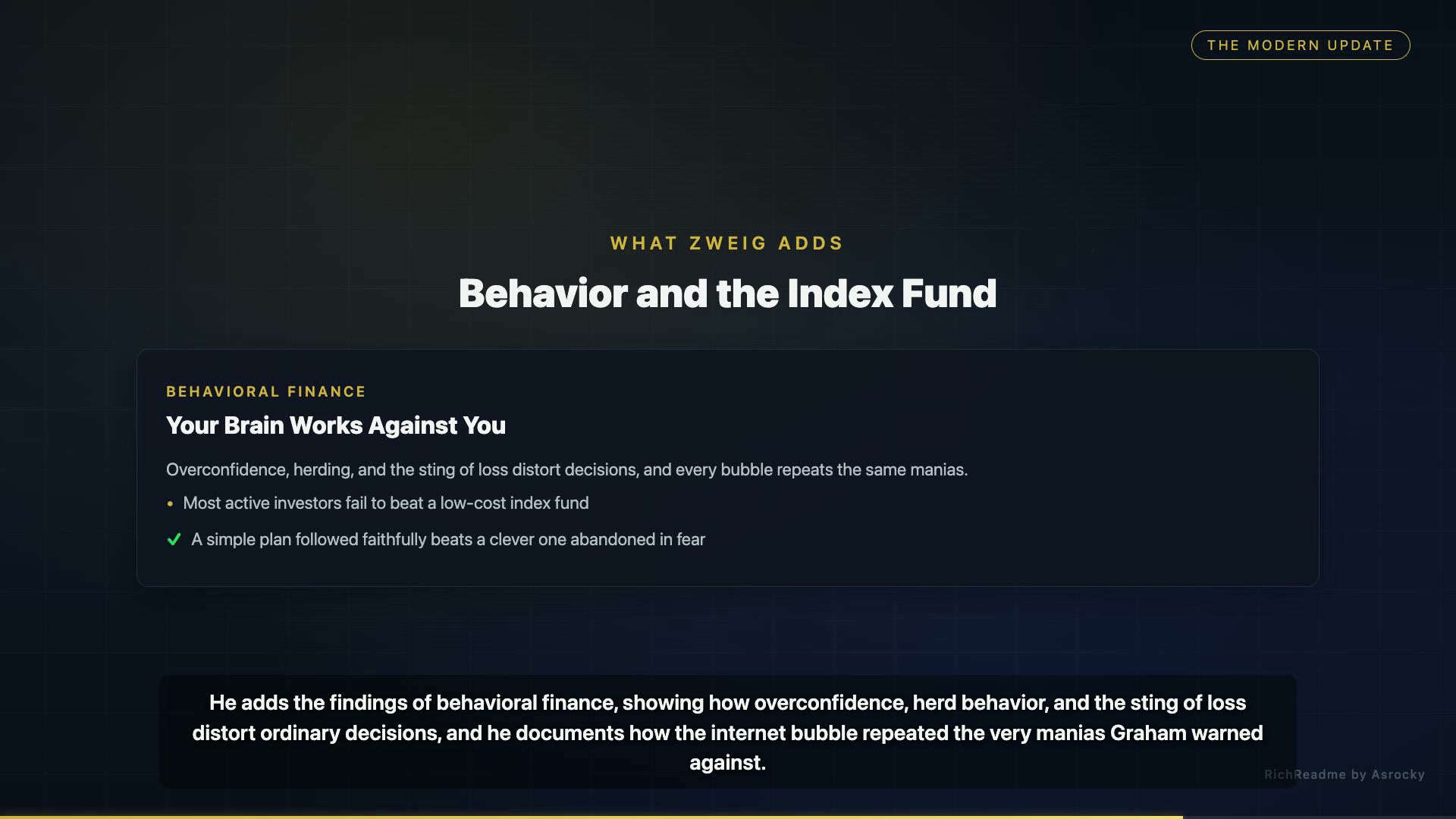
Jason Zweig's modern commentary translates Graham's wisdom for today. He adds the findings of behavioral finance, showing how overconfidence, herd behavior, and the sting of loss distort ordinary decisions, and he documents how the internet bubble repeated the very manias Graham warned against. His central conclusion for most readers is humbling.
The majority of active investors, professionals included, fail to beat a simple low-cost index fund over time. Graham himself would likely approve, since he always prized a simple plan faithfully followed over a clever one abandoned in fear.
Three Commitments to Make Now

You can apply the book with three commitments. First, write down the reason and the downside for every investment, and refuse to buy anything you cannot justify as an investment rather than a speculation. Second, build a simple stock-and-bond plan and set a calendar to rebalance and add money automatically, so that no forecast is ever required. Third, demand a margin of safety on every purchase, and keep a wish list of quality businesses to buy only when Mr. Market turns fearful.
Control yourself, buy cheaply, and let patience do the work. If this made value investing feel clear and calm rather than complicated, hit like and subscribe. The full book is linked below. Congratulations on finishing this book!
📖 Want the full book?
Get The Intelligent Investor on AmazonDisclosure: This post contains affiliate links. If you buy through them, I earn a small commission at no extra cost to you.