What if the boring, cheap, do-nothing portfolio beats almost every professional investor? William Bernstein shows why, in four pillars.
This is The Four Pillars of Investing by William Bernstein. It lays out the theory, history, psychology, and business of building a portfolio that actually works.
Pillar One · Theory

The first pillar is theory. The return you earn comes from the risk you bear. Stocks beat bonds over the long run precisely because they are frightening and can crash, so investors demand a premium for holding them.
There is no return without risk, and any investment that promises high returns with complete safety is lying. Once you accept that risk and reward are inseparable, you stop searching for the magical safe stock that simply does not exist.
This Time Is Never Different

History, the second pillar, teaches humility. For centuries, investors have repeated the same manias, from the Dutch tulip craze to the roaring twenties, and from Japan's bubble to the internet frenzy. Each generation convinces itself that this time is different, and every single time it is not.
Studying this record is not nostalgia. It is a vaccine. The investor who has seen the pattern before is far less likely to buy at the top of the next frenzy.
The Biases That Cost You

The third pillar is psychology, where most of the real damage is done. Investors are overconfident, believing they can pick winners that they cannot. They feel losses far more sharply than they enjoy gains, which pushes them to sell at the very bottom.
They follow the herd and overweight whatever happened recently, treating a few good years as if they will last forever. These biases are hardwired, and the market punishes them without mercy.
The Industry Gets Paid to Trade

The fourth pillar is the business of investing, and it is the one the industry prefers to hide. Fund companies, brokers, and the financial media all get paid when you trade, not when you sit still. Their fees, commissions, and constant activity act as a guaranteed drag on your returns, collected whether the market rises or falls.
The industry profits from your emotions and your turnover. Once you understand that its interests oppose yours, the path becomes obvious. You want the cheapest, most boring funds you can find.
The Cost Trap

The math of fees is brutal. A yearly charge of just one or two percent sounds tiny, but compounded over a working lifetime it can consume a third or more of your final nest egg. You pay that fee in good years and in bad, and it compounds against you every single day.
Active funds must beat the market by the amount of their fees just to break even, and the vast majority never do. Cost is the one variable you control completely, so cutting it is a guaranteed win.
The Boring Portfolio That Works
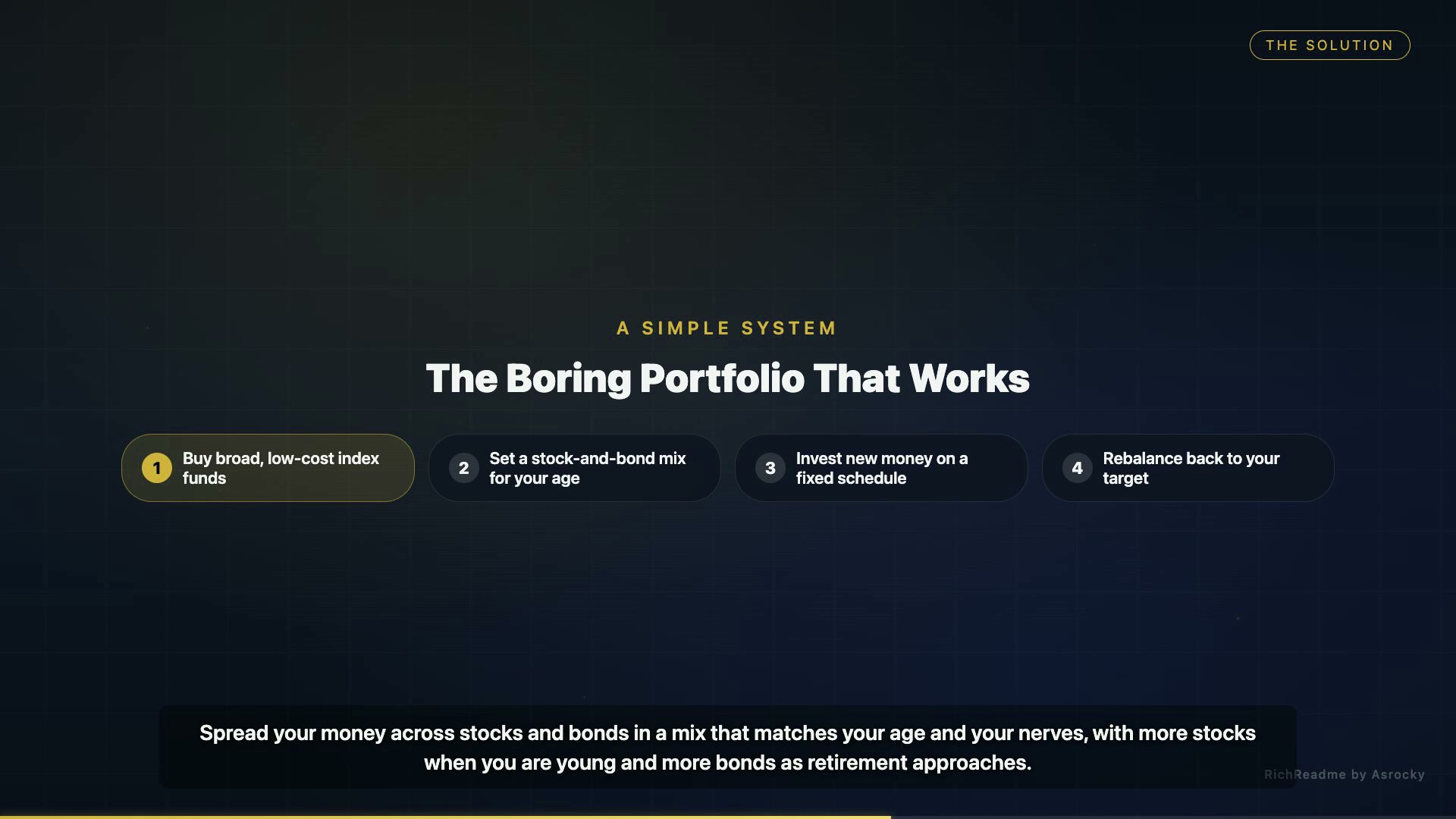
Bernstein's solution is refreshingly simple. Buy broad, low-cost index funds that hold thousands of companies and bonds, so that no single mistake can ruin you. Spread your money across stocks and bonds in a mix that matches your age and your nerves, with more stocks when you are young and more bonds as retirement approaches.
Then do two things that feel unnatural. Add new money on a fixed schedule, and periodically rebalance back to your target, which forces you to sell what has risen and buy what has fallen.
Mechanically Buy Low, Sell High

That rebalancing step is quietly powerful. When stocks soar and feel wonderful, you trim them. When they crash and feel terrifying, you buy more.
Done mechanically, with no forecasting and no emotion, you end up selling high and buying low, the exact opposite of what your instincts demand. You do not need to predict interest rates, recessions, or elections. You only need a written plan and the discipline to follow it when your feelings scream the opposite.
Nothing Beats Saving More

Before any of this, remember the variable that matters most. Your savings rate matters far more than finding the perfect fund or timing the market. A high saver with a plain portfolio builds wealth reliably, while a clever investor who spends everything he earns builds nothing at all.
Living below your means and investing the difference, month after month, is the unsexy engine behind almost every comfortable retirement. Everything else in investing is secondary to that single habit.
Three Moves This Week

You can act this week on three fronts. First, list every fund you own and look up its expense ratio, then replace anything expensive with a low-cost index fund. Second, write down a simple stock-and-bond mix for your age and set a calendar reminder to rebalance once a year. Third, automate your saving so the money is invested before you can spend it.
Master your behavior, minimize your costs, and let time do the heavy lifting. If this made successful investing feel simpler rather than harder, hit like and subscribe. The full book is linked below. Congratulations on finishing this book!
📖 Want the full book?
Get The Four Pillars of Investing on AmazonDisclosure: This post contains affiliate links. If you buy through them, I earn a small commission at no extra cost to you.