What if the greatest investor in history wrote down exactly how he thinks, in plain letters anyone can understand? Warren Buffett did, and the lessons are free.
This is The Essays of Warren Buffett, collected by Lawrence Cunningham. It distills decades of Buffett's shareholder letters into timeless lessons on business and investing.
You Buy a Business, Not a Ticker
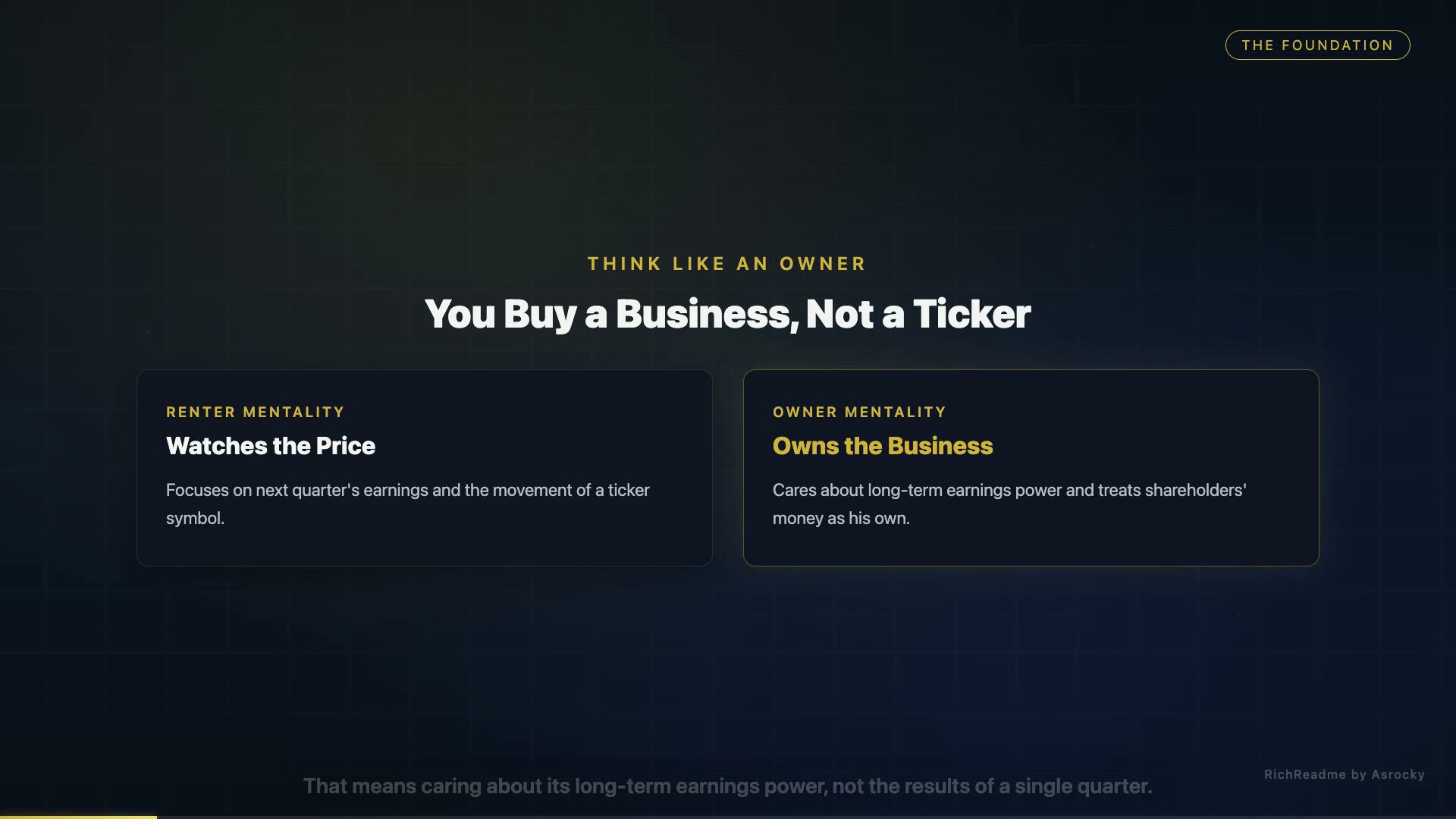
Buffett's first principle is to think like an owner. When you buy a stock, you are not buying a ticker symbol. You are buying a piece of a real business, and you should judge it exactly as you would judge the entire company.
That means caring about its long-term earnings power, not the results of a single quarter. Managers should act the same way, treating shareholders' money as carefully as if it were their own. An owner mentality changes every decision that follows.
The Market

His teacher Benjamin Graham gave him a parable he has used ever since, called Mr. Market. Imagine a partner who offers to buy your share of a business or sell you his share every single day. Sometimes Mr. Market is wildly optimistic and names a huge price. Other days he is terrified and offers almost nothing.
The beauty is that he never minds being ignored. Buffett says the market exists to serve you, not to instruct you. You are free to accept his offer or simply walk away.
Know Where Your Edge Ends
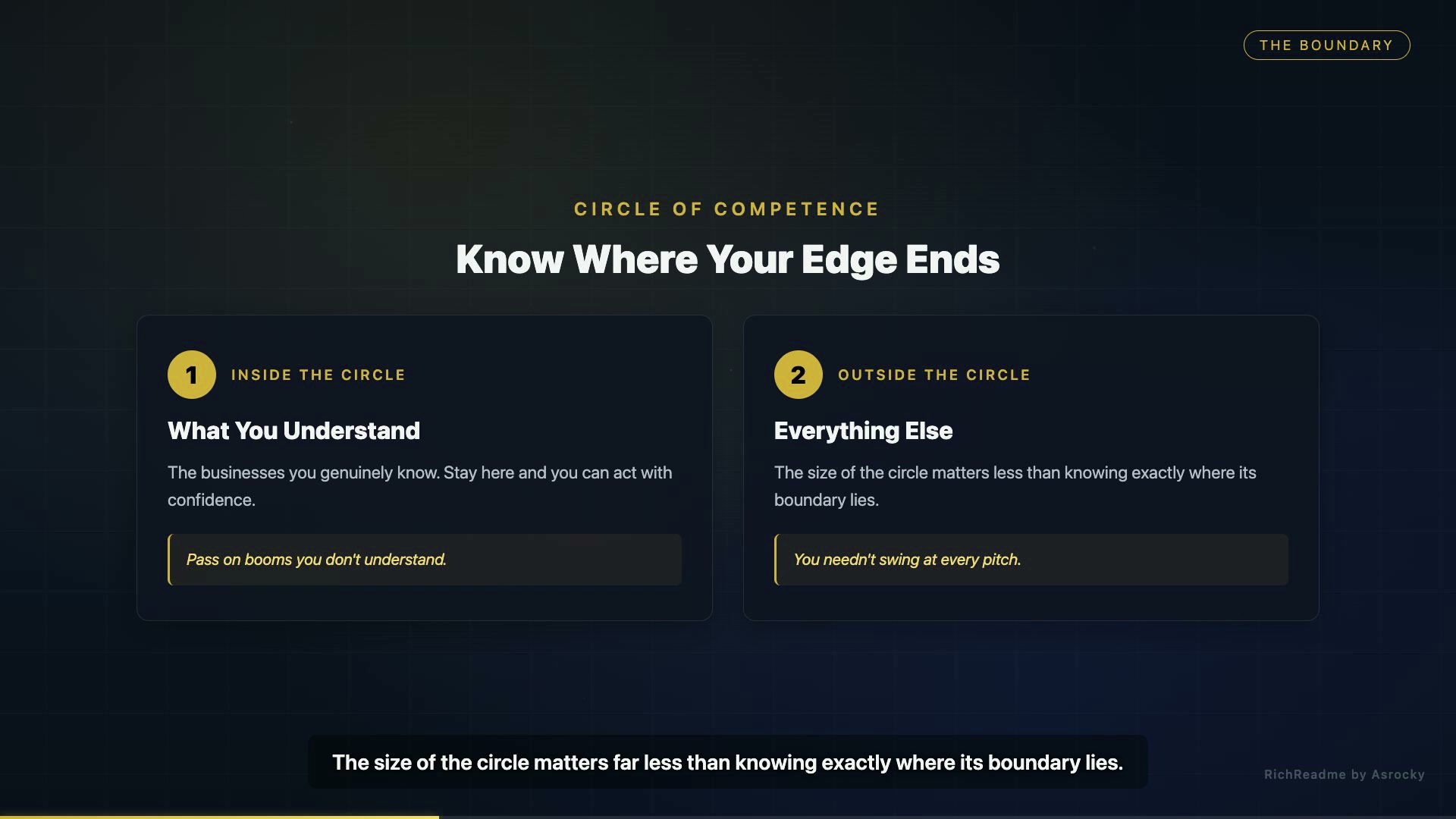
Buffett draws a circle and calls it his circle of competence. Inside sit the businesses he genuinely understands, and outside sit all the rest. The size of the circle matters far less than knowing exactly where its boundary lies.
Most investors lose money not because their circle is small, but because they wander outside it without realizing it. Buffett passed on countless technology booms he did not understand, and that discipline protected him. You do not have to swing at every pitch.
The Cash an Owner Can Take Out
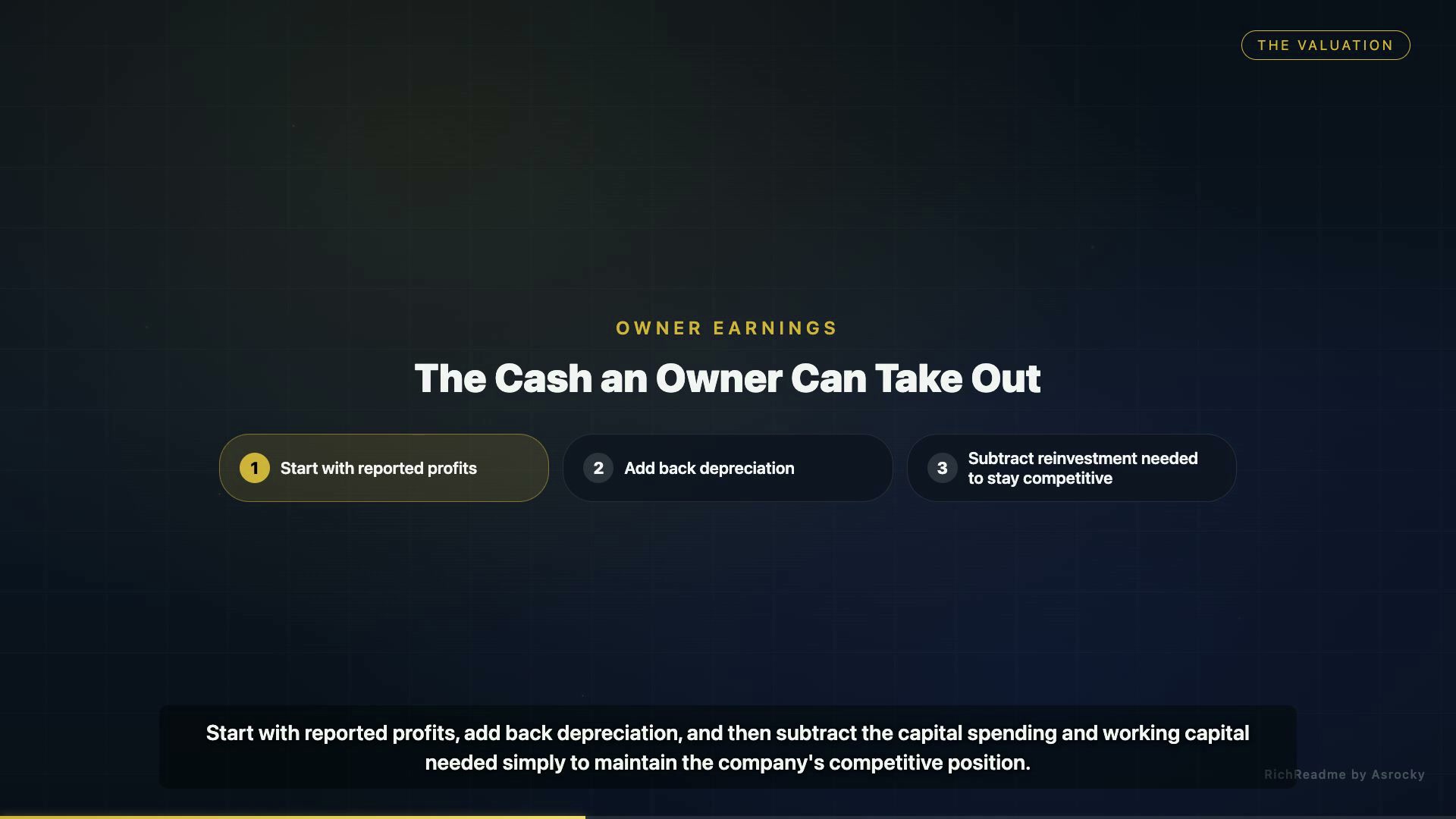
To value a business, he ignores the accounting noise and focuses on intrinsic value, the cash the company can generate over its entire life. He calls the useful number owner earnings. Start with reported profits, add back depreciation, and then subtract the capital spending and working capital needed simply to maintain the company's competitive position.
What remains is the cash an owner can actually take out. A business that constantly needs reinvestment just to stand still is worth far less than it appears.
Which Business Would You Own?
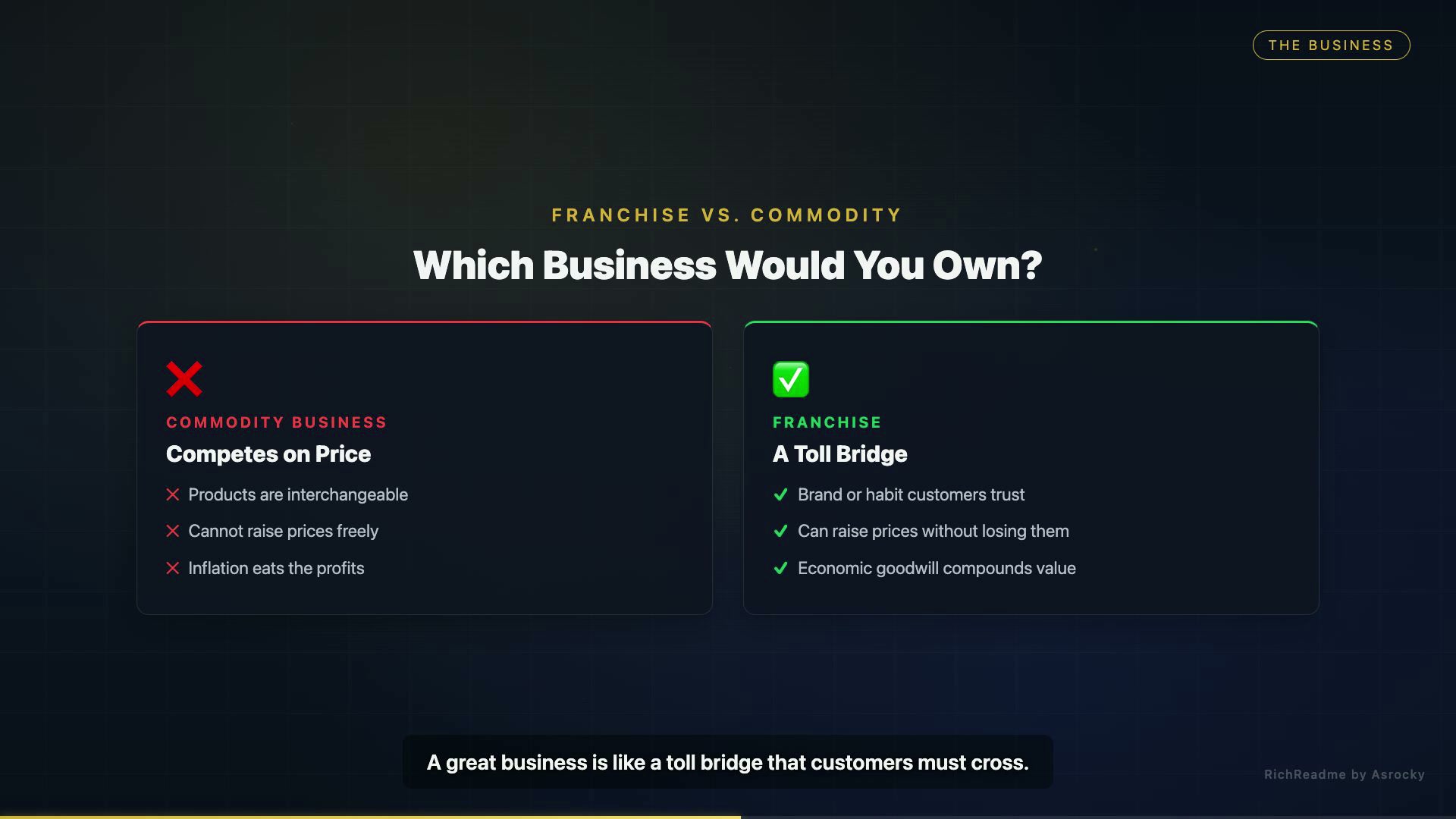
Buffett prefers businesses with economic goodwill, often called franchises. These are companies that can raise prices without losing customers because of a brand, a habit, or a product people deeply trust. A great business is like a toll bridge that customers must cross.
A mediocre commodity business, by contrast, competes mostly on price and watches inflation quietly eat its profits. He would rather buy a wonderful company at a fair price than a fair company at a wonderful price, a lesson he credits to his partner Charlie Munger.
The Protection
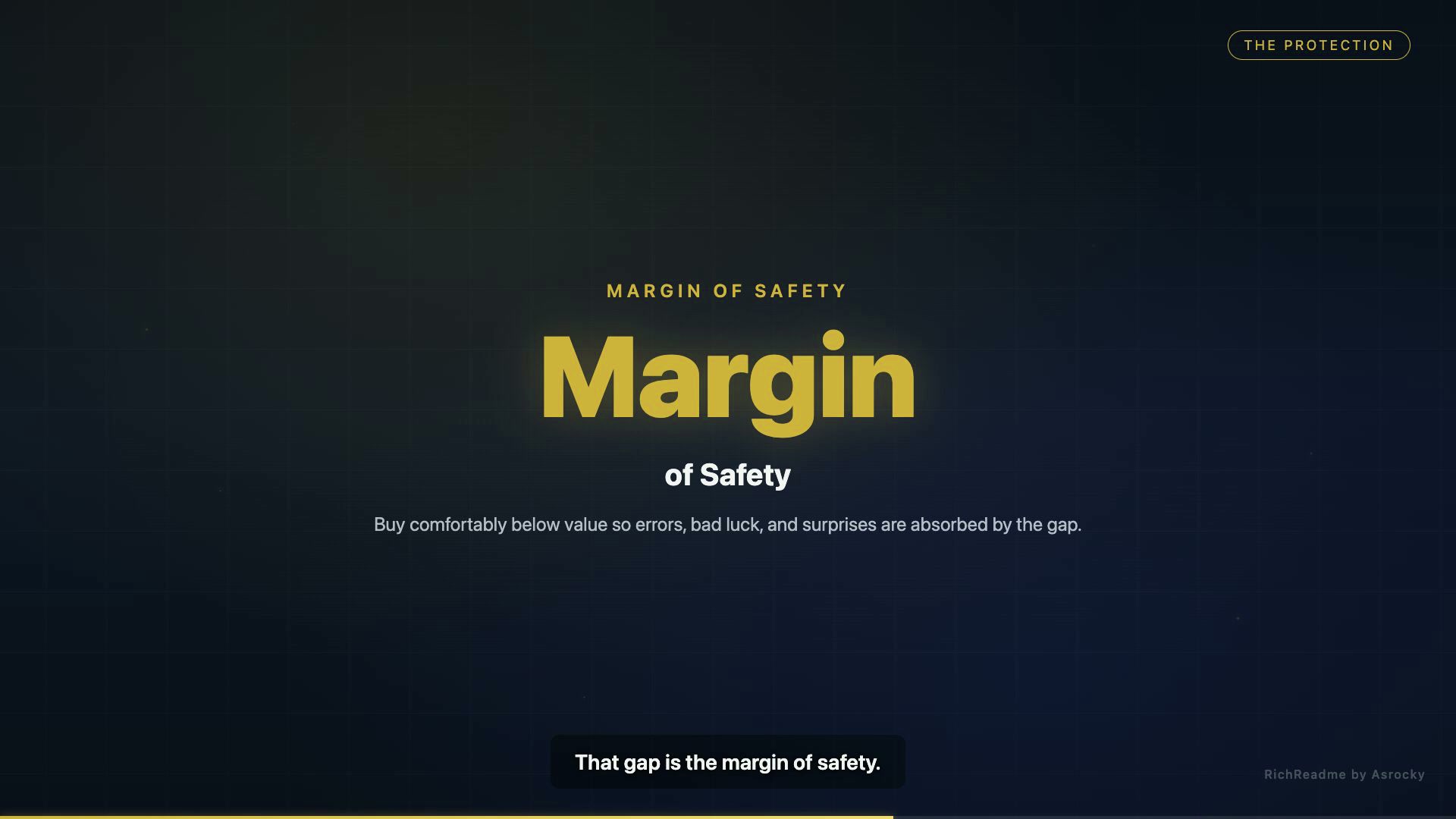
The single word that protects him most is margin. Even after careful analysis, the future remains uncertain, so he insists on buying at a price comfortably below his estimate of value. That gap is the margin of safety.
It absorbs errors, bad luck, and unpleasant surprises. If you demand a wide margin, you do not need to be exactly right in order to do well. You only need to avoid being badly wrong, which is a far easier and more forgiving game.
Retained Money Must Earn Its Keep
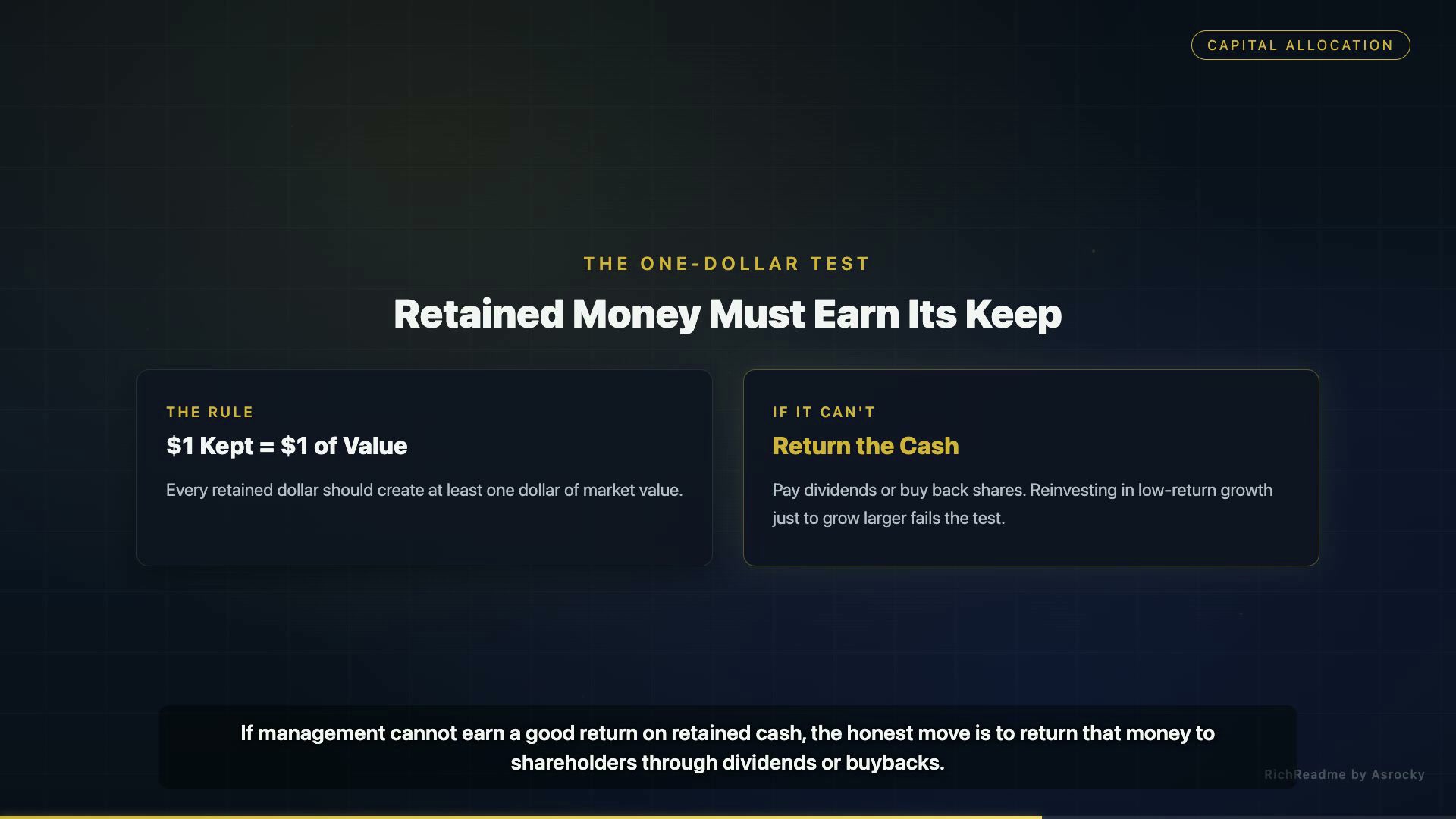
For Buffett, a chief executive's most important job is allocating capital, and he applies a simple test. For every dollar of earnings a company keeps instead of paying out, it should create at least one dollar of market value. If management cannot earn a good return on retained cash, the honest move is to return that money to shareholders through dividends or buybacks.
Many executives fail this test quietly, reinvesting in low-return growth simply to make the company larger. Size is not the goal. Value is.
Temperament
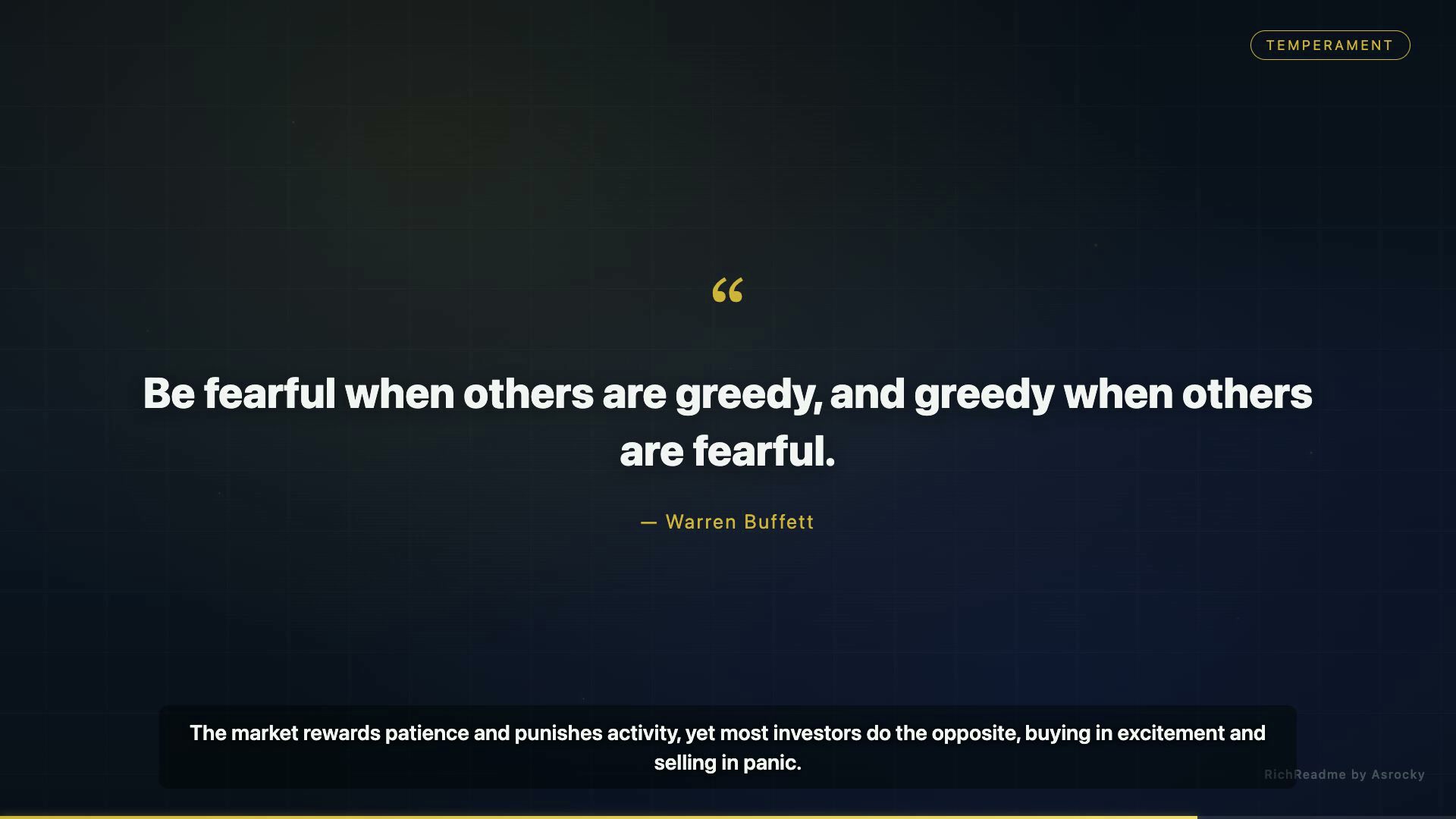
Through every bubble and crash, his advice on temperament stays the same. Be fearful when others are greedy, and greedy when others are fearful. The market rewards patience and punishes activity, yet most investors do the opposite, buying in excitement and selling in panic.
His favorite holding period is forever, because time lets a wonderful business compound while trading costs and taxes quietly destroy the busy investor. Investing, he says, is simple, but it is not easy.
Invest Like an Owner This Week
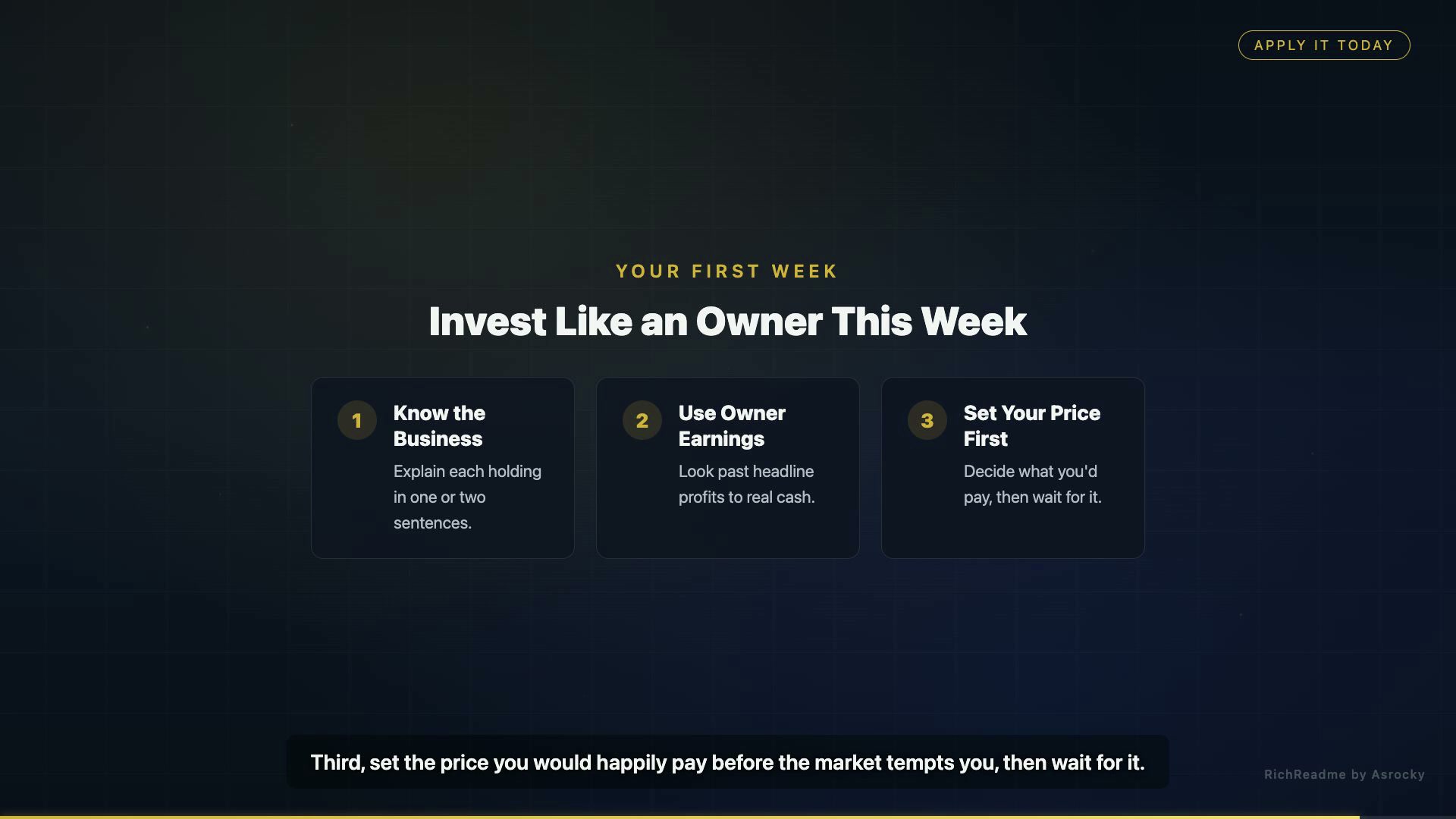
You can apply his lessons this week. First, write down the business behind each stock you own in one or two sentences, and question anything you cannot explain. Second, estimate owner earnings instead of trusting headline profits. Third, set the price you would happily pay before the market tempts you, then wait for it.
Make your decisions inside a small circle you truly understand, and let patience do the heavy lifting. If this made investing feel a little simpler and a lot calmer, hit like and subscribe. The full book is linked below. Congratulations on finishing this book!
📖 Want the full book?
Get The Essays of Warren Buffett on AmazonDisclosure: This post contains affiliate links. If you buy through them, I earn a small commission at no extra cost to you.