What if a handful of outsiders saw the greatest financial crash in history coming, while Wall Street's smartest drove the system off a cliff?
This is The Big Short by Michael Lewis. It tells the true story of the few investors who bet against the housing bubble and won when everything collapsed.
The Housing Money Machine
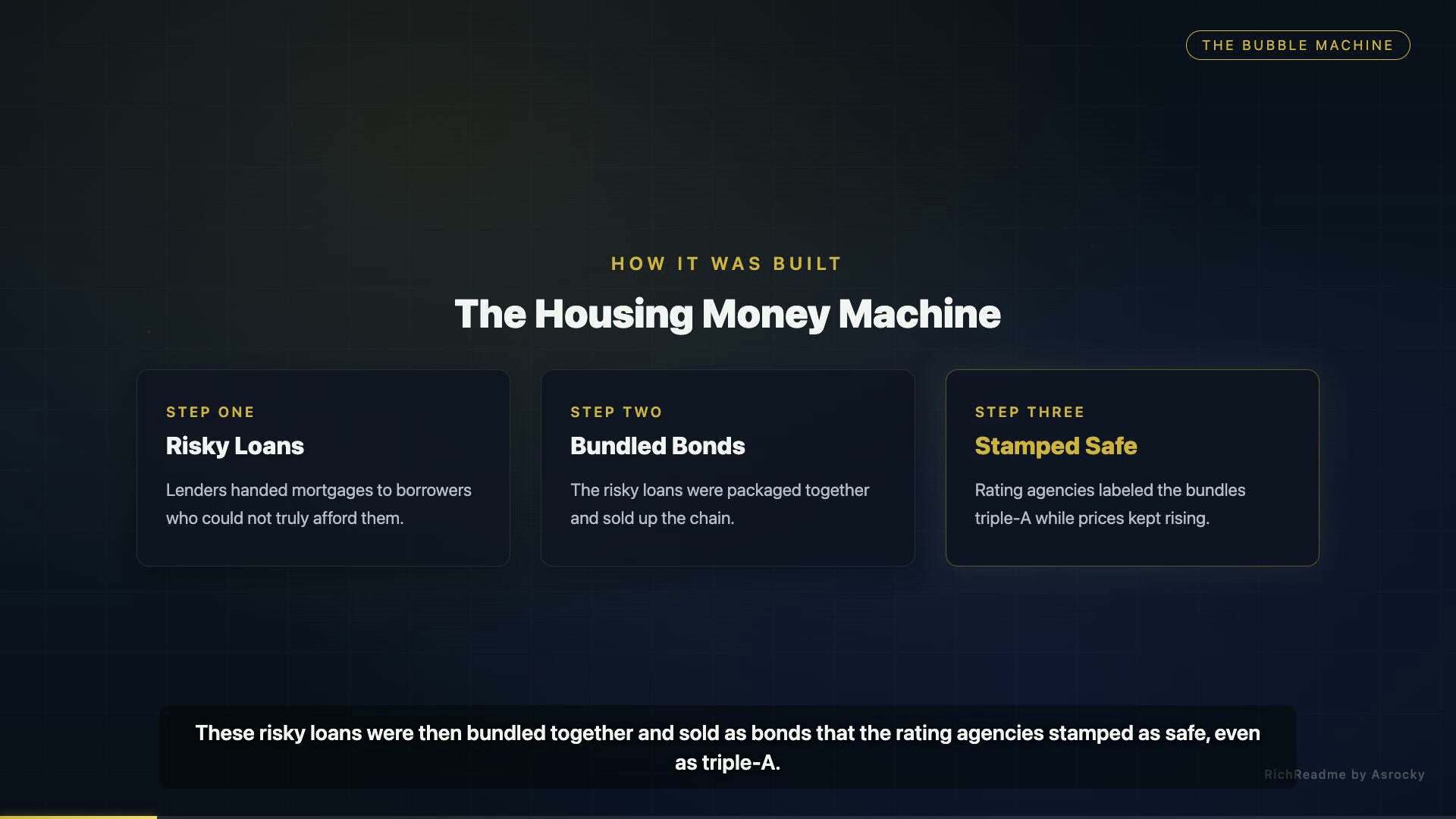
The story begins with the American housing market. For years, mortgage lenders handed out loans to borrowers who could not truly afford them. These risky loans were then bundled together and sold as bonds that the rating agencies stamped as safe, even as triple-A. As long as house prices kept rising, the machine appeared to work, and nobody wanted to look too closely at what was actually inside the bonds.
The Instrument
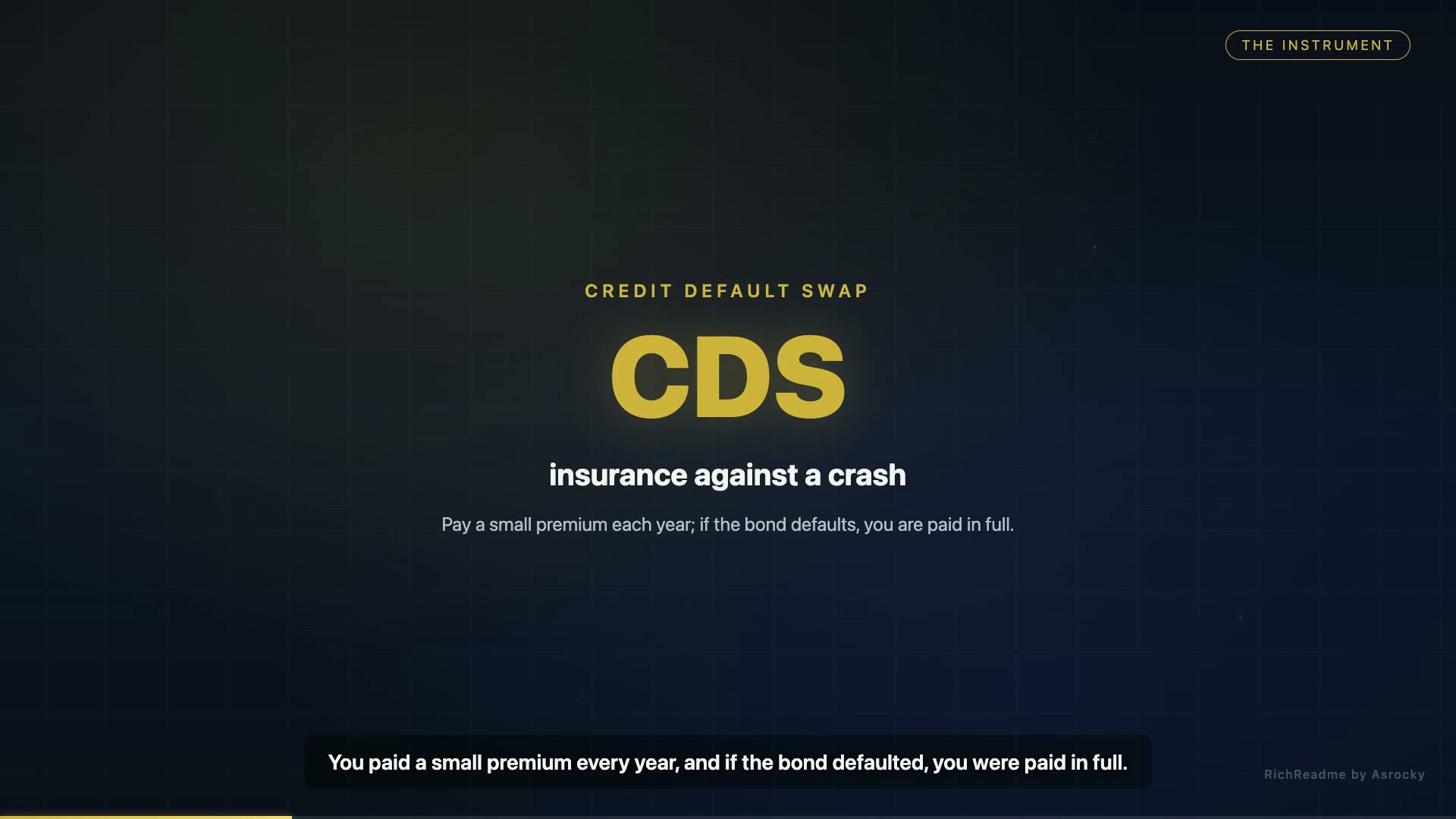
A few investors discovered a way to bet against this machine. It was called a credit default swap, essentially an insurance policy on a bond. You paid a small premium every year, and if the bond defaulted, you were paid in full.
The swaps let them risk only a little in order to make a fortune if housing cracked. To the banks selling them, a nationwide housing crash seemed impossible, so the insurance looked like free money.
He Read the Fine Print
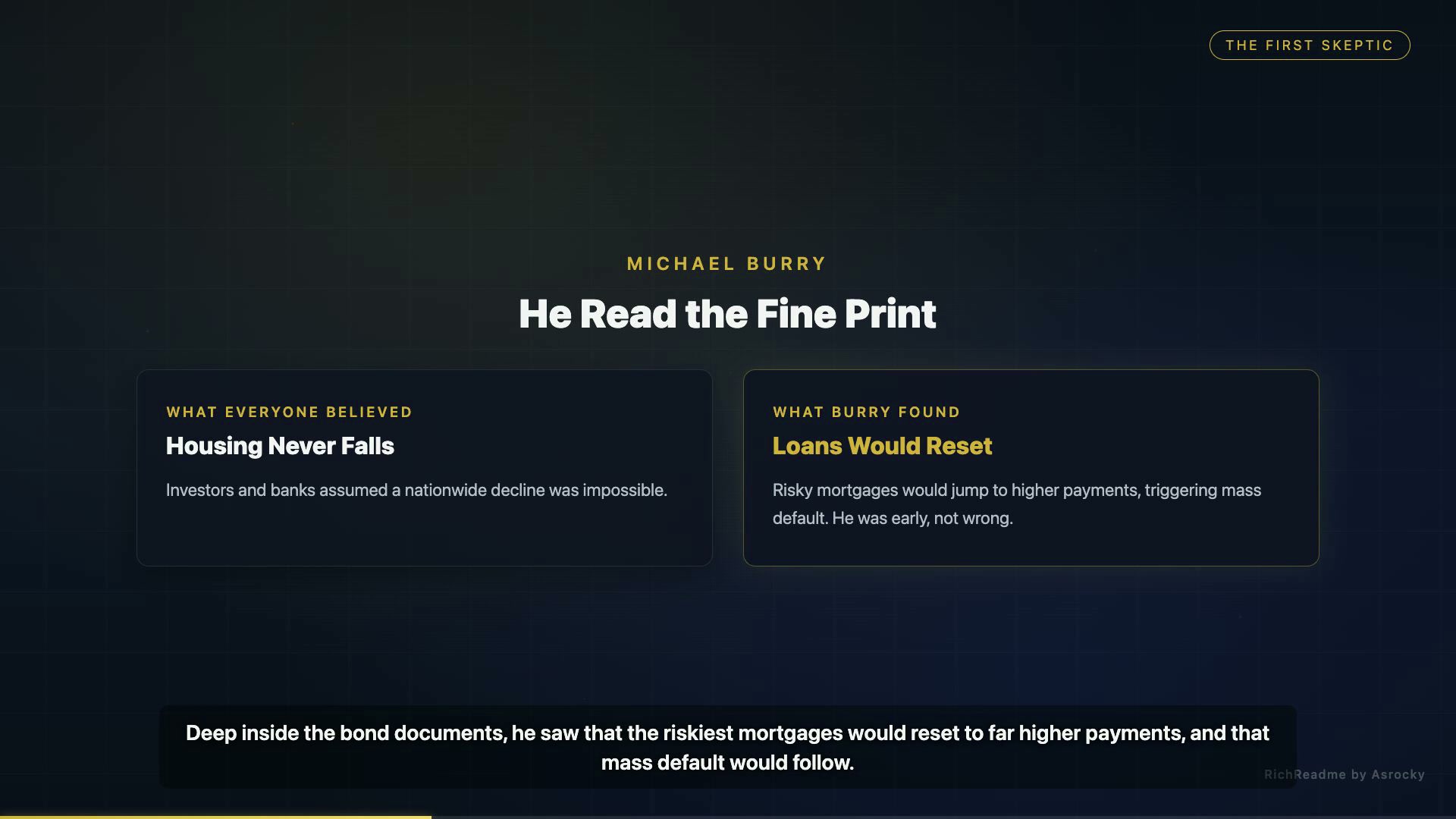
The first person to figure it out was Michael Burry, a doctor turned fund manager with a glass eye and a habit of reading every page of the fine print. Deep inside the bond documents, he saw that the riskiest mortgages would reset to far higher payments, and that mass default would follow. He bought more than a billion dollars in credit default swaps and then waited. His investors doubted him for years, but he was simply early, not wrong.
The Misfits Who Saw It
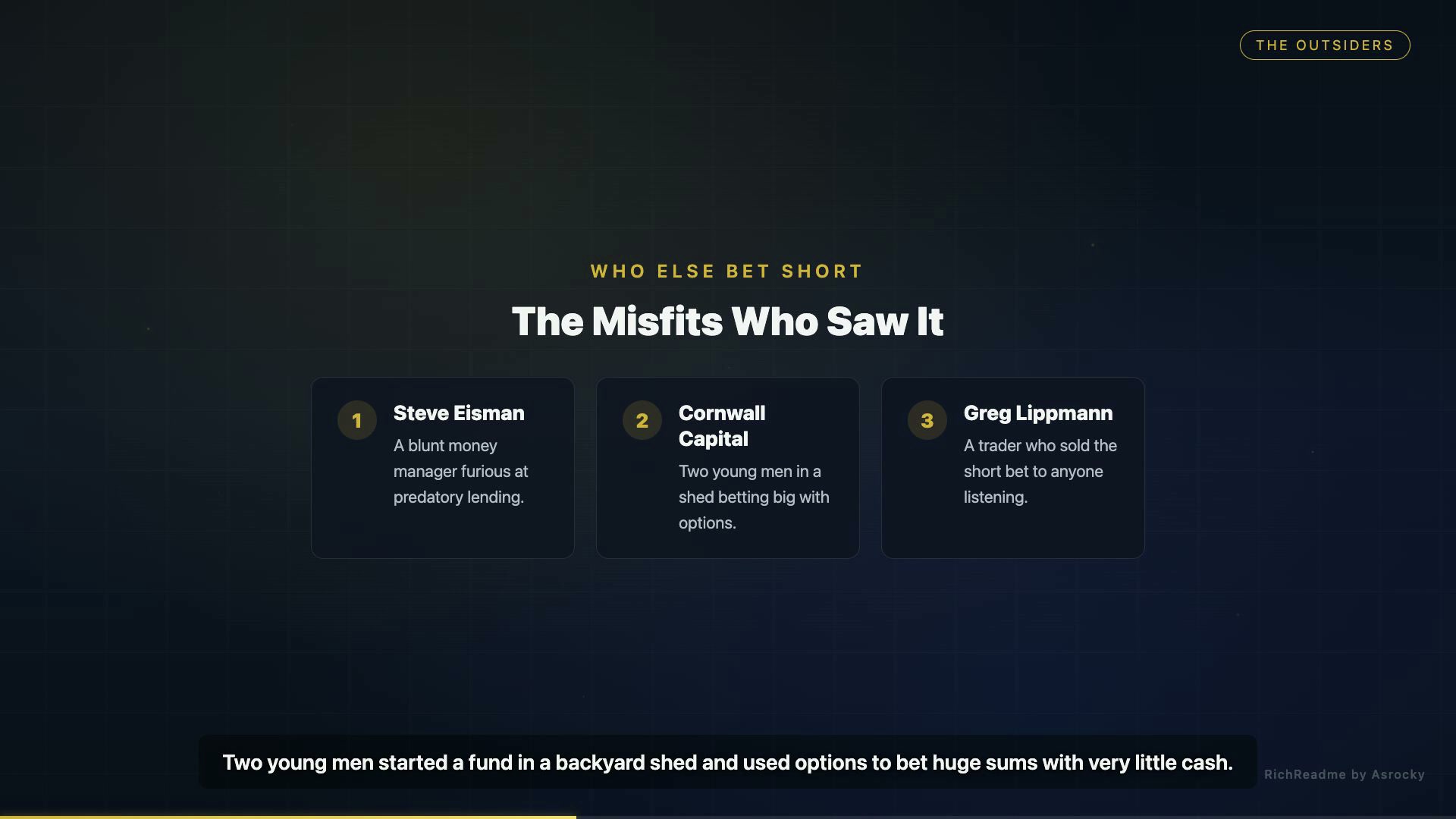
Others reached the same conclusion from different angles. Steve Eisman, a blunt and furious money manager, met the bankers selling loans to people who could never repay them. Two young men started a fund in a backyard shed and used options to bet huge sums with very little cash.
A Deutsche Bank trader named Greg Lippmann sold the same bet to anyone who would listen. Almost none of them were Wall Street insiders, and that was exactly the point.
Why Nobody Wanted the Truth
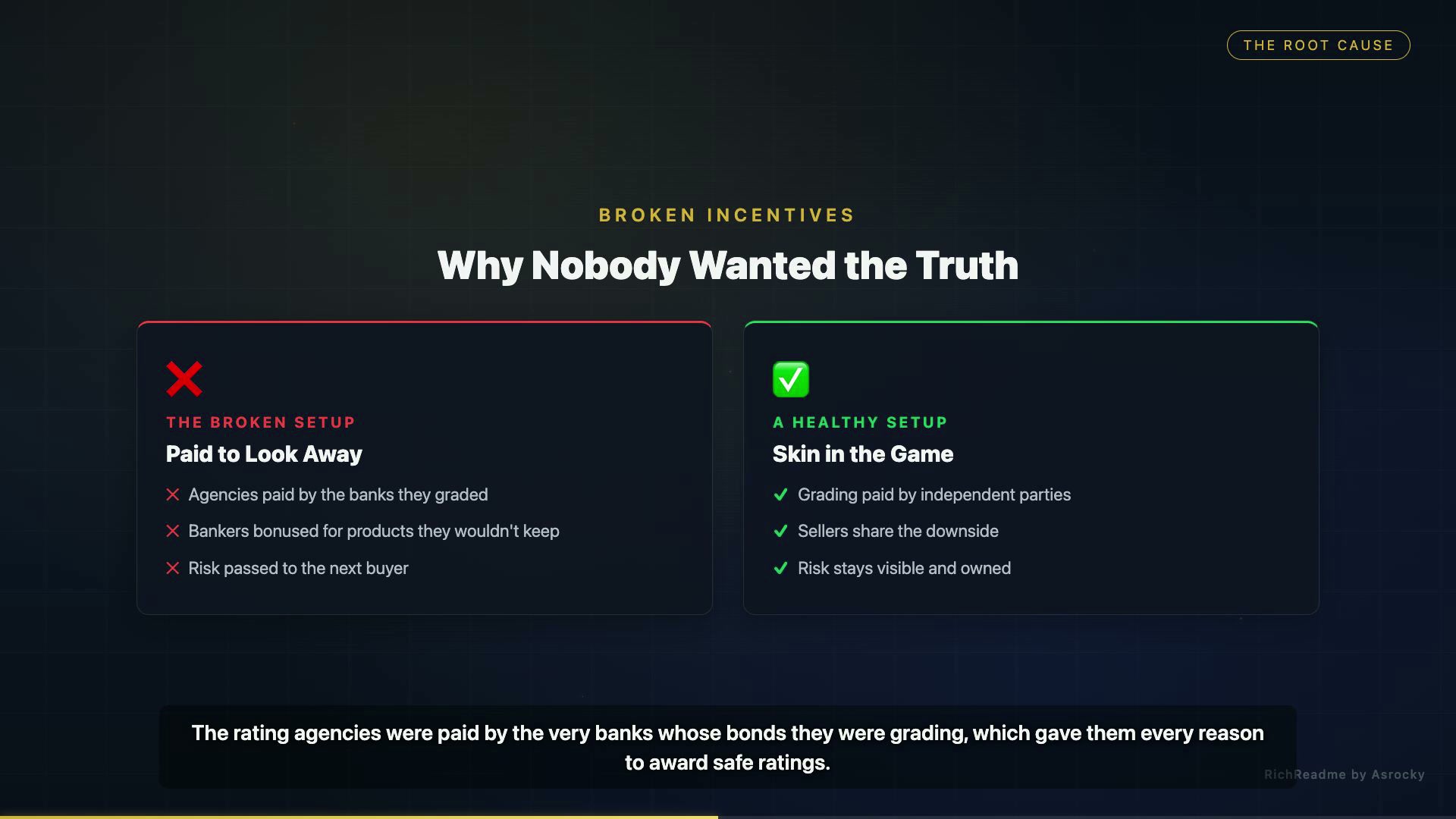
How could an entire system be so blind? The incentives were upside down. The rating agencies were paid by the very banks whose bonds they were grading, which gave them every reason to award safe ratings.
Bankers earned enormous bonuses for selling products they would never have to live with. The risk was never eliminated. It was simply passed along to the next buyer, until it landed somewhere no one could see.
Real Mortgages vs. Side Bets
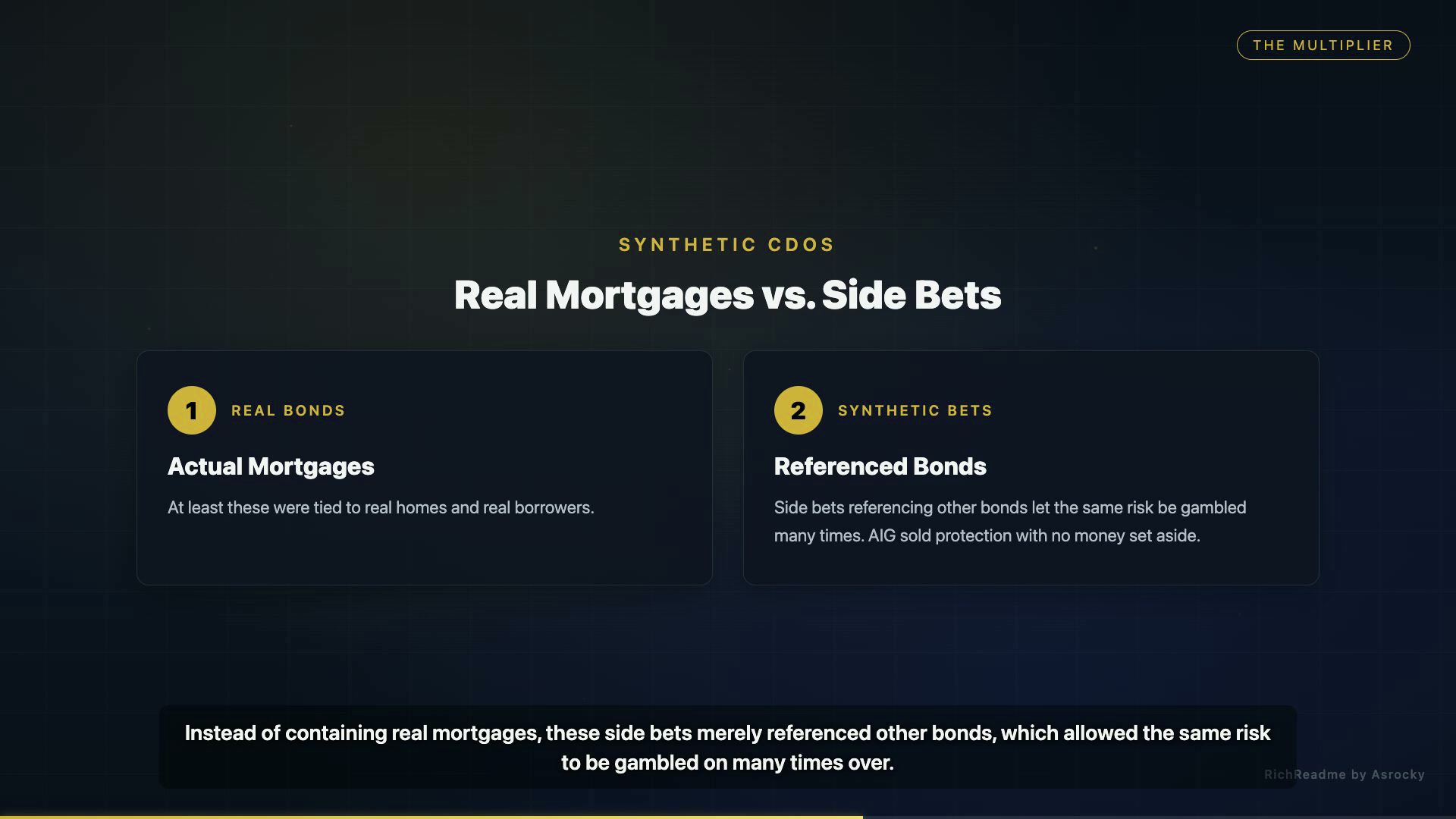
The danger then multiplied through products called synthetic collateralized debt obligations. Instead of containing real mortgages, these side bets merely referenced other bonds, which allowed the same risk to be gambled on many times over. A giant insurance company, AIG, sold vast amounts of protection without setting aside any money to pay it. When mortgages failed, the web of side bets meant losses many times larger than the underlying loans themselves.
The Collapse
When house prices finally stopped rising, the entire structure unraveled. Borrowers defaulted, mortgage bonds crumbled, and the supposedly safe triple-A products turned out to be nearly worthless. Major banks, along with AIG, faced ruin, and governments had to step in with enormous bailouts.
The outsiders who had bought the insurance, mocked for years, were suddenly paid fortunes. Being early and right looked identical to being wrong, until the moment it did not.
What the Big Short Teaches
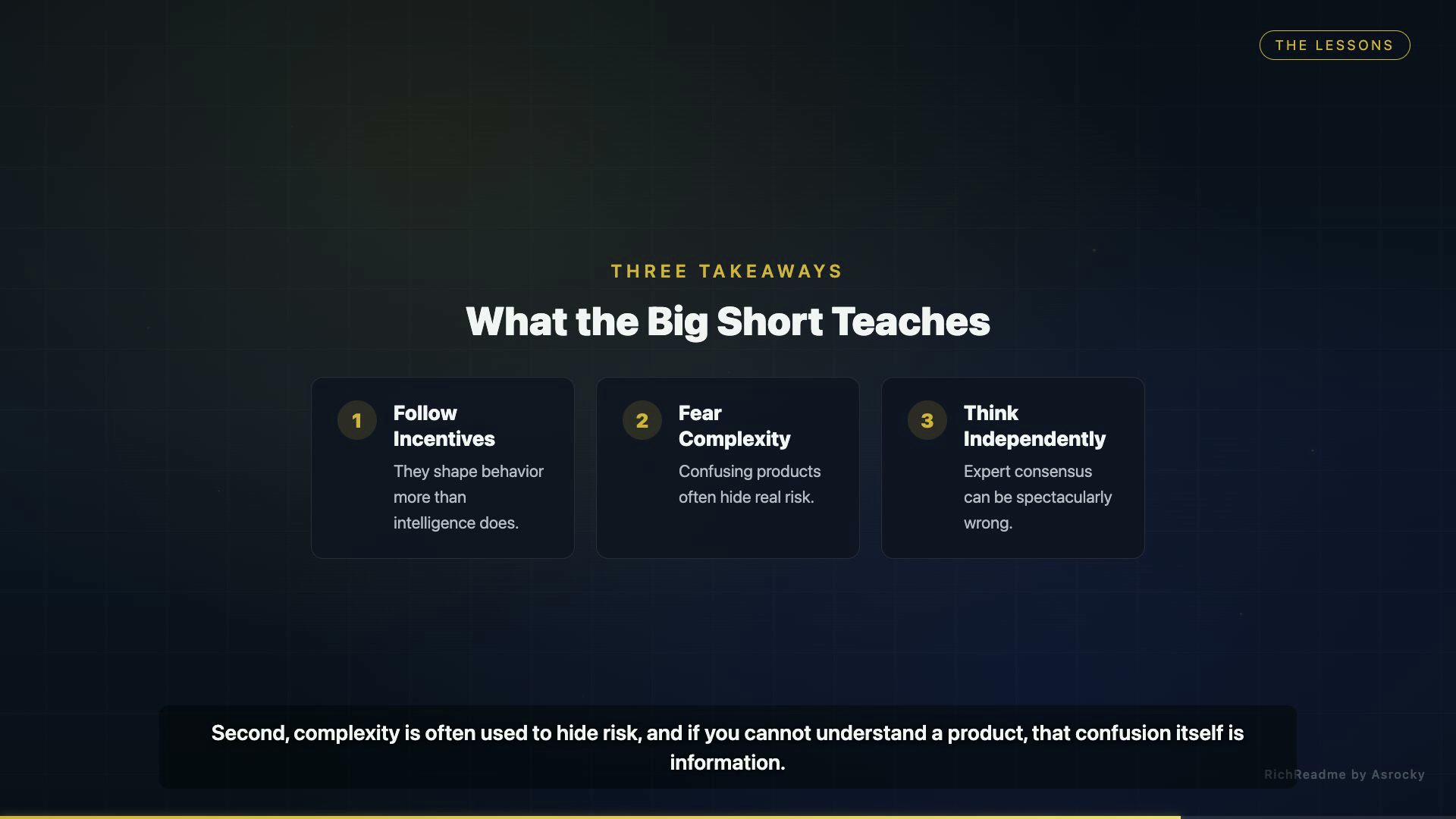
The book leaves three lasting lessons. First, incentives shape behavior far more than intelligence does, so always ask who gets paid for what. Second, complexity is often used to hide risk, and if you cannot understand a product, that confusion itself is information. Third, the consensus of experts can be spectacularly wrong, which is why independent thinking and reading the fine print still matter.
Protect Yourself From the Next Machine
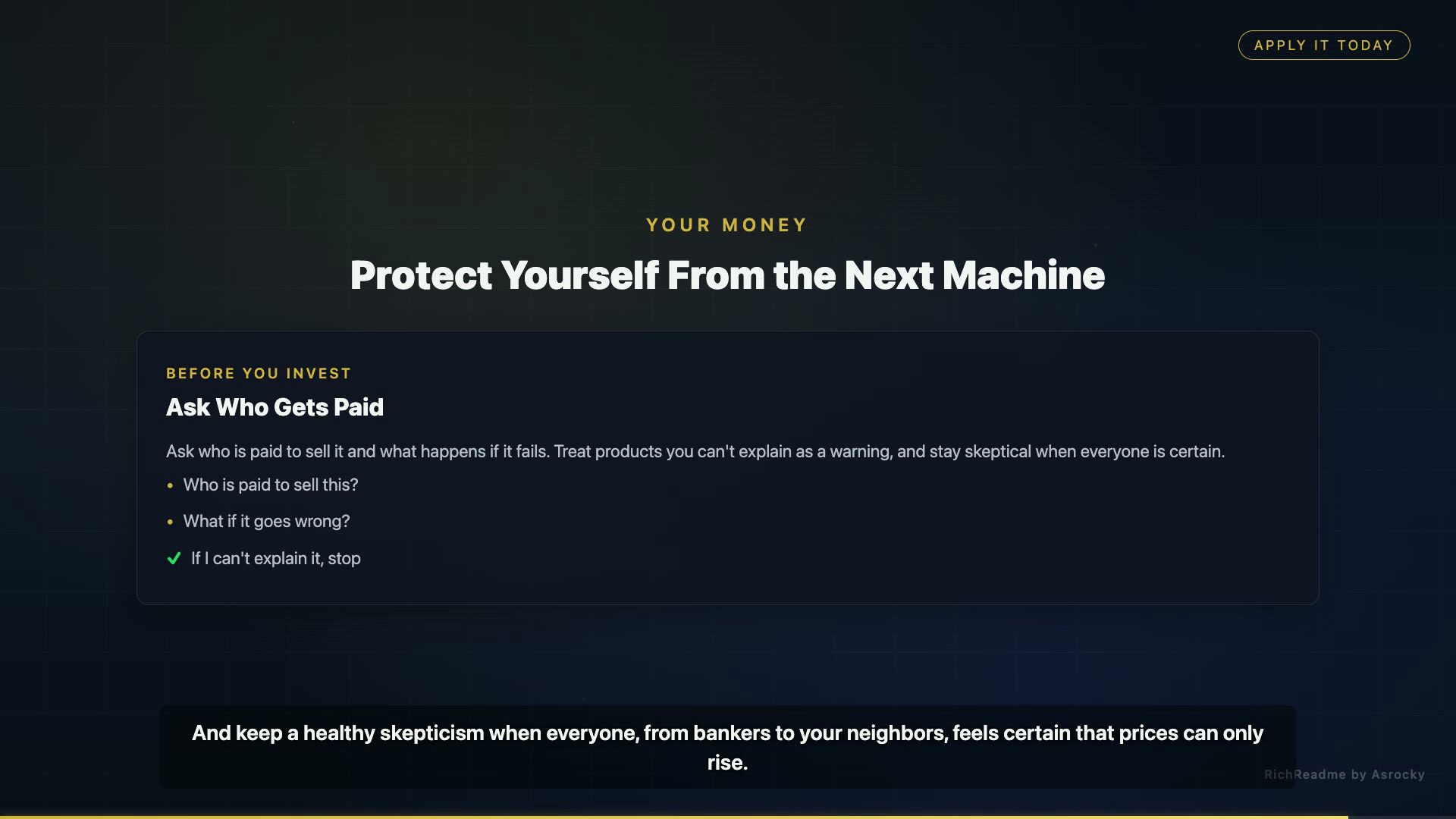
Apply it to your own finances. Before you trust any investment, ask who is paid to sell it to you and what happens if it goes wrong. Treat any product you cannot explain as a warning rather than a reason to trust an expert. And keep a healthy skepticism when everyone, from bankers to your neighbors, feels certain that prices can only rise.
In financial markets, certainty is the most expensive emotion of all. If this made you see the financial system a little more clearly, hit like and subscribe. The full book is linked below. Congratulations on finishing this book!
📖 Want the full book?
Get The Big Short on AmazonDisclosure: This post contains affiliate links. If you buy through them, I earn a small commission at no extra cost to you.