What if your next ten-bagger stock is hiding in plain sight, in the stores you already visit and the products you already use?
This is One Up On Wall Street by Peter Lynch, the legendary manager of the Magellan Fund. It shows how ordinary investors can use what they already know to beat the experts.
Your Everyday Life Is Research
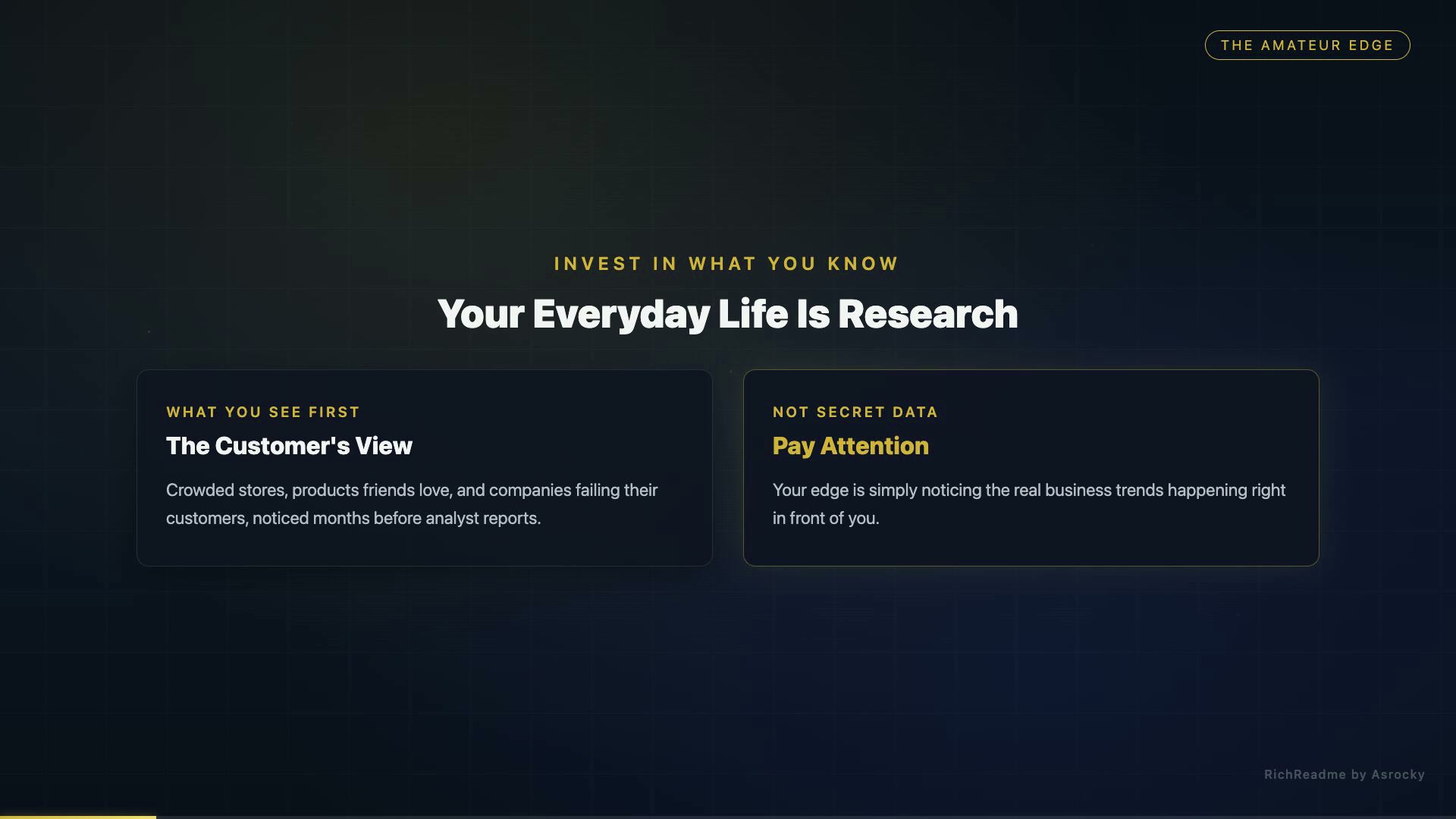
Lynch's core idea is to invest in what you know. As you live your normal life, you see which stores are crowded, which products your friends love, and which companies are failing their customers. You encounter these trends months before Wall Street analysts ever write their reports.
Your everyday experience is genuine research. Your edge is not secret data. It is simply paying attention to what is right in front of you.
Six Kinds of Company
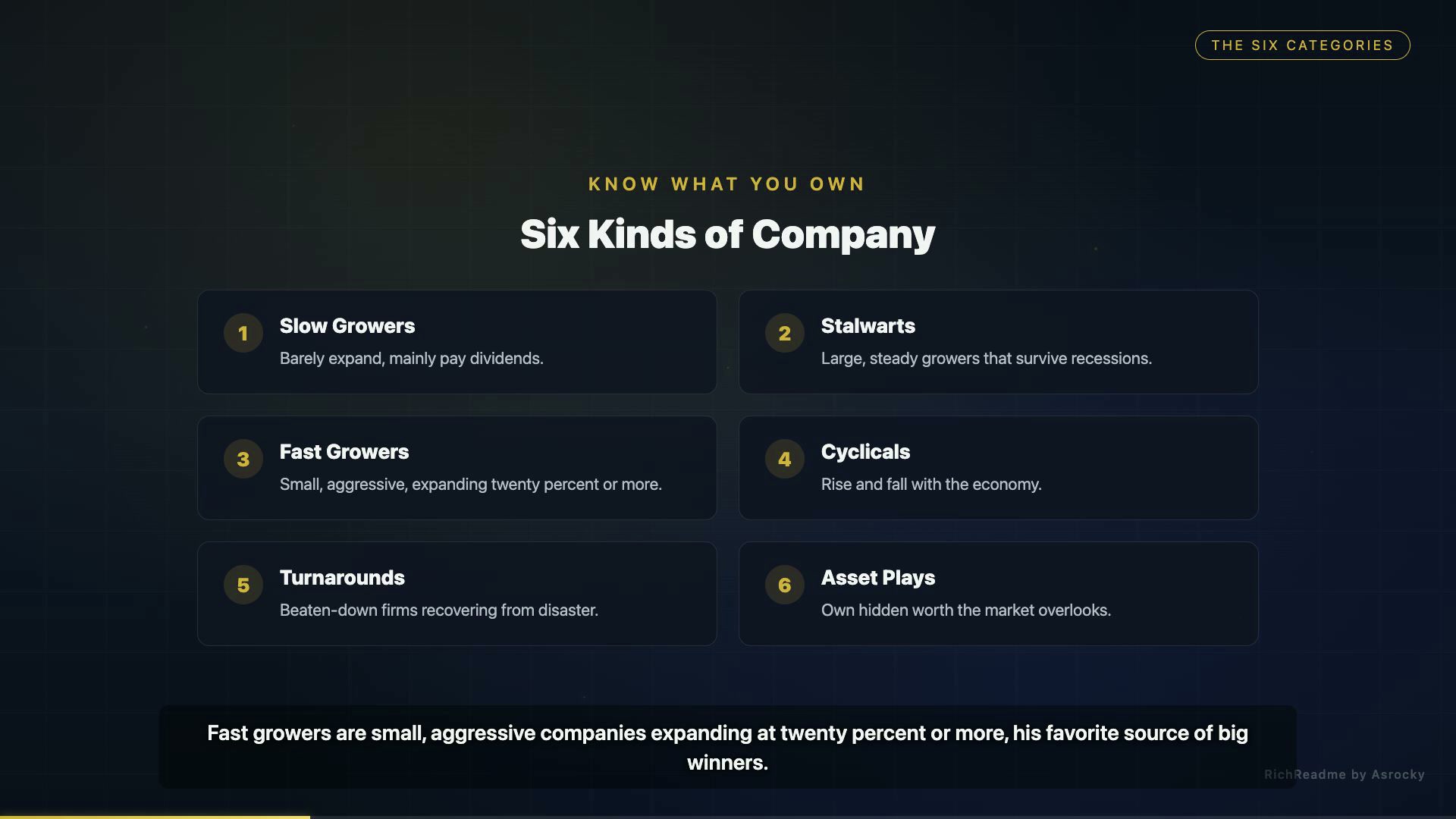
He sorts every company into six categories. Slow growers barely expand and mainly pay dividends. Stalwarts are large, steady growers that hold up in recessions. Fast growers are small, aggressive companies expanding at twenty percent or more, his favorite source of big winners.
Cyclicals rise and fall with the economy. Turnarounds are beaten-down companies recovering from disaster. And asset plays own hidden worth that the market has overlooked. Knowing the category tells you how to analyze a stock and when to sell it.
The Big Winner
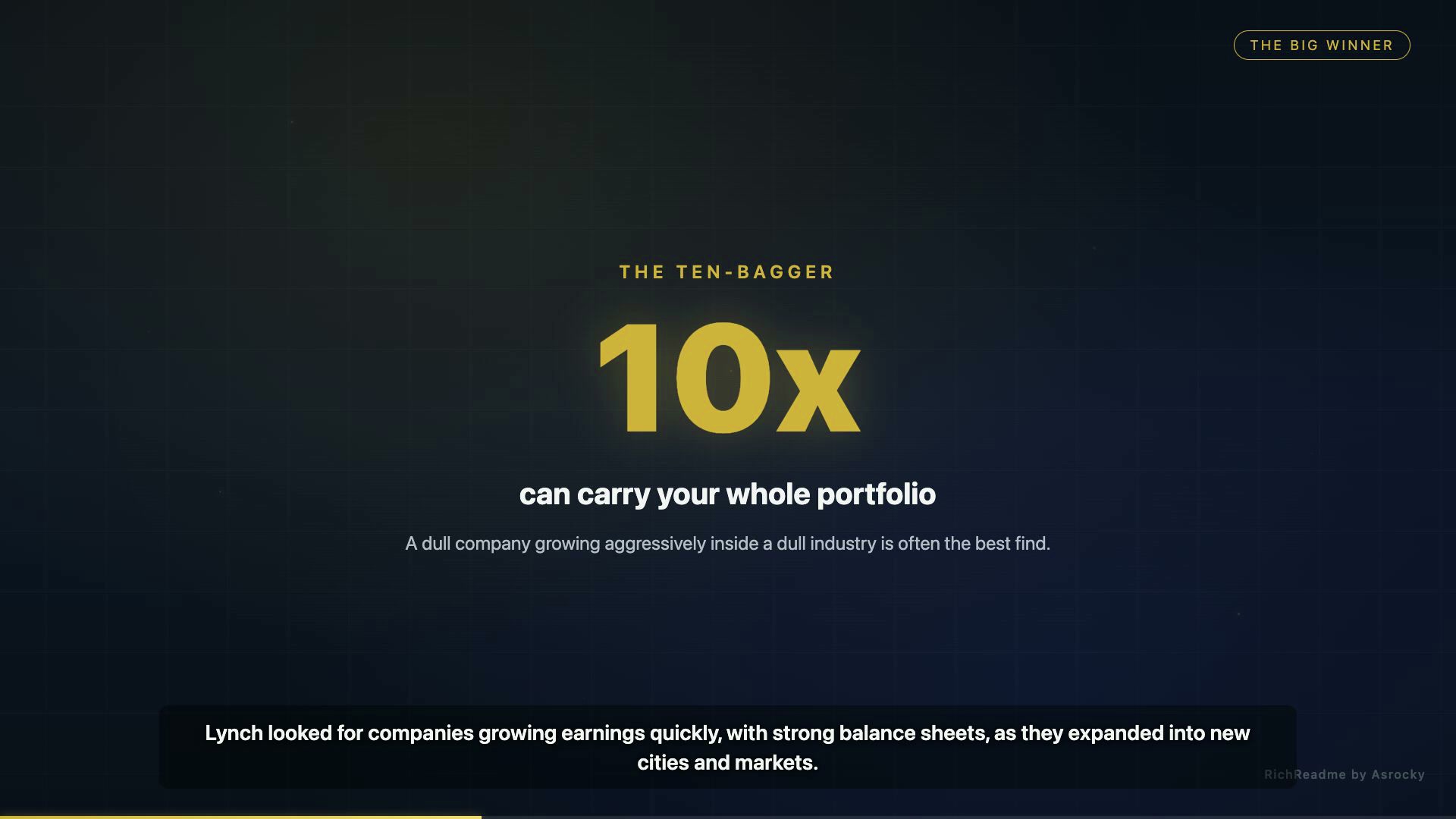
The fast grower is where the ten-baggers come from. A ten-bagger is a stock that rises to ten times your purchase price, and just a handful of them can carry an entire portfolio. Lynch looked for companies growing earnings quickly, with strong balance sheets, as they expanded into new cities and markets.
Crucially, a fast grower does not need to sit in a fast-growing industry. A dull company growing aggressively inside a dull industry is often the best opportunity of all.
Are You Paying for Growth?
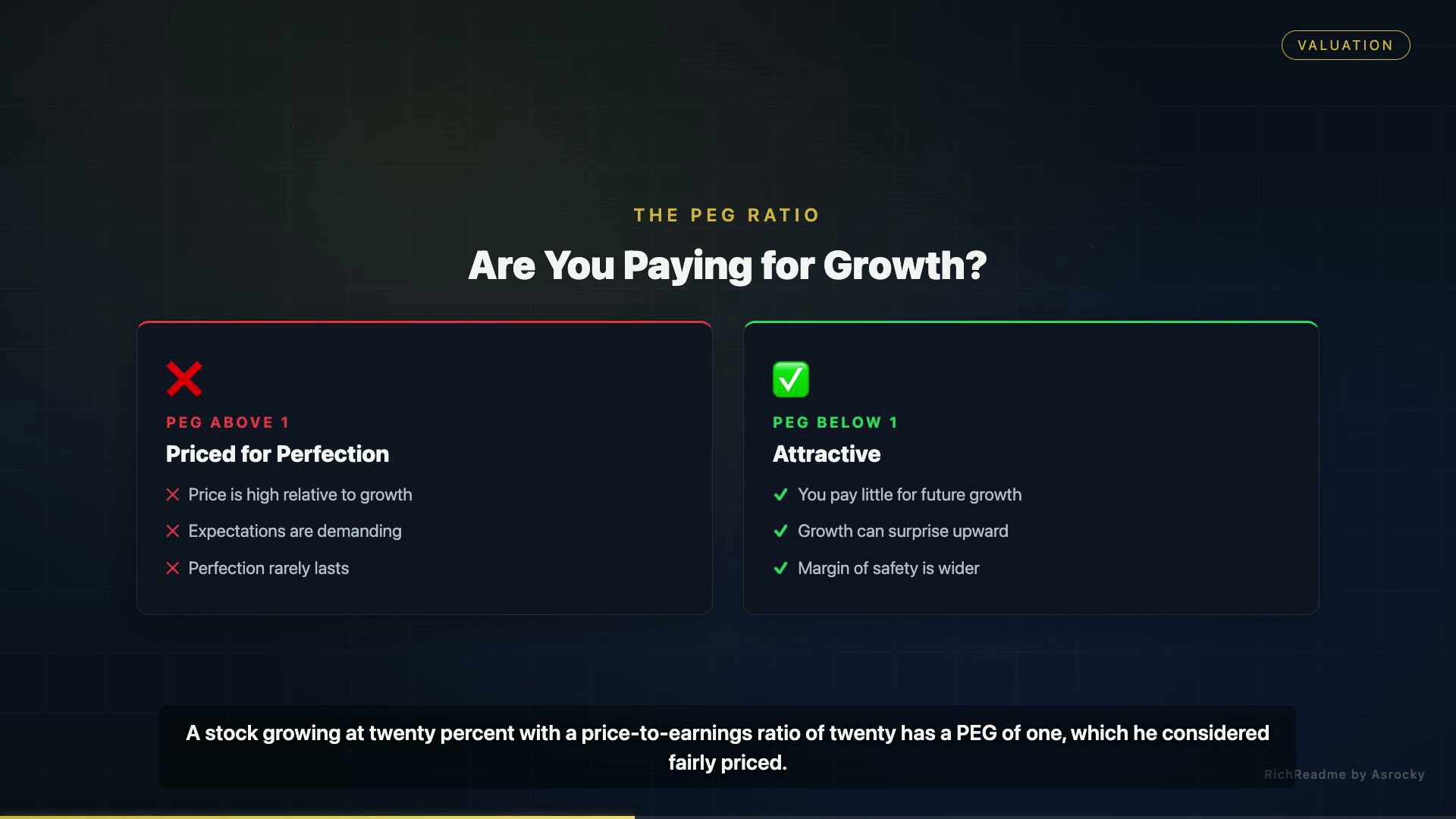
For valuation, he popularized the PEG ratio. Take the price-to-earnings ratio and divide it by the company's earnings growth rate. A stock growing at twenty percent with a price-to-earnings ratio of twenty has a PEG of one, which he considered fairly priced.
Below one is attractive, because you pay little for the growth ahead. A high-flying stock with a PEG far above one is pricing in perfection, and perfection rarely lasts for long.
Explain It Simply
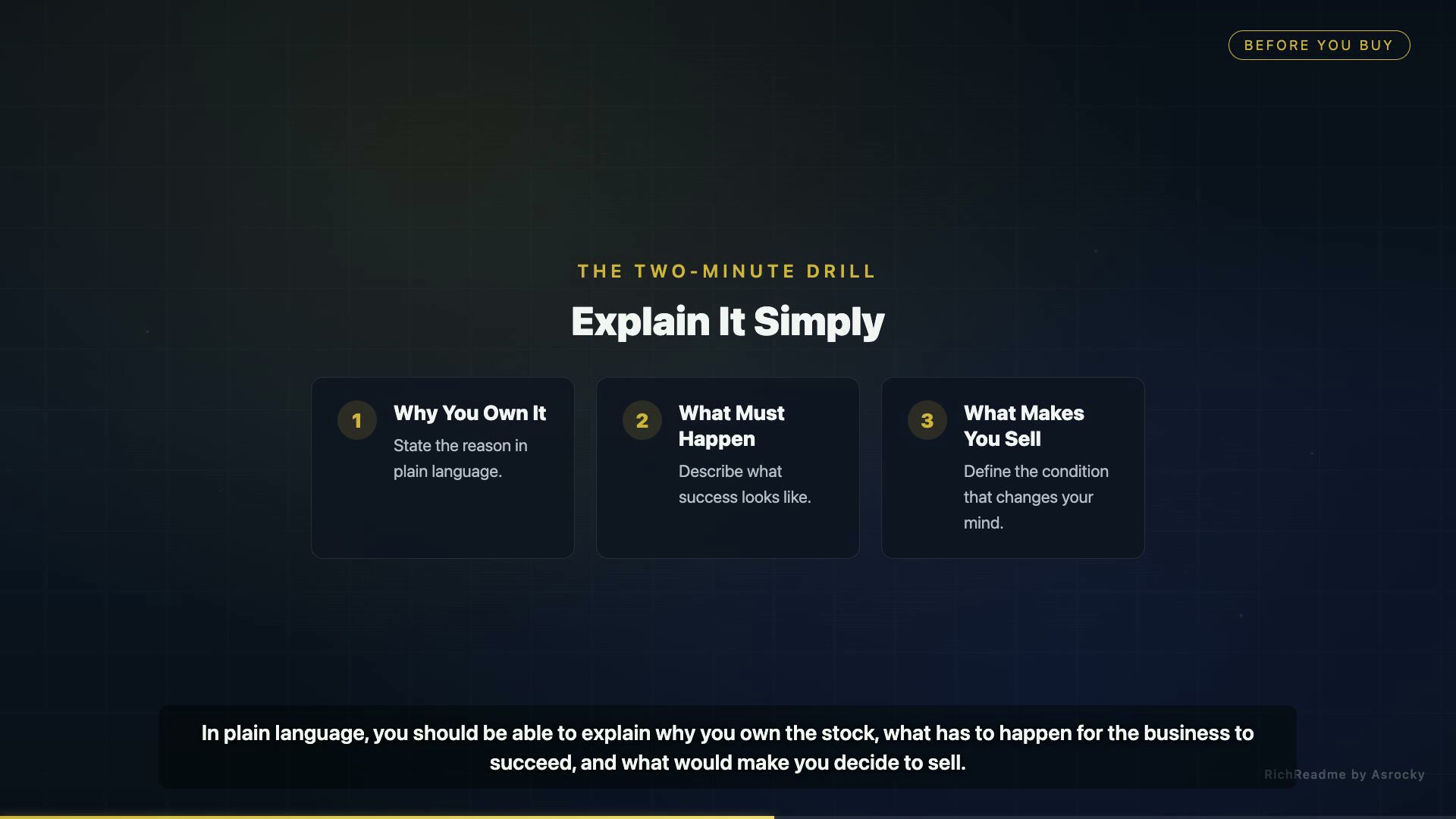
Before buying, Lynch demands a two-minute drill. In plain language, you should be able to explain why you own the stock, what has to happen for the business to succeed, and what would make you decide to sell. If you cannot tell that story simply, you do not understand the company well enough.
A stock is not a lottery ticket. It is partial ownership of a real business, and you deserve to know what you own and why.
Look for the Boring Winners
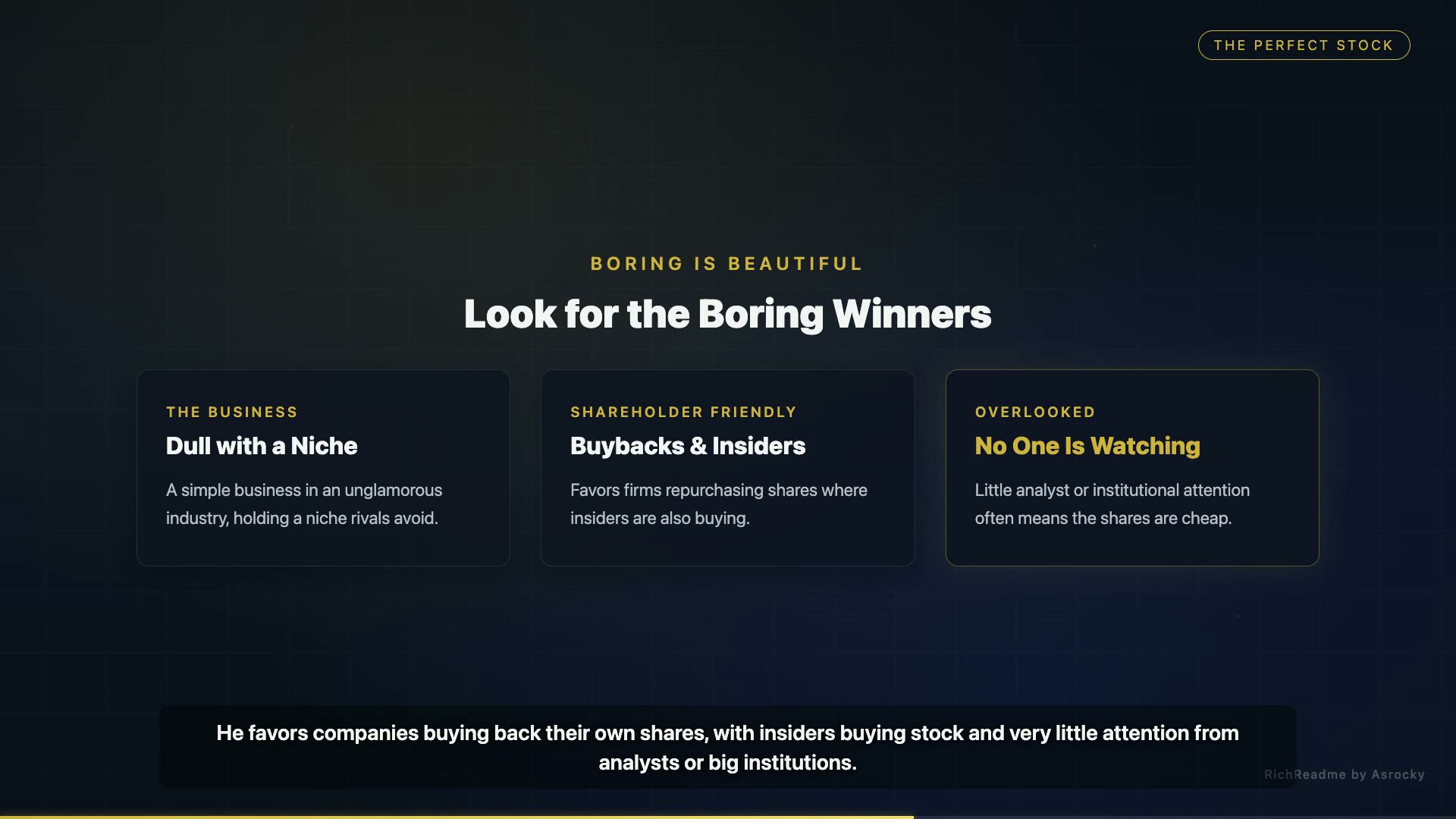
His ideal company is deliberately boring. He loves a simple, dull business in an unglamorous industry, holding a strong niche that competitors prefer to avoid. He favors companies buying back their own shares, with insiders buying stock and very little attention from analysts or big institutions.
The less exciting the story, the more likely the shares are cheap. Glamour, by contrast, usually arrives only after the easy money is already gone.
Price Alone Is Never a Reason
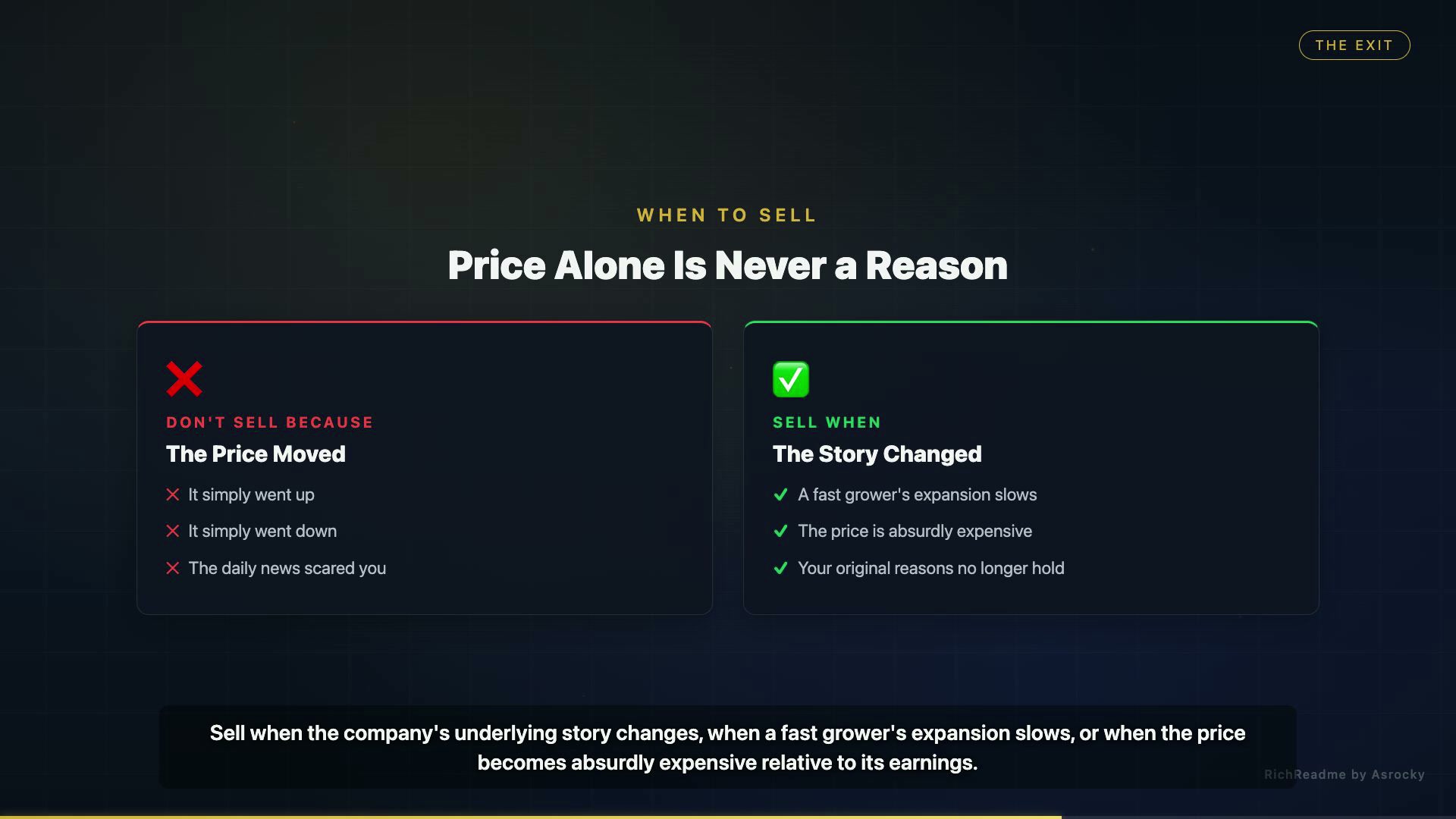
Knowing when to sell matters as much as knowing when to buy. Do not sell a stock merely because its price has risen or fallen. Sell when the company's underlying story changes, when a fast grower's expansion slows, or when the price becomes absurdly expensive relative to its earnings.
Write down the reasons you bought, and sell only when those original reasons no longer hold. Price movement alone is never a reason.
The Mindset

Lynch also warns against the emotions that undo small investors. They pull their money out after a drop, exactly when stocks are cheapest, and pile in near the top, exactly when they are dearest. He quotes his teacher Benjamin Graham.
In the short run the market is a voting machine, but in the long run it is a weighing machine. Ignore the daily noise, and let the company's real earnings decide your result.
Three Habits to Start Now
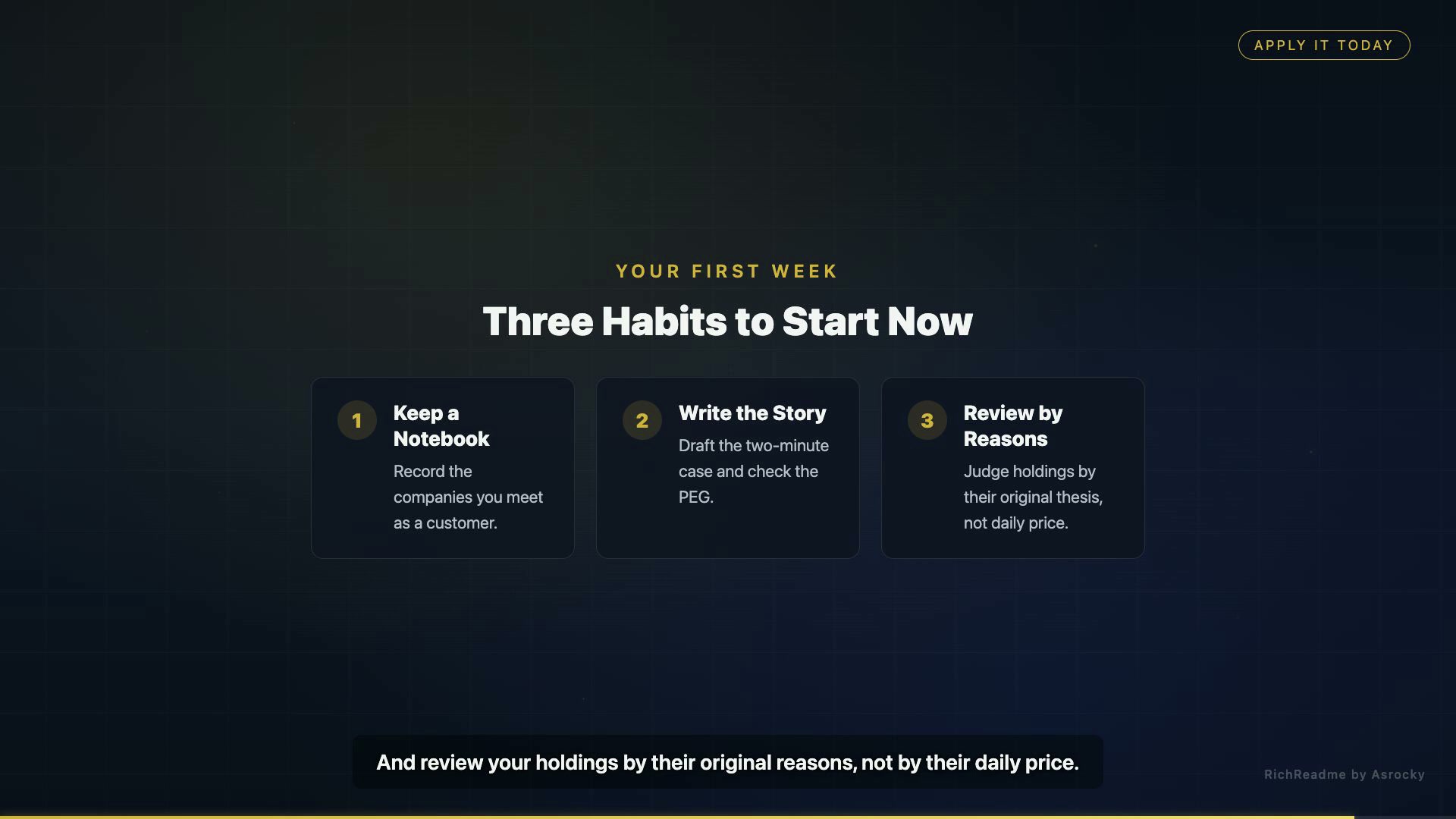
You can start with three habits this week. Carry a small notebook and record the companies you encounter as a customer, then research the best one. Before buying any stock, write out its two-minute story and check its PEG ratio. And review your holdings by their original reasons, not by their daily price. You do not need to beat the entire market.
You only need to understand a handful of businesses better than the crowd. If this gave you a new way to look at your everyday spending, hit like and subscribe. The full book is linked below. Congratulations on finishing this book!
📖 Want the full book?
Get One Up On Wall Street on AmazonDisclosure: This post contains affiliate links. If you buy through them, I earn a small commission at no extra cost to you.