What if the whole stock market can move on a story everyone suddenly believes, rather than on the facts? Robert Shiller calls it irrational exuberance.
This is Irrational Exuberance by Robert Shiller. It explains how speculative bubbles form in stocks and in housing, and why even smart people get caught in them.
The Definition

Shiller defines a speculative bubble as a situation in which news of rising prices stirs up investor enthusiasm, which then spreads through psychological contagion. As prices climb, more people hear stories of easy money, so they buy, which pushes prices even higher. The rise seems to justify the story, and the story fuels the rise. Inside a bubble, the market becomes a feedback loop about itself.
Are Stocks Expensive?
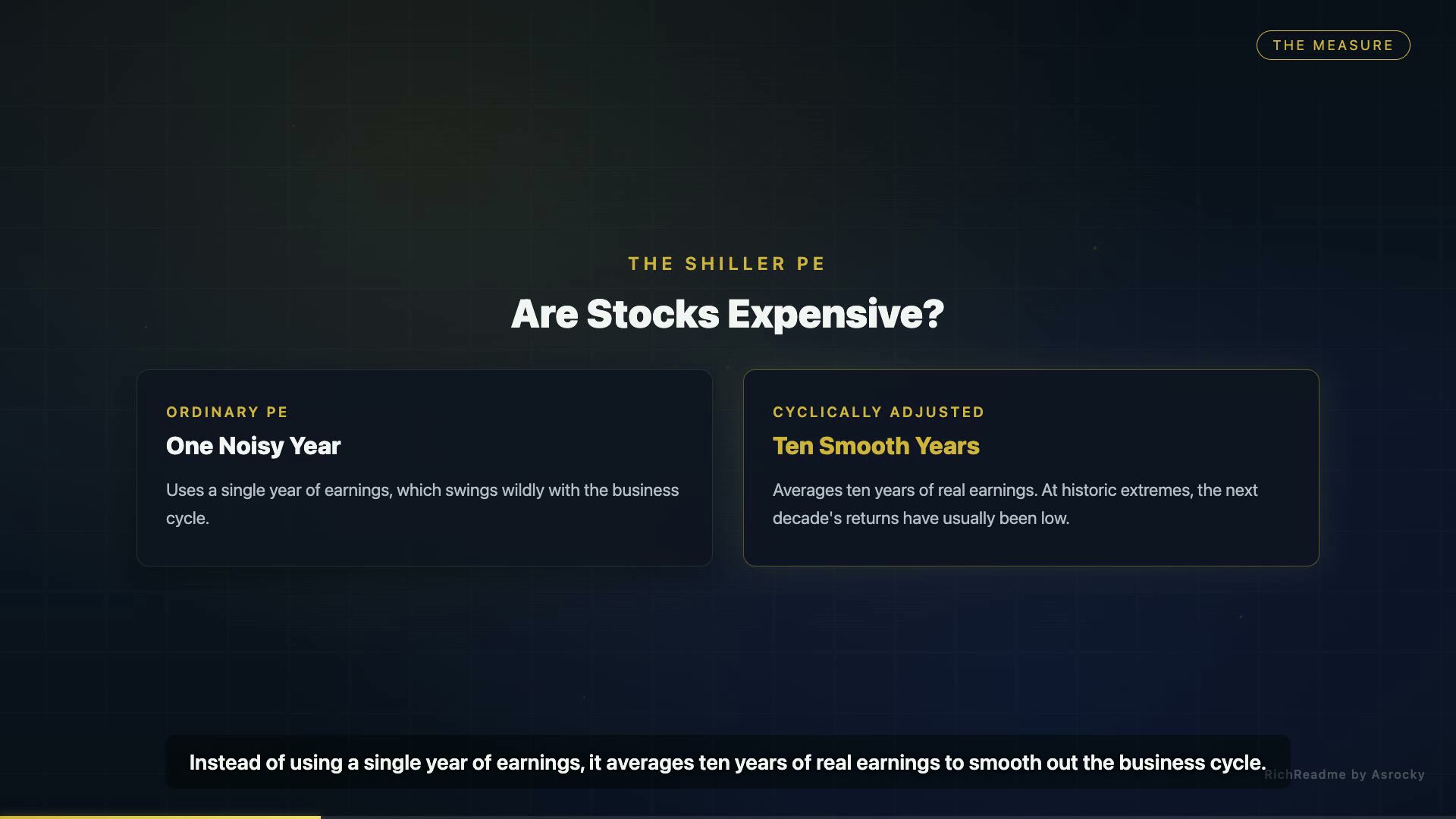
To judge whether stocks are expensive, Shiller built the cyclically adjusted price-to-earnings ratio. Instead of using a single year of earnings, it averages ten years of real earnings to smooth out the business cycle. When this measure reaches historic extremes, returns over the following decade have historically been low. Valuation cannot time the market, but it sets the odds for a patient, long-term investor.
What Feeds the Bubble

Several psychological biases quietly feed the bubble. Anchoring makes people treat recent high prices as if they were normal. Overconfidence makes them believe they can exit just before the crowd.
Herding makes buying feel safe because everyone around them is doing it. And hindsight turns past crashes into neat, predictable stories, even while the next one builds unnoticed.
The Same Loop, Two Directions

The core engine is the feedback loop. Imagine that prices begin to rise. Early investors feel smart and tell their friends. The news covers the gains, drawing in fresh buyers, who push prices up again, and each round feels like proof.
The exact same loop runs in reverse on the way down. Falling prices create fear, fear drives selling, and selling creates more fear. Momentum is mistaken for wisdom in both directions.
Every Bubble Has a Story

Every bubble dresses itself in a convincing story. In the late nineteen twenties it was the new age of electricity and radio. In the late nineties it was the internet revolution.
In the two thousands it was the belief that house prices could never fall. Each story was partly true, which is precisely what made it dangerous. A genuinely new technology and an overpriced market are two entirely different things.
Volume of Talk vs. Weight of Evidence

The news media then amplifies the story. Outlets compete for attention, and record-breaking prices and bold predictions attract far more readers than calm, boring analysis. Constant coverage makes the bubble feel permanent and universal.
Investors begin to mistake the sheer volume of talk for the weight of real evidence. By the time a trend is glowing on every screen, the easy money has usually already been made.
Homes Were Not a Can't-Lose Bet
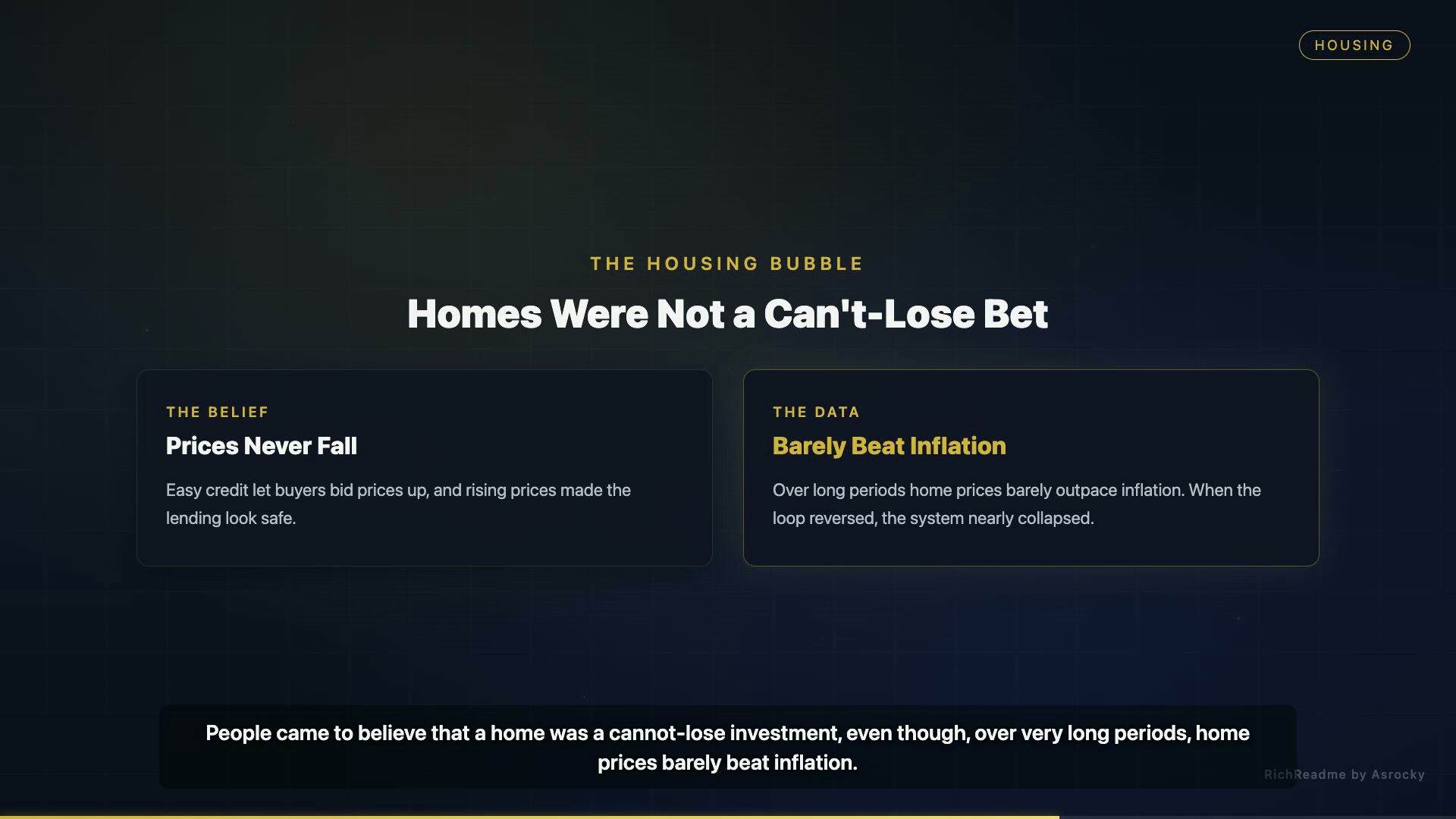
Shiller showed that the very same psychology drives housing. People came to believe that a home was a cannot-lose investment, even though, over very long periods, home prices barely beat inflation. Easy credit let buyers bid prices up, and rising prices made the lending look safe. When the loop finally reversed, the housing bubble of the two thousands nearly brought down the entire financial system.
Three Disciplines for Investors

So what should an ordinary investor do? First, know the long-term odds. When valuations are extreme, expect lower future returns and plan around them.
Second, resist the story when it is loudest, because confidence tends to peak near the top. Third, rely on simple, disciplined habits like regular saving and broad diversification, which protect you from your own emotions. Humility beats forecasting.
Name the Story Before You Buy

Apply it this week. Before your next investment decision, write down the story that makes you want to buy. Then ask whether that story is already widely believed and already reflected in the price. If everyone knows it and is excited by it, the market has probably already been paid for it. Buying excitement is expensive.
Buying calm is not. If this made you look at the market differently, hit like and subscribe. The full book is linked below. Congratulations on finishing this book!
📖 Want the full book?
Get Irrational Exuberance on AmazonDisclosure: This post contains affiliate links. If you buy through them, I earn a small commission at no extra cost to you.